Category Archives: Recipes

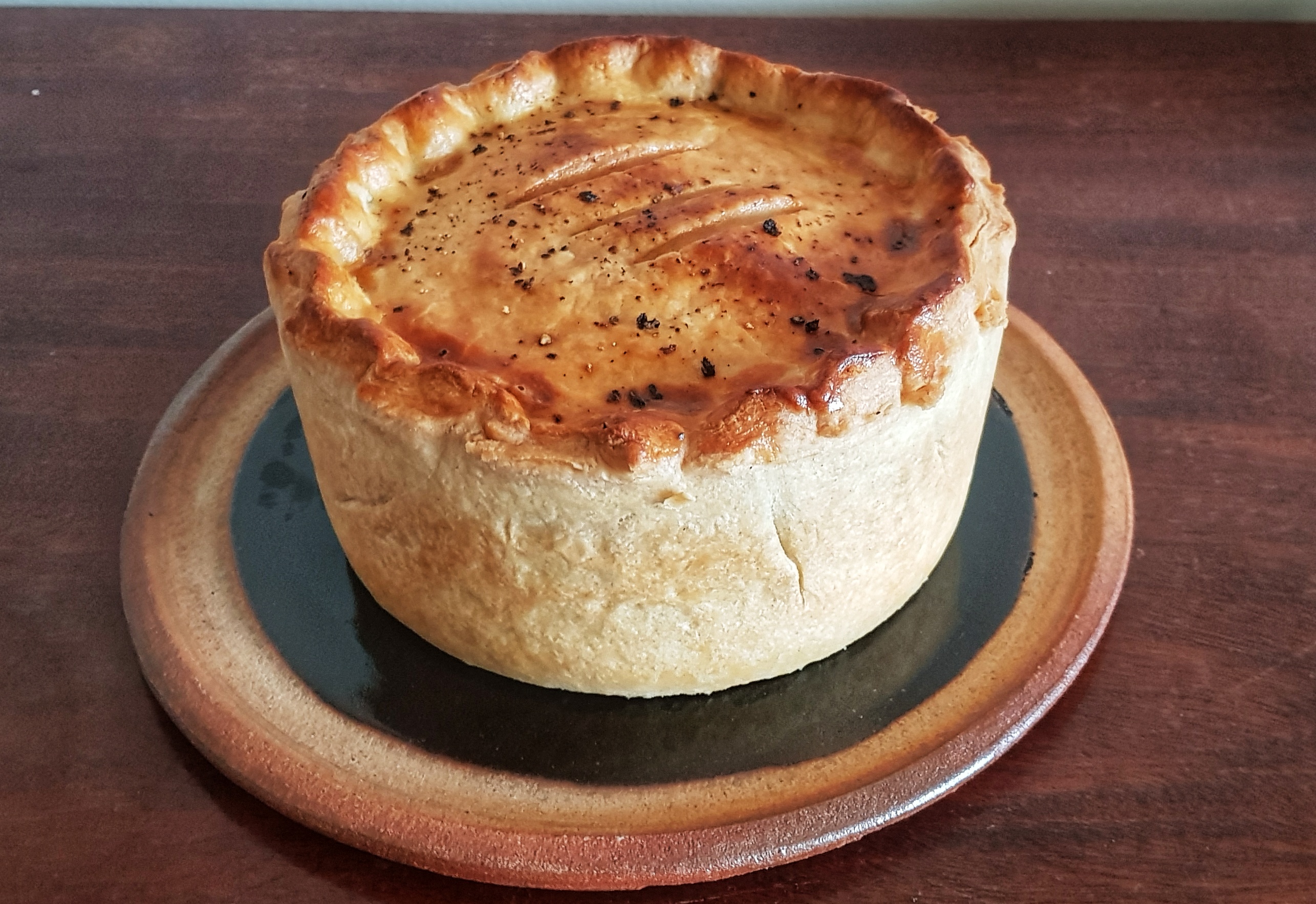
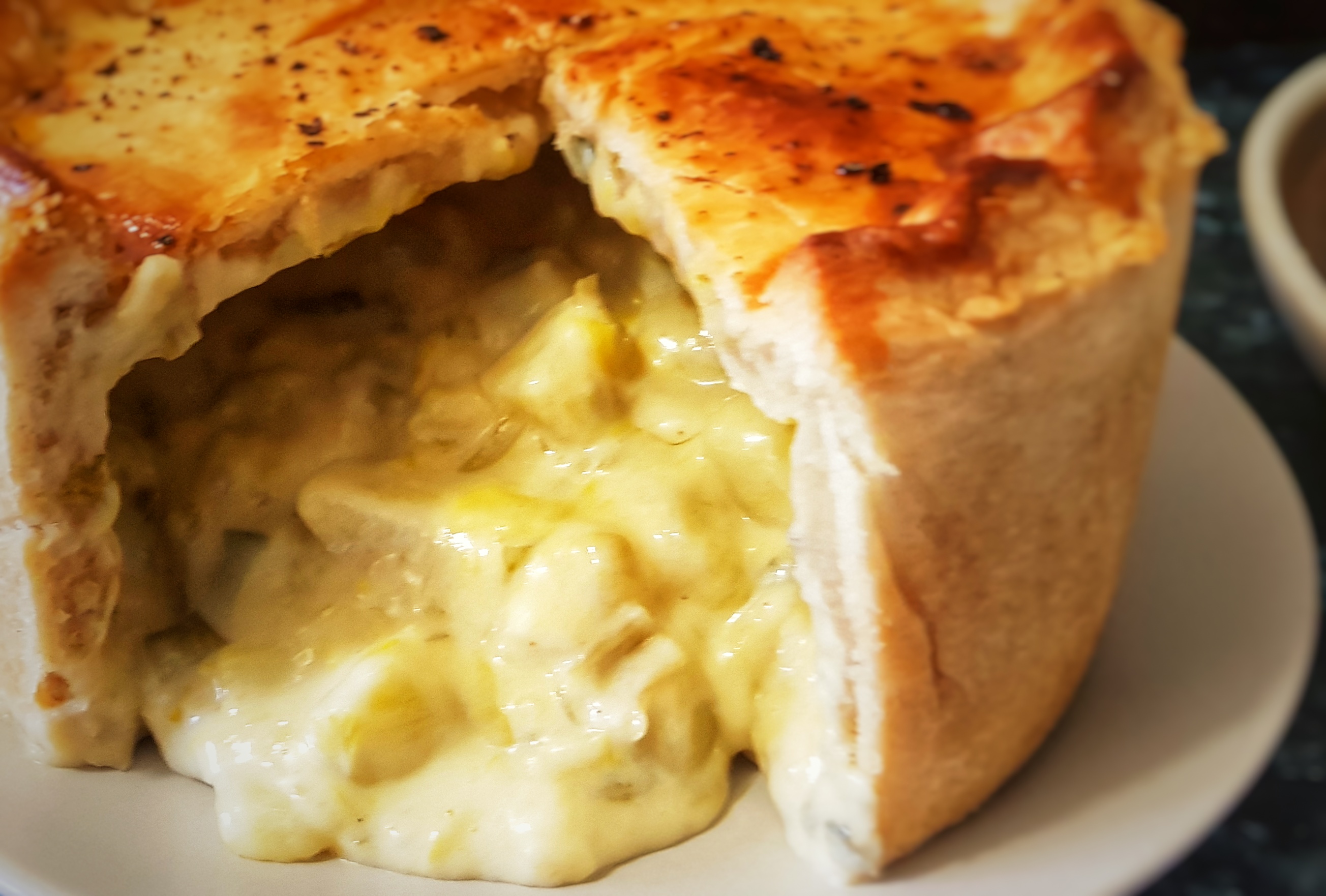
Cheese and Leek (or Onion) Pie

Hello! I’m back after two-month hiatus. Did you miss me?

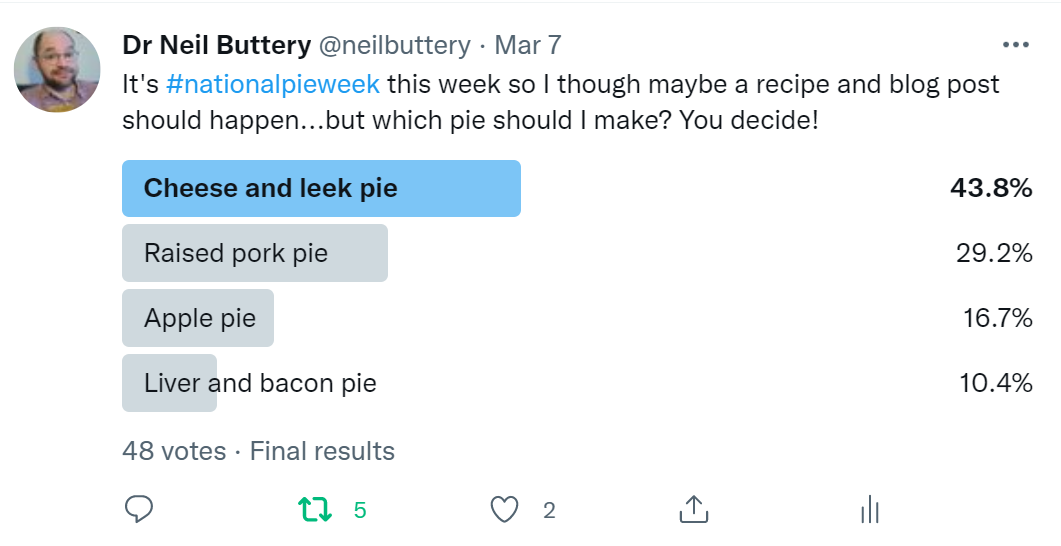
It’s British Pie Week this week so I thought I’d post a recipe for a favourite of mine. The trouble is, I have many favourites, so I came up with a list of four and let Twitter decide. I was very glad to see my favourite won.

Later, I saw the cheese and leek/onion pie was tenth in the top ten favourite UK pies, receiving just 1% of the vote!* Shocking. I think there may be a north-south divide effect at work there; back in the days of my market stall and restaurant, cheese and leek pie was by far the favourite.

The cheese and onion pie or pasty used to be a very important food for the working classes of Northern England, especially Yorkshire and Lancashire: it’s easy to make and the ingredients are cheap compared to meaty fillings. It’s the pie equivalent of the Welsh Rabbit/Rarebit.

The simplest of fillings were made of cooked onion, thinly-sliced raw potato, or cold mashed potato, and grated cheese. On the fancier side, a thick white sauce is used instead of mash. For my recipe I am going somewhere in between to hopefully enjoy the best of both worlds. I use onion and leek interchangeably because either (or both) can be used: I make leek pies as I’m intolerant to onion.

As for the cheese, use a mature kind that melts easily: Cheddar, Lancashire, Double Gloucester etc. The pastry should be a simple shortcrust made with half butter, half lard, but all butter is good too.

Serve the pie with mashed potatoes or chips, with peas and gravy as is traditional, but this pie eats very well just warm with a dressed green salad and some good old salad cream.


If you like the blogs and podcast I produce, please consider treating me to a virtual coffee or pint, or even a £3 monthly subscription: follow this link for more information.


Makes one large pie to serve 6 people (or 4 greedy ones who always have seconds)

For the filling:

50 g butter

1 leek, trimmed and sliced, but with the green left on; or 2 medium onions, peeled and sliced

350 g (approx.) potatoes, peeled and diced (about 2 medium-sized ones)

Salt and pepper

1 tbs plain flour

1 tsp English mustard powder

275 ml hot milk

150 g grated cheese

Pinch Cayenne pepper (optional)

2 tbs double cream

For the pastry:

400 g plain flour

200g salted butter, or 100 g each butter and lard (or shortening)

120 ml water or milk

Egg wash

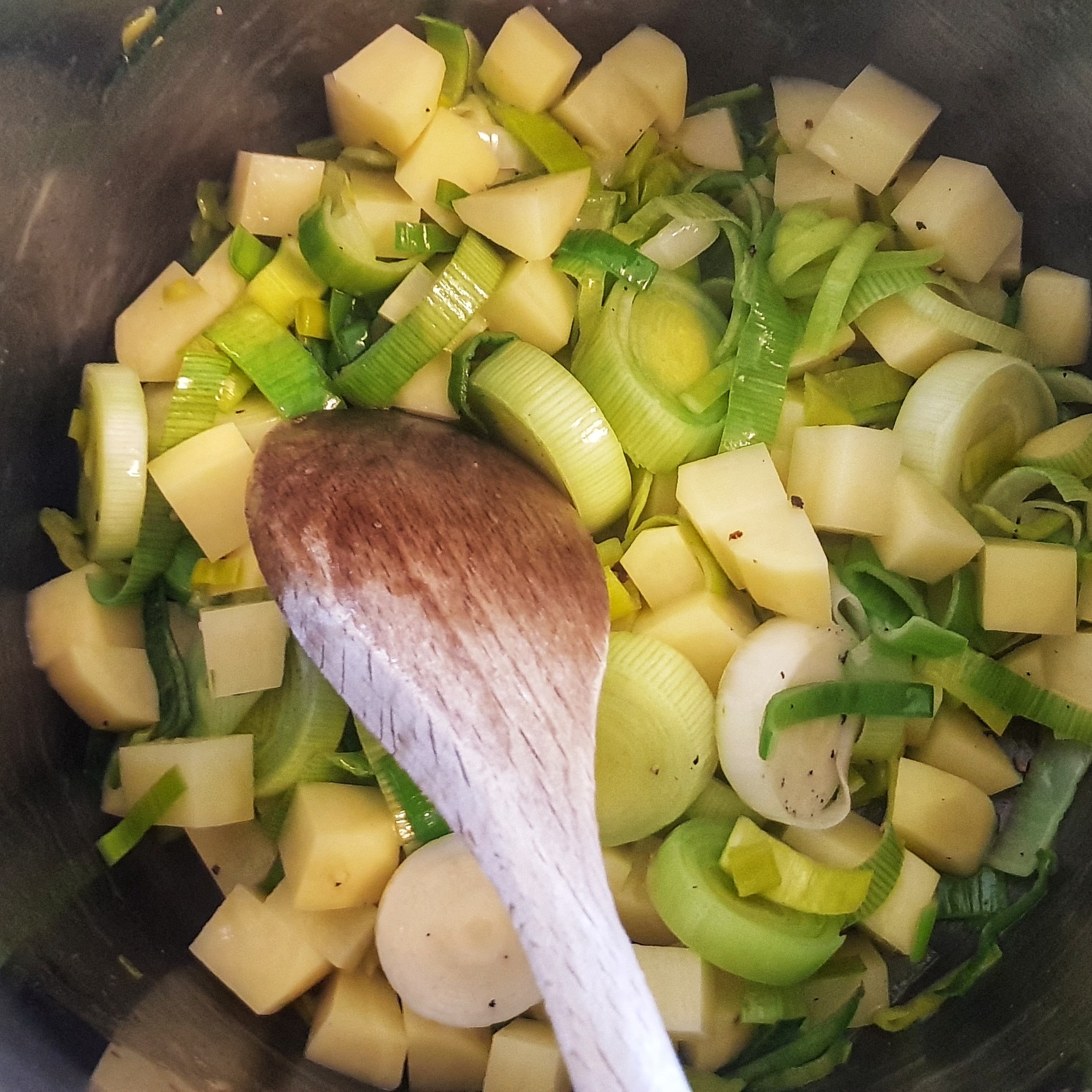
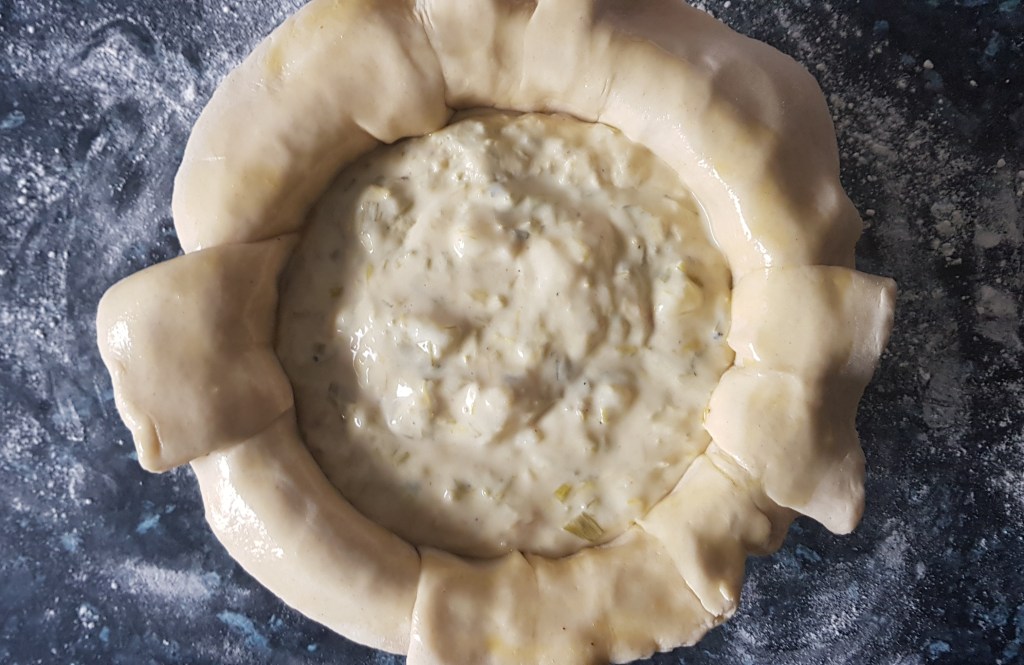
Start with the filling. Melt the butter in a saucepan and add the leek or onion and potatoes, season with half a teaspoon of salt and a good grind of pepper. Cook over a medium heat until the leek or onion melts right down. Do this slowly, turning down the heat if necessary – you don’t want to fry them, though a pale golden brown colour is fine.

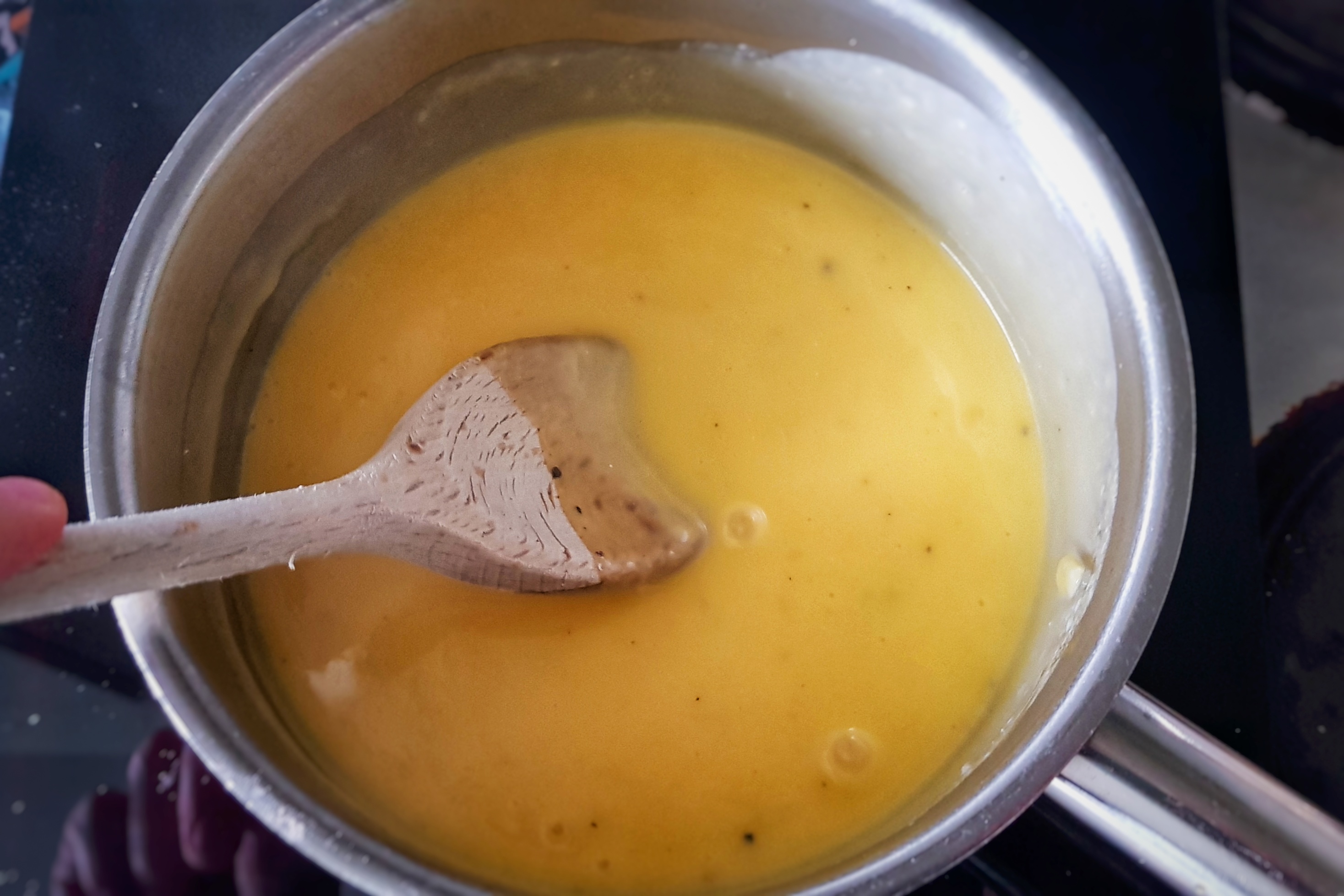
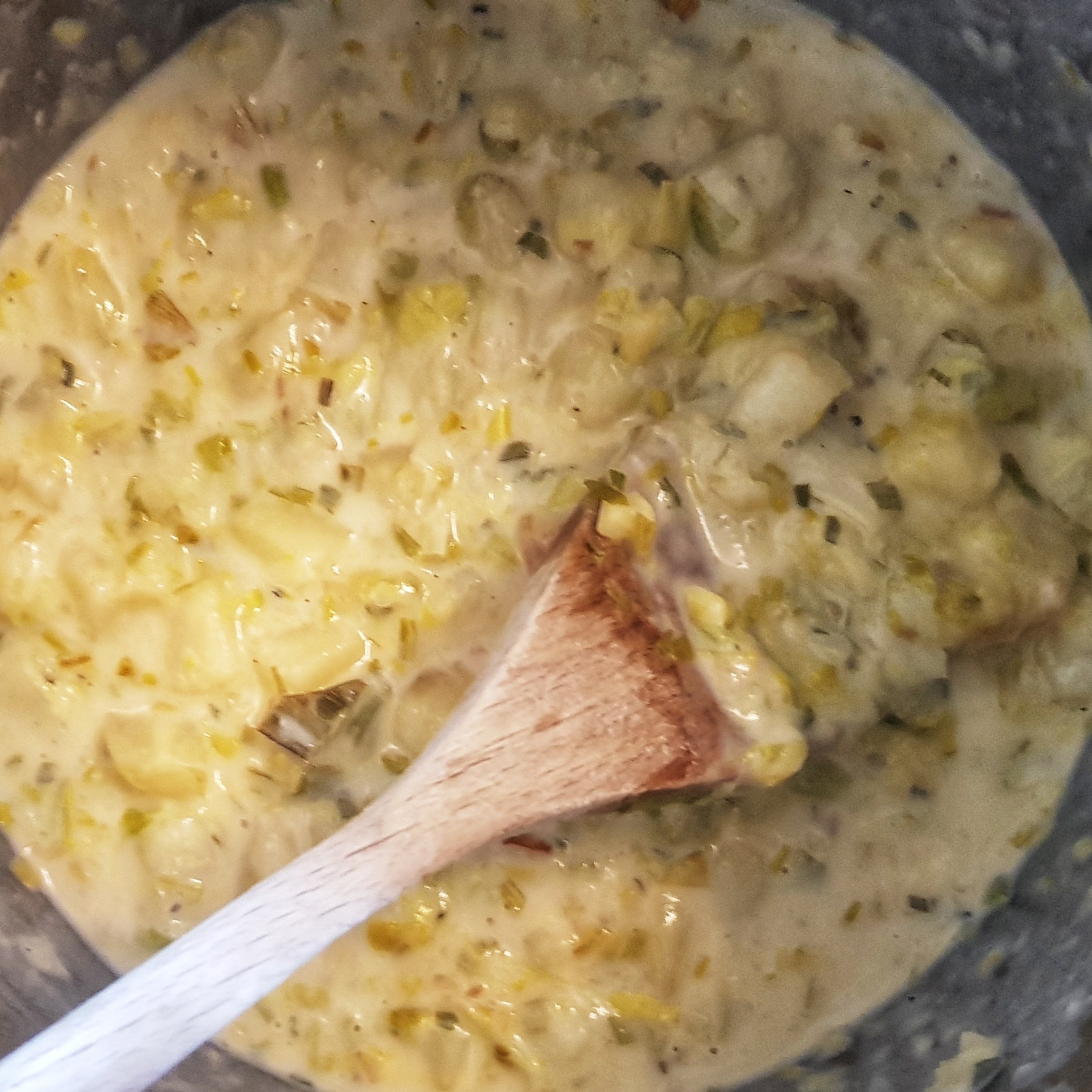
Stir in the flour and mustard and cook for a minute before mixing half of the milk. When the milk combines with the flour to make a smooth sauce, add the remainder of the milk and combine again.

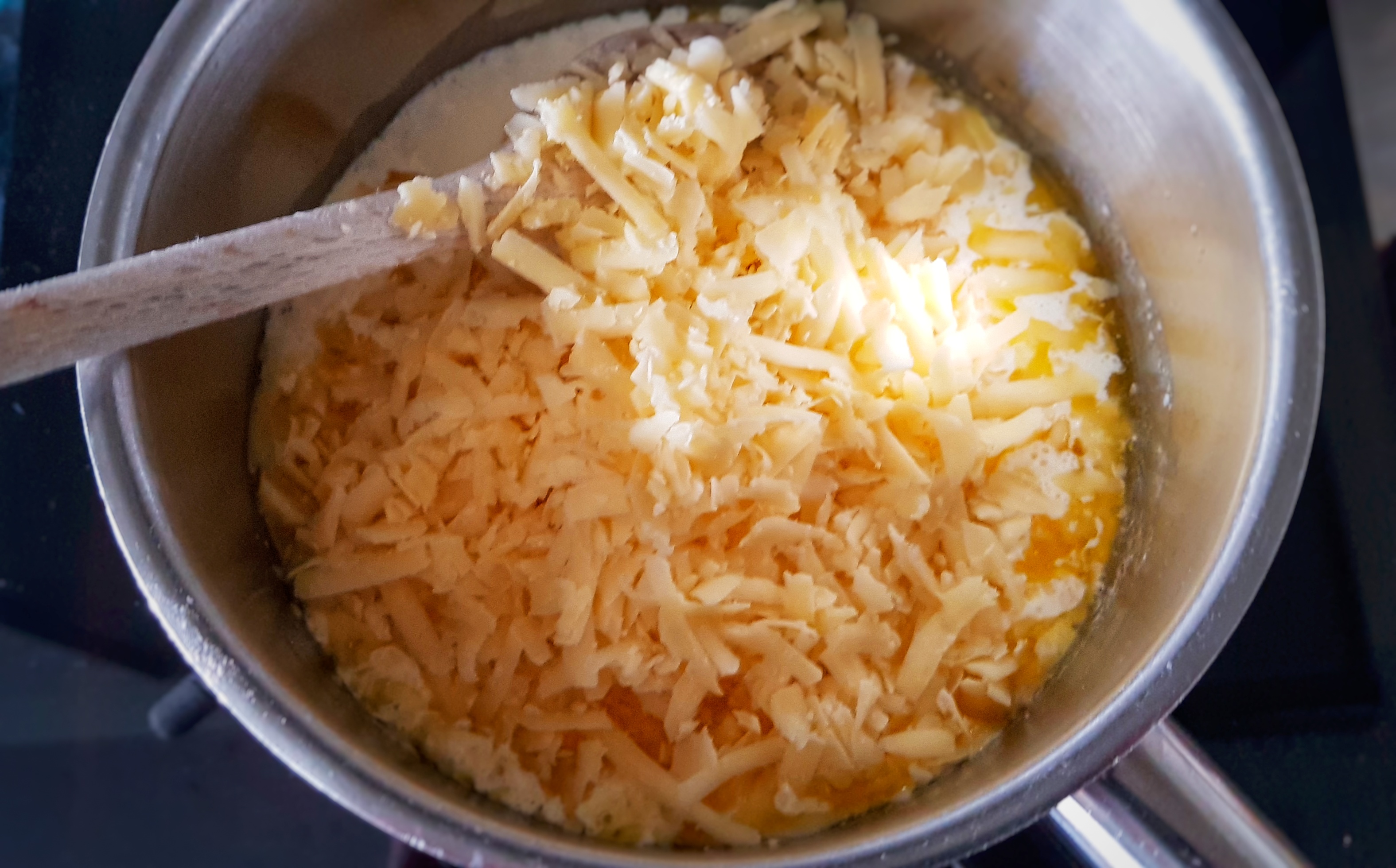
Simmer gently for 10 minutes, stirring occasionally. Then remove from the heat and stir in the cheese. Mix in the Cayenne pepper. Check the seasoning and add more salt and pepper. It’s a good idea to slightly over season the filling to make up for the comparatively bland shortcrust pastry. Finally stir in the cream and allow to cool completely. I usually make my cooked fillings a day or two ahead of time.

Now make the pastry. Rub the fat(s) into the flour. If you are using unsalted butter, add half a teaspoon of salt. If you are making pastry by hand, unless you have forearms like Popeye, use fats that are at room temperature. If using a mixer, use the flat beater and use cold fats straight from the fridge. Either way, once it resembles breadcrumbs add the water a couple of tablespoons at a time until you have a soft but not sticky dough. Knead very briefly, wrap in cling film and leave it rest in the fridge for 30 minutes.

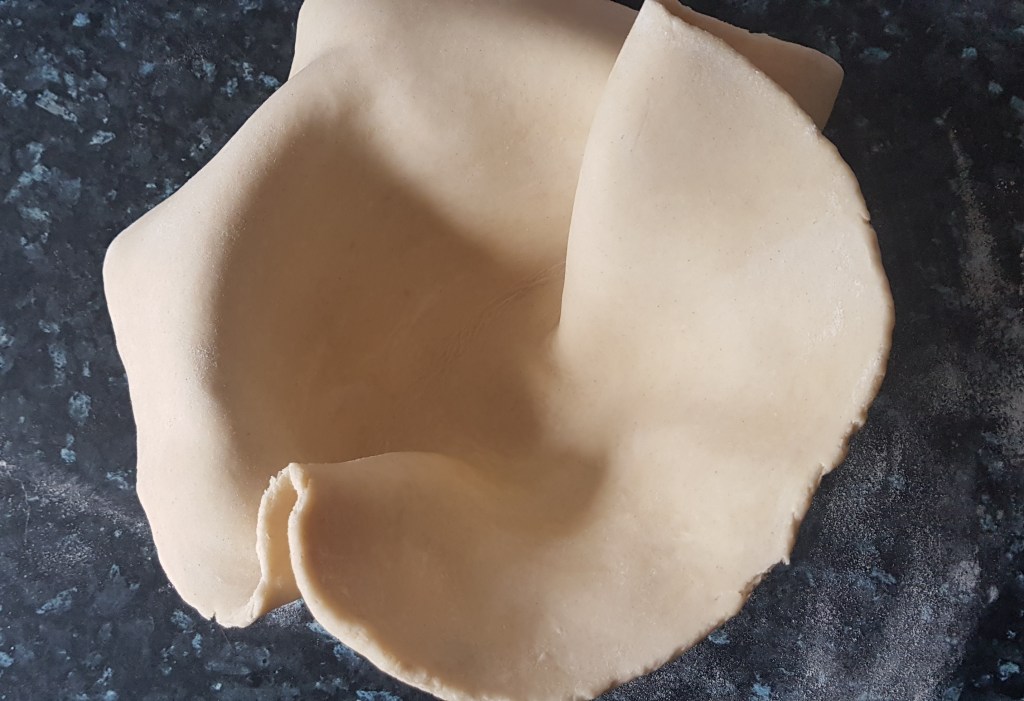
After resting, take around a third of the dough and roll out on a lightly floured worktop. I used an 18 cm cake tin because I like deep-filled pies, but a shallow pie dish or flan ring of around 25 cm would work too. Roll out a third of the pastry into a circle. Leave the pastry to rest again for a minute or so before laying it in the tin. Be careful to press the pastry into the corners without stretching it: lift it in carefully. If using a deep dish as I have it’s helpful to fold the pastry into quarters, placing it in the dish or tin and then unfolding it.

Roll out the remainder of the pastry to make a lid. Cut a steam hole in the centre and set aside.

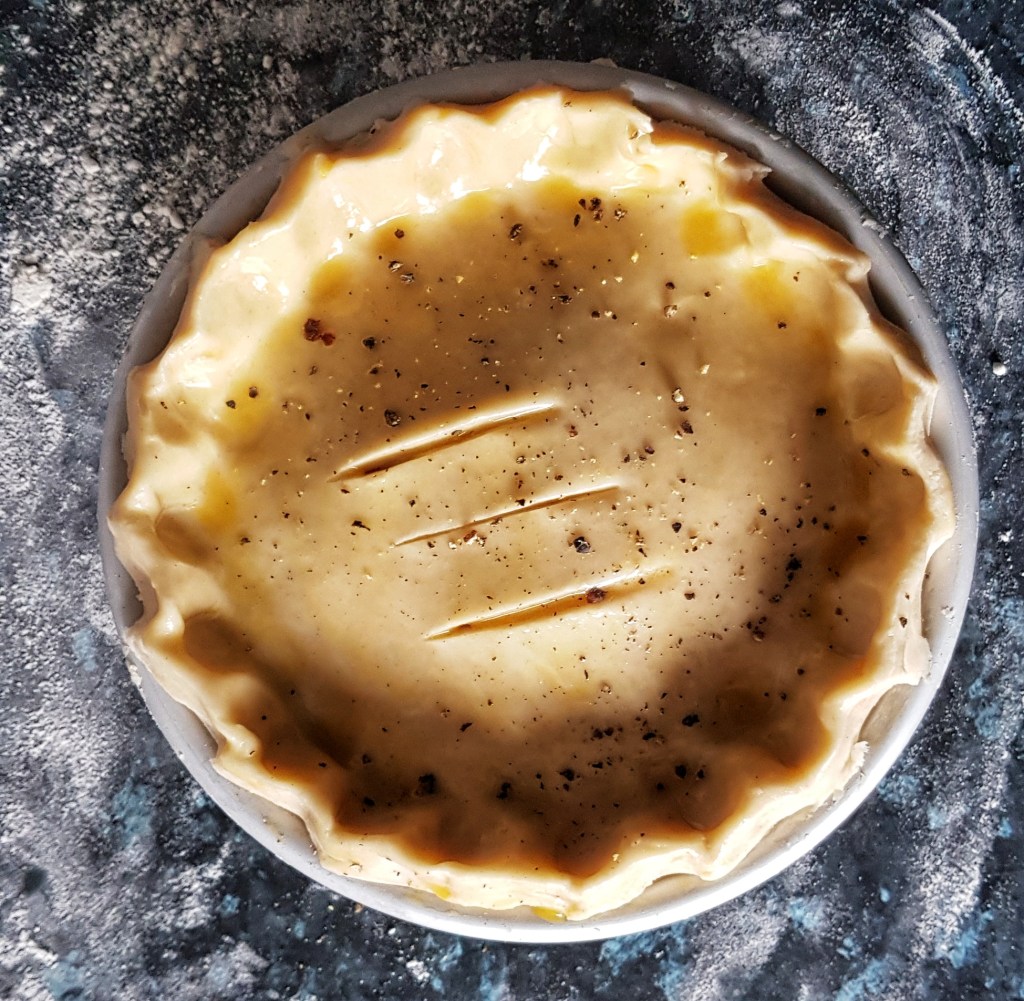
Spoon in the pie filling, but don’t fill it too much – it does expand as it cooks. Now brush the edges with egg wash (I use an egg, or egg yolk, beaten with half a teaspoon of salt). Glue the lid in place, pressing the lid down well.

Trim the excess pastry with a sharp knife and then crimp the edges or use a fork to seal the lid. Paint with more egg wash, and if you like add a bit more black pepper. Place in the fridge to set the pastry.

Preheat your oven to 220°C and pop a baking tray on the centre shelf.

(If you have any left-over pastry and filling, make a pasty with it (see here for my Cornish pasty recipe) and bake it with the pie, or freeze it. Both pastry and filling freeze well separately.)

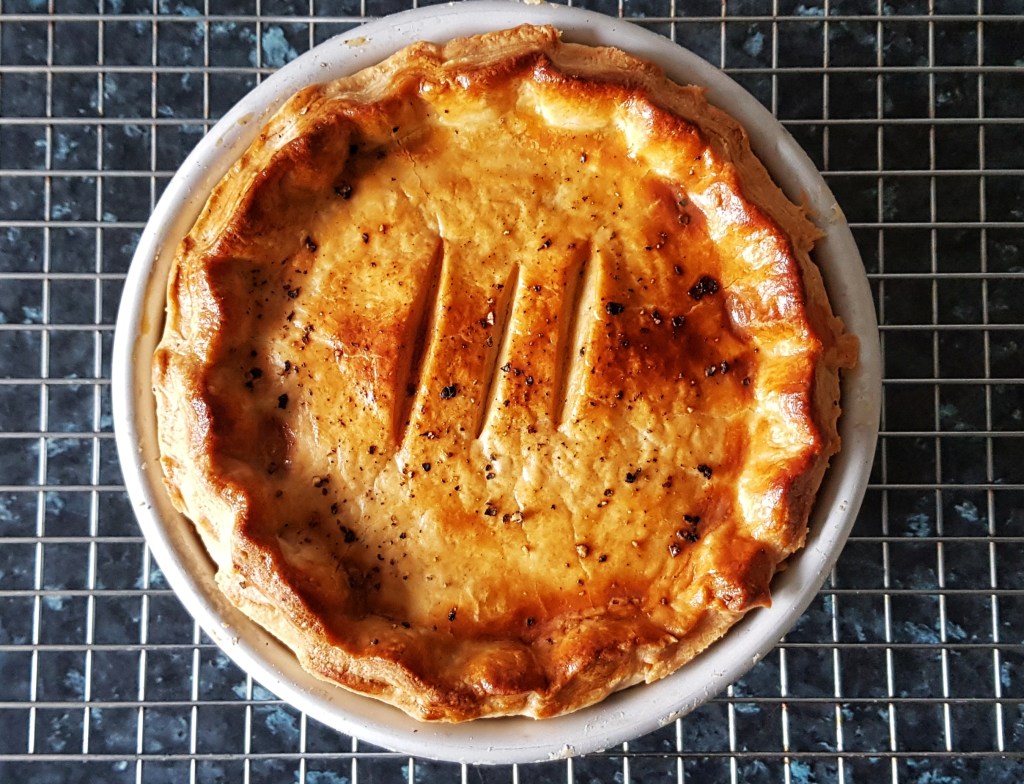
Take the pie out of the fridge and place in the oven on the hot baking tray (this prevents a soggy bottom from developing) and bake for 45 minutes, turning down the heat to 180°C when the pastry is a nice golden brown.

*The poll appeared in the Metro back in 2017: https://metro.co.uk/2017/03/09/the-most-loved-pies-around-the-uk-may-divide-the-nation-6498584/

7 Comments

Filed under baking, Britain, food, General, history, Recipes

A Hot Toddy

Merry Christmas! I hope you are all able to have some fun in yet another strange Yuletide.

At Christmas we often receive bottles of booze we don’t really like as gifts. My most hated alcoholic drink is whisky, but it is delicious in a hot toddy. Well I was recently gifted some and that’s why it is this year’s Christmas boozy drink post.

What do you think of when imagine a toddy? I think of Scotland, whisky. I think of lemons and spices, and its warming effects on those who have just come in from the cold.

There is a popular myth that the drink was invented in the early 18th century at Tod’s Well Tavern, Edinburgh, to warm up the very cold patrons1, but I found that the hot toddy’s history is a little more complicated. The trouble is, toddies were not created in Scotland, not were they hot, and nor were they laced with whisky.

Whenever I am researching the vintage of a recipe, I always visit The Foods of England website – even if the recipe is Welsh, Scots, or Irish. It’s definition is I would say standard: ‘Spirit such as whisky with hot water, sugar, lemon and sometimes spices such as cloves.’ On the webpage is a quote from the 1788 book Grose Classical Dictionary of the Vulgar Tongue which states: ‘Toddy, originally the juice of the cocoa tree, and afterwards rum, water, sugar, and nutmeg.’2

Going by that quote, the drink looks like it has its origins in the West Indian plantations. Note it is not a hot drink.

It turns out, however, to have its roots in the East, rather than the West, Indies, or rather the British Raj. There was a Hindi drink known as taddy, which was made from slightly fermented palm sap since at least the early 17th century. During the British occupation of the country in the 18th century, the fermented juice was used to ‘water down’ expensive beer3: expensive because at the time it was difficult to make in hot climates, and therefore had to be imported (this is before the invention of Indian pale ale, or IPA).

By 1820 the drink had evolved into a mixture of alcohol, sugar, ginger and lime.4 It wasn’t hot, but the delicious drink spread through the British Empire, changing depending upon what was available. The palm sap swapped for ‘the juice of the cocoa tree’ in the West Indies, and perhaps the Scots were the first to think of warming it up? Who knows?

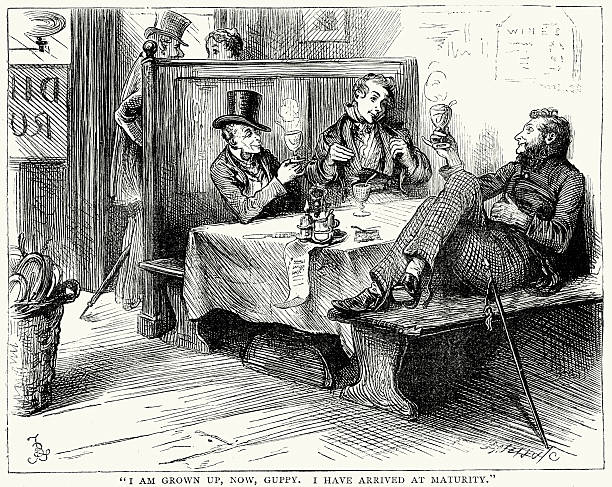
Drinking hot toddies in Charles Dickens’s Bleak House

However it became the classic whisky-based drink, it certainly became popular as a cure-all for colds and flu. And why not? There’s the lemon with its vitamin C, honey or sugar making the drink viscous and soothing, and hard liquor – nature’s anaesthetic. There may be an element of practical truth to this; those who drink a moderate amount of alcohol are able – on average – to fend off colds better than those who drink heavily, and those who do not drink at all.5

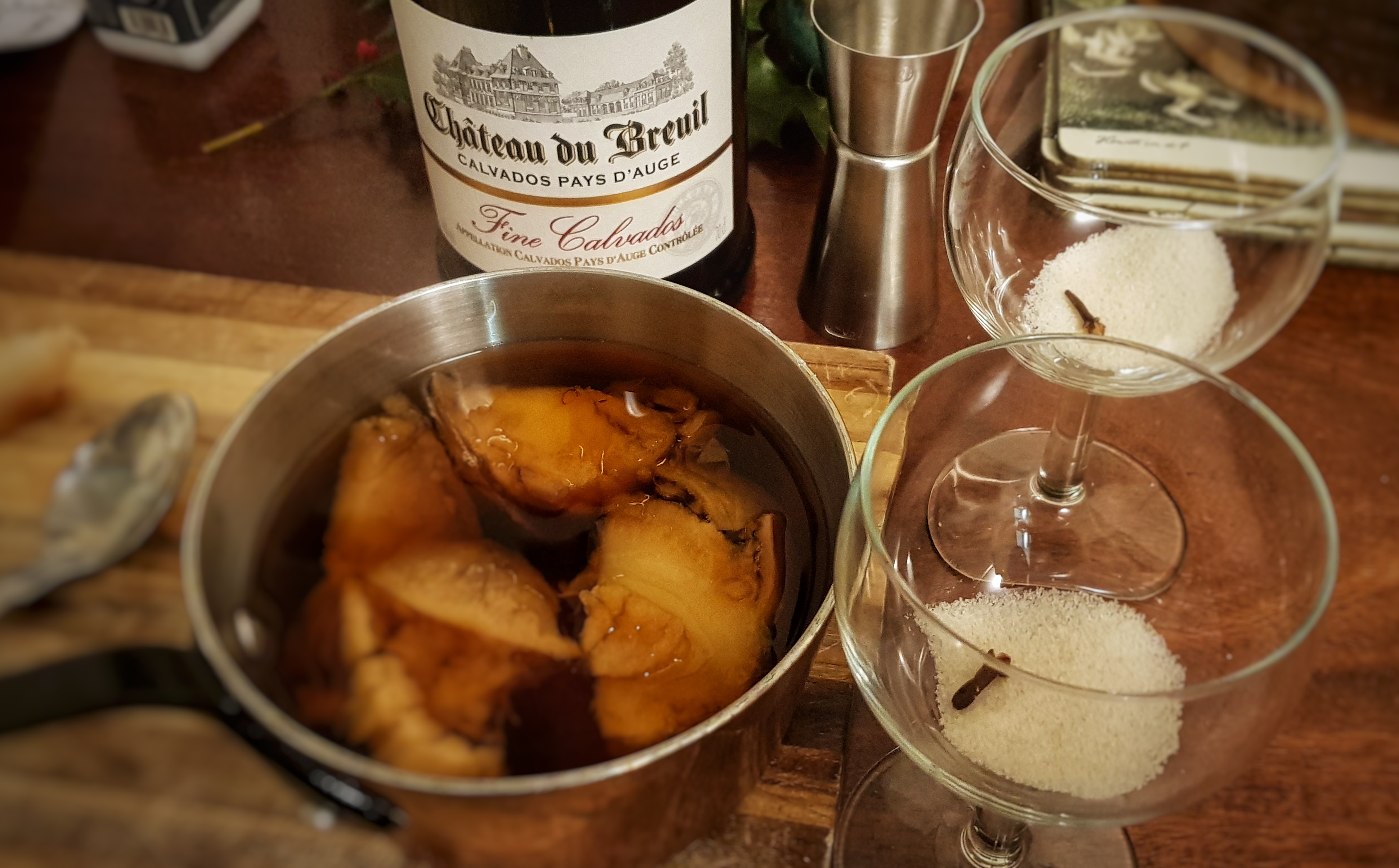
So what should I put in my recipe? I turned to another favourite of mine: the classic and comprehensive Savoy Cocktail Book (1930). Disappointingly, there are just three toddy recipes, and of those only one is hot and contains no whisky (Calvados is the booze of choice) and uses roasted apples. The cold toddies contain whisky only as an option.6 In the end I came up with my own, I had a play around and I think I have the proportions of ingredients just right. I also tried the Calvados toddy, which was also a great success.

Here are my recipes for both cocktails. Let me know if you give them a go.

Whatever you do, be safe, eat and drink plenty, and do as little as possible this Christmas. Thanks for reading my posts, trying the recipes, leaving comments, listening to the podcast, and for supporting me this year. I have the best followers! I’ll be back on 1 Jan 2022 with my usual review of the year.


If you like the blogs and podcast I produce, please consider treating me to a virtual coffee or pint, or even a £3 monthly subscription: follow this link for more information.


A classic hot toddy

Per person:

1 shot (25-30 ml) whisky (or rum or brandy)

2 tsp honey or sugar

Juice of quarter of a lemon

75-100 ml hot water (or tea)

1 cinnamon stick (optional)

1 slice of lemon

Freshly grated nutmeg (optional)

Put whiskey, honey or sugar, lemon juice and most of the hot water, or tea, into a small glass or coffee cup. Stir with a cinnamon stick, or a spoon, to dissolve the honey.

Taste and see if you need to add more water (I go with the full 100 ml).

Garnish with a lemon slice, the cinnamon stick and a few rasps of freshly-grated nutmeg.

Calvados hot toddy

This is adapted from the entry in The Savoy Cocktail Book. I always buy a bottle of Calvados at Christmastime, but I think rum or brandy would be good substitutes.

For four:

1 dessert apple

400 ml hot water or tea

2 tbs sugar

4 cloves

4 shots (100-120 ml Calvados)

Freshly grated nutmeg

Preheat your oven to 180°C. Take your apple and make an incision around the apple two-thirds of the way up, cutting just the skin. Place on a baking sheet and roast until, pale brown and the juices have begun to caramelise, around 40 minutes.

In a small saucepan add the hot water, sugar and cloves. Slice the apple in half, roughly chop one half and place in the pan. Keeping the heat very low, allow the flavours to steep in the hot water for around 10 minutes.

Place a shot of calvados in four small glasses, and divide the hot steeped liquid between the four cups, passing through a tea strainer or small sieve.

Garnish each with a clove and a neat piece of roasted apple cut from the reserved piece. Grate a little nutmeg over the top and serve.
References:

  1. Schofield, J. & Schofield, D. Schofield’s Fine and Classic Cocktails: Celebrated Libations & Other Fancy Drinks. (Octopus, 2019).
  2. Toddy. Foods of England http://www.foodsofengland.co.uk/toddy.htm.
  3. M., N. Warding Off Jack Frost: The History of the Hot Toddy. Arcadia Publishing https://www.arcadiapublishing.com/Navigation/Community/Arcadia-and-THP-Blog/November-2018/Warding-Off-Jack-Frost-The-History-of-the-Hot-Tod.
  4. Burton, D. The Raj at the Table: A Culinary History of the British in India. (Faber & Faber, 1993).
  5. Barrett, B. Viral Upper Respiratory Tract. in Integrative Medicine (ed. Rakel, D.) (Saunders Elsevier, 2007).
  6. The Savoy Cocktail Book. (Constable & Co., 1930).

5 Comments

Filed under Britain, Christmas, Festivals, history, Recipes, Uncategorized

Rum Butter & Brandy Butter

This post complements the episode ‘Christmas Special 2021: Christmas Pudding’ on The British Food History Podcast.

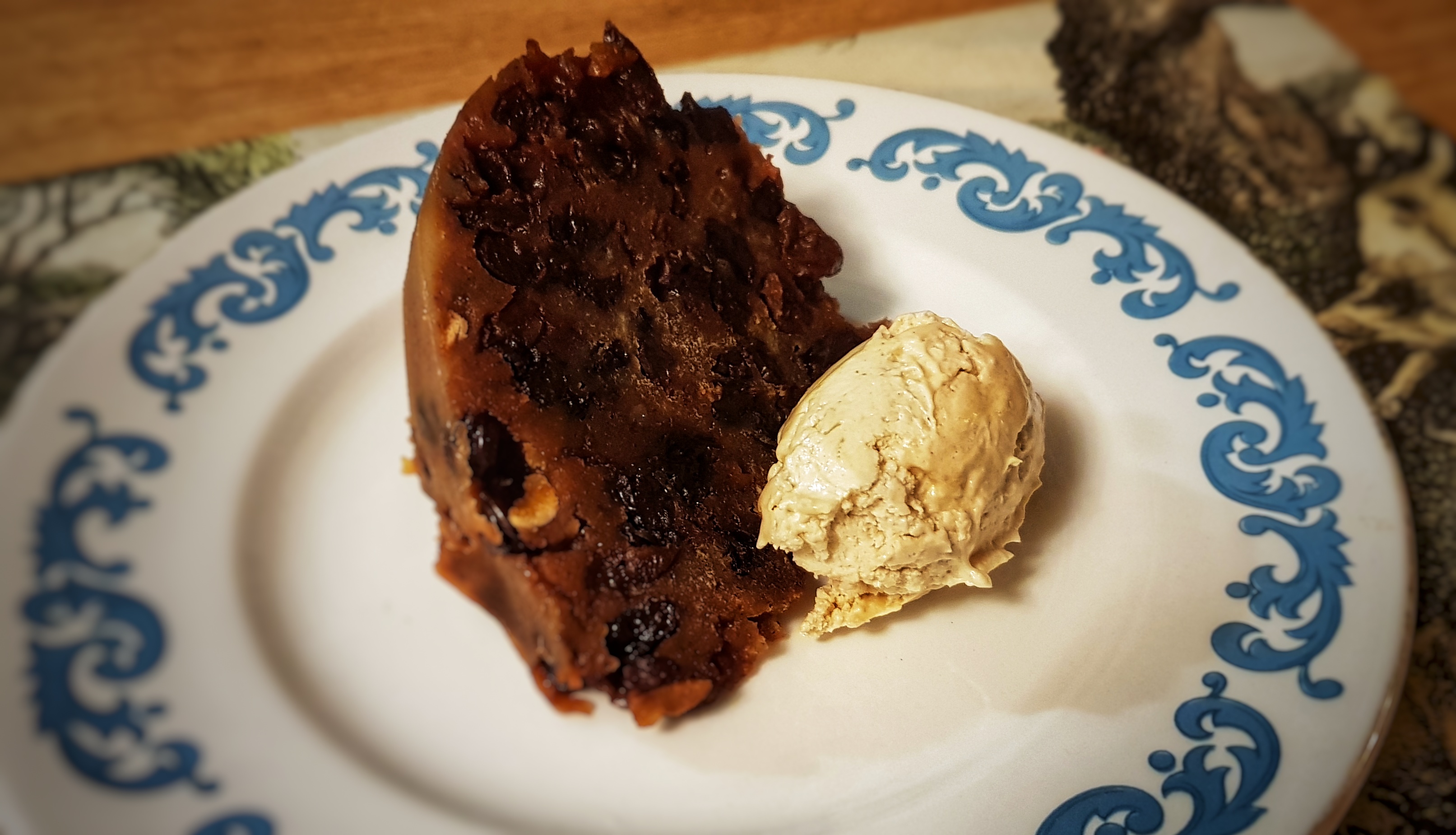
I used to believe that brandy butter – that infamous accompaniment to Christmas pudding and mince pies – was far too rich and sweet, and always preferred custard. I made a traditional Christmas pudding from a 19th century recipe and because it wasn’t as rich as modern day puds, I found the buttery sauce complemented the dessert perfectly – though I still prefer the rum butter.

Subscribe to get access

Read more of this content when you subscribe today.

To subscribe please visit the Support the Blog & Podcast tab.

7 Comments

Filed under Blogs, Britain, Christmas, cooking, Festivals, food, General, history, Puddings, Recipes, Uncategorized

To Make a Christmas Pudding Part 2: the Big Day

This post complements the episode ‘Christmas Special 2021: Christmas Pudding’ on The British Food History Podcast.

On Stir Up Sunday I made my Christmas Pudding, using Sam Bilton’s Great Aunt Eliza’s plum pudding recipe, and now it is time to cook it and get it ready to serve for the big day. If you missed the first post click here to catchup.

I fed the pudding a couple of tablespoons of rum (but brandy is also good) twice, and I found the best way to do this was the untie the pudding, open the top and sprinkle in the rum, before retying with fresh string.

On Christmas Day, get your big pot of boiling water just like you did for the first boiling. Simmer the pudding for 2 hours, making sure the pudding doesn’t touch the base of the pot and scorch.

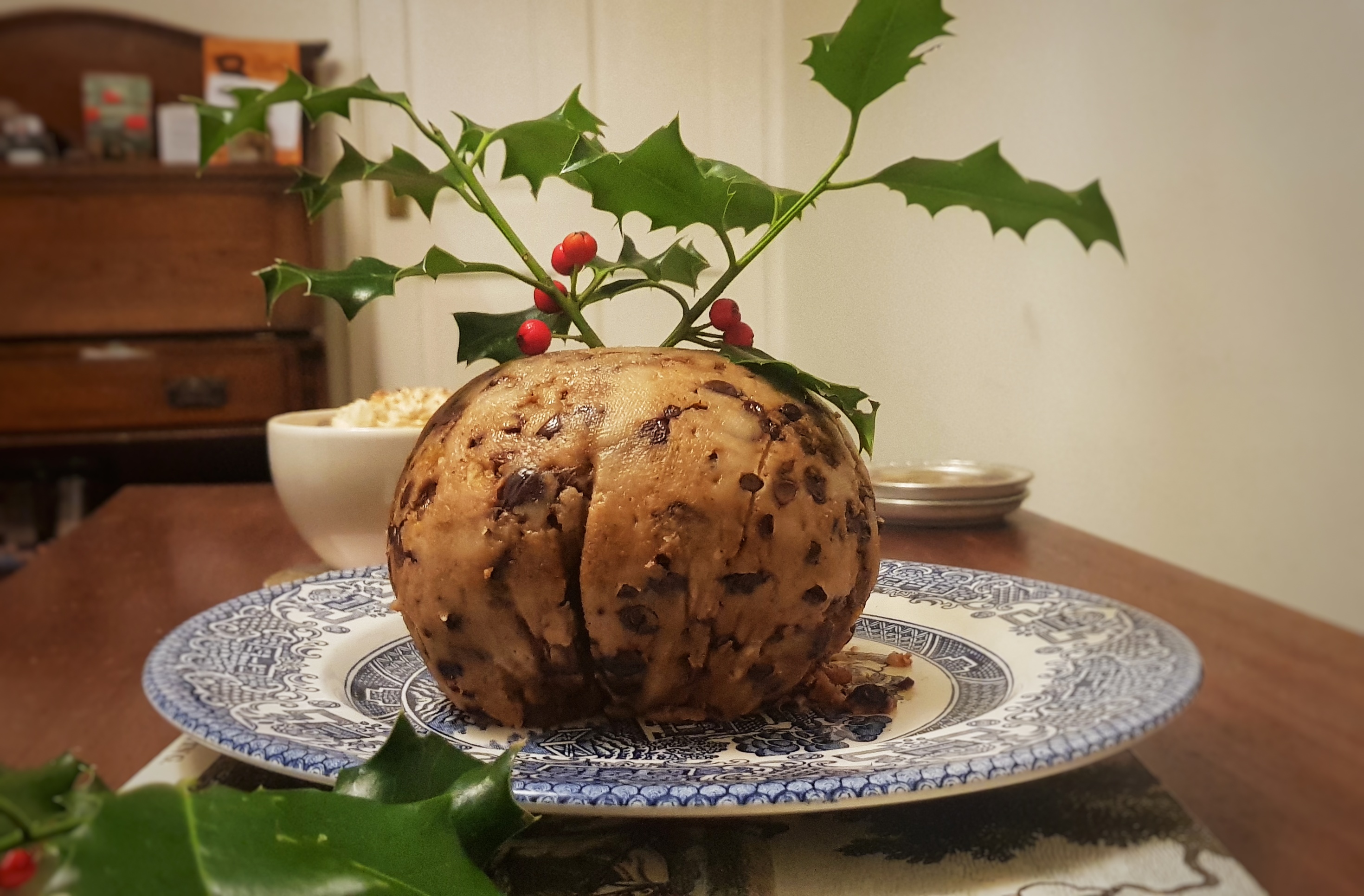
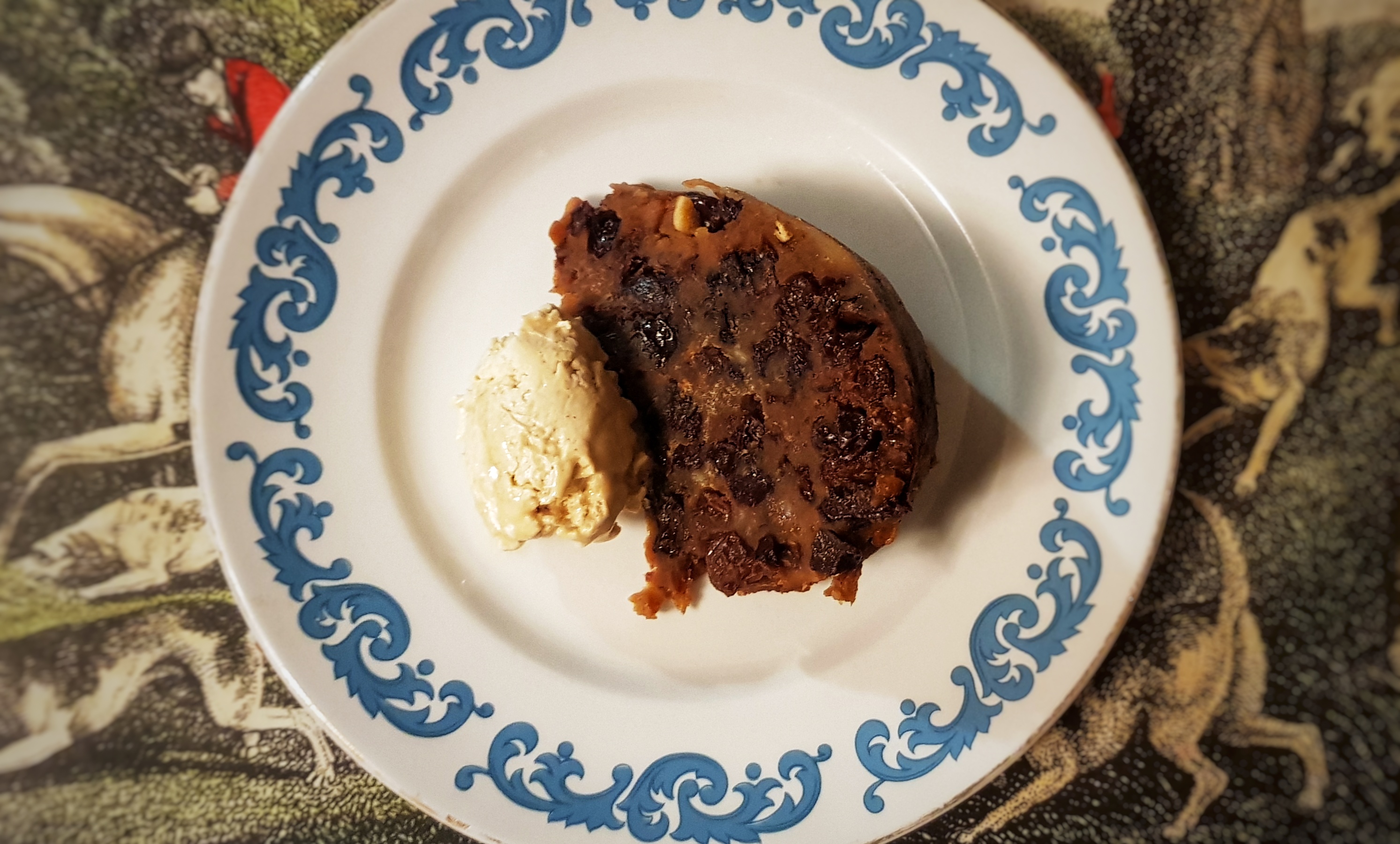
When ready, remove from the pan and gingerly cut away the string and carefully unwrap the pudding; don’t worry too much about it breaking because it develops a skin made from the flour that had been dredged on the cloth before its first boiling, keeping it all together. Pop it on a serving dish with a sprig of holly.

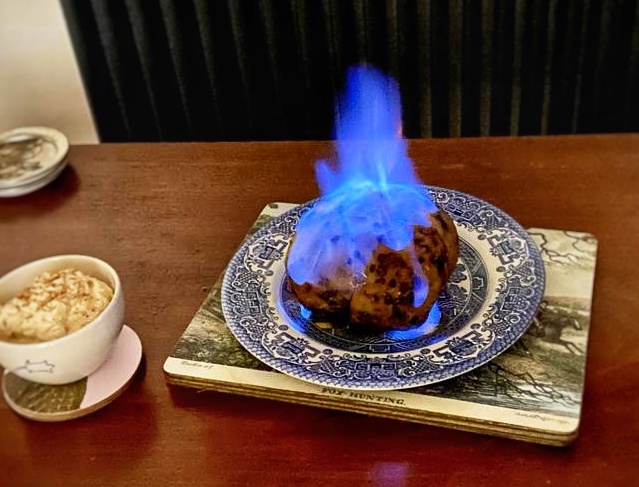
When you want to serve it, flame with rum or brandy, turn the lights down and carry it into the dining room. There will be applause.

I served the pudding with rum butter, but you can also serve it with brandy butter (which I must admit, I don’t like as much as the rum butter), or good old custard. I’ll be publishing a post tomorrow with my recipe for brandy or rum butter.


If you like the blogs and podcast I produce, please consider treating me to a virtual coffee or pint, or even a £3 monthly subscription: follow this link for more information.


The pudding was delicious, I must say, and it will forever be my standard, so thanks again to Sam Bilton for her letting me use the recipe.

Listen to the podcast episode for more information, including the history and folklore surrounding Christmas pudding, plus a cooking spot, and a handy guide to flaming your pudding safely and effectively!

1 Comment

Filed under baking, Britain, Christmas, cooking, Desserts, Festivals, food, General, history, Podcast, Puddings, Recipes, The Victorians

To Make a Christmas Pudding Part 1: Stir Up Sunday

This post complements the episode ‘Christmas Special 2021: Christmas Pudding’ on The British Food History Podcast.

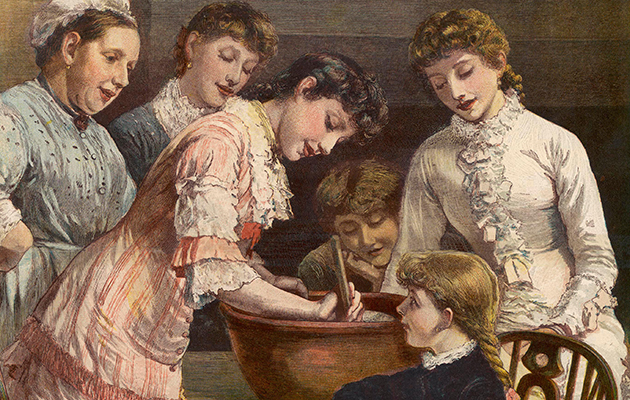
Today is Stir Up Sunday, traditionally the day Christmas pudding is made. The day was also a cue to local grocers to begin to make their orders and get ready for the 12-day long Christmastide feast.1 As they mixed, the children would sing:

Stir up, we beseech thee

The Pudding in the pot,

And when we get home,

We’ll it it all hot!

Stir Up Sunday is always the Sunday before Advent; which isn’t 1 December despite what manufacturers of Advent calendars would have you believe. Advent actually begins on the sixth day before Christmas, so this year (2021) Advent begins on 28 November. The day has a deeper meaning beyond reminding us to prep our puds; the children’sl song was sung on the day comes from a hymn: Stir up, we beseech thee O Lord the wills of my faithful people… and is call for everyone to stir up their pious and spiritual feelings in preparation for Advent – a period of fasting and reflection before the festivities begin.

When you make your Christmas pudding (whichever day you make it on) there are various superstitions which should be held. First, each member of the family should add at least one ingredient to the mix, give it a good stir and make a wish. The stirring must either go from east to west (like the Sun).2 The pudding should be made up of 13 ingredients to represent Jesus and his 12 disciples.

There are trinkets too of course: a sixpence to represent financial success or good luck in the New Year, a ring to represent romance or marriage, or a thimble – bad luck! No romance for you, spinster!


If you like the blogs and podcast I produce, please consider treating me to a virtual coffee or pint, or even a £3 monthly subscription: follow this link for more information.


Great Aunt Eliza’s Christmas Pudding

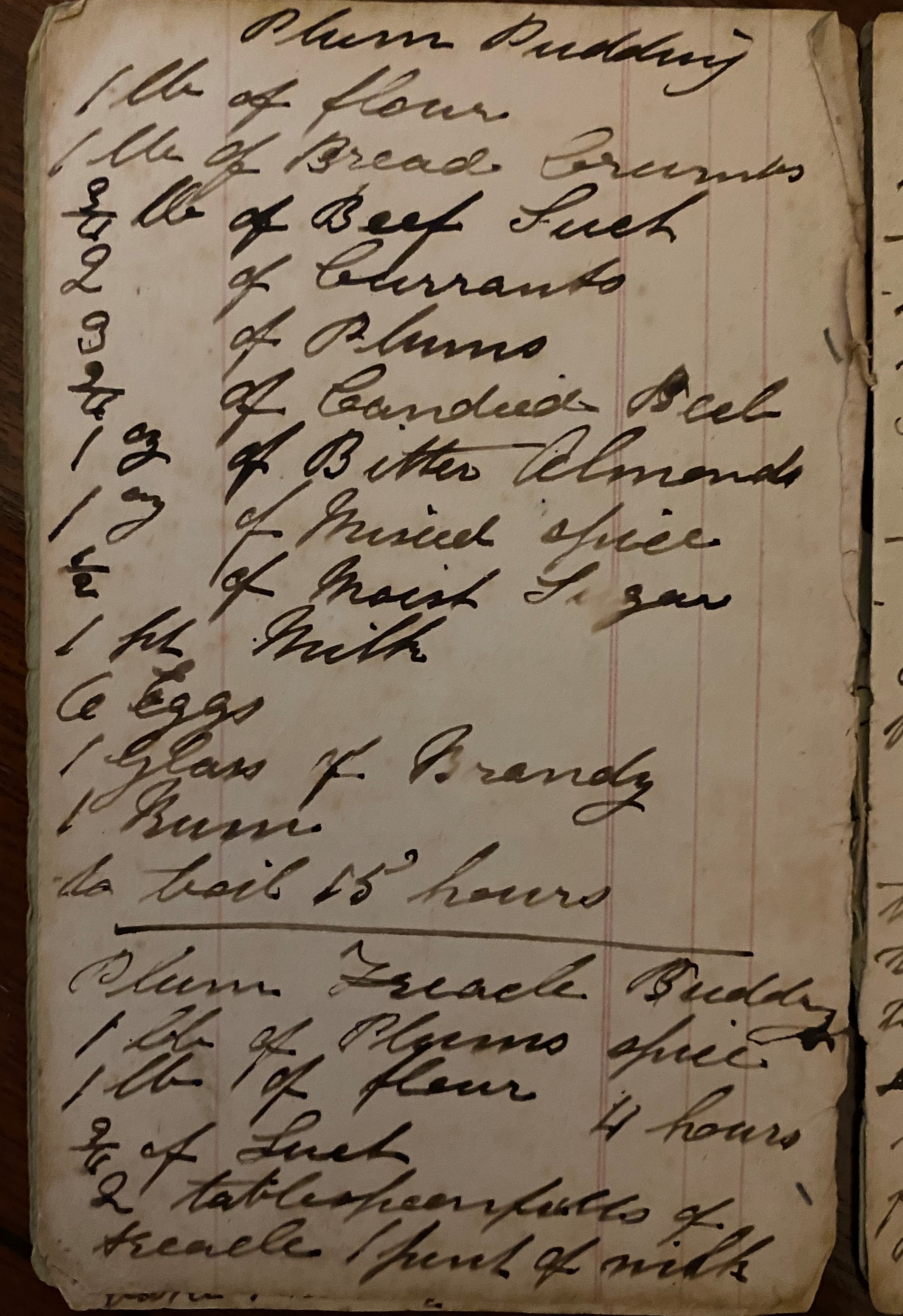
I love Christmas pudding, but whenever I’ve made my own (I have used Delia Smith’s and Jane Grigson’s recipes in the past) I’ve always been rather disappointed. I reached out to Twitter for inspiration and food historian (and podcast alumnus) Sam Bilton very kindly let me use her Great Aunt Eliza’s recipe taken from her handwritten recipe book. Sam has cooked it for a demonstration at Petworth House, West Sussex.3 Click here to find out more about Sam’s Great Aunt, and how she adapted and recreated the recipe. Here’s the original:

Note there are indeed 13 ingredients!

I decided to adapt the recipe myself, only later looking at Sam’s interpretation and we took a similar approach, which is pleasing.

I took the recipe and converted it into metric and then divided everything by 3, making a huge pudding with a 15 hour boiling would have been craziness. I could have made one good-sized pudding from my one-third mix, but decided to make 2 smaller ones. I used vegan suet because I already had that in. Fresh beef suet would have been best, but there’s no point buying more if there’s some already in the cupboard.

I hedged my bets on the plums and used half prunes and half raisins, and swapped out almond extract for the bitter almonds. Feel free to toss in some slivered almonds for texture though.

Makes 2 x 800 g puddings:

150 g plain flour

150 g breadcrumbs from a stale loaf

120 g suet

300 g currants

225 g raisins

225 g prunes, roughly chopped

40 g candied peel

2 tsp mixed spice

75 g soft dark brown sugar

½ tsp almond extract

60 ml milk

40 ml brandy

40 ml rum

2 eggs

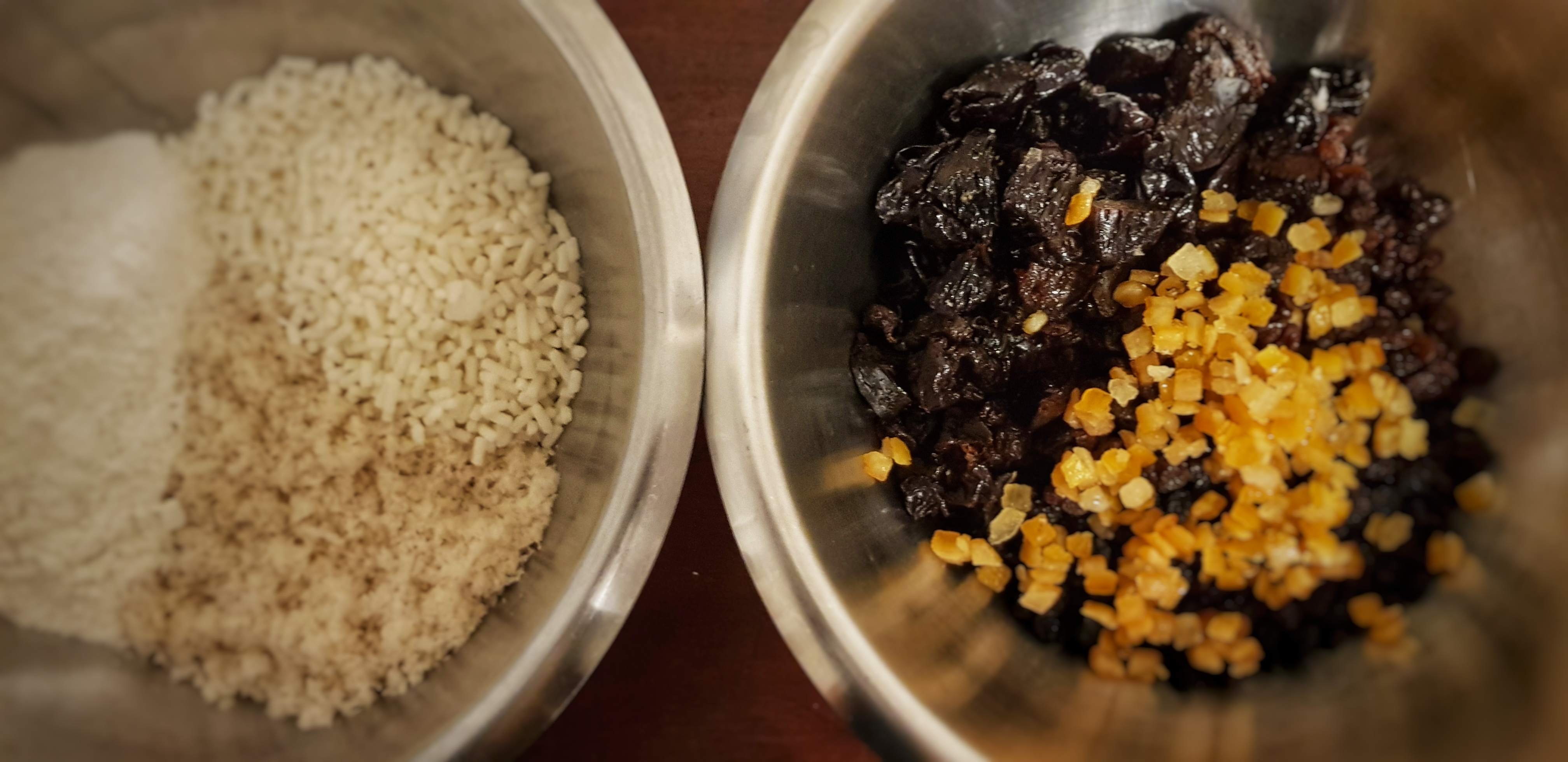
Making a Christmas pudding batter couldn’t be easier: mix all of the dry ingredients in a large bowl, i.e. everything on the list from plain flour down to the soft dark brown sugar, then add all of the remaining wet ingredients to a jug and give them a good whisk.

Make a well in the centre and pour in the eggy mixture then stir until combined. If after a few minutes’ mixing things still seem a little bit dry, add an extra slug of milk, brandy or rum. Mine needed a bit more rum.

Cover the mixture and leave it somewhere cool overnight to let the flavours develop – if you’re in a rush, leave for an hour.

Next day (or next hour) make you puddings. First get a large pot of water on the boil; deep enough for two puddings to cook without touching the base of the pot. Next, cut two pieces of muslin (cheesecloth) into rectangles of around 30 x 60 cm, place in a bowl and pour boiling water over them. When cool enough to handle, remove one and squeeze out excess water. Fold it in half to make a square shape, then lay it in a bowl.

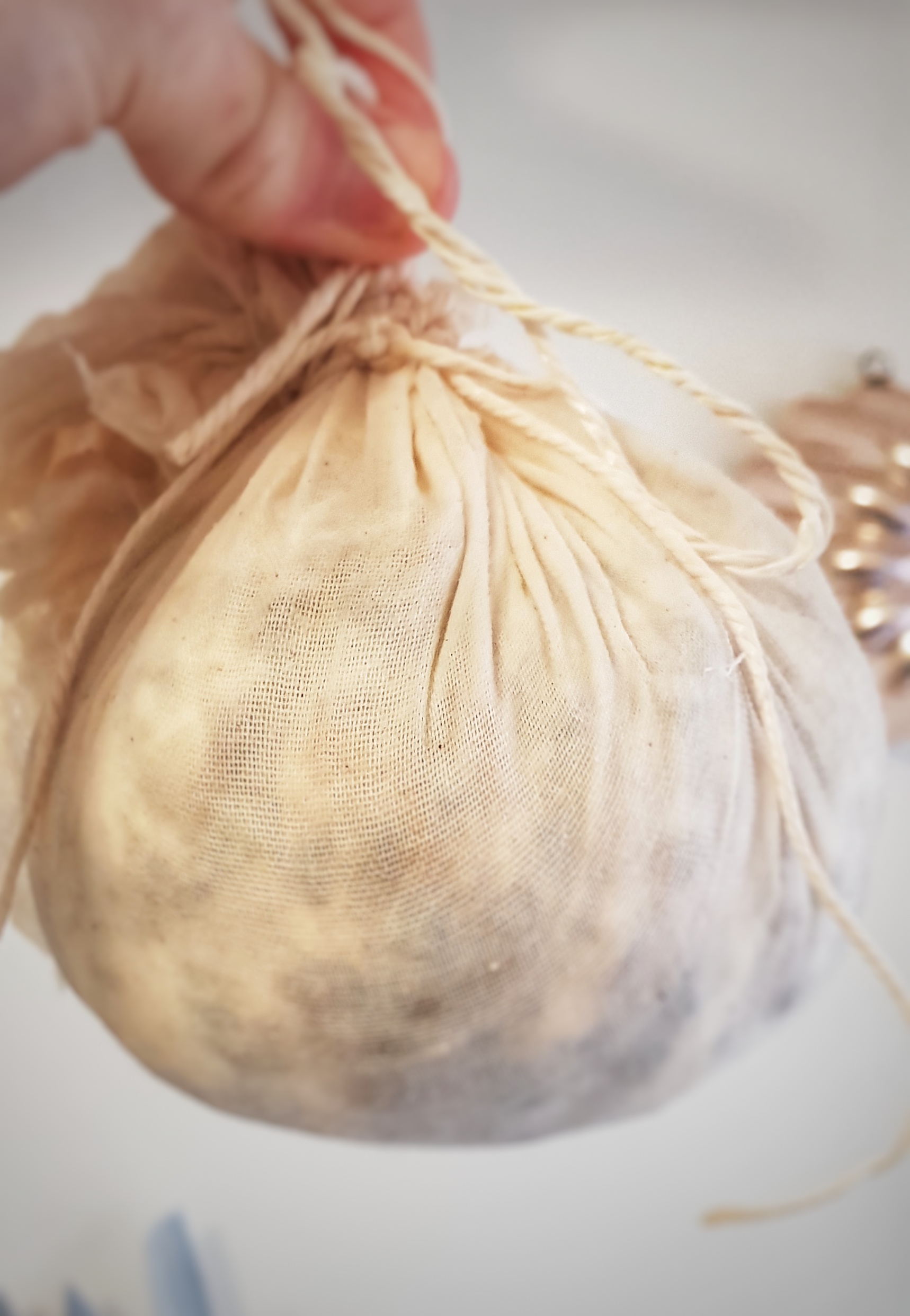
Dust the muslin very well with plain flour, leaving no bare patches, then spoon in half the mixture, then gather up the corners and twist to tighten. Use some good quality string to tie the pudding tight. If there are folds in the cloth, they can be easily smoothed out. Repeat with the other piece of cloth.

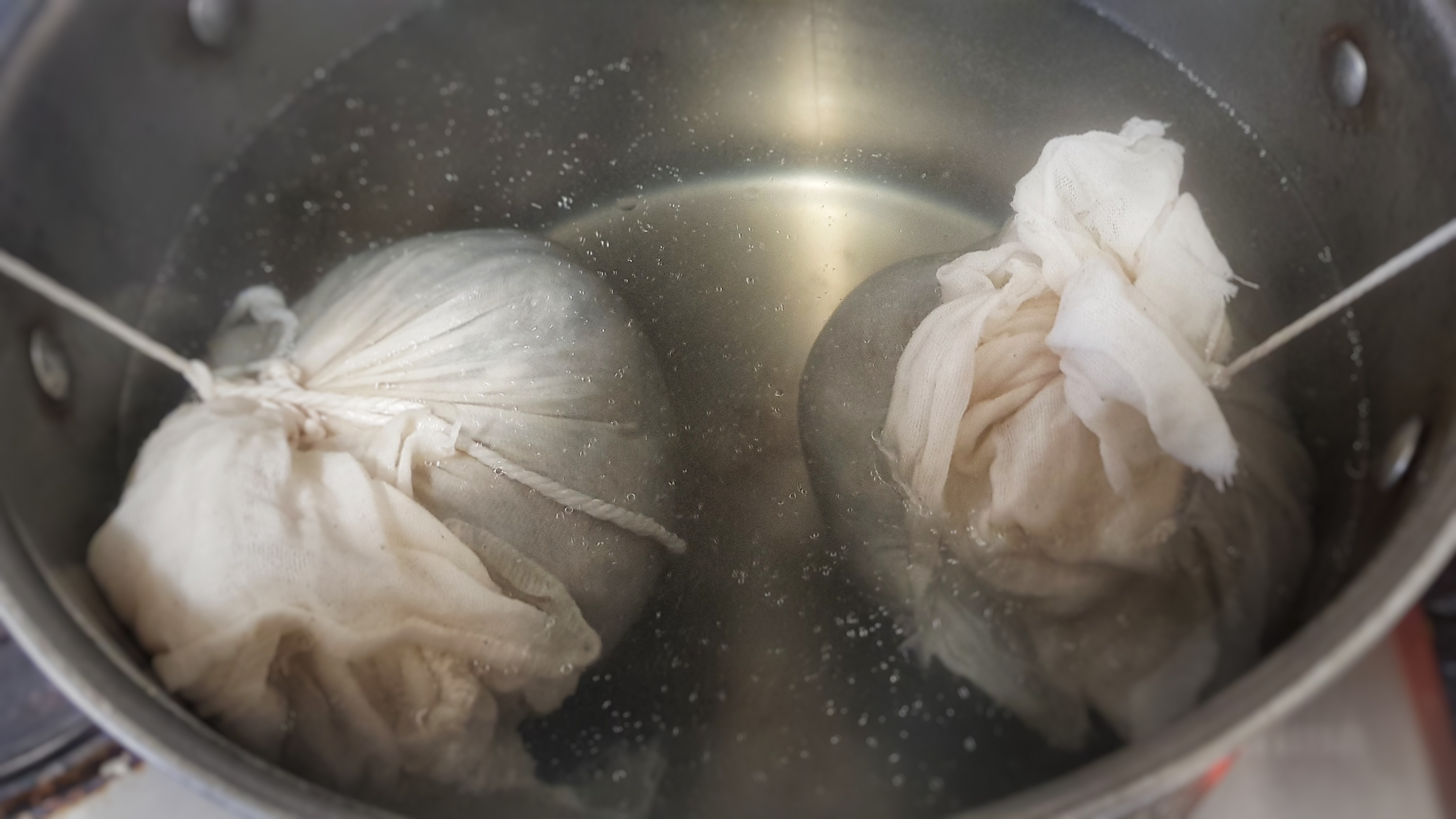
Tie a longer piece of string to your puddings, drop them in the boiling water, and tie them so that they are nicely bobbing about in the water and not touching the bottom. Cover, bring the water back to a boil, and let things cook on a simmer for 2½ hours.

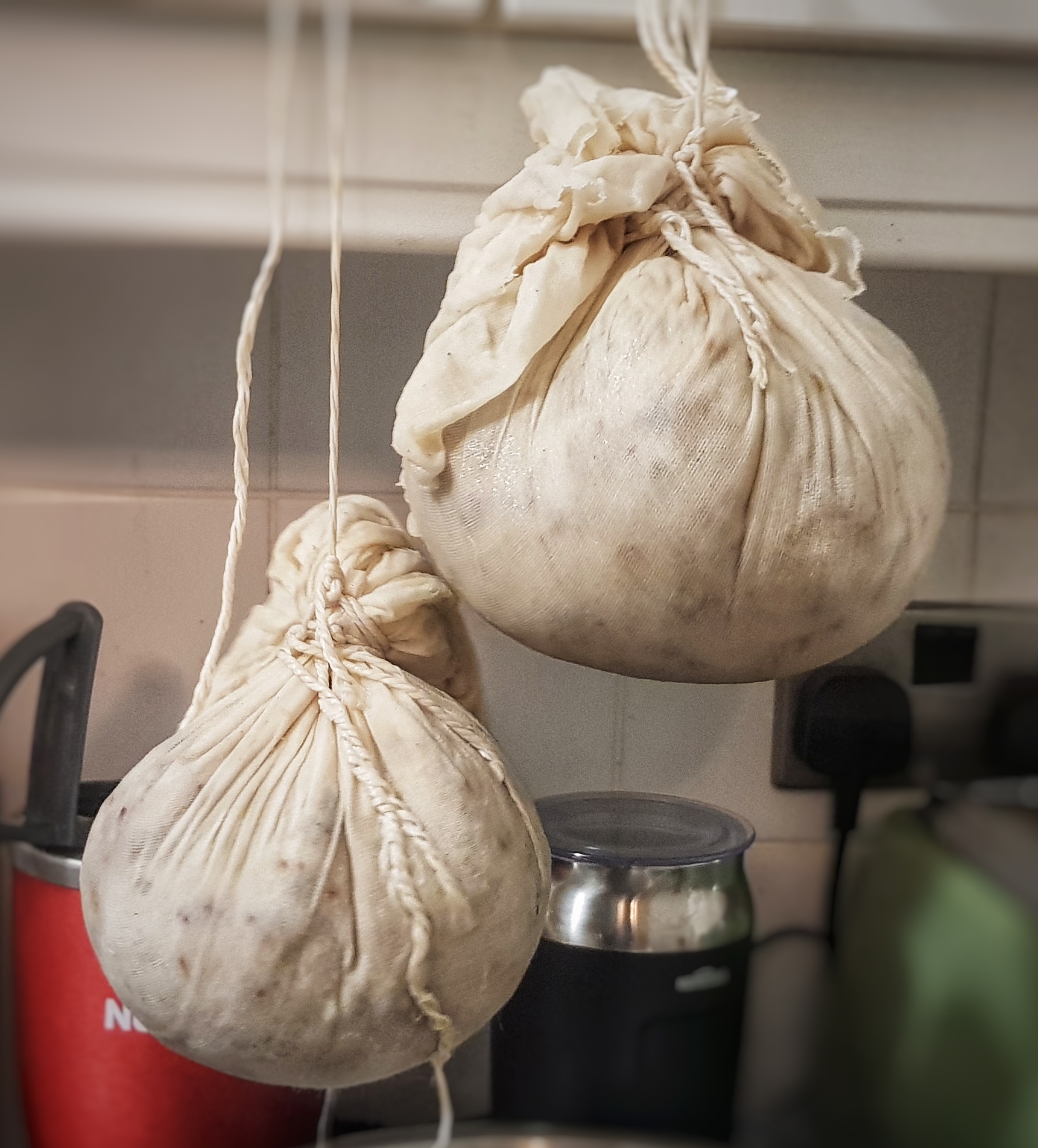
Remove and cool on a cooling rack and keep in a tub or tin. You can feed the puddings a few times if you like with more brandy or rum by untying the top and pouring some in, or by rolling them in a few tablespoons – they quickly absorb it!

Then it’s just a case of giving it a second boil on the big day…I’ll post that a few days before Christmas Day, along with a recipe for brandy or – even better – rum butter to go with.

References

1.           Simpson, J. & Roud, S. A Dictionary of English folklore. (Oxford University Press, 2000).

2.           Kerensa, P. Hark: The Biography of Christmas. (Lion Hudson Ltd., 2017).

3.           Bilton, S. A Proper Plum Pudding. Comfortably Hungry http://www.sambilton.com/plum-pudding/ (2019).

5 Comments

Filed under baking, Britain, Christmas, food, General, history, Podcast, Puddings, Recipes, Uncategorized

Cobnuts, Filberts & Hazelnuts (& Cobnut Cake)

One of my favourite seasonal foods are fresh Kentish cobnuts, and they are in season right now, so I thought I’d write a little post about them in case you see them at your local greengrocer’s shop. In the north of England they are difficult to get hold of, and when you do see them they cost a small fortune, but luckily for me, I was in London last weekend and spotted a fruit seller outside Borough Market selling big punnets at just £3.50 a pop. Up North, I’d have had to remortgage.

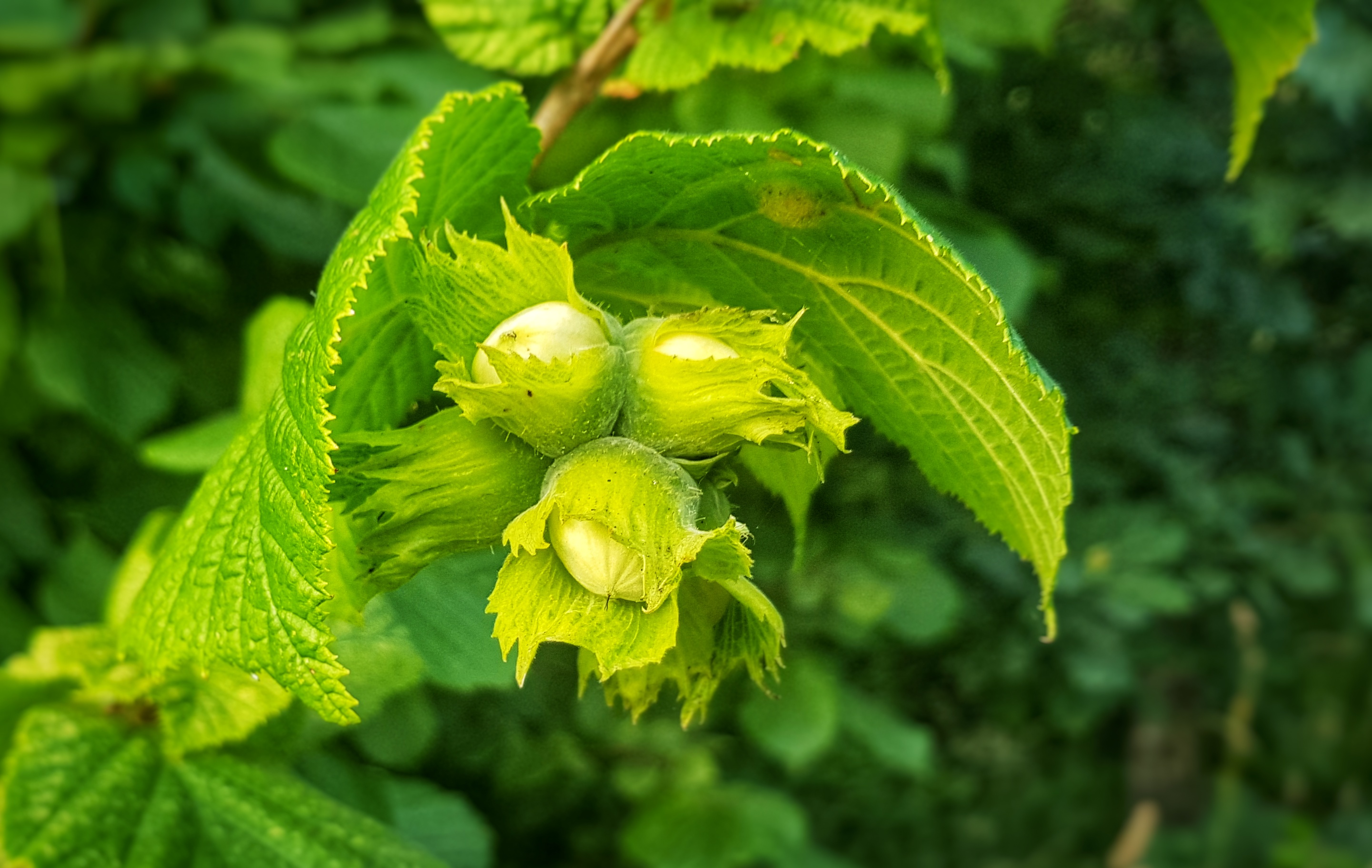
Cobnut season runs from late August to October in the UK, and they can – or, at least, their wild cousins can – be found growing on wild hazel trees all around the country – in fact they grow in abundance near me in Manchester. Unfortunately, the squirrels beat me to them every year. Nutting season traditionally started on 20 August on St Philibert’s Day.1

Wild, unripe Mancunian hazel/cobnuts

There’s a little confusion regarding nomenclature here, as is so often the case, some call these nuts cobnuts, others filberts, and some call them simply hazelnuts. Are there any real differences between the three or are they just regional names for the same thing? Well that all depends upon whom you ask, and when in time you ask.

Let’s start with the wild tree, the hazel, or to give its Latin name Corylus arellana. These nuts are hazels, or hazelnuts, they are elongate and flatter that the supermarket variety, but they still have the same smooth shells. This is what many people today would call a cobnut. This common tree produces nuts that was an important foodstuff for Neolithic humans, and they have been cultivated since Roman times.2,3 These cultivated trees were bred for greater yields and larger nuts changing making them more spherical in shape. These round nuts were called cobs, or cobnuts, and they are what we would call hazelnuts today. They grow so well in Kent that at one point 7000 acres of land was put aside for their cultivation, plenty to export a significant number to the United States.3

Okay, let’s, for the sake of argument, say that hazels are the wild nuts and cobnuts are their cultivated cousins, where do filberts fit in? Well, these are a larger cultivated nut from a completely different species of hazel (C. americanus).4 They were regarded as a rather upmarket orchard fruit, whilst cobnuts were considered more suitable for the hedgerow (or did they mean hazels!?).3

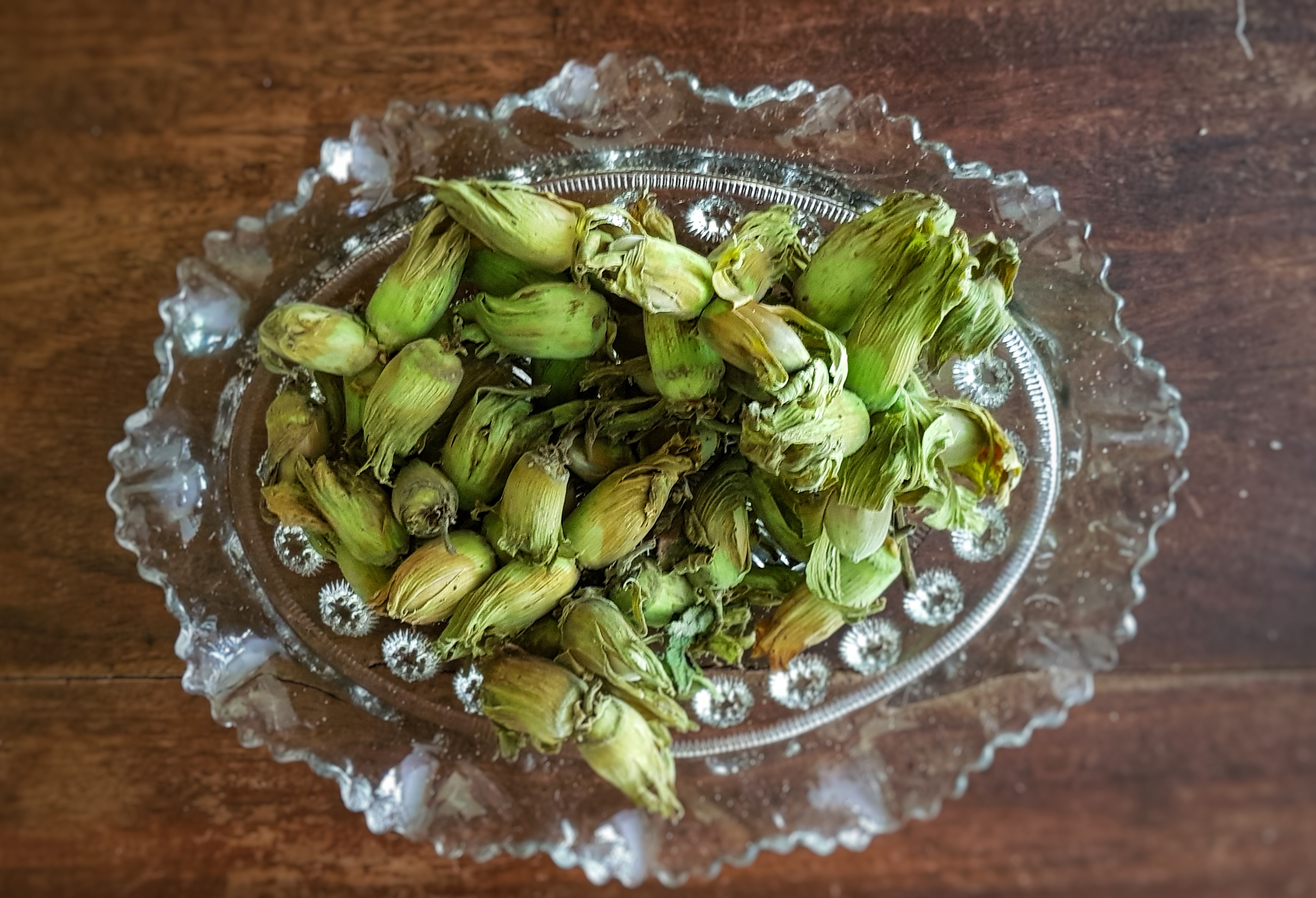
Today, cobnuts appear to be a catch-all term for any of the elongate forms of hazelnuts. The great thing about getting them fresh is that they have a lovely crisp, refreshing flavour, rather like water chestnut but with a mild hazelnut flavour. They are still covered in their green protective coats (shucks) and sometimes even the shell is still green. They store well and can be dried and eaten months later. An alternative to drying is to shell the fresh kernels and store them in honey. I expect the fresh kernels would make very successful pine nut replacement in pesto.


If you like the blogs and podcast I produce, please consider treating me to a virtual coffee or pint, or even a £3 monthly subscription: follow this link for more information.


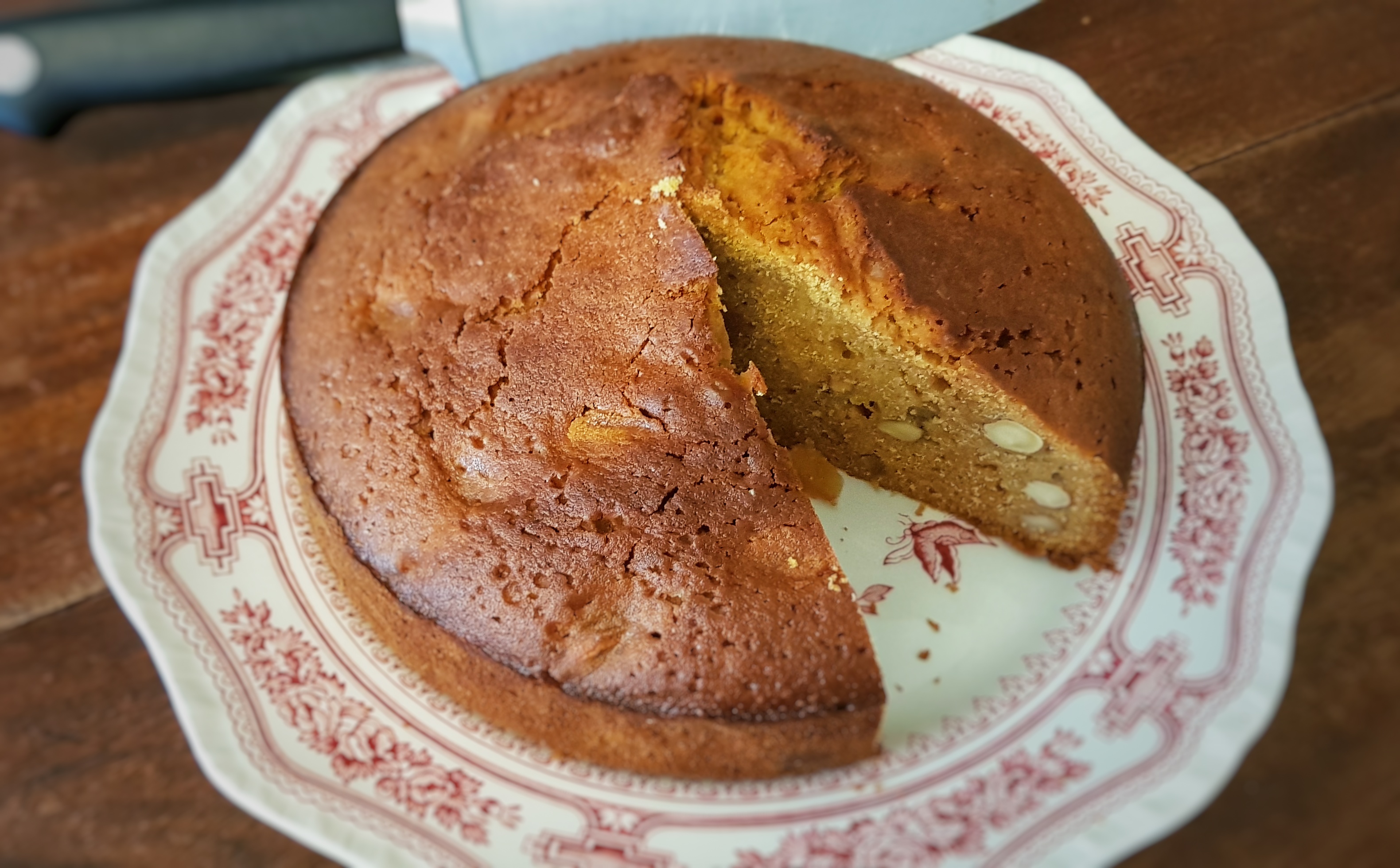
Kentish Cobnut Cake

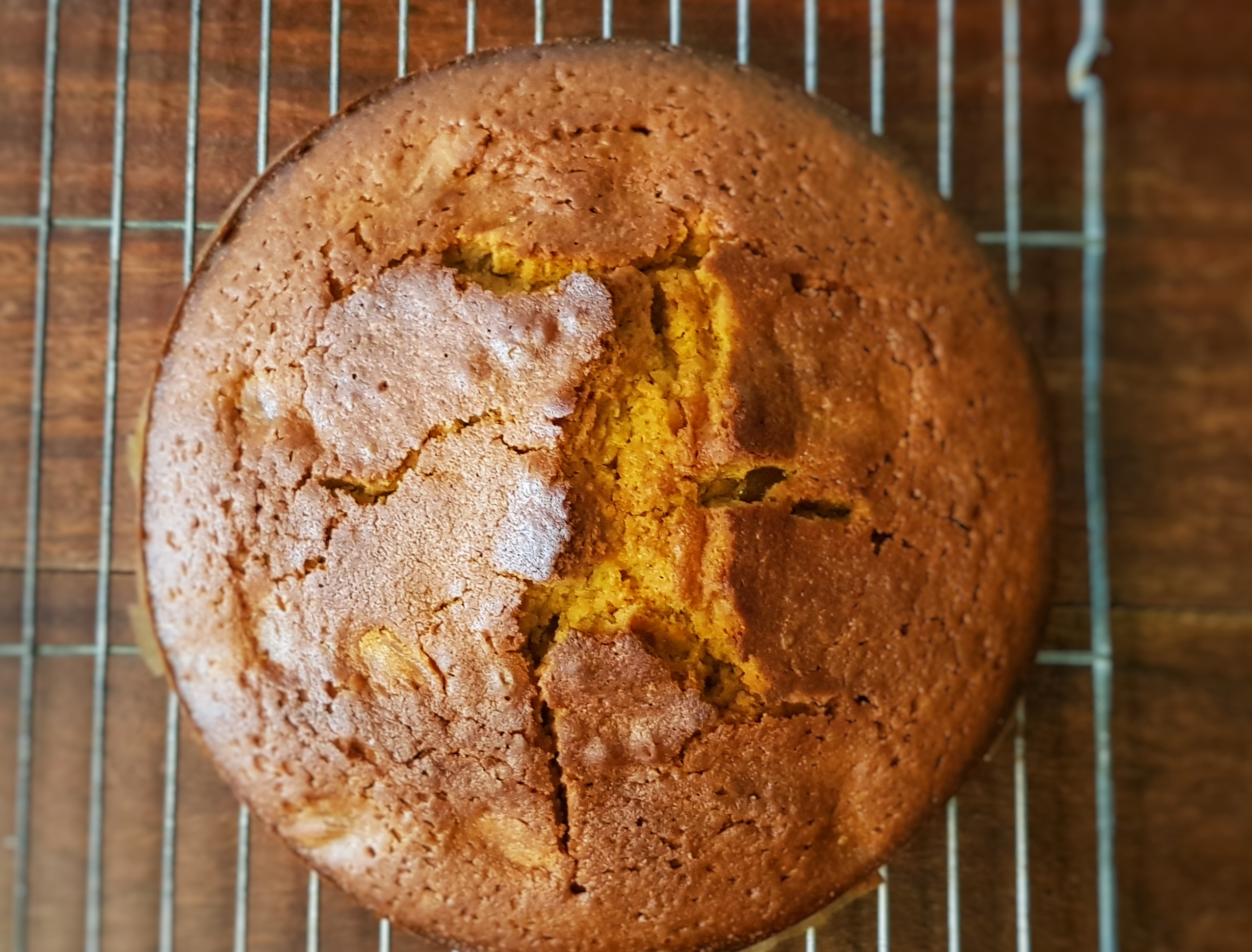
The best known traditional food made with cobnuts is Kentish cobnut cake. A dense cake flavoured with ginger and sweetened with some kind of unrefined sugar or honey. Some are made like a sponge cake by creaming butter and sugar, others are made by melting butter and syrup/sugar together. I go for the latter method. I found a few recipes that include a good dollop of double cream in the mix, so I’ve added it my recipe. This produces a dense cake, which I prefer, but if you want to make a lighter one, mix a teaspoon of baking powder into the flour and swap the cream for around half its volume of milk (i.e. 80 ml). Being a syrupy cake, it benefits from a couple of days’ maturing time in an air-tight box. You can use any syrup you like, or indeed any unrefined sugar. Honey works very well, especially if you have stored within it some cobnut kernels. As far as the nuts go: hazels, cobnuts or filberts all work equally well.

Makes one 8 inch/23 cm cake.

180 g butter

120 g golden syrup or honey

80 g Demerara, or any brown sugar

150 ml double cream (or 80 ml milk, if going for the lighter option)

3 knobs preserved ginger, chopped

2 eggs, beaten

240 g self-raising flour

1 tsp baking powder (optional; use if going for the lighter option)

1 ½ tbs ground ginger

100-150 g whole cobnuts, shelled weight

Preheat oven to 160°C and line a 20 cm round cake tin.

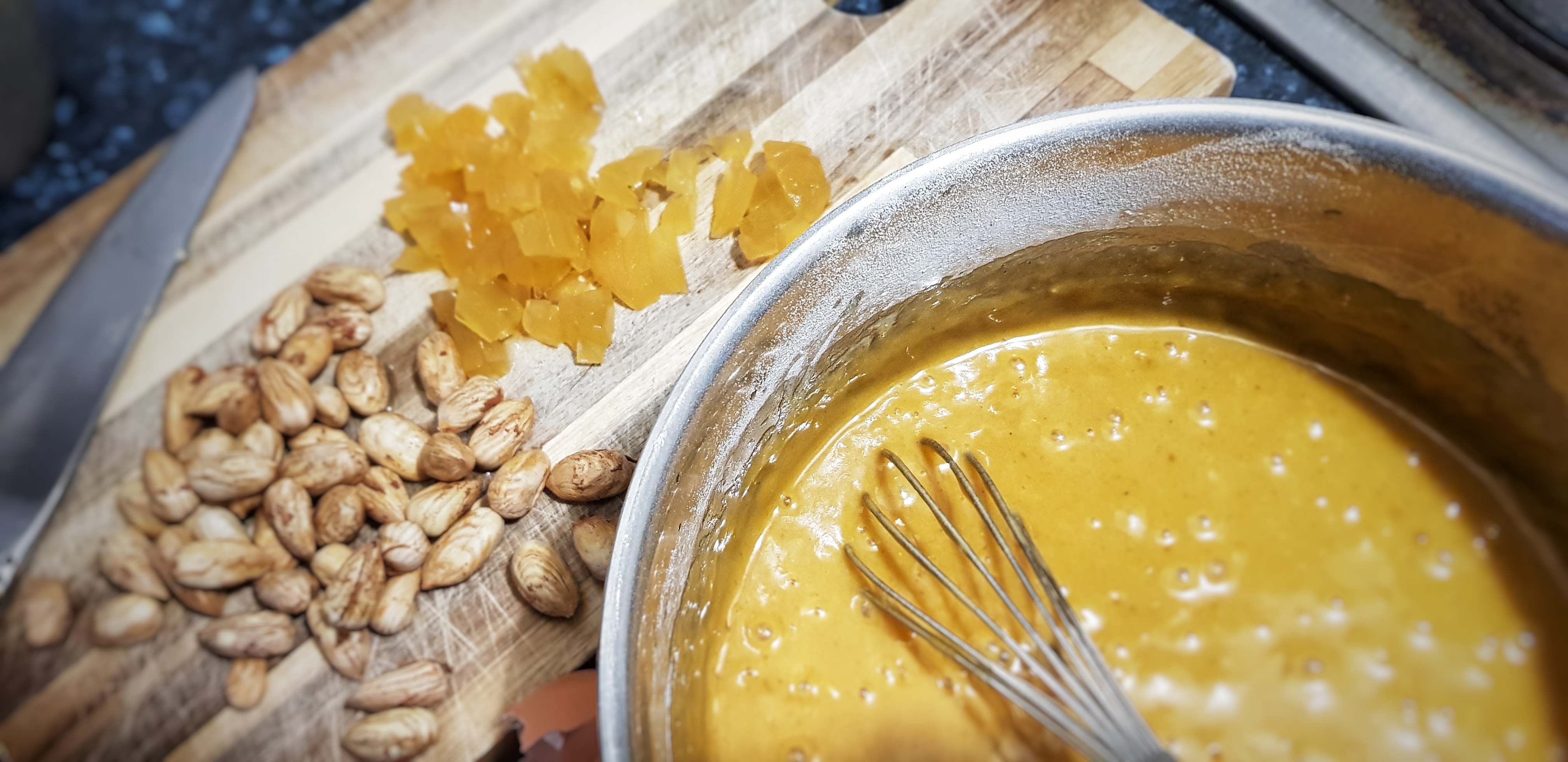
Melt the butter, syrup or honey and sugar in a saucepan, stirring until sugar is dissolved. Take off the heat and mix in the cream (or milk), chopped preserved ginger and then the eggs.

Mix the baking powder, if using, into the flour, then mix in the ground ginger and cobnuts. Make a well in the centre and pour in the butter-sugar mixture, stirring slowly with a whisk until the batter is smooth.

Pour into the lined cake tin and bake for anywhere between 1 and 1 ¼ hours. Test it is ready using a skewer. Cool in the tin.

References

1.           Wright, J. River Cottage Handbook No.7: Hedgerow. (Bloomsbury, 2010).

2.           Vaughan, J. G. & Geissler, C. A. The New Oxford Book of Food Plants. (Oxford University Press, 2009).

3.           Mason, L. & Brown, C. The Taste of Britain. (Harper Press, 1999).

4.           Johnson, O. & More, D. Collin’s Tree Guide. (Collins, 2004).

5 Comments

Filed under baking, Britain, cooking, food, foraging, General, history, Recipes, Teatime

Scotch Woodcock

This post complements the episode ‘Savouries’ on The British Food History Podcast.

When I asked Twitter what the best savoury is, I was surprised and very delighted that Scotch Woodcock was by far the most popular choice. Most of the other votes seemed to be for dishes containing lashings of anchovies too; I obviously need to write more about the popular, salty fish. I talk about Scotch Woodcock in the podcast, so I won’t repeat myself here, except I forgot to mention was that it was a Victorian invention and then, as now, one of the most popular savouries of the Victorian and Edwardian eras. The earliest mention of the dish can be found amongst the pages of Mrs Beeton’s Book of Household Management, and is pretty similar to mine except Gentleman’s Relish is swapped for simple drained anchovies which are mashed and spread on the toast and no spices are used.

If, by the way, you know not of Scotch Woodcock or the concept of the savoury, have a listen to the podcast episode. I also wrote a post about savouries a few years ago.

This makes enough for two for lunch and is very good with a green salad dressed only with salt, pepper and cider or wine vinegar.

The simple foods are best

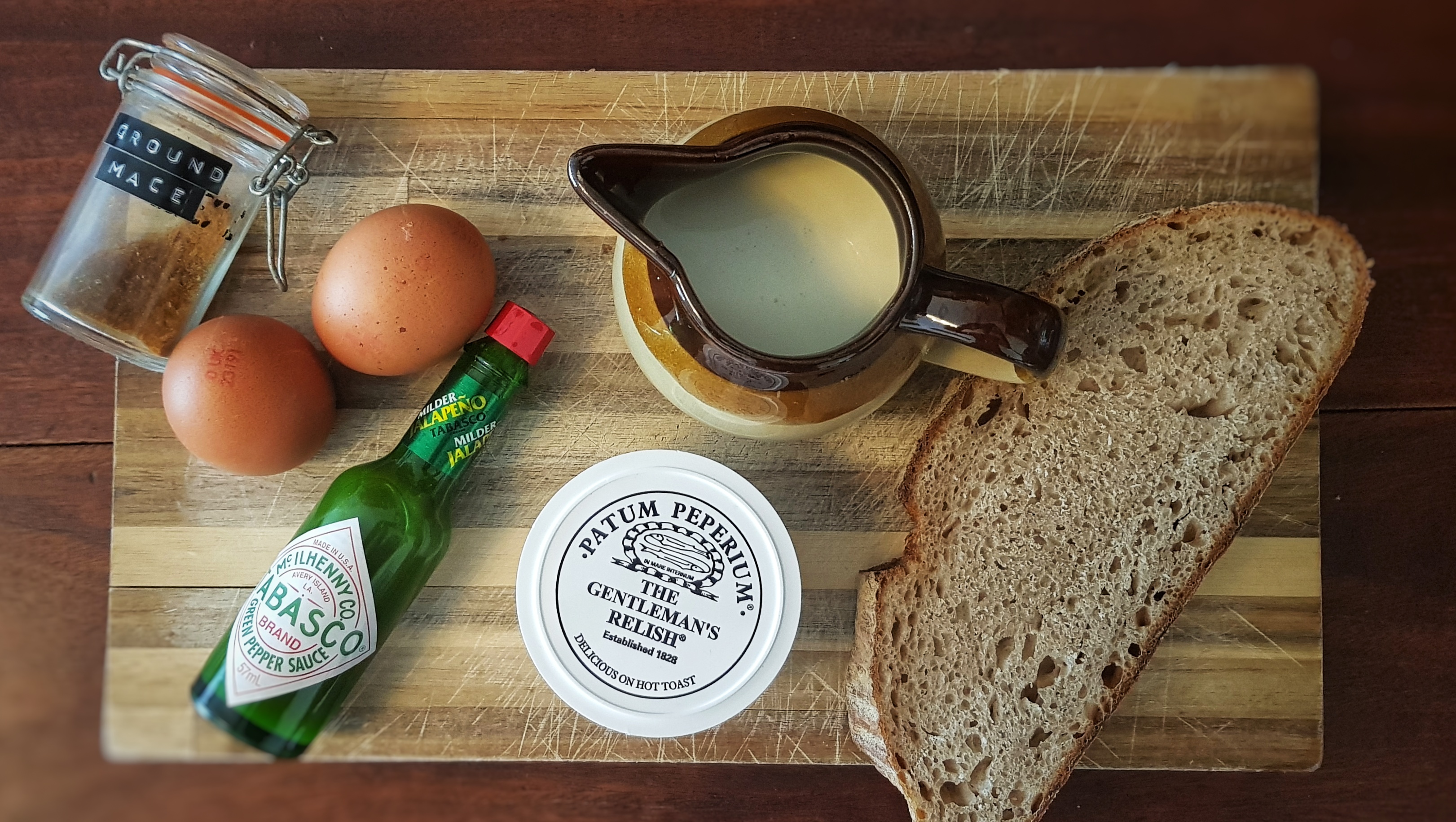
150 ml double cream

2 egg yolks (or 1 whole egg)

Salt and pepper

Dash of Cayenne pepper (optional)

Pinch of ground mace (optional)

2 slices of toast kept warm

Around 2 tsp Gentleman’s Relish (my recipe for that here)

Turn your grill to a high setting.

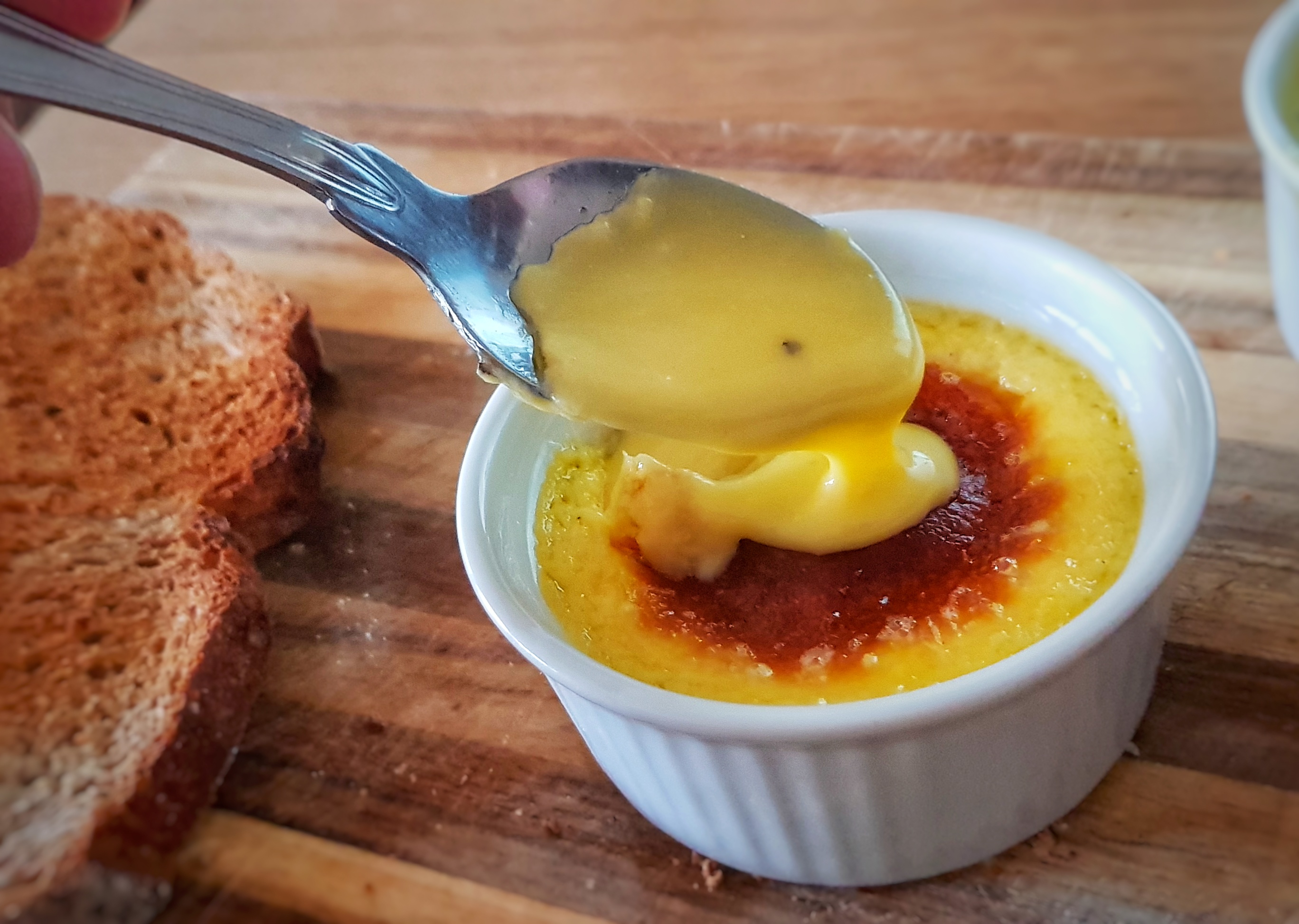
Put a small saucepan on a medium-low heat. Pour in the cream and beat in the egg yolks (or whole egg) then the spices with a wooden spoon. Keep stirring until the mixture becomes scalding hot, but do not allow it to boil. You can tell when it’s ready if when you scrape your wooden spoon through the savoury custard you can see the base of the pan.

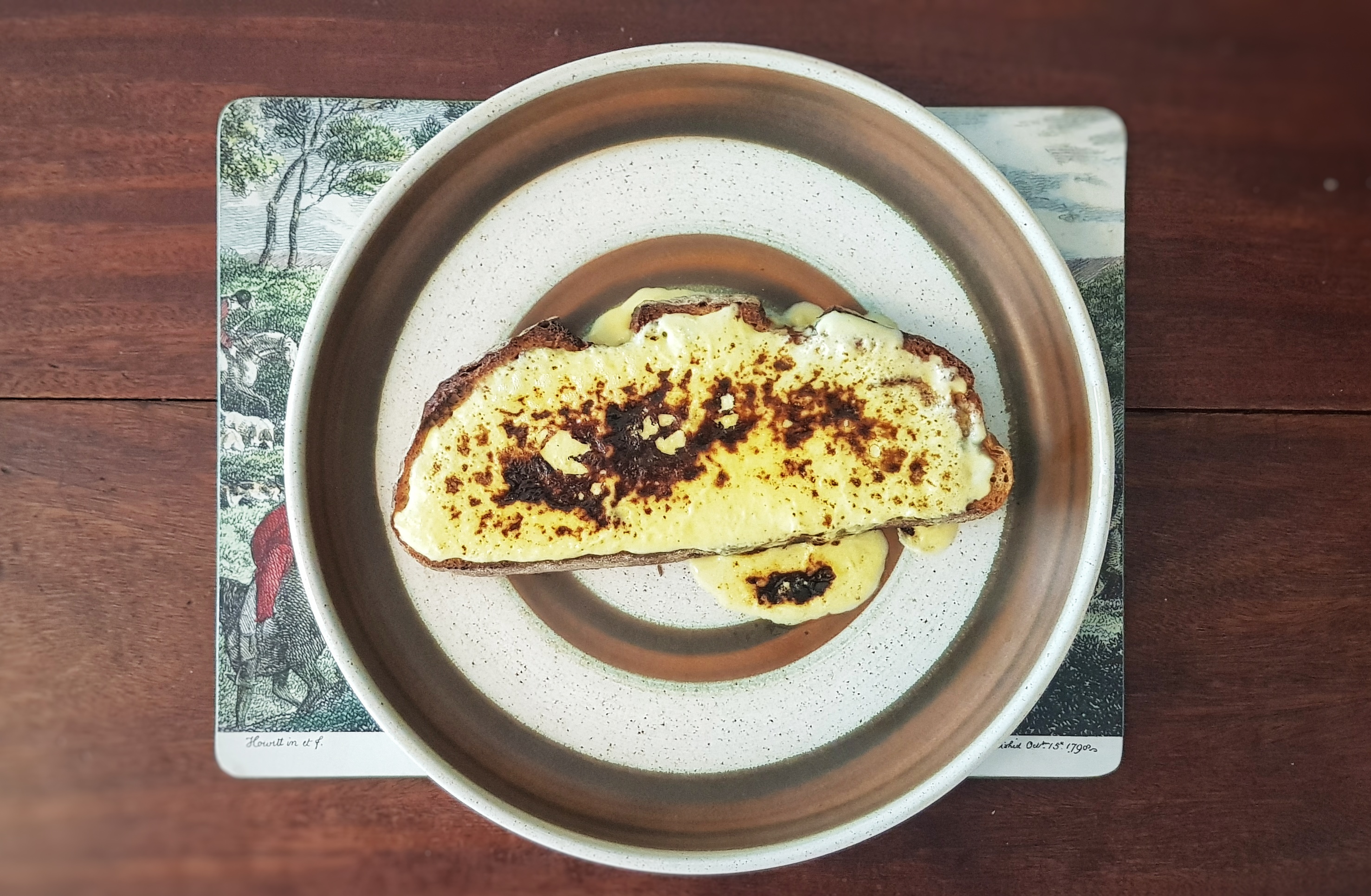
Spread the Gentleman’s Relish thinly over the toast (if you’re using my recipe, you can be a little more generous) then spoon over the savoury custard. Don’t worry if there are a few small lumps of cooked egg: it’s very forgiving. Use the back of a spoon to spread the custard right to the very edges of the toast, and grill until the top turns a delicious dark golden brown (or do as I did, and use a chef’s torch).

Serve immediately.


If you like the blogs and podcast I produce, please consider treating me to a virtual coffee or pint, or even a £3 monthly subscription: follow this post for more information.


4 Comments

Filed under Britain, cooking, food, General, history, Podcast, Recipes, The Edwardians, The Victorians

To Make Frumenty/Furmenty

This post complements the episode ‘Forme of Cury with Christopher Monk’ on The British Food History Podcast.

This post is for subscribers only. Subscribers get access to my Easter Eggs tab – full of extra interviews, outtakes and other bits and bobs, as well as subscriber-only blog posts and recipe

Subscribe to get access

Read more of this content when you subscribe today. Follow this link for more details.

13 Comments

Filed under Britain, cooking, food, Mediaeval Age, Podcast, Recipes, Uncategorized

To Make a Seed Cake

Miss Lavinia and Miss Clarissa partook, in their way, of my joy. It was the pleasantest tea-table in the world. Miss Clarissa presided. I cut and handed the sweet seed-cake – the little sisters had a bird-like fondness for picking up seeds and pecking at sugar; Miss Lavinia looked on with benignant patronage, as if our happy love were all her work; and we were perfectly contented with ourselves and one another.

Charles Dickens, David Copperfield, 1849


I do love a seed cake, once a key element of a British teatime table. Sadly, it’s largely either forgotten, or worse, ignored in our modern world of ‘instagrammable’ drizzle cakes, or multi-coloured creations slathered with luxurious buttercreams and frostings. With that sort of competition, the poor old seed cake doesn’t get a look in, bless it. As a result, the only way you are going to taste is to make one.

For those in the dark as to what I’m banging on about, a seed cake is a plain, rather dry cake flavoured subtly with caraway. It’s texture is similar to that of a madeira cake; dry enough so that it is perfect to have with a nice cup of tea for your elevenses. It has just the right amount of clack, as we northerners say; a tendency to stick to the roof of your mouth. Don’t let this put you off – it’s plainness is what makes it perfect. Super-sweet cakes covered with their myriad fillings are fine, but often a little too much to take.

Hannah Glasse had several seed cake recipes

Seed cakes appear in cookbooks from the seventeenth century, but only really became a cornerstone of the tea table in the eighteenth. They were a different beast then; sugary cakes also said something of both your status and sensibilities, so other things were added. Hannah Glasse added allspice, cinnamon and ambergris in one of her recipes.1 It was a time before chemical raising agents too, so cakes at this time were made light by the action of live yeast. Seed cake, therefore, was reserved for those who had a taste for the finer things in life, such as Parson Woodforde, diarist and great lover of cakes, puddings, pies and confectionary. He loved listing what he’d had for dinner. Take this entry from 17 August 1778:

7 p.m. Hot hash, or cold mutton pies. Saturday night an addition of good seed-cake of one pound, covered with sugar and a quart of good beer poured over it.2

Fast-forward a century and we see that the seed cake is pretty much what we would expect to see; the only difference being that a splash of brandy, rather than milk, is used to slacken the mixture.3

A seed cake cannot be made with any other seed than caraway. Sure, you could swap them for poppy seeds or some such, but you will have made a cake with seeds in it, not a seed cake! What’s so special about caraway then? Well, caraway was used to flavour all sorts of foods ever since ancient times, because unlike the other spices* it grew happily throughout Europe. It is an essential flavouring in German sauerkraut for example. In Britain, folk seemed to prefer to use in sweet foods, as Elizabeth David noted: “Apart from seed cake, (why were those cakes always so dry?) once the great English favourite, and caraway sweets and comfits, caraway appears little in English cooking.”4


If you like the blogs and podcast I produce, please consider treating me to a virtual coffee or pint, or even a £3 monthly subscription: follow this post for more information.


Elizabeth’s quote eludes as to why this cake fell out of favour – it’s viewed as boring, dry, stale perhaps, but I disagree. It is light, and because it contains very little liquid compared to, say, a moist Victoria sponge, it is paramount that the butter and sugar are well creamed together, the flour is carefully folded in without over-mixing, and that it is not over-baked. This is where I fear folk may go wrong: baking an extra ten minutes, just to be on the safe side, will produce a dry, boring cake. Done well, however, a seed cake can be as superlative as any Proustian madeleine.

175 g salted butter, softened

175 g caster sugar

3 eggs

250 g self-raising flour

1 tbs ground almonds

1 tbs caraway seeds

 Around 3 tbs milk (or brandy)

Preheat your oven to 180°C and line a 2 pound loaf tin (usually around 23 cm long) with greaseproof paper, keeping it in place with a smear of butter or cooking oil.

In a mixing bowl cream the softened butter until pale and fluffy. Add an egg and one tablespoon of the flour and beat in until smooth. Repeat with all of the eggs. Mix the remaining flour with the ground almonds and caraway seeds and tip into the mixture.

Fold in carefully and when combined, add the milk (or brandy) to loosen the batter slightly – unlike a regular sponge, you are not looking for a dropping consistency with seed cake, so don’t go overboard: start with two tablespoons and see how it looks.

Spoon into the tin and smooth the top – you don’t have to be fastidious here, as the batter cooks it levels out all on its own.

Bake for around an hour – this will depend on the dimensions of your tin, in my wide one, it took just 55 minutes. Test with a skewer if it is ready – I’ll say it again: it’s important not to overbake seeing as the batter is on the dry side.

Let it cool in its tin for 15 minutes before removing and cooling on a rack. These sorts of cakes are best eaten on the day, or the day after, they are baked.

*Mustard also grows in Europe, hence its heavy use in British recipes throughout history.

References:

1.           Glasse, H. The Art of Cookery Made Plain and Easy. (Prospect Books facsimile of the 1747 original).

2.           Woodforde, J. The Diary of a Country Parson Volume 2. (Oxford University Press, 1924).

3.           Beeton, I. The Book of Household Management. (Lightning Source, 1861).

4.           David, E. Spices, Salt and Aromatics in the English Kitchen. (Penguin, 1970).

24 Comments

Filed under baking, Britain, cake, cooking, Eighteenth Century, food, General, history, Recipes, Teatime, Uncategorized

‘A Bite of History’ Event Saturday 10th April 2021

Hello all – a very quick post to let you all know that this Saturday 10th April at noon (GMT) I’m taking part in a free event called ‘A Bite of History’. I’ll be in conversation with poet Dan Simpson and we’ll be discussing allsorts of things: food history and historical cooking, the evolution of our never-sated desire for sugar, the trials of running a restaurant and of course the blog. There’ll be a Q&A session too, so if you have any burning questions I shall do my best to answer them.

I’m also going to attempt a live cook spot – what could possibly go wrong!?

The event is part of the Inter-Action Book Club Cook Book Club which has been putting on free events throughout lockdown.

Hopefully see you there on the 10th of April.

Link to event: https://www.eventbrite.com/e/a-bite-of-history-with-food-historian-neil-buttery-tickets-149301421571

1 Comment

Filed under Britain, history, Recipes, Uncategorized