
Category Archives: Uncategorized

Favourite Cook Books no. 3: The Forme of Cury, part 2 – recipes

FC scroll

 The vellum scroll rolled up (British Museum)

As promised in my previous post, a few recipes from the Forme of Cury. I have translated them into modern English, so you can follow them a bit easier. For the hippocras drink, I have given you my interpretation of the recipe as there are some hard-to-find ingredients. All the recipes are easy to make and taste delicious.


If you like the blogs and podcast I produce, please consider treating me to a virtual coffee or pint, or even a £3 monthly subscription: follow this link for more information.


Cabbage Soup

A very simple dish – not everything Richard II ate was ostentatious. This is a very simple recipe with ingredients we use today. The addition of the saffron give it an interesting earthy flavour. Powder douce was a mixture of sweet spices – the spices we would associate with desserts like apple pie – shop-bought mixed spice is good substitute. The base of the soup is broth or stock, use any you like, though I think chicken is the best for this soup.

Caboches in Potage. Take Caboches and quarter hem and seeth hem in gode broth with Oynouns yminced and the whyte of Lekes yslyt and ycorue smale. And do þerto safroun & salt, and force it with powdour douce.

Cabbage Soup. Take cabbages and quarter them and seethe (simmer) them in good broth with chopped onions and the white of leeks, slit and diced small. Add saffron and salt, and season it with powder douce.

forme of cury stitches

The Forme of Cury with stitching where a new piece of parchment was added to the scroll (British museum)


If you want to know more: this blog post complements this podcast episode.


Rabbit or Kid in a Sweet and Sour Sauce

Any kind of meat can be used here really, chicken legs or diced lamb are the best substitutes. Sweet and sour sauce was called egurdouce; -douce meaning sweet and egur- meaning sour, e.g. vin-egur was sour wine, in other words vinegar! The meat is browned in lard, removed, so the onions and dried fruit can be fried, the meat is replaced with the liquid ingredients and spices and simmered just like a modern casserole or stew.

Egurdouce. Take connynges or kydde, and smyte hem on pecys rawe, and fry hem in white grece. Take raysouns of coraunce and fry hem. Take oynouns, perboile hem and hewe them small and fry them. Take rede wyne and a lytel vynegur, sugur with powdour of pepr, of ginger, of canel, salt; and cast þerto, and lat it seeþ with a gode quantite of white grece, & serue it forth.

Take young rabbits or kid and cut them into pieces and fry them in lard. Take currants and fry them. Take onions, parboil them, and chop them small and fry them. Take red wine and red wine vinegar, sugar and powdered pepper, ginger, cinnamon, salt and add them, let it simmer gently in a good quantity of lard and serve it forth.

Hippocras
hippocras MS

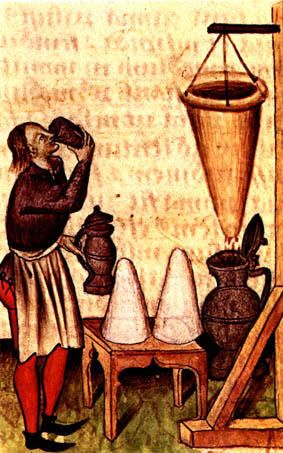
 Straining hippograss through a bag

This is a really excellent recipe for spiced wine; mulled drinks were drunk throughout the year and could be served hot or cold. There are some tricky to get hold of spices, but I’ve added alternatives where appropriate. If you have to omit a spice or two, don’t worry, it will still be delicious.

Pur fait ypocras. Troys vnces de canell & iii vneces de gyngeuer; spykenard de Spayn, le pays dun denerer; garyngale, clowes gylofre, poeure long, noieȝ mugadeȝ, maȝioȝame, cardemonii, de chescun dm. vnce; de toutes soit fsait powdour &c.

To make hippocras. Three ounces of cinnamon and three ounces of ginger, spikenard of Spain, a pennysworth; galingale, cloves, long pepper, nutmeg, marjoram, cardamom, of each a quarter of an ounce; grain of paradise, flour of cinnamon, of each half an ounce; of all, powder is to be made etc.

There are a couple of tricky spices in the list: long pepper and grains of paradise are available to buy online quite easily, but are very expensive, so you can get away with regular black pepper as a substitute. Galangal is easier to find fresh than dried these days, as it is used extensively in Thai cuisine as part of their delicious red and green curries, however, seek and ye shall find the dried variety.

Spikenard of Spain is the extract of the root of a valerian plant and was used in the church as an anointing oil, it also appears very commonly in recipes. I’ve never had the opportunity to taste it.

Here’s my version of the recipe:

1 bottle of red wine

1 tsp each ground cinnamon and ground ginger

¼ tsp each ground galingale, ground black pepper, ground nutmeg, dried marjoram, ground cardamom

honey to taste

Pour the wine into a saucepan with all of the spices and bring slowly to a scalding temperature. Don’t let the wine boil as there’ll be no alcohol left in it! Let the spices steep in the hot wine for around 10 minutes.

Meanwhile spread a piece of muslin, or any other suitable cloth, over a sieve and pour the spiced wine through it into another pan or serving jug. Add honey to sweeten. Serve hot or cold.

7 Comments

Filed under Books, Britain, cooking, food, history, Mediaeval Age, Recipes, Uncategorized

Favourite Cook Books no.3: The Forme of Cury, Part I

FC blanc mange

Some original text from the Form of Cury – a recipe for blank mang              (British Library)

The Forme of Cury (literally, A Method of Cookery) is Britain’s earliest known cook book, dating from around 1390. Regular readers will know, I am somewhat of a mediaevalist and so I have leafed through this ancient text many times, slowly soaking up the recipes just like a sop in potage.


If you want to know more: this blog post complements this podcast episode.

The effort required to produce the food, prepare it an obtain the ingredients, the surroundings and equipment and the wonderment of a mediaeval feast are all there to see, but from one person’s perspective: the cook.

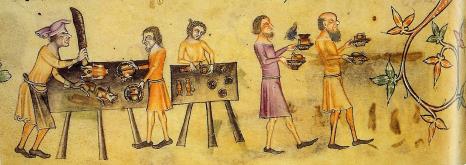
Angry cook

 Angry Cook and Waiters c. 1330

By cooking recipes from books like this, we get a glimpse of a bygone world, and with a bit of knowledge about the ingredients and methods used to prepare them, you get to experience history almost at first hand and really fires up the imagination. Anyone with as passing interest in history will love giving recipes like this as go, and I implore you to try, whether it be this book, or something more accessible like Mrs Beeton’s Book of Houshold Management, you won’t be disappointed.

Of course, for the Forme of Cury you have to brush up on your Middle English – this is the language of Chaucer – but with a good glossary and some persistence, you will tune in.

The Forme of Cury begins thus:

The Forme of Cury was compiled of the chef maister cooks of kyng Richard the Secunde king of Englond aftir the Conquest.

Richard II, the Dandy King, was flamboyant and ostentatious; he lived in grandeur and was considered to be a narcissistic, effeminate fop by many. Everything was done on a grand scale. His court and household were huge: 200 personal guards, 13 bishops, barons, knights, esquires plus many servants and other workers. In all, around 10 000 people worked under him.

Richard’s feasting and partying were also elaborate – one feast in 1383 cost 57 000 pounds plus an extra 10 000 pounds for napery and spices! If he were alive he’d be called a foodie for sure, his other gift to gastronomy aside from this book, being the napkin, prior to that the tablecloth doubled as one.

Richard was also obsessed with record-keeping, and because of this he commissioned this manuscript, and history is all the much richer for it.

richard II

 Richard II

Who wrote it?

The master cooks will not have written the recipes down themselves, it’s very likely that they were illerate, but they will have been dictated to by a scribe who sat behind the master cook taking notes. The cook himself sat in a raised chair in the centre of the huge kitchen, filled with industrious workers such as the bakers, the sauce cook, the spit-roaster, and the mincer; there was even a person in charge of salad! From his chair he was lord of all he surveyed, checking every dish before it was ‘served forth’.

The manuscripts

There are ten incomplete copies of the Forme of Cury in existence today, but the original 1390 document seems to be forever lost. The most complete copy is a six-metre long scroll of vellum parchment which is housed in the British Museum. No extant copy matches up exactly and all appear to contain errors or omissions (and in some cases additions). These differences are mainly due to human error by copying – some scribes were better than others it seems – but some are purposeful, new recipes unique to the commissioning household could be added, and some removed if disliked.

FC scroll

The Forme of Cury scroll (British Museum)

These manuscripts were transcribed and published as printed documents several centuries later many containing further errors, but they are invaluable because the text is easier to read, and many were written before some of the original copies degenerated, becoming unreadable. Some errors were mistranslations, for example ‘cast’ being swapped for ‘yeast’ (which was then spelt ȝast); other mistakes were made because non-cooks were doing the translating. In one case one transcriber recommends pouring boiling hot water over an intricately constructed pastry castle – not a good idea!


If you like the blogs and podcast I produce, please consider treating me to a virtual coffee or pint, or even a £3 monthly subscription: follow this link for more information.


The recipes

Modern editions of the book start with a list of recipes, and such a breadth of dishes is represented. Some are homely, many are ostentatious, others mysterious. There are some familiar names and ingredients: blancmange, custard tart, soups and stews, gruel and frumenty and hippocras (spiced wine), all of which would go down well at a dinner party today. However, I’m not sure if porpoise in frumenty or piglets in sage sauce would be well-received.

20180810_115613

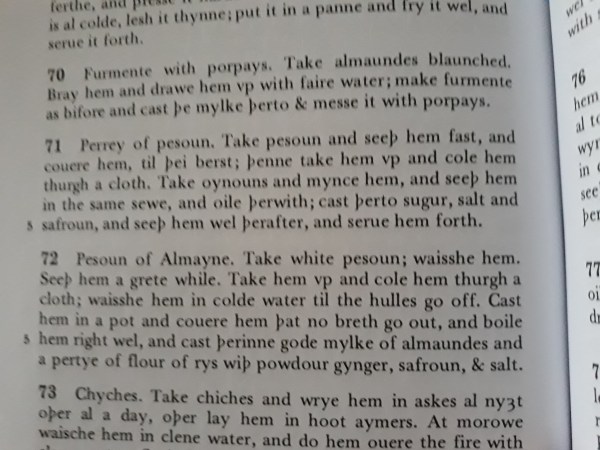
 Excerpt from a modern transcription of the Forme of Cury

On feast days there was a type of dish called a sotielty (subtlety) which was not eaten, just looked at. Examples include the aforementioned pastry castle; the cokagrys, a half-pig, half-cock creation, and animals on pilgrimage, dressed in clothes and holding lamprey staffs.

The food that was eaten, however, was similarly painstaking to produce. To show of Richard’s great wealth there would be liberal use of spices and sugar (which was then considered a spice) as well as dried fruits such as currants, which had to have their seeds individually removed before they could be used – there was no such thing as seedless grapes in the 14th Century!

There were more fast days then feast days however, so there are many vegetarian and vegan dishes as well as recipes using freshwater fish and almonds or almond milk.

Some recipes are familiar and are delicious (they made great custard tarts), there are early recipes for rice pudding, bread sauce and meatballs. They even made pasta, which was most often rolled out thinly, cut into diamonds and dried. The pasta would be layered up with cooked mincemeat and a cheese sauce: in other words, a mediaeval English lasagne!

Food from The Forme of Cury has appeared on the blog before (see the Tartlettes post) and I made eel pie and hippocras for Alice Roberts on Channel 4’s Britain’s Most Historic Towns. I’ve waffled on a bit so I’ll post some original recipes as well as my interpretations of them in the next few days.

7 Comments

Filed under Blogs, Books, Britain, cooking, food, General, history, Mediaeval Age, Uncategorized

Britain’s Most Historic Towns

Here’s just a quickie to let you all know that I did a little bit of historical cookery on TV on Saturday. I was hired to cook some mediaeval food as part of the Channel 4 documentary series Britain’s Most Historic Towns, and I thought you might be interested in watching as I don’t appear on the blog very often. My episode was in the beautiful city of Winchester and I cooked up an eel pie for the presenter Alice Roberts. The recipe I used was from Britain’s earliest extant cook book The Forme of Cury, written in the time of Richard II, sometime in the late 14th Century.

Here’s a clip of myself and Alice eating the pie.

If you are in the UK, you can catch the episode on Channel 4 on demand here. The series is very good, so I suggest you binge-watch the whole thing so far!

I also made some hippocras – a type of spiced wine – but that bit was cut out for time (it was a jam-packed episode!). Next post I’ll give you the recipes so that you can have a go yourself. It might be a while because I am in the process of moving house…


If you like the blogs and podcast I produce, please consider treating me to a virtual coffee or pint, or even a £3 monthly subscription: follow this link for more information.


7 Comments

Filed under Uncategorized

Simnel Cake


Want to know more? There’s a podcast episode that complements this blog post:


A Simnel cake is a type of fruit cake that contains plenty of marzipan and is eaten at Easter, although it used to be specifically associated with Mothering Sunday. When folk were fasting during Lent, Mothering Sunday, appearing in the middle of the fast, offered a respite from 40 days of religious austerity.

Mothering Sunday occurs on the fourth Sunday of Lent; a special day when people visited their mother church or cathedral. Don’t confuse Mothering Sunday with Mothers’ Day; it is only in the last century that this day is associated with showing enforced appreciation to our mums (though I assume that you met up with your mother on return to your original diocese).

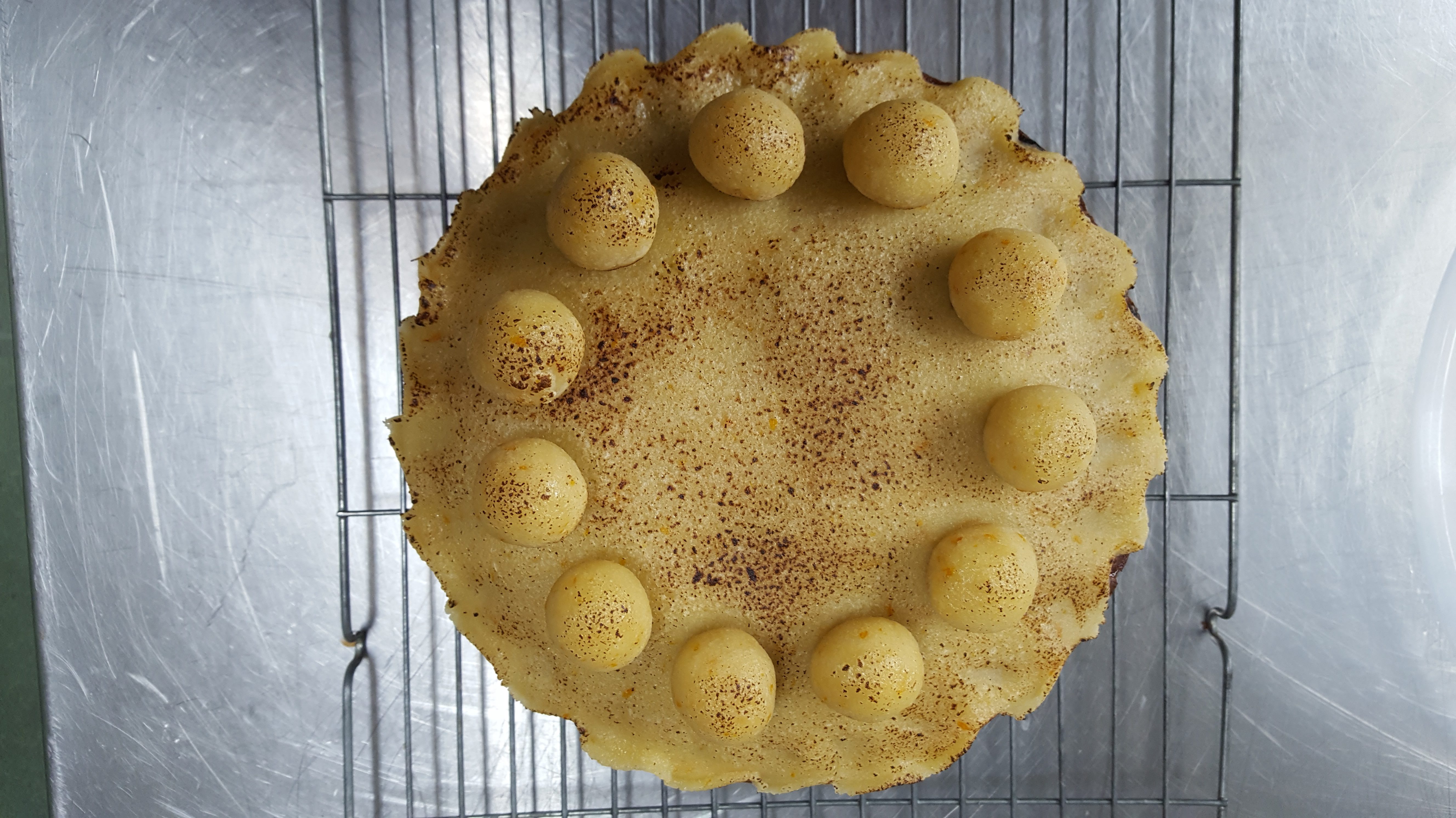
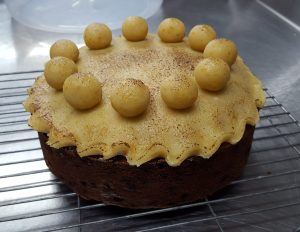
Like most British food eaten during winter and early spring, the Simnel cake contains lots of dried fruit, but it is much lighter than boozy Christmas cake and contains a layer or marzipan both on top and within, and is decorated with eleven marzipan balls, each symbolising Jesus’s disciples (minus the treacherous Judas of course).

To trace the origin of Simnel cake, you need to go right back to mediaeval times where it began life as a yeast-leavened bread, which may or may not have been enriched. This doesn’t sound that much like a special bread, you may think, but what made it special is that it made out of the highest quality flour possible; simnel derives from the Latin simila – the whitest and finest of flours.

Fast forward to the 17th and 18th centuries, and the bread mixture had been swapped for a pudding batter, not dissimilar to spotted dick, enriched with dried fruit, spices and almonds. It would be boiled like a pudding. When cooked, it was wrapped in pastry, glazed with egg and baked until a good hard crust formed. It would be like the Scottish black bun, a traditional Christmas food north of the border.

It is only when you get to the tail end of the 19th century that it starts to look like something we would recognise as a cake, though surprisingly it is not until the 20th century that the familiar marzipan layers and decorative disciples appear.


If you like the blogs and podcast I produce, please consider treating me to a virtual coffee or pint, or even a £3 monthly subscription: follow this link for more information.


Simnel cakes themselves seem to be disappearing from our Easter tables altogether and are getting more and more difficult to find in British bakeries. Below is the recipe I use – I can’t claim it as my own, but I don’t know where I got it from, so if you recognise it let me know, you know I always like to credit my sources!

This is a very straight-forward cake mixture made using the all-in-one method; it is very important that you use very soft butter so that the cake batter creams quickly without developing the gluten too much. If you don’t want to make your own marzipan, you can buy some ready-made, but I do urge you to make your own, it really is worth the (really quite little) effort required. The marzipan recipe below is different to my previously published one and I think much better. I shall try to remember to update the other post.

For the cake:

225 g softened butter

225 g caster sugar

4 eggs

225 g plain flour

2 tsp ground cinnamon

zest of 2 oranges

zest of 2 lemons

325 g mixed fruit (currants, sultanas, currants)

125 g glacé cherries, quartered or left whole

500 g orange marzipan (see below)

icing sugar for dusting

apricot jam

1 beaten egg

Begin by greasing and lining an 8-inch cake tin and preheating your oven to 150°C.

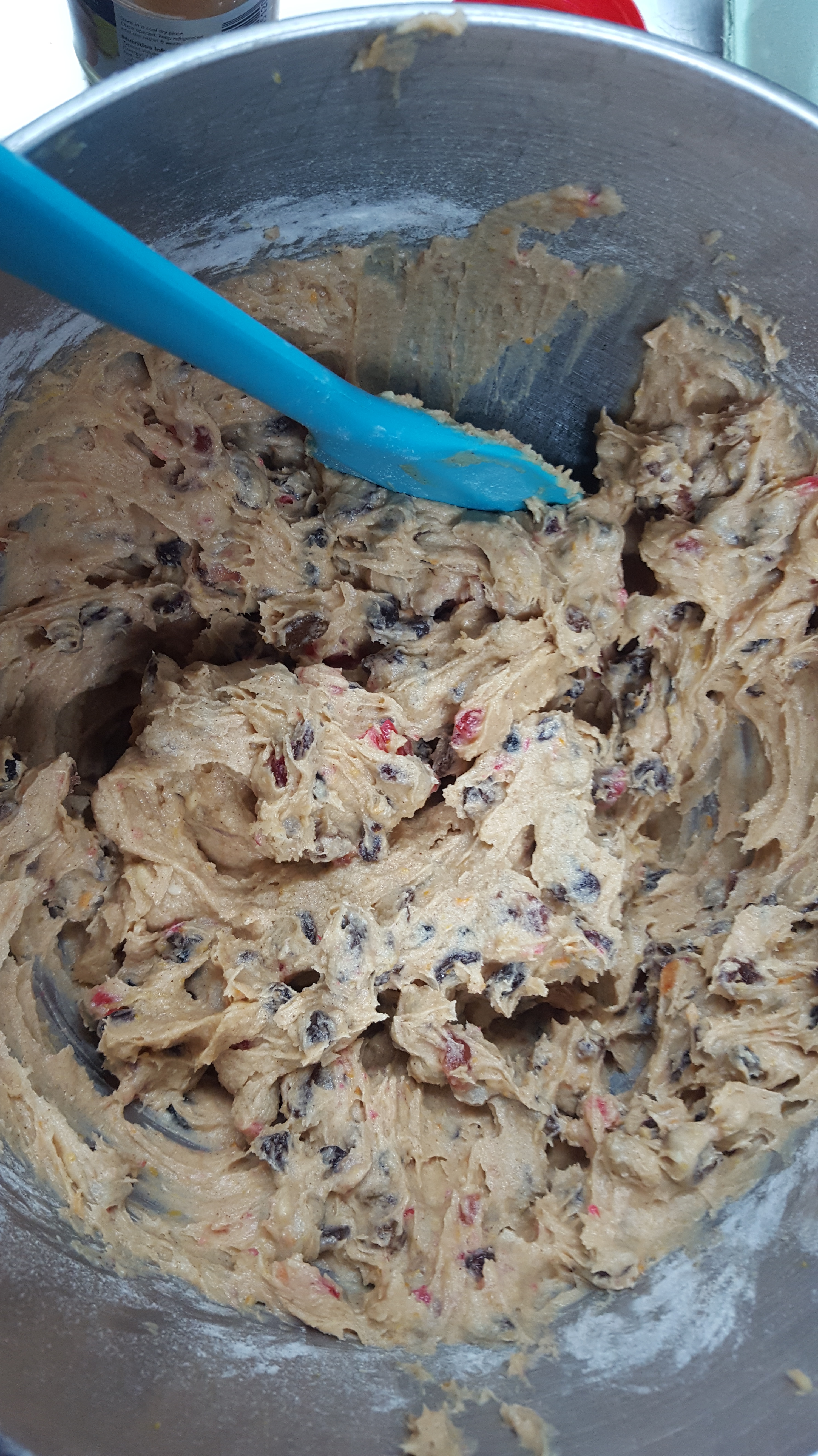
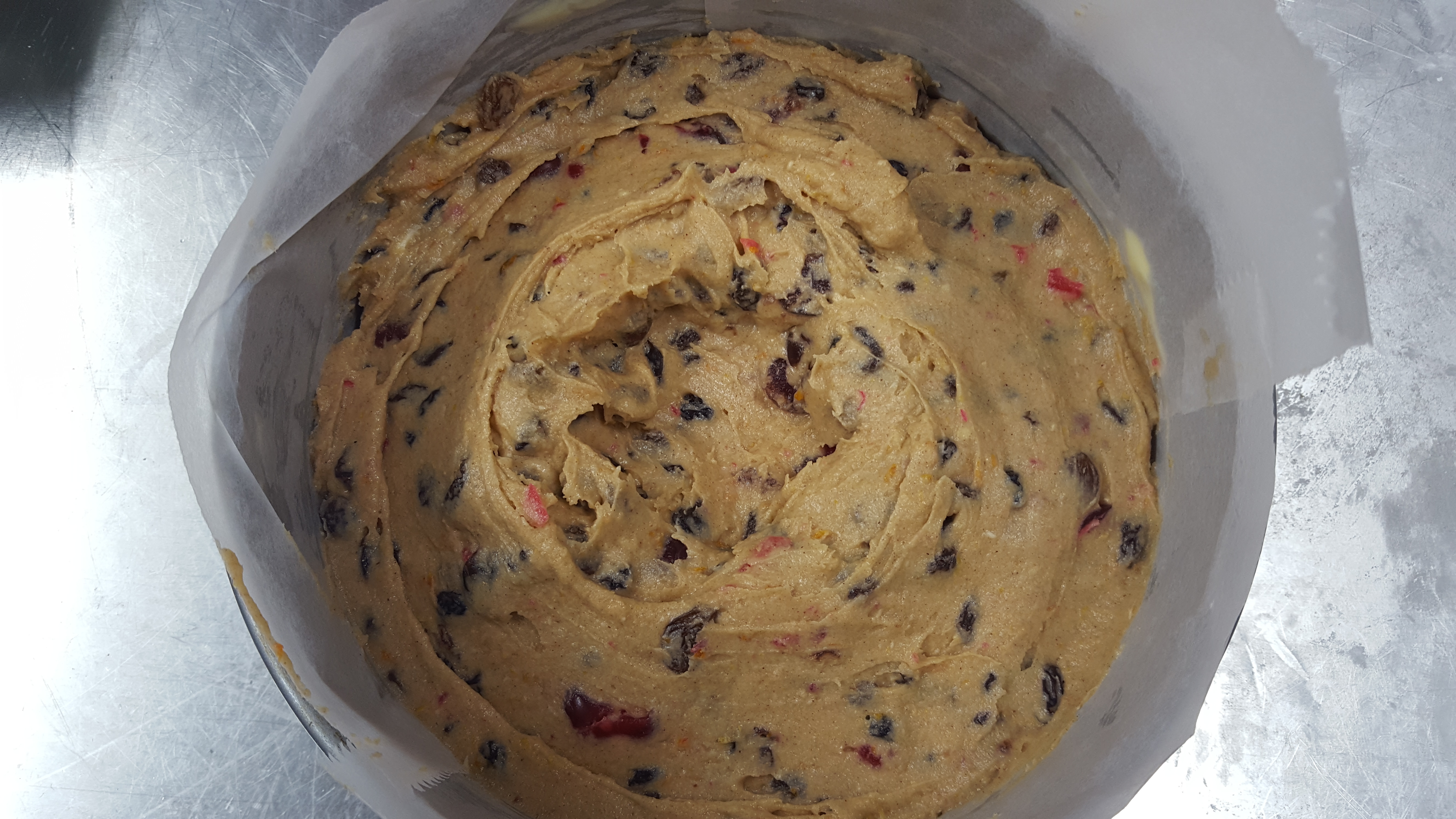
In a large bowl, beat together the softened butter, caster sugar, eggs, flour, cinnamon and zests. Using a hand mixer, beat together until smooth. Now fold in the mixed fruit and cherries with a spatula or wooden spoon.

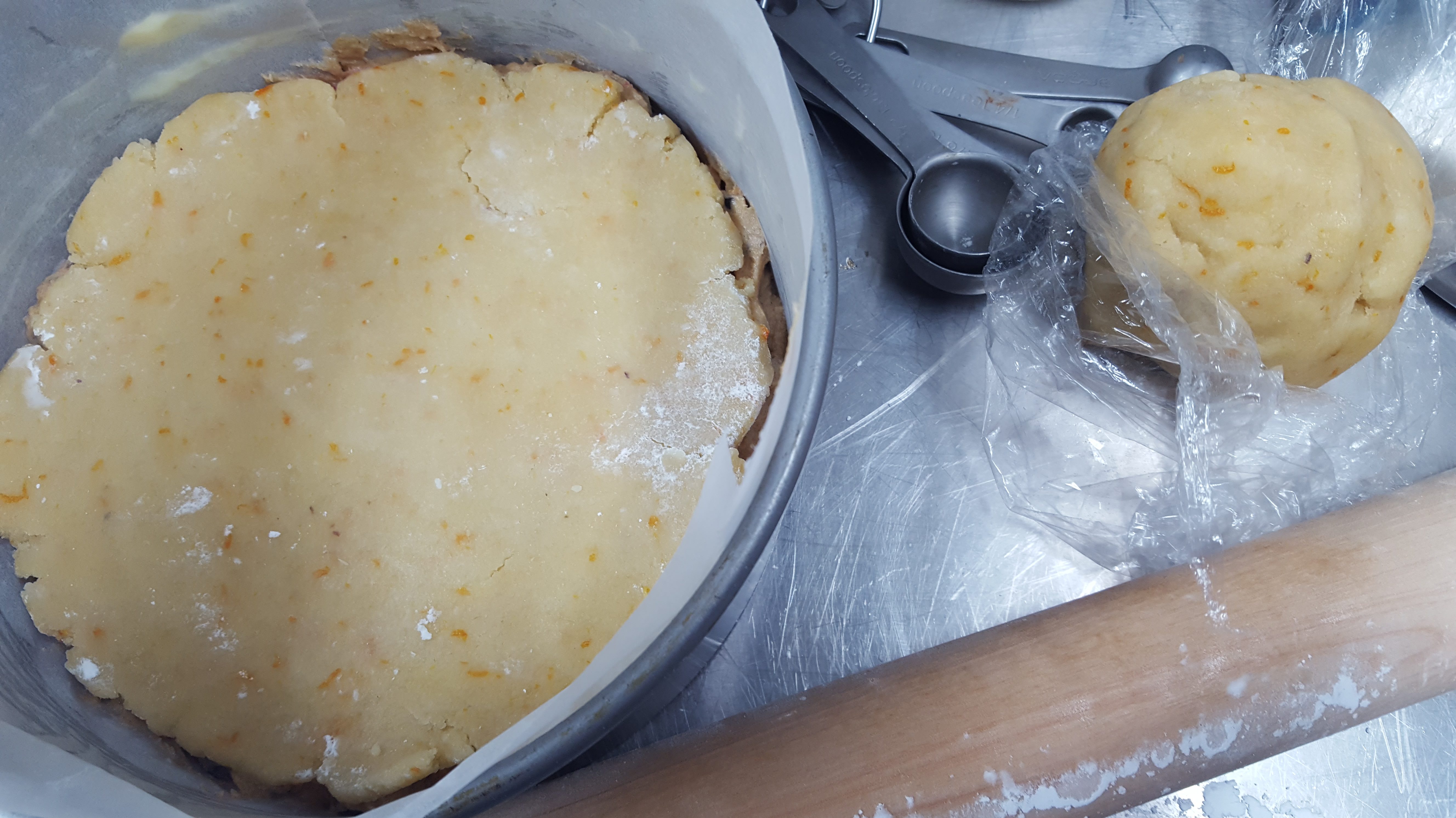
Spoon half of the mixture into your tin and level it off. Take a third of your marzipan and roll it out into a circle the same size as the tin, trimming away any untidy bits. Use a little icing sugar to roll the marzipan out, just like you would use flour to roll out pastry.

Lay the marzipan in the tin and then spoon and scrape the remainder of the cake batter on top of that. Level off with your spatula and make an indentation in the centre, so that the cake doesn’t rise with too much of a peak.

Bake for 2 ¼ to 2 ½ hours. Use a skewer to check it is done. Cool on a rack for about 30 minutes before removing the tin and greaseproof paper.

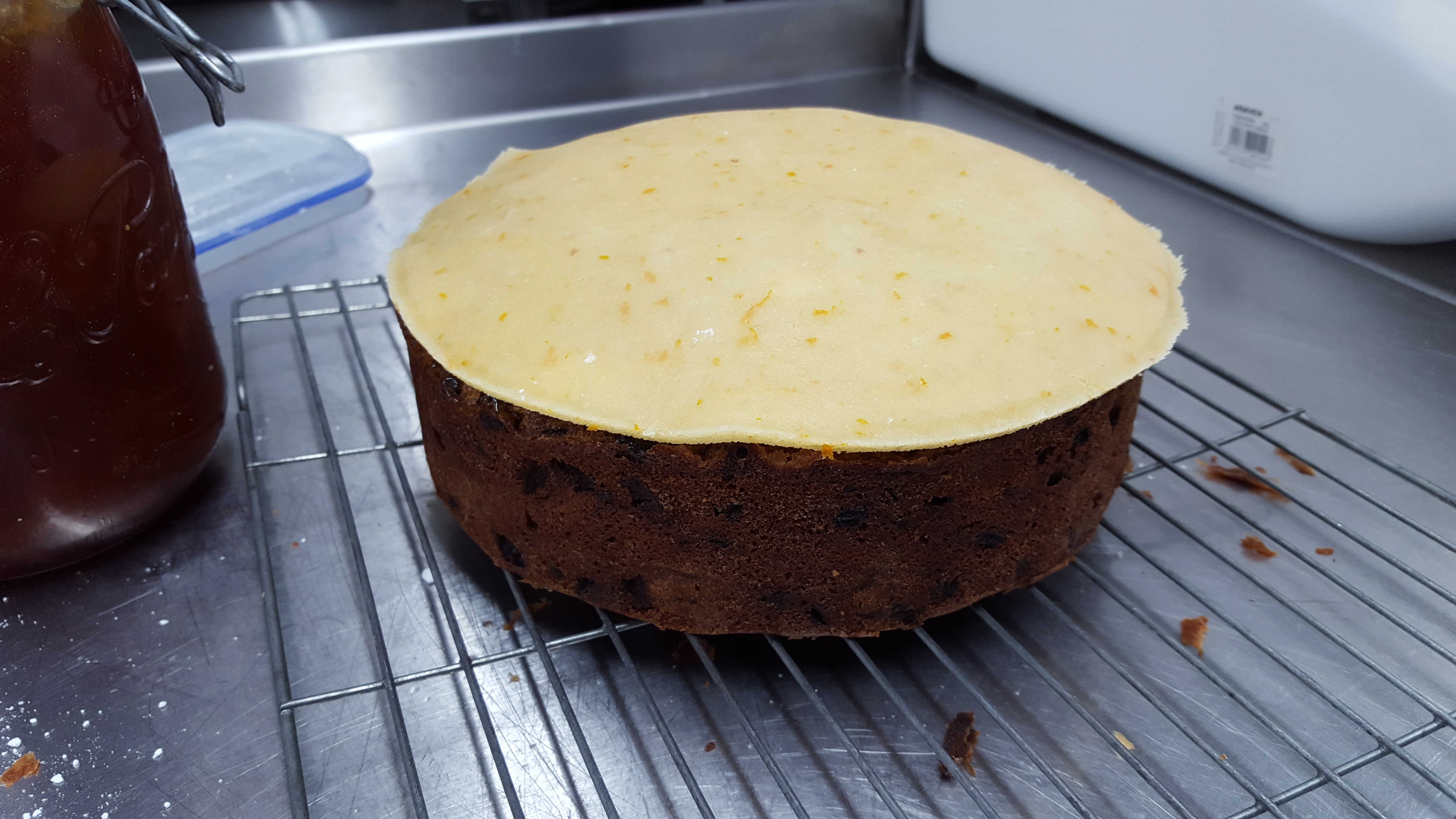
When cold, roll out half of the marzipan in a circle slightly larger than the cake – the best way to do this is to use the outside edge of the tin it was baked in as a template.

Brush the top of the cake with some apricot jam (if it is very thick, you may want to warm some with a little water in a pan) and lay the marzipan on top, then brush the marzipan with the beaten egg. Divide the remaining marzipan and trimmings into 11 equally-sized balls and arrange them in a circle. Brush those with egg too and glaze the top using a chef’s flame torch (or a very hot grill).

For the marzipan:

90 g caster sugar

140 g icing sugar

220 g ground almonds

grated zest of an orange

1 beaten egg

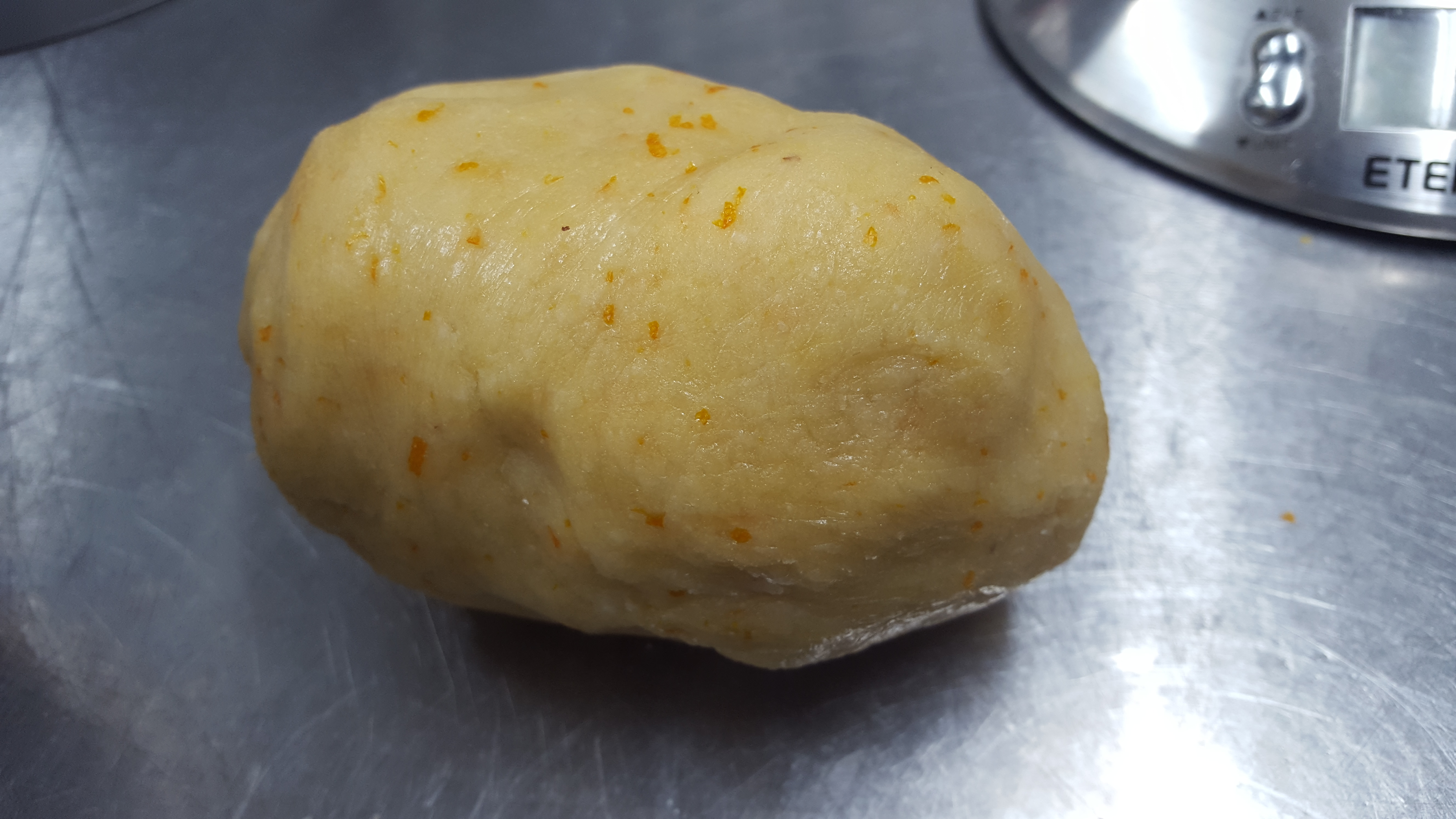
Mix all of the ingredients except for the egg in a bowl. Make a well in the centre and pour in the egg. Using a mixer or your hand, form a dough. Knead in the bowl until smooth, wrap in cling film and refrigerate for at least 2 hours.

Do you like the blogs and podcast I produce? If so, please consider supporting me

Sorry! This product is not available for purchase at this time.

23 Comments

Filed under Britain, cake, Easter, Festivals, food, Recipes, Uncategorized

Savouries

About five years ago, a reader asked if I could write about savouries, that now forgotten course served up towards the end of a Victorian or Edwardian meal. Well I’ve finally pulled my finger out and written one, so here we go:

The savoury course used to be extremely popular; a delicious morsel, which was salty, creamy and spicy, serving as a digestive after a rich meal, either as a final course, or before a sweet. What often happened was that the gentlemen ate their savouries and went off to drink whiskey and play bar billiards, and the ladies had their sweets and swished off to the withdrawing room for cards, chats and sherry; there were no non-binary genders allowed here, let me tell you.

I’m a big fan of the savoury course and I often include one in my supper clubs and pop-ups. They had gone out of fashion by the mid-twentieth century, the only real survivor being the cheeseboard.

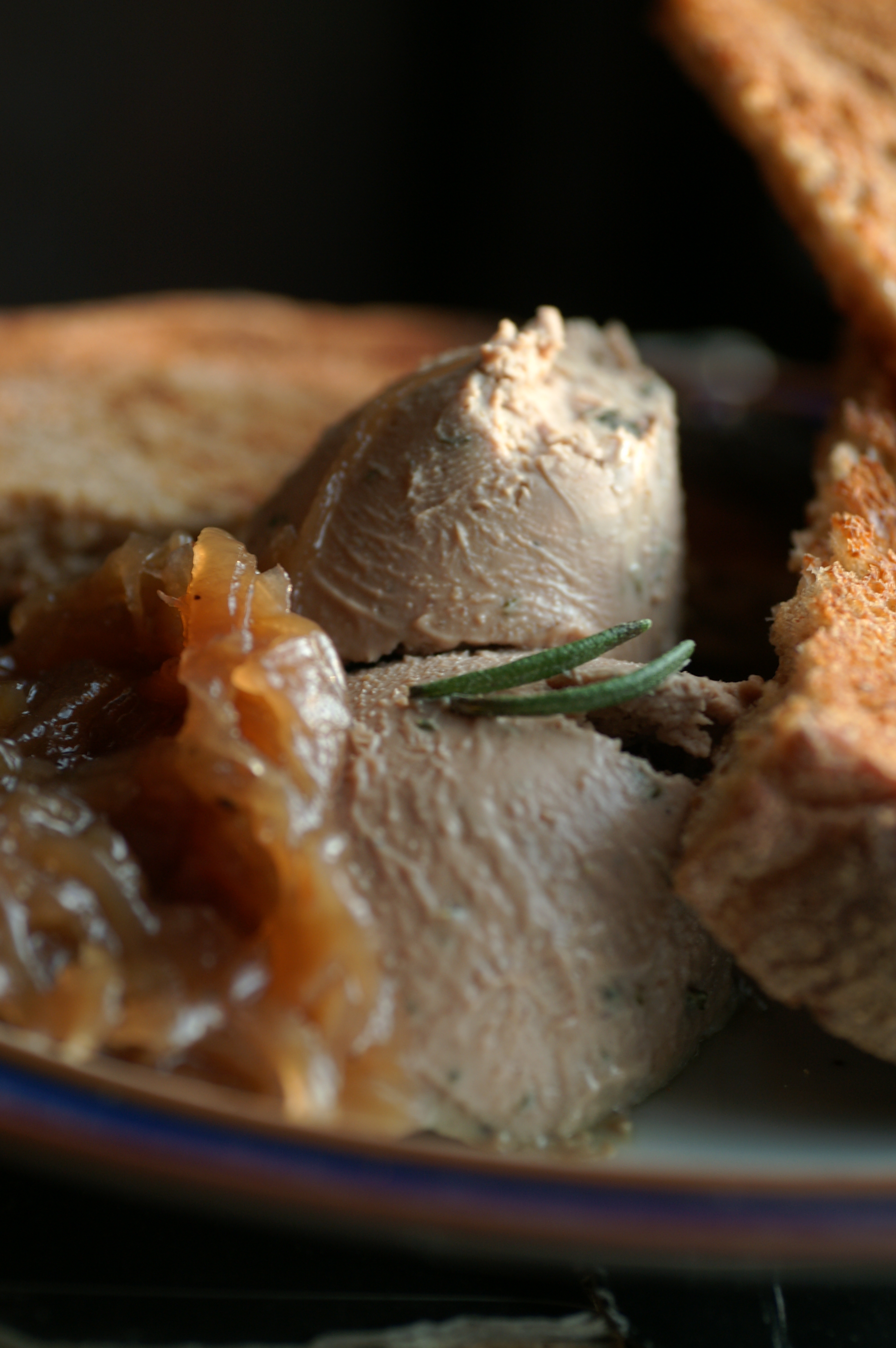
Potted chicken livers

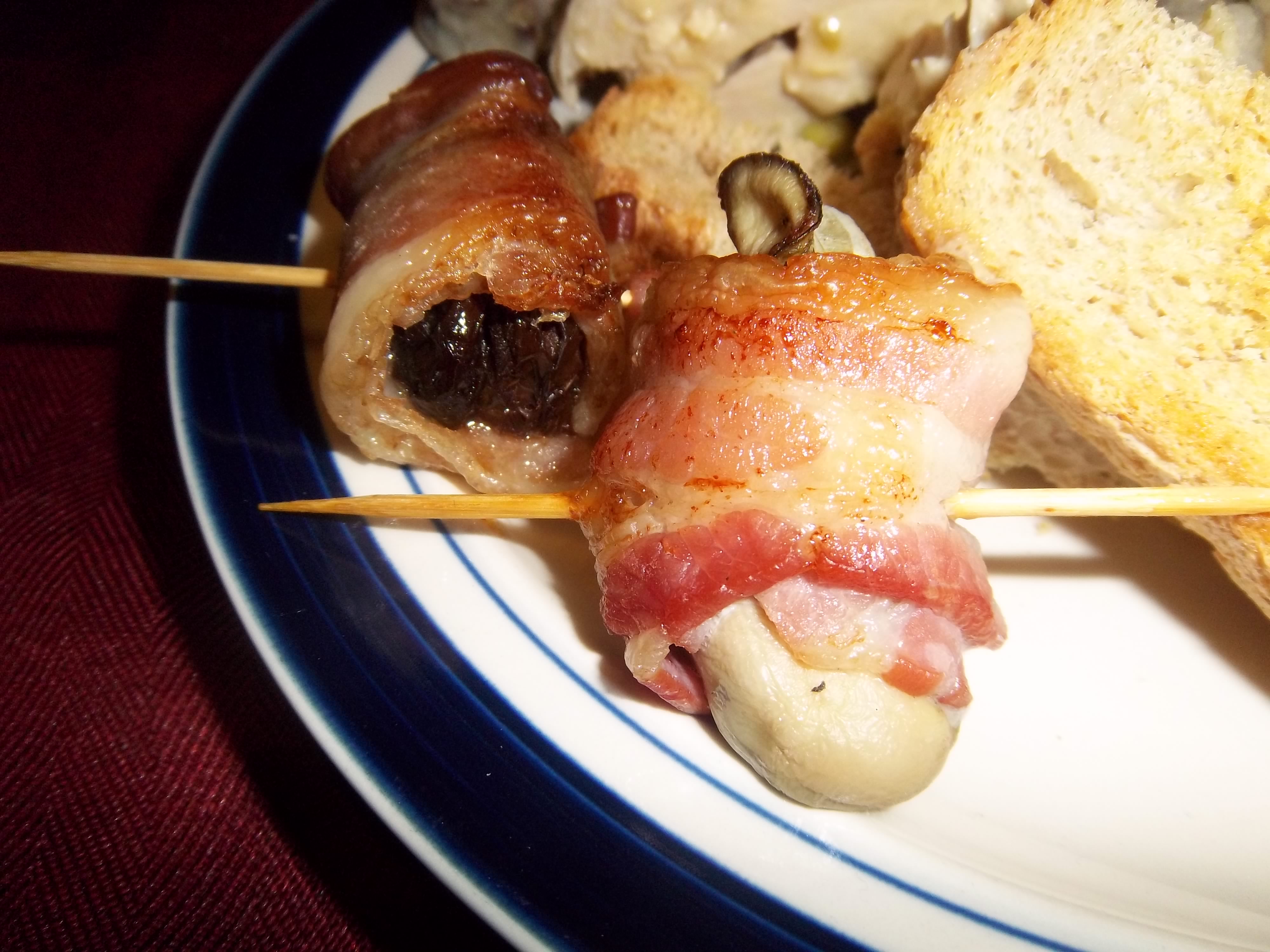
Savouries have of course lived on as first courses, canapés, teatime snacks and light lunches, and you will have eaten some of them, and many have already appeared on the blog. Delicious morsels like devilled kidneys, Welsh rarebit, potted chicken livers, potted cheese, Patum peperium, rillettes, angels & devils on horseback and sardines on toast have all been served up by Yours Truly at some point. Two of my favourites are Scotch woodcock – a spiced anchovy butter served on toast covered with a creamy, savoury custard – and Locket’s savoury, a slice of toast topped with ripe sliced pears, wilted watercress, and a thick blue cheese sauce which is then grilled, rather like Welsh rarebit. Delicious! It was nice to see Nigella Lawson championing the devilled egg recently; a woman after my own heart.

Angels & devils on horseback

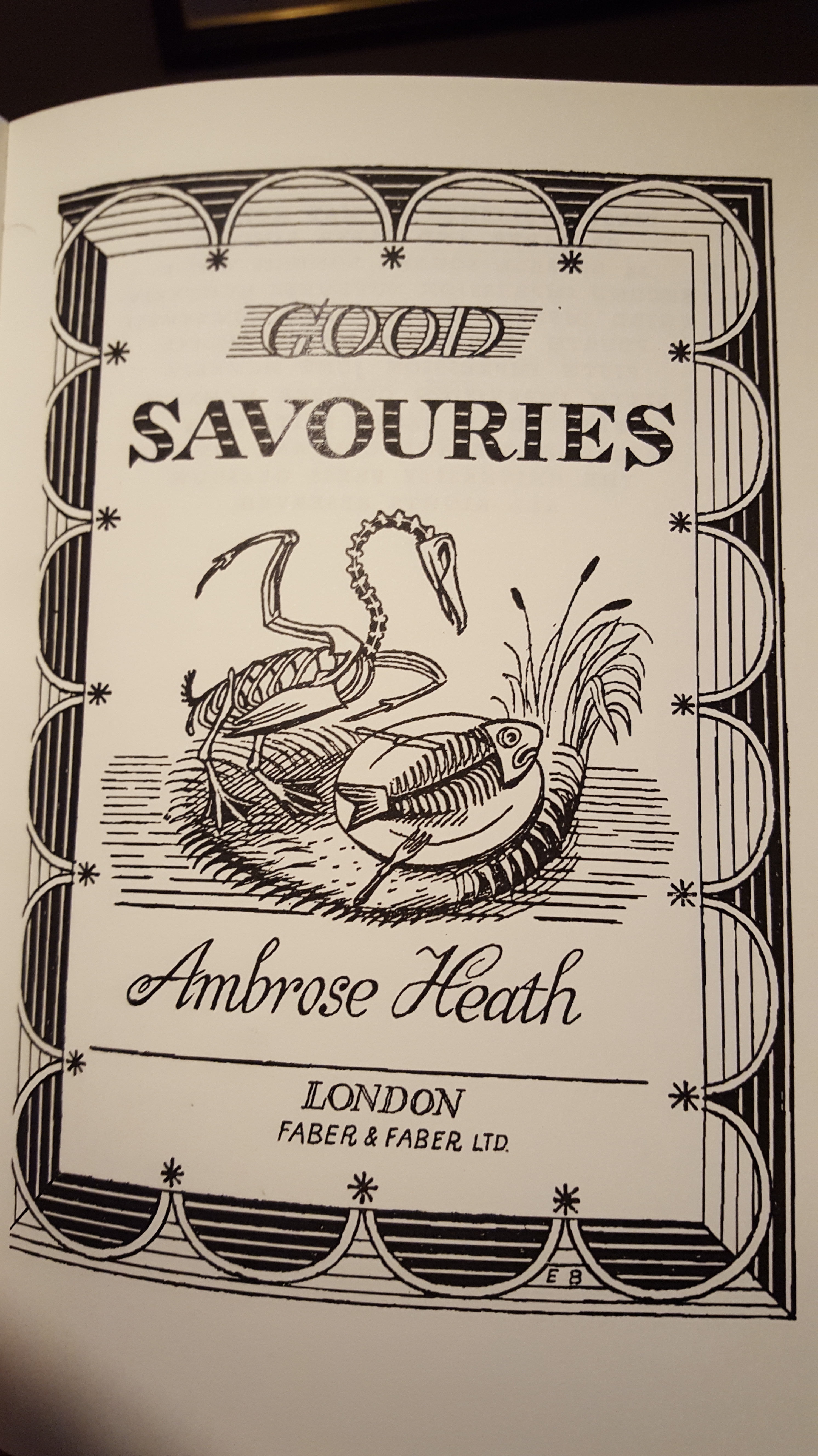
Savouries are often served on toast, fried bread or some kind of biscuit or cracker. In Eliza Action’s 1845 book Modern Cookery for Private Families, there is just one recipe for savouries which appears to be a proto-croque monsieur, with a small footnote. She doesn’t seem to approve. In the twentieth century, however, you get entire books of the subject, the best being Good Savouries by Ambrose Heath (1934).


Want to know more? There’s a podcast episode that complements this blog post:


What makes a good savoury?

  1. Size matters: it must be one or two mouthfuls, so the best vehicles are toast, fried bread or crackers. However, boiled eggs work well as do oysters in the shell. As long as you can eat it without cutlery, you’re doing good.
  2. Salt: savouries are almost always highly seasoned with salt. This is apparently the digestive part, but it also functioned to give people a good thirst ready for a boozy evening ahead. Salt itself was rarely used, it’s much better to use more interesting ingredients such as anchovies, cured meat and fish, cheese and relishes such as mushroom ketchup, Worcestershire sauce, etc.
  3. Heat & spice: quite a lot of the ingredients served more that one purpose, so most of those listed above fit into this category too, but there was also good old black pepper, English mustard, Cayenne pepper, curry powder and Tabasco sauce.
  4. Strong flavours: other strong flavoured things were used, such as blue Stilton, kidney, liver, game and smoked meats and fish like ham, bloaters and even red herrings.
  5. Creaminess: all that salt, spice, richness and heat was often tempered with something bland and creamy and a variety of things were used for this purpose, such as cream (obviously), egg yolks, savoury custards, béchamel sauces, soft cheeses, brains, sweetbreads, lambs’ fries, fish roes, oysters and left-over poultry meat.

If you like the blogs and podcast I produce, please consider treating me to a virtual coffee or pint, or even a £3 monthly subscription: follow this link for more information.


Devilled Chicken Livers

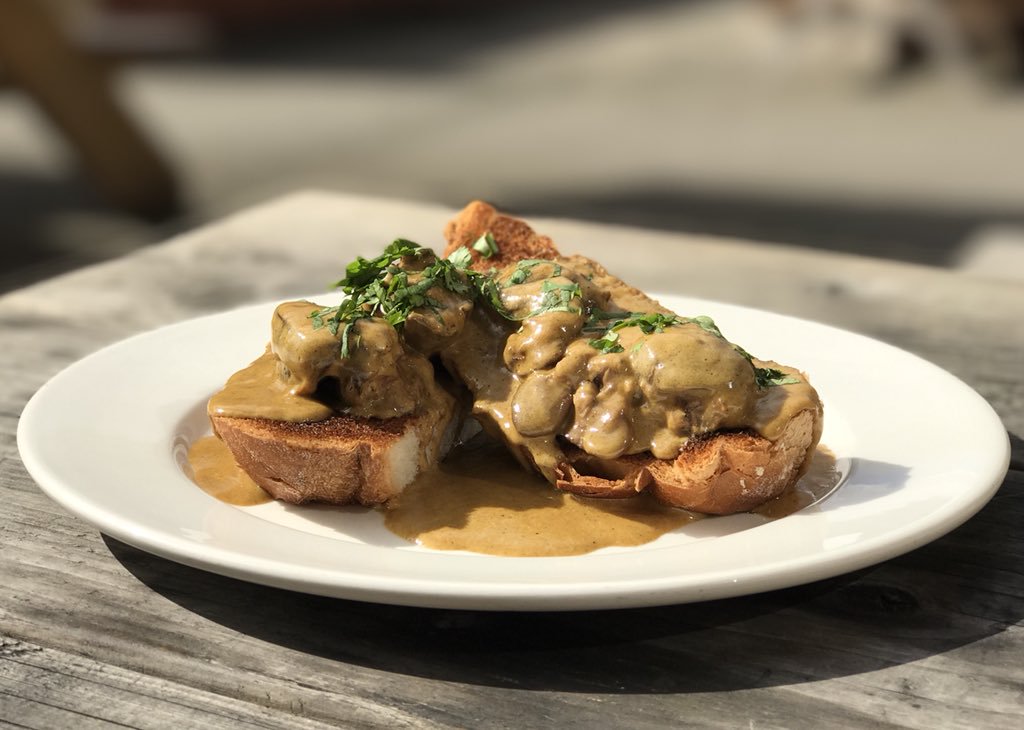
Probably the most infamous savoury is the devilled kidney, but you can devil lots of things. I pride myself on my devil sauce, and at The Buttery devilled chicken livers on toast became a rather unlikely signature dish. This recipe can be easily adapted if livers aren’t your thing: fish roes, kidney, brain, lambs’ fries, left over roasted poultry, mushrooms and even tofu can all be devilled with great success. My favourite is chicken liver because it has all of the qualities listed above in abundance. It’s a good idea to make extra devil sauce as it keeps in the fridge for a good ten days or so, and I can guarantee, you’ll be wanting to devil everything you eat from now on! Here’s how to make it.

Serves 2 as a light lunch or snack, or three as a first course, or six as a savoury course.

For the devil sauce:

2 tbs English mustard

2 tbs Worcestershire sauce or mushroom ketchup, or a mixture of the two

1 tbs vinegar

good pinch of Cayenne pepper

dash of Tabasco sauce

freshly ground black pepper

Simply beat all the ingredients together – taste and add more Tabasco and pepper if you like. There’s no need to add salt.

For the livers:

6 chicken livers

a decent knob of salted butter

the devil sauce

3 or 4 tbs double cream

1 slice of crisp toast per person

chopped parsley

First of all, check the livers for any bitter green gall sacks, which are often accidentally left on. If you sport one, snip it off with scissors.

Get a frying really good and hot and melt the butter. As soon is stops foaming, add your livers. Try not to disturb them. After 2 minutes, turn them over and cook for one more minute. Next, add most of the devil sauce and fry a further minute, making sure the livers get coated in it. Add the cream and let form a lovely rich sauce, turning the livers over in it. Have your toast ready on plates so you can top it with the livers and then the sauce. Scatter over some parsley and serve immediately.

18 Comments

Filed under Britain, cooking, food, General, history, Meat, Recipes, The Edwardians, The Victorians, Twentieth Century, Uncategorized

Two Easy Pickle Recipes

My previous post on pickling went on a bit, so I’ve added these two simple recipes as a separate one. The methods are not particularly comprehensive, so if you haven’t pickled before read the previous post for hints and tips.

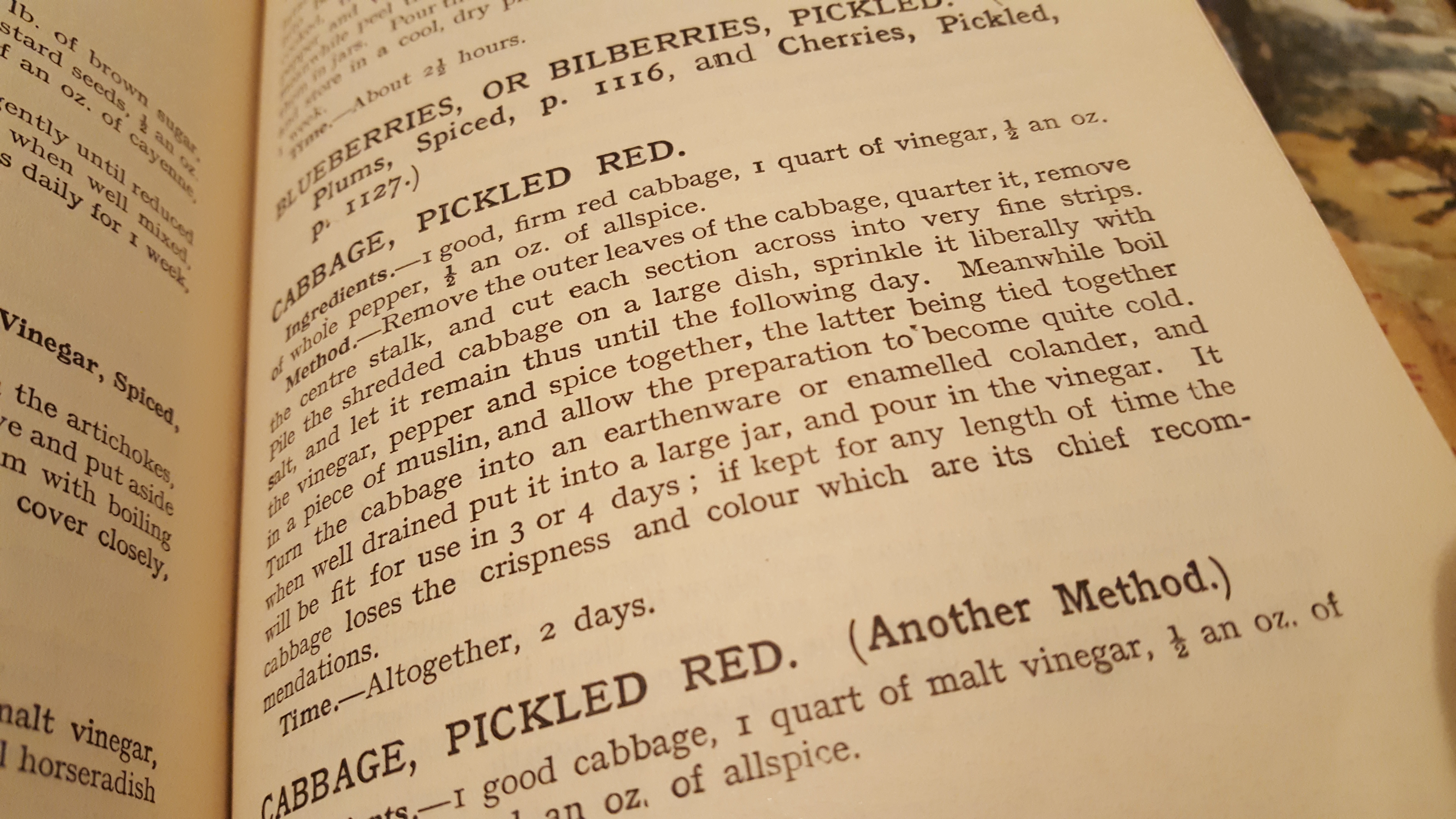
Pickled Red Cabbage

As with many recipes for preserving, it’s difficult to come up with precise amounts. It all depends upon how much produce you have and the size and shape of your jars . A certain amount of guesswork is required. If you don’t make enough pickling liquor, you can quickly make more, and if you make too much, keep it in a sterilised jar; you can always use it pickle something else, or use it in salad dressings.

It is a good example of a system rather than of a recipe, but I reckon a good-sized red cabbage will need a litre of liquor. Oh and it’s a two-day affair, so don’t start this the day before a fortnight’s holiday or something:

Day 1:

1 red cabbage, sliced thinly, centre removed

Sea or rock salt

Scatter your sliced cabbage into a colander placed on a deep plate or large bowl and strew with plenty of salt. Cover with a tea towel and leave overnight for the water to drain.

Day 2:

1 litre of cider, wine or distilled vinegar

1 tsp peppercorns

1 chilli

1 tsp Allspice berries

50 g sugar

1 star anise

1 tsp Mustard seeds

Boil the vinegar with the spices and sugar, simmering for 5 minutes. Rinse the salt from the cabbage and pack into sterilised jars. Strain the hot vinegar and fill the jars with the piping hot liquor. Pop the chilli and star anise into the jars and a few of the seeds and berries (for prettiness). Put on lids and leave to mature for four weeks.

  1. Cover cabbage with salt for 24 hours.
  2. Next day, rinse away the salt and pack into sterilised jars.
  3. Boil up the remaining ingredients. Simmer 5 minutes and pour over the cabbage.

If you like the blogs and podcast I produce, please consider treating me to a virtual coffee or pint, or even a £3 monthly subscription: follow this link for more information.


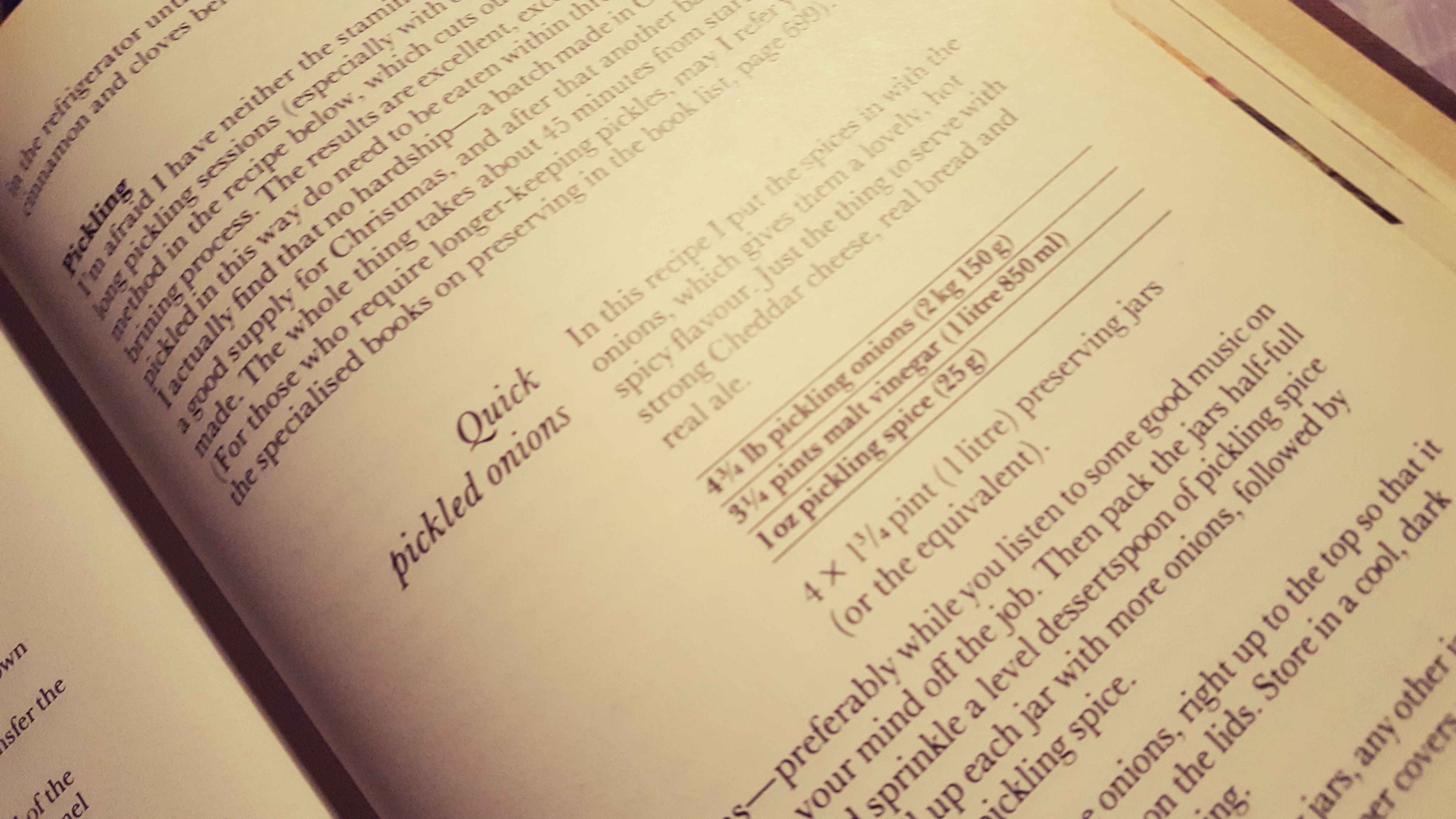
Delia Smith’s Quick Pickled Onions

from her Complete Cookery Course, 1982

“I’m afraid I have neither the strength nor the patience of endure long pickling sessions…so I always use the method below” says Delia.

No faffing about with this one: onions usually need brining or dry-salting. Delia skips this stage, but be warned: they don’t keep as long as regular pickled onions as the excess water isn’t drawn out by the salting process. They’ll keep 4 months maximum.

In her recipe, Delia asks for pickling spice, which you can buy already blended, but have a go at making your own; a keen cook will probably have most of the spices needed anyway! See the previous post for an example.

2 kg pickling onions [or shallots]

1.75 l of malt vinegar (Sarson’s is best)

25 g pickling spice

The first task is to peel the onions. Put them in a bowl and cover with boiling water straight from the kettle, drain and get peeling. The skins should now be relatively loose from their hot water treatment.

Half-fill your jars with onions – 4 1-litre jars will be enough – and share out half of the pickling spices between them, scattering nicely. Top up with the remainder of the onions, and then the rest of the spices. Pour the vinegar in (no need to heat it) and screw the lids on tightly. Leave the onions 8 weeks before eating them.

6 Comments

Filed under Blogs, food, General, Preserving, Uncategorized

Vinegar in the Home

Vinegar is, of course, delicious on your fish and chips and a great preserver, but it has been put on a bit of a pedestal by many because of its seemingly myriad uses in the kitchen and home.

Here’s a culinary tip I spotted in a book called Domestic Cookery from 1840 which is useful to anyone who has just caught themselves a hare; when hanging it in your larder, place a bowl beneath the beast to collect the blood. Add a teaspoon of vinegar to the bowl to stop the blood from coagulating. The blood can then be used to thicken the sauce when making the classic dish, jugged hare. Vinegar is used in the same way when making black puddings from fresh blood.

A brown hare (photo: Damien Waters)

Vinegar diluted in water can clean and polish so many things: floors, windows, stainless steel, chrome, carpets and cruets (no one wants a dirty sauce cruet!). Mixed with pinhead oatmeal or sand it works as an abrasive, cleaning oily hands efficiently, and mixed with bicarbonate of soda it can unblock your sink. Vinegar is a deodoriser, so add a few drops of an essential oil to a weak vinegar solution to make your own air freshener. Used neat it will remove ink stains from clothes and sanitise wooden chopping boards.

It has medical uses too. Hippocrates apparently used vinegar to treat sores and other infections, and the Victorians used to make a vinegar, sage and honey tea to treat sore throats. Modern medical research is looking into the application of vinegar to treat several diseases, including cancer.

Hannibal

By far my most favourite use of vinegar in history comes courtesy of Hannibal, that great Carthaginian general, who famously crossed the Alps on elephant. It is said that he used vinegar to dissolve any boulders blocking his mountainous path! He must have been either a very patient man, or had somehow produced acid as strong as hydrochloric.

For more – somewhat more modern – tips on using vinegar in the home take a look at the Sarson’s website.


If you like the blogs and podcast I produce, please consider treating me to a virtual coffee or pint, or even a £3 monthly subscription: follow this link for more information.


3 Comments

Filed under Britain, food, General, history, Uncategorized

Forgotten Foods #7: Openarses

I’m continuing my mediaeval-themed posts with a somewhat infamous forgotten fruit: the openarse.

This unusual fruit is a member of the Rosaceae family which contains within its members familiar apples and pears as well as the less familiar, such as quinces, rosehips and sorbs; and like many of the cultivated varieties within this group, they made their way over here from Asia Minor. They quickly nestled themselves into the English mediaeval orchard, becoming an essential fruit crop.

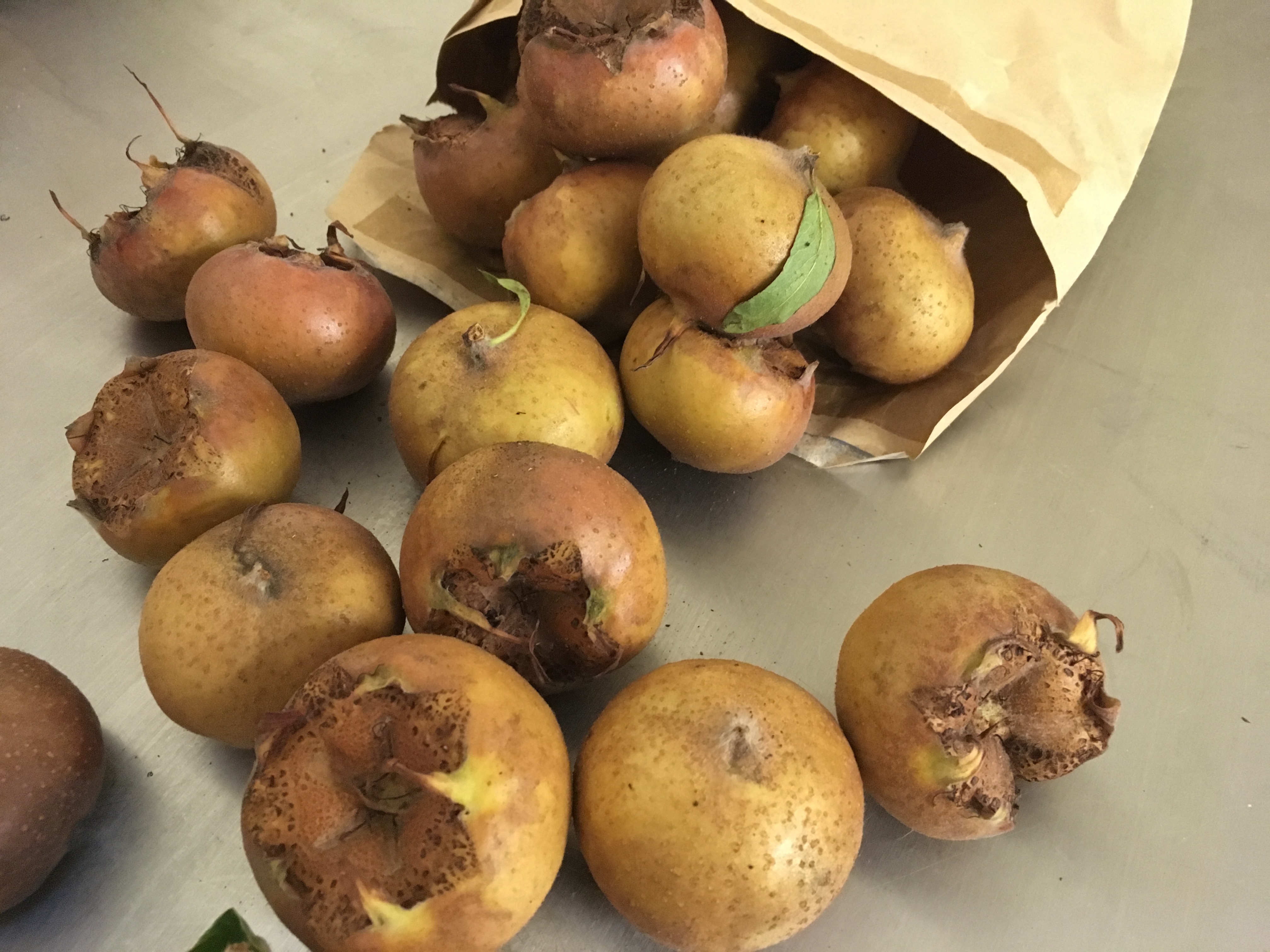
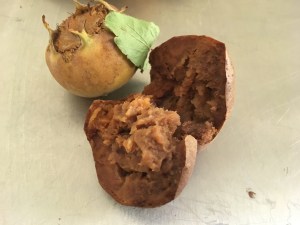
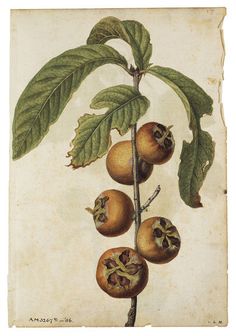
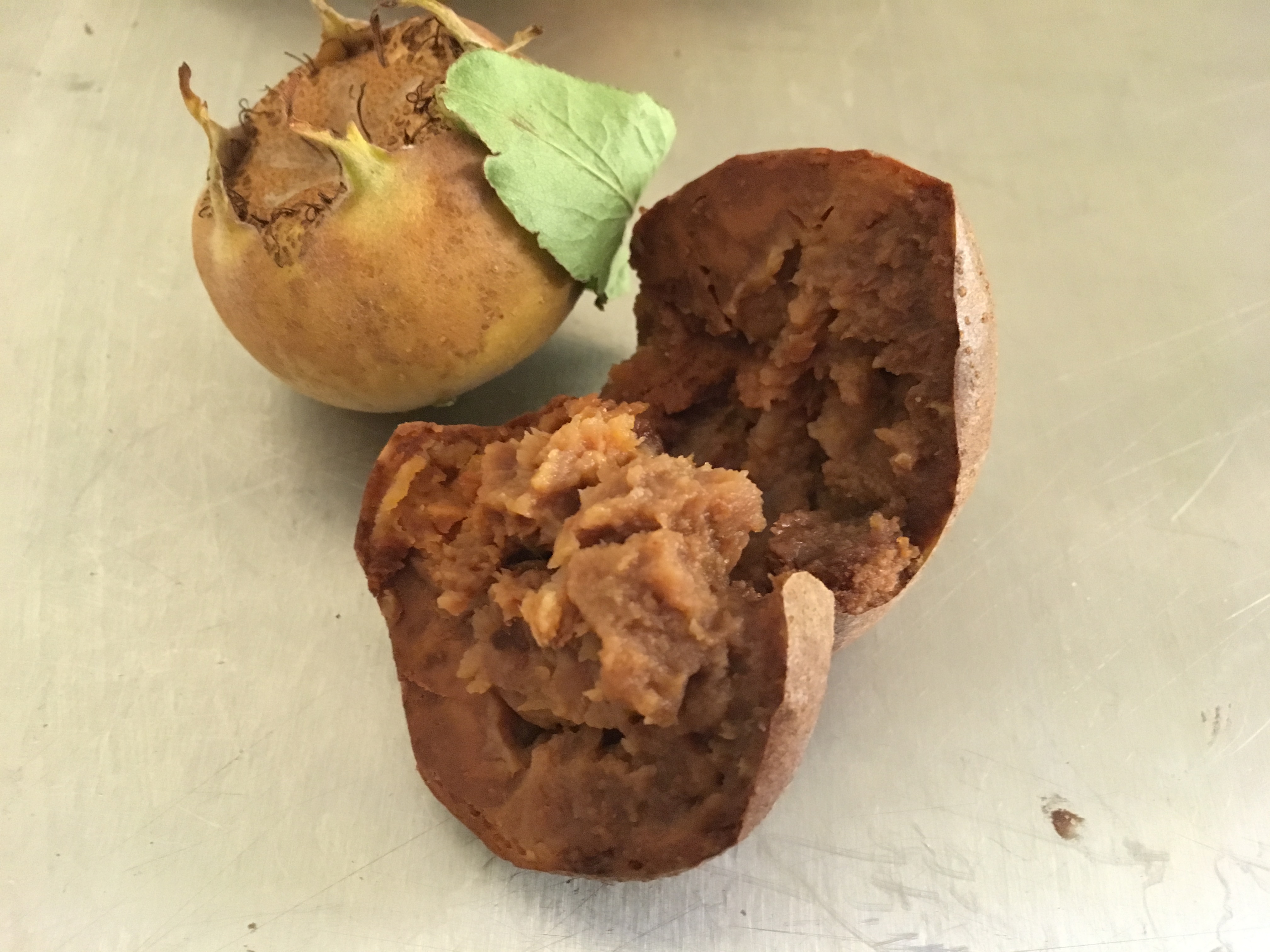
The openarse looks superficially like a russet apple’s withered twin; all squat, rough and green-brown. Turn it over and you’ll see how it gained its name. The calyces, usually small and tightly puckered on the underside of an apple or pear, are very large and lobular, protruding somewhat, giving it a definite rusty sheriff badge appearance. They also sometimes called grannies’ arses. Nice.

According to Jane Grigson in her Fruit Book, the ‘English name openarse, gradually and politely, …was superceded by the French-derived medlar.’ That said, the French also call them dogs’ arses. Trust them to be more vulgar us!

During the mediaeval period, medlars were widely cultivated in England, reaching peak production in the 1600s. They were a useful fruit because they store well, ripening up quite a while after picking. At first, however, they are rock hard, sour and terribly astringent. Picked in late autumn (some say to wait after the first frost) and stored in a cool, dark place, they begin to soften and sweeten. This controlled decay – called bletting – converts starch to the fruit sugar fructose and reduces the acid and tannin levels dramatically. It’s quite nice to see the fruits bletting at different rates and times; some blet on the tree, some take weeks post picking. You can see how this steady supply of ripening fruit would have been extremely important to mediaeval people during winter (see this post on mediaeval feast and famine for more information).


A bletted medlar

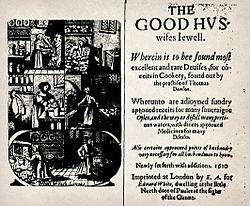
The traditional way to eat the fruit is to squeeze your openarse between your fingers so that the pulp can be either picked or sucked out. The medlar was considered very good for digestion and so would be taken after a meal with port (science is revisiting these ideas and has provided some experimental evidence that it is indeed the case). The taste is pleasant, lying somewhere between tart apple and sweet prune. Because the medlar was generally eaten in this way, recipes don’t tend to appear in old cook books; the only common recipe is for medlar jelly (which will be the subject of the next post). However, I did find one for a medlar tart in Thomas Dawson’s 1596 book The Good Housewife’s Jewel:

To Make a Tart of Medlars

Take medlars that be rotten and stamp them. Then set them on a chafing dish with coals, and beat in two yolks of eggs, boiling it till it be somewhat thick. Then season them sugar, cinnamon and ginger and lay it in the paste.

Thomas Dawson was a contemporary of William Shakespeare, and an openarse can be found in a Shakespeare passage. From Romeo and Juliet:

Now will he sit under a medlar tree,

And wish his mistress were that kind of fruit

As maids call medlars, when they laugh alone.

O Romeo, that she were, O that she were

An open-arse and thou a pop’rin pear!

A pop’rin pear, by the way, looks rather like a cock and balls. O! the camp bawdiness of it! I’m going to have to lie down.

Amusingly, the prudish Victorians replaced ‘openarse’ with ‘et cetera’, which – if you didn’t know of the replacement – makes no sense at all and, more importantly, spoils the joke.

FYI: Chaucer mentions openarses in the Canterbury Tales, and the earliest known use of the word goes right back to the 10th Century!

Colour plate from unknown source

Sourcing Medlars

After reading this, I expect you are simply dying to get your hands on some openarse yourself. This will be tricky; they are no longer grown commercially, so you’ll either have to plant one yourself or find a feral tree. If you live in the south of England this may not be an impossible task as many villages grew them in public spaces.

They are lovely trees – they grow untamed, sprawling in any direction they choose. They grow slowly, but still produce quite a large crop, so even a small tree would provide you with a decent glut of openarse. This is definitely the fruit tree for the lazy gardener.

As for me, I know the whereabouts of an ignored medlar tree in Manchester, but I’m keeping quiet about it; I don’t want all and sundry picking at my openarses now do I!?

I’ll stop now.


If you like the blogs and podcast I produce, please consider treating me to a virtual coffee or pint, or even a £3 monthly subscription: follow this link for more information.


12 Comments

Filed under food, Fruit, General, history, Mediaeval Age, Uncategorized

Mediæval Feast, Mediæval Famine

The Mediaeval Period is a vast expanse, lasting around one thousand years from the fifth century to the fifteenth, and so encompasses a substantial slice of history. It is flanked on one side by the Classical Period, the end of Roman occupation ended that one; at the other, the start of the Modern Age marked by the fall of the Plantagenet dynasty, the rise of the Tudors and the Age of Discovery. Being bookended like this, the Mediaeval Period is also sometimes called the Middle Ages.

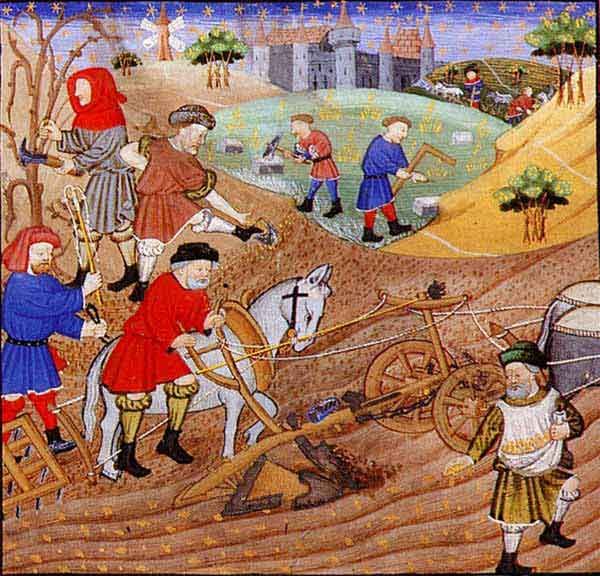
A 13th Century farming scene:  Le Régime des princes, 1279.

During this period, technology and agriculture advanced greatly, but everyone was at the mercy of the elements and entire harvests were often lost creating famine. The knowledge and skill required of the mediaeval farmer was therefore ‘vital and important’; a close eye had to be kept on the seasons, weather and general climate. Planning and forethought were essential, especially when things did not go to plan, for nothing could be grown in the winter months, so the community (which may just have been a single household) depended upon the stores built up over the summer and autumn. They were slaves to the calendar.

Wet, cold weather in spring and summer could spell disaster later in the year if food, especially grain, was not rationed and stored properly; what was grown was grown, and when autumn hit no plants could be cultivated from seed. Fighting off damp and vermin was important too; not just because it was food for the people, but for livestock too. Whole stores have been destroyed by mould. The best way to take down a village or town was to destroy the grain stores.

A modern reproduction of a mediaeval grain store (Village de l’An Mil)

Efficiency was also key: corn and other cereal crops (such as oats in more northern climes) were collected and stored, poultry such geese would eat fallen grains difficult for people to pick, and would hopefully fatten. These birds – and other livestock – would all be slaughtered, the offal being eaten immediately with most of the meat preserved in salt and smoked in chimneys. Only the animals required for breeding the next year would be kept, but in poor years even these beasts had to be killed. This had huge repercussions; not only would there be no breeding stock next spring, but also no oxen to plough the fields to plant the corn. With few crops, people were essentially reduced to a hunter-gatherer lifestyle, trapping wild animals and foraging for pignuts, berries and leaves. Famine and its associated diseases followed, especially when one throws in the Black Death in the latter centuries of this period.

Life for most was relentlessly gruelling and cruel, especially in the first Anglo-Saxon half of the period and no one was exempt; of course, it was peasants and slaves who would be the first to feel the effects of this, those ranked higher were better protected, but as a town generally ate the food it produced itself, effects quickly trickled down.

Things did improve in England when William the Conqueror/Bastard hopped over the channel with his Norman mates; an unprecedented amount of food and wine was imported from Normandy, France and other countries. Of course, only the Norman high-rankers benefitted. A major blow to the common man was the Conqueror’s implementation of strict hunting laws. Only the king, nobles, and those given special permission could hunt in the forests, anyone caug were punished severely, even in very lean times (for more information on this topic see this previous post).

Mediaeval Feast

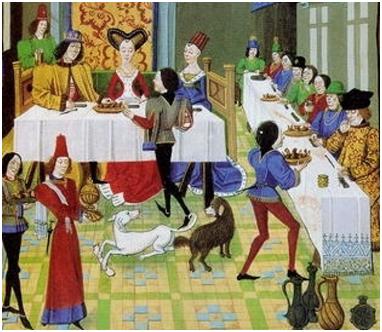
A noble mediaeval feast, notice the dogs have free reign!

In times of plenty great feasts were held, especially by the kings and nobles of the age; one had to show ones wealth, and the best way to do this was by displaying how productive your land was with huge amounts of meat, poultry, game and fish. In this period it was all about quantity and quality.

In the twelfth century, the first crusades opened up a whole new world of excitement and opulence for the rich, as exotic fruits and spices were brought back from the Holy Land along the newly-formed spice routes, adding a whole new dimension to high-class feasting.

In the early Anglo-Saxon period, and in smaller towns and for Christian feasts and celebrations, feasts tended to be a community-wide affair, with everyone eating together in a great hall. There was a strict system where one sat, however, the top table being reserved for the special guests.

Most feasts followed the same basic pattern; several courses each made up of several dishes, with everyone collecting food from the tables at which they were sat. Large flat squares of hardened bread called trenchers were used as plates, which were then given to the poor to eat afterwards (it was also much cheaper to make disposable bread plates than to buy or produce earthenware ones.)

The first course started with the archetypal roast boar’s head, it was often extravagantly decorated with brightly coloured pastry pieces as well as silver and gold leaf. It was symbolic of a time gone past – the head of the beast killed for the night’s feast, and was not generally eaten. Served alongside the head was brawn, a kind of terrine made from a pig’s head, and mustard. I have made brawn myself and it is very delicious; it’s amazing how much meat there is on a pig’s head!

Immediately after the boar’s head and brawn, the large roasted animals were brought in: pigs, mutton, kid, swan, venison and ‘noble’ game such as hare.

The second course was made up of the smaller and lesser animals: chickens, rabbits, songbirds and bitterns for example, and meat broths.

The third course was essentially the same as the third, but included fish and and more dainty dishes, like eggs in jelly, custard tarts, marzipan and comfits.

There would also be many pies, some small and some huge, and some that were there just for show; the most famous being the ‘four-and-twenty blackbirds baked in a pie’. It was common to put live animals in huge pastry cases so that when it was cut open, they would fly (or crawl) out much to the guests’ amusement. Such solettes, or subtleties, were part of many feasts. Great feasts had a whole course made up of dishes that were simply there to be looked at!

The planning and manpower required to carry off these huge events, the food served would be dependent upon season. My next few posts are going to about mediaeval food – hope you enjoy!


If you like the blogs and podcast I produce, please consider treating me to a virtual coffee or pint, or even a £3 monthly subscription: follow this link for more information.


References:

Curye on Inglyche (1985), Eds. Constance B Hieatt & Sharon Butler, Oxford University Press

Food in England (1954) by Dorothy Hartley, Little Brown & Company

A History of English Food (1998) by Clarissa Dickson-Wright

3 Comments

Filed under Britain, food, General, history, Uncategorized

Forgotten Foods #6: Pease Bread

I often frequent the excellent vegan cooperatively-run supermarket Unicorn in Chorlton, south Manchester, to fill my food cupboards both at home and at the restaurant. One day, a couple of months ago, I spotted a very mediaeval ingredient: green pea flour. I had come across ‘peasemeal’ in several old books, but didn’t expect to ever see it for sale. (Another popular mediaeval ingredient is almond milk, used particularly on fasting days; it’s funny how these old ingredients are having a comeback as health foods.)

One of the mediaeval small-holder’s most important crops was his pea crop – they were not eaten as young sweet garden peas, but were left in the pods to mature and dry. The peas became starchy and packed with protein; an excellent nutritional source for the winter months. We use those dried peas today for mushy peas or split peas. Then, they were mainly used in pease porridge/pottage.

The pease were often ground to make peasemeal to thicken stews, and to make bread for cattle. People only ate it themselves in times of winter famine, and this peasebread was hated by all.

Peasebread and peasemeal stopped being produced in most of the UK, but it did live on until the mid-20th Century in the very North of Scotland and Orkneys, where very few crops can be grown in abundance (rye and oats are the only others really). Folk enjoyed pease scones, bannocks (flatbreads) and breads, but it was still associated with poverty.

Peasemeal is considered easy to digest, partially due to its lack of gluten, and is high in protein and carbohydrates. I quite like how some of these mediaeval ingredients are being re-examined during a time of vegan and paleo-dieting. It is strange to think how the poor were eating healthy vegetables with little fat, red meat, salt and sugar, considered then to have no nutritional value. Meanwhile, the bunged-up rich were chowing down almost entirely on meat, spice, white bread and sugar, in the belief they were eating properly. I bet their bedchambers sank in the morning.

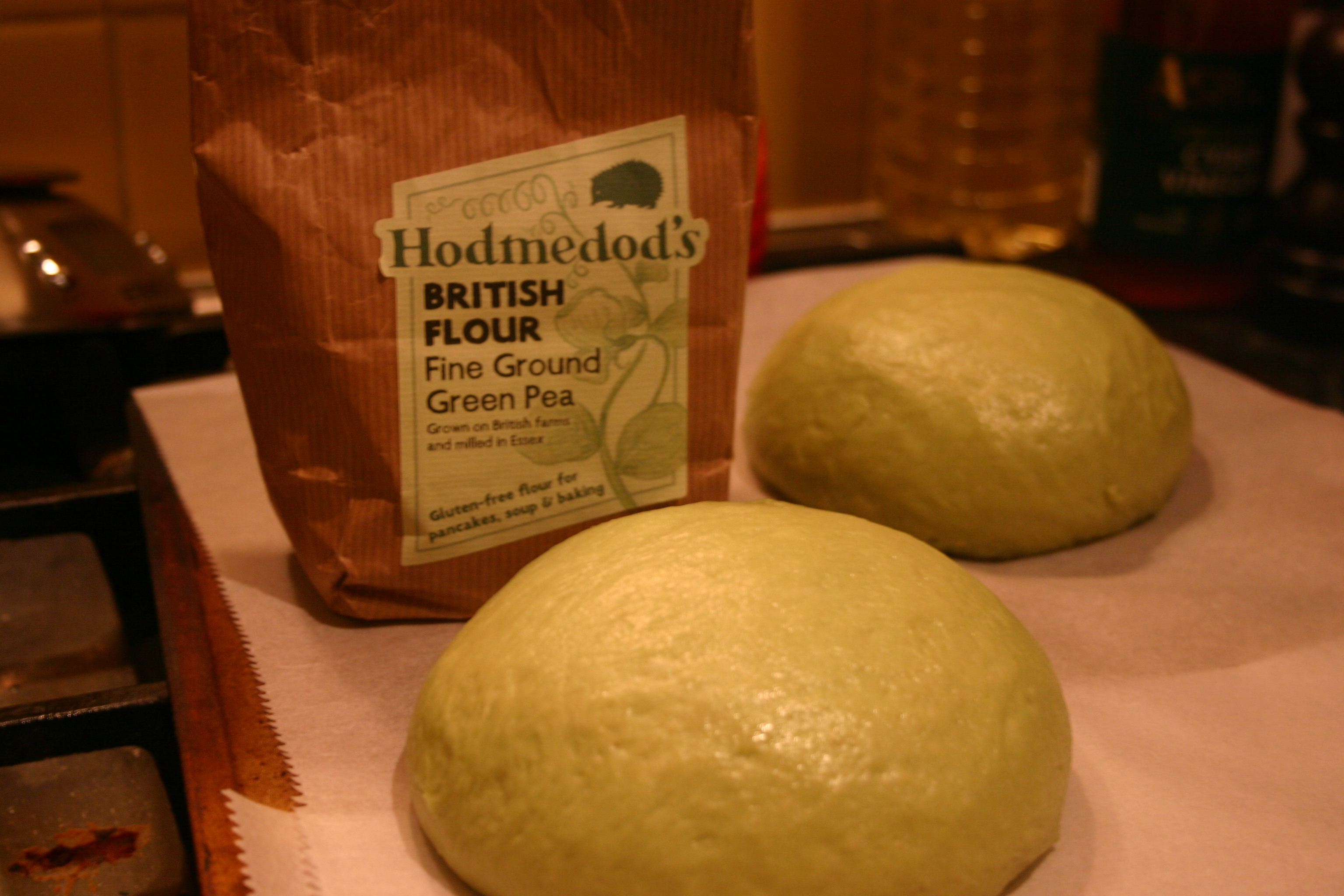
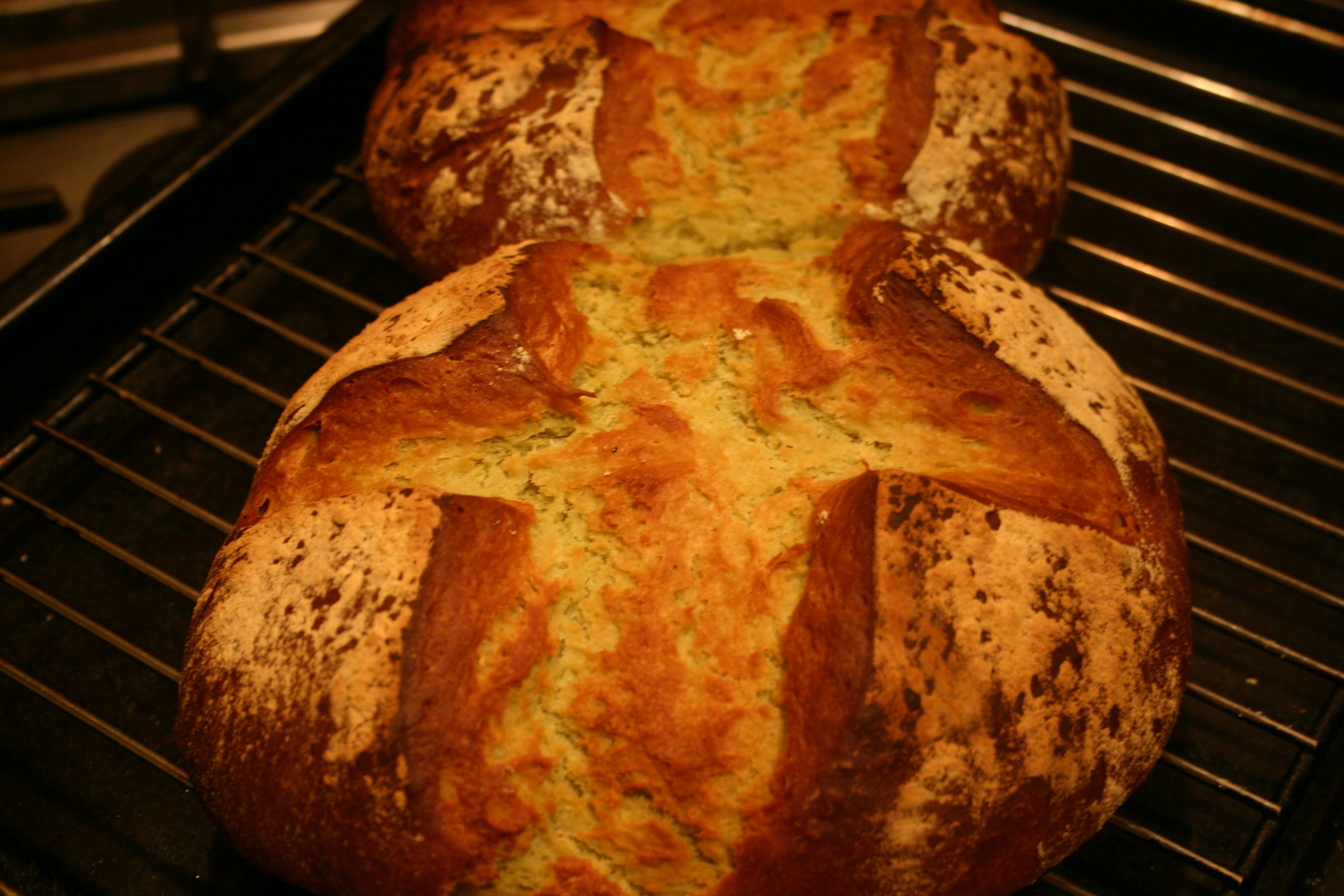
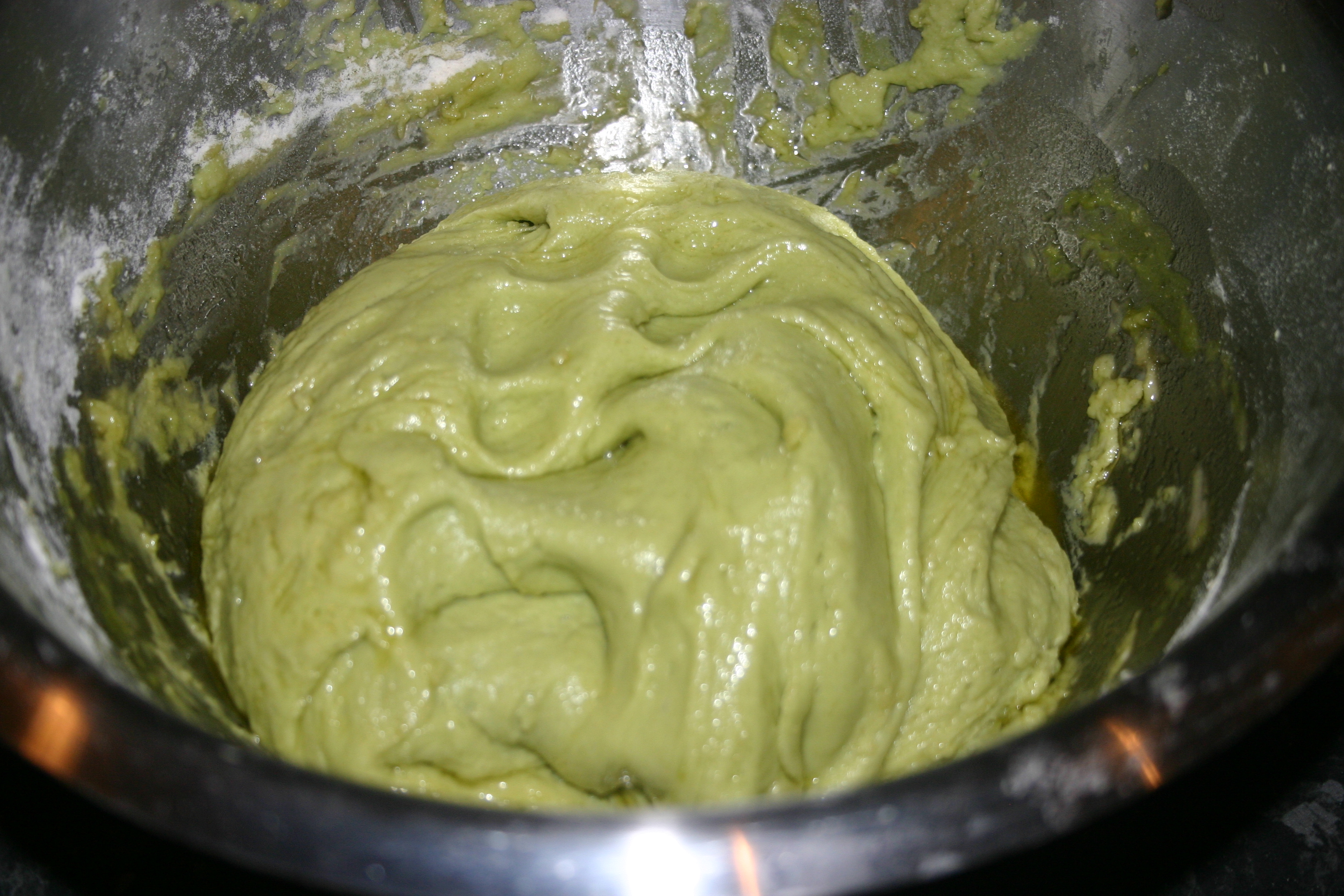
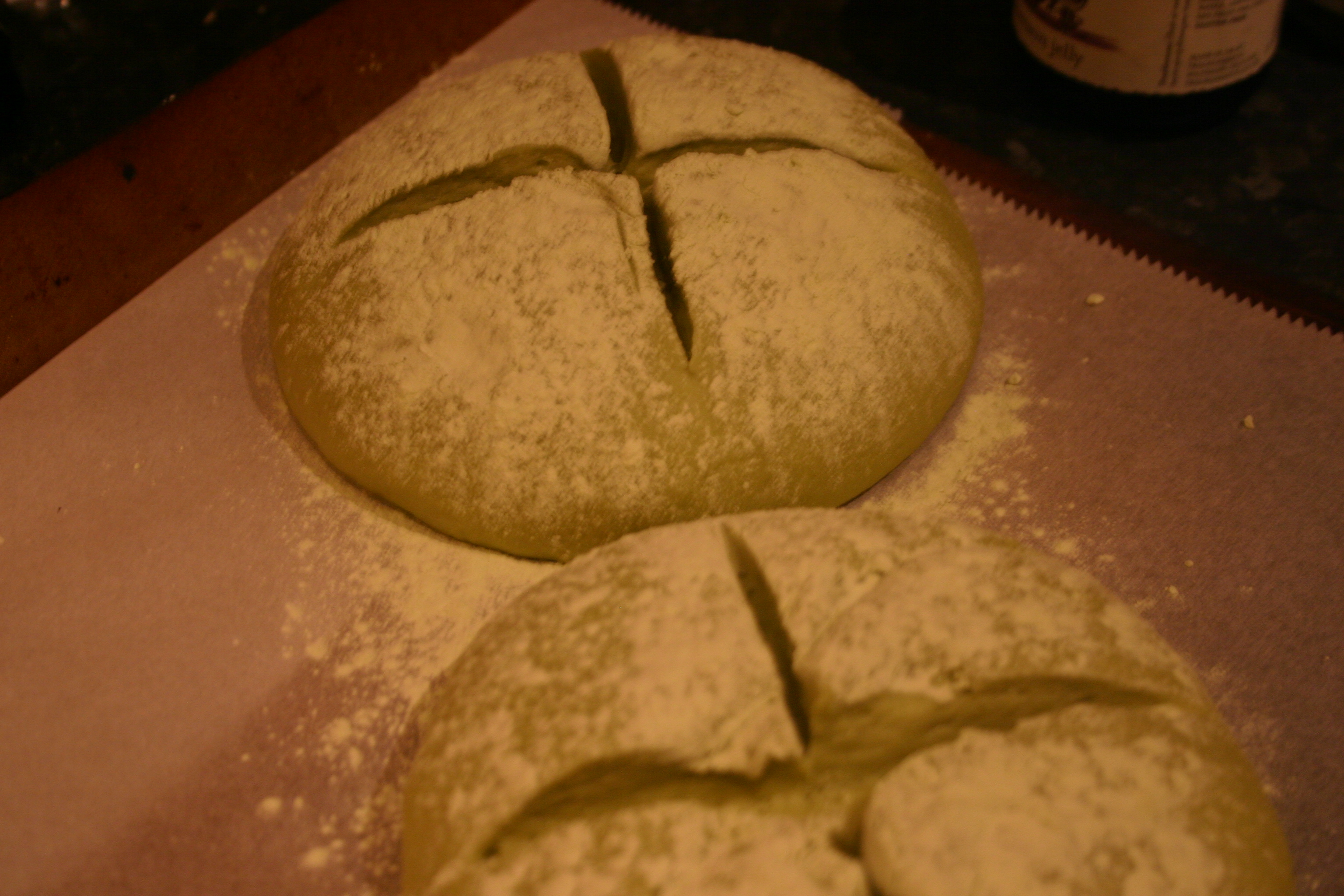
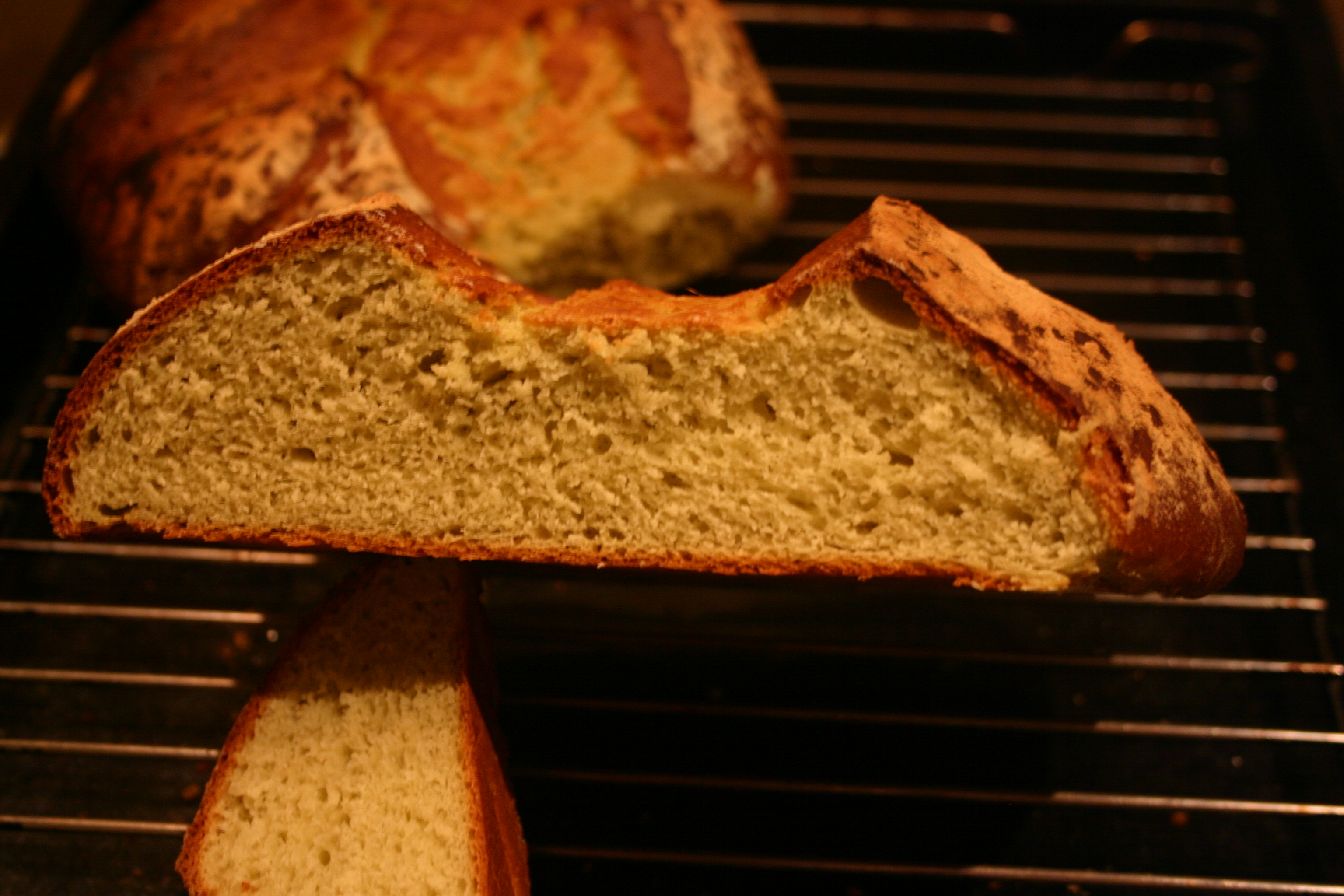
I had to have a go at the derided peasebread, just to see how bad it was. I did cheat a little bit and mixed the peasemeal with some strong bread flour. It was pretty straight-forward to make, though the dough was very sticky was hard to knead. The resulting bread was dense and a little crumbly, but had a delicious sweet pea flavour, with hints of roasted peanut butter. Probably too dry to eat on its own, it was great toasted, buttered and dunked in soup.


If you like the blogs and podcast I produce, please consider treating me to a virtual coffee or pint, or even a £3 monthly subscription: follow this link for more information.


So, here’s my recipe for peasebread. It made two flattened cobs.

(Notice all my liquid measurements are in grams rather than millilitres; for greater accuracy, it’s much easier to weigh your liquids, a tip from Elizabeth David.)

250g green pea flour

250g strong white bread flour

10g salt

10g instant yeast

30g sunflower or olive oil, or softened butter or lard

330g hand-hot water

In a wide mixing bowl mix together the two flours. To one side of the bowl place the salt, and place the yeast to the opposite side. Make a well in the centre and pour in the oil/fat and the water. Mix with your hands to form a dough. Leave to settle for ten minutes.

Spread a little oil on a work surface and knead until smooth. This is pretty tricky because it is so sticky, so use a dough scraper to help.

Oil a bowl and place in the dough inside and cover. Leave to rise until it has doubled in size, about 2 hours. Knock back the dough, divide into two pieces and form in to two taught, round cobs. To do this, roll into balls with oiled/floured hands, then tuck in the dough underneath whilst turning the ball, tautening the surface. Place on greased baking trays, flour generously and cut a cross in the centre. Cover with large plastic bags and leave to rise again for about an hour.

Place the cobs in a cold oven, then set the temperature to 230⁰C and bake for 40 minutes. Cool on a rack.

21 Comments

Filed under baking, bread, Britain, cooking, food, history, Recipes, Teatime, Uncategorized