Tag Archives: hazelnuts

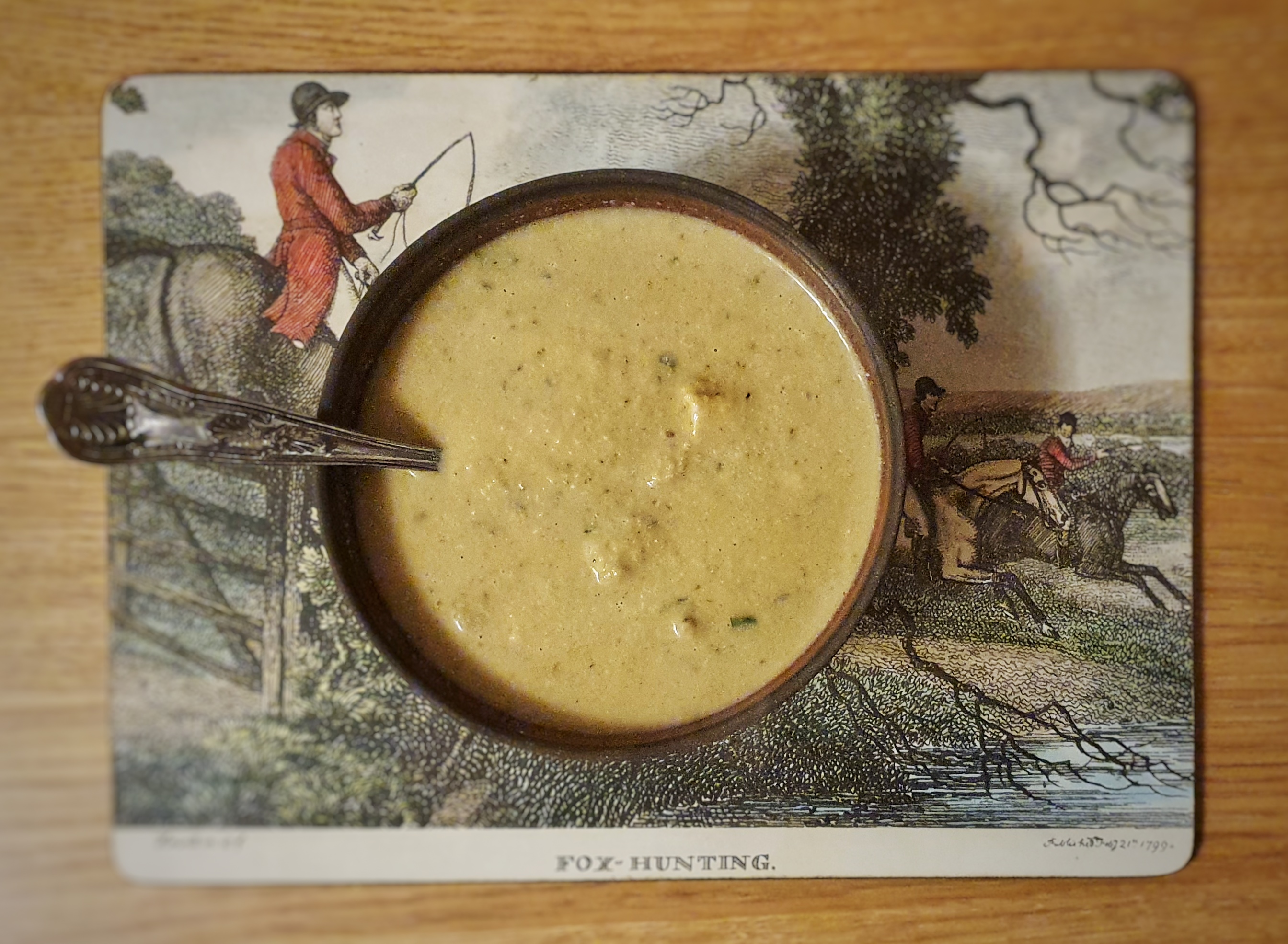
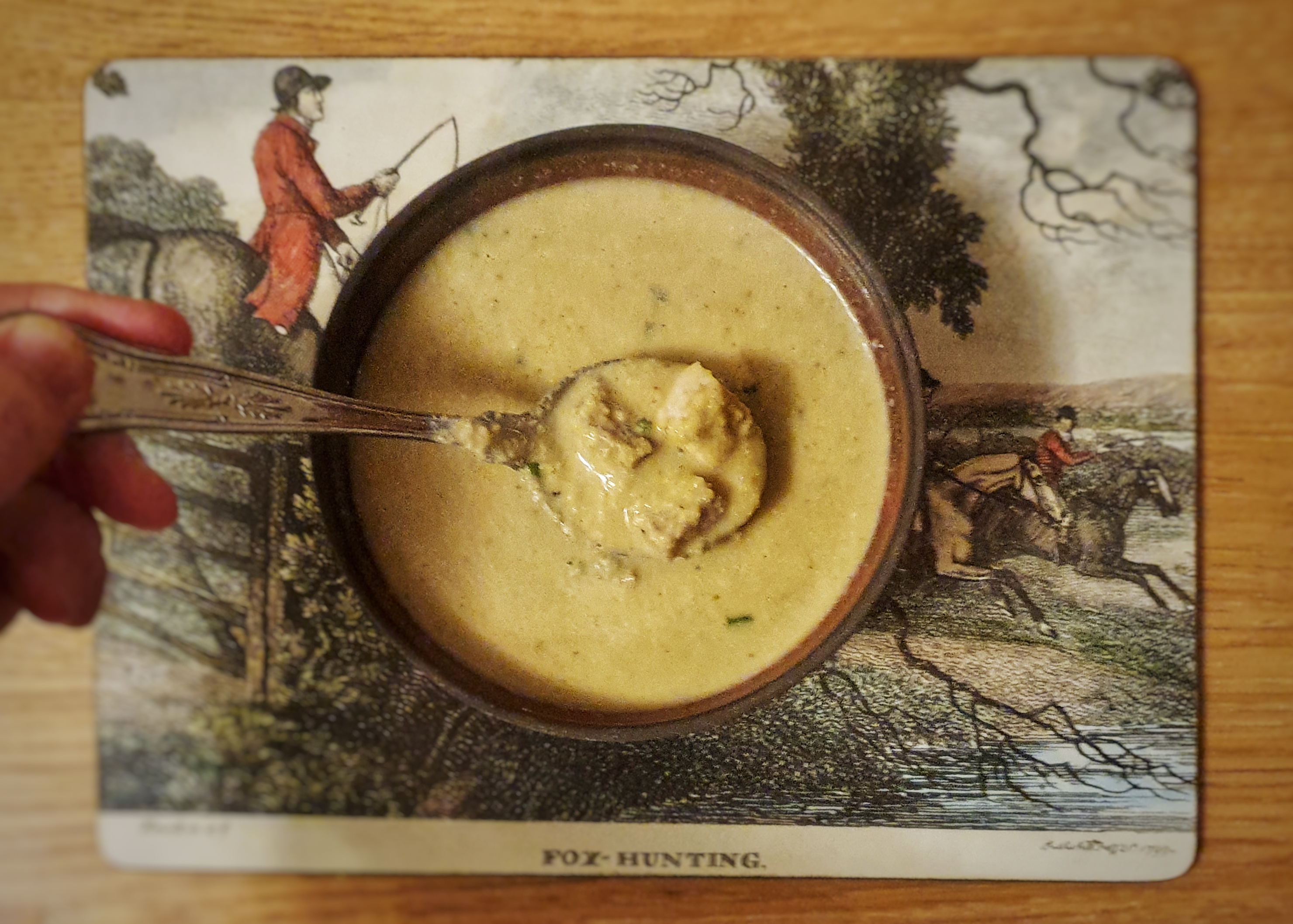
To Make Turkey and Hazelnut Soup (& Turkey Stock)

If you are not loving your leftovers at Christmastime, then you are missing a trick: it doesn’t have to be all dry turkey and cranberry sandwiches for the next week.

This is a really great recipe adapted from Jane Grigson’s English Food. I’ve made a few tweaks, and I have provided you with a method for making turkey stock. This recipe would work with leftover chicken, or even pheasant and partridge, or a mix of them.
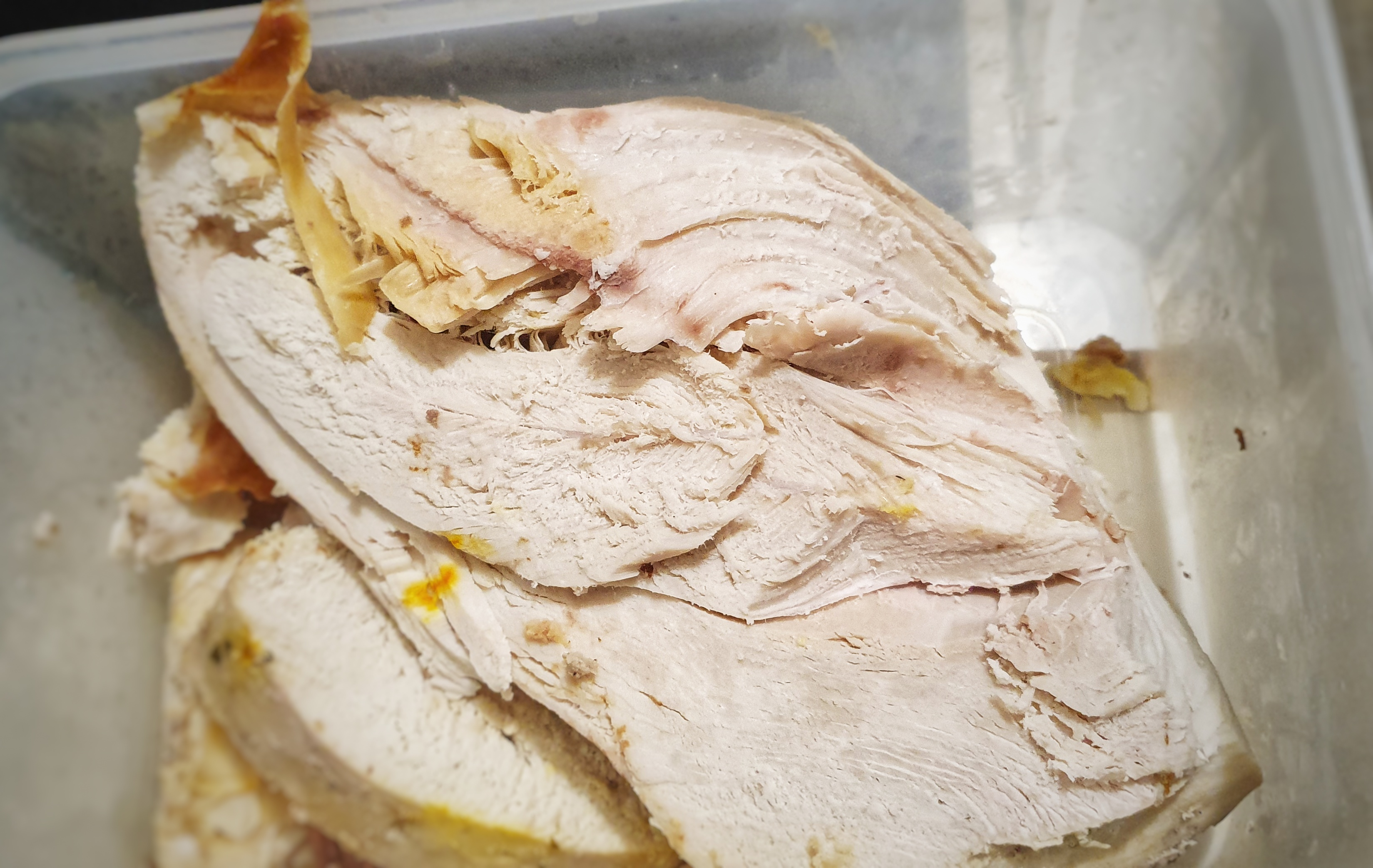
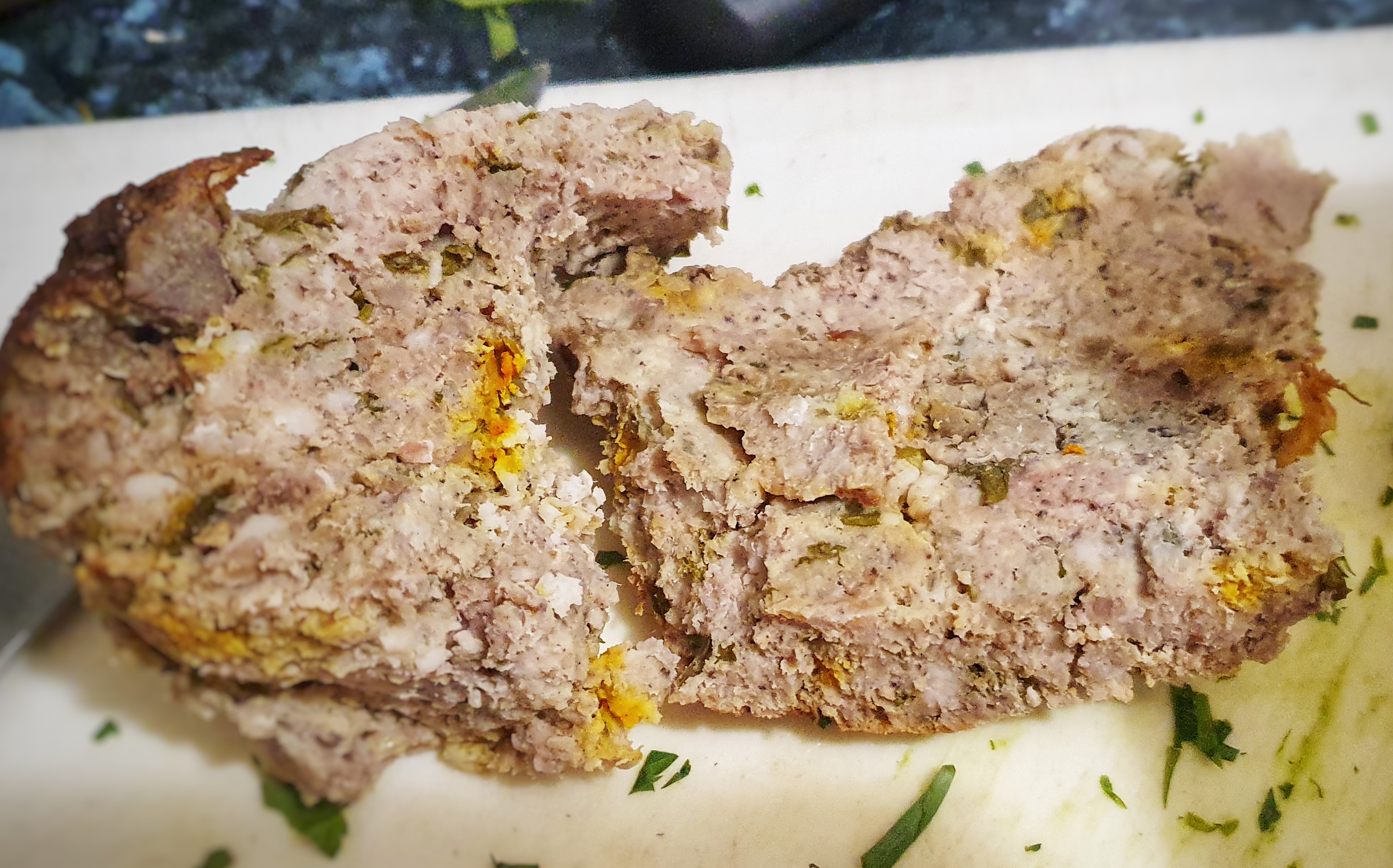
Because it’s a leftovers dish, don’t worry if you don’t have all of the ingredients, though I would say it’s important to have at least three of the basic soup veg and one herb (fresh or dried). It doesn’t even matter if you don’t have any hazelnuts: almonds would work just as well, or you could miss them out entirely. Also, if there are any leftover boiled or steamed vegetables, or roast potatoes, you can pop them in before everything gets blitzed.


If you like the blogs and podcast I produce, please consider treating me to a virtual coffee or pint, or even a £3 monthly subscription: follow this link for more information.


This recipe makes many servings.

For the soup

2 to 3 tbs of fat: this could be butter, leftover fat from the roast potatoes or skimmed from the roast turkey juices

Basic soup veg, peeled, trimmed and diced, such as 2 carrots, 2 onions, 3 cloves garlic, white part of one or two leeks (keep the green parts for the stock), 3 sticks of celery

Herbs: 4 bay leaves, a small bunch of thyme or a tsp of mixed, dried herbs

1 tsp celery salt

1 bunch tarragon leaves, chopped

1 bunch parsley, chopped

1 medium potato, peeled and diced

1.5-2 L turkey stock

Salt and pepper

2 handfuls diced turkey breast (or whatever you have left)

100 g roast hazelnuts, roughly chopped

Leftover stuffing, cut into approx. 1 cm dice

150 ml cream

Heat the fat in a stockpot or large saucepan and add the diced soup veg and herbs, plus the celery salt. Stir and fry on a medium heat until things begin to turn golden brown. Add half of the parsley and tarragon plus the potato and continue to cook for another 7 or 8 minutes.

Pour in the turkey stock and bring the whole lot to a lively simmer, then turn it down to gently bubble until the vegetables are nice and soft, about 15 minutes.

Taste, and season with salt and pepper at this point, then add the diced turkey and the hazelnuts. Simmer for a further 7 or 8 minutes, then allow to cool slightly before blitzing the soup in batches in your blender or food processor. Be careful here! Don’t overfill your blender, especially if the soup is still quite hot.
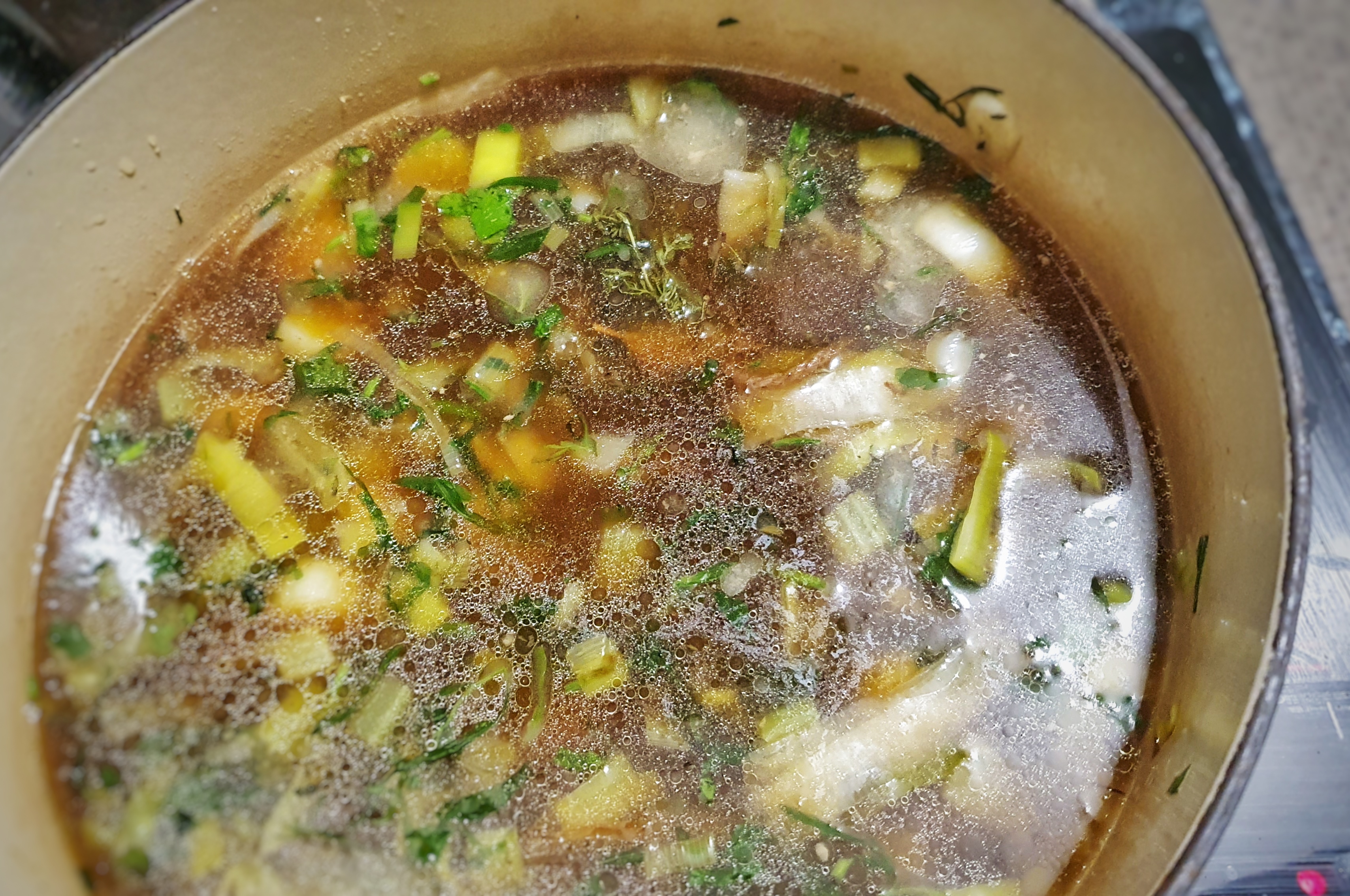
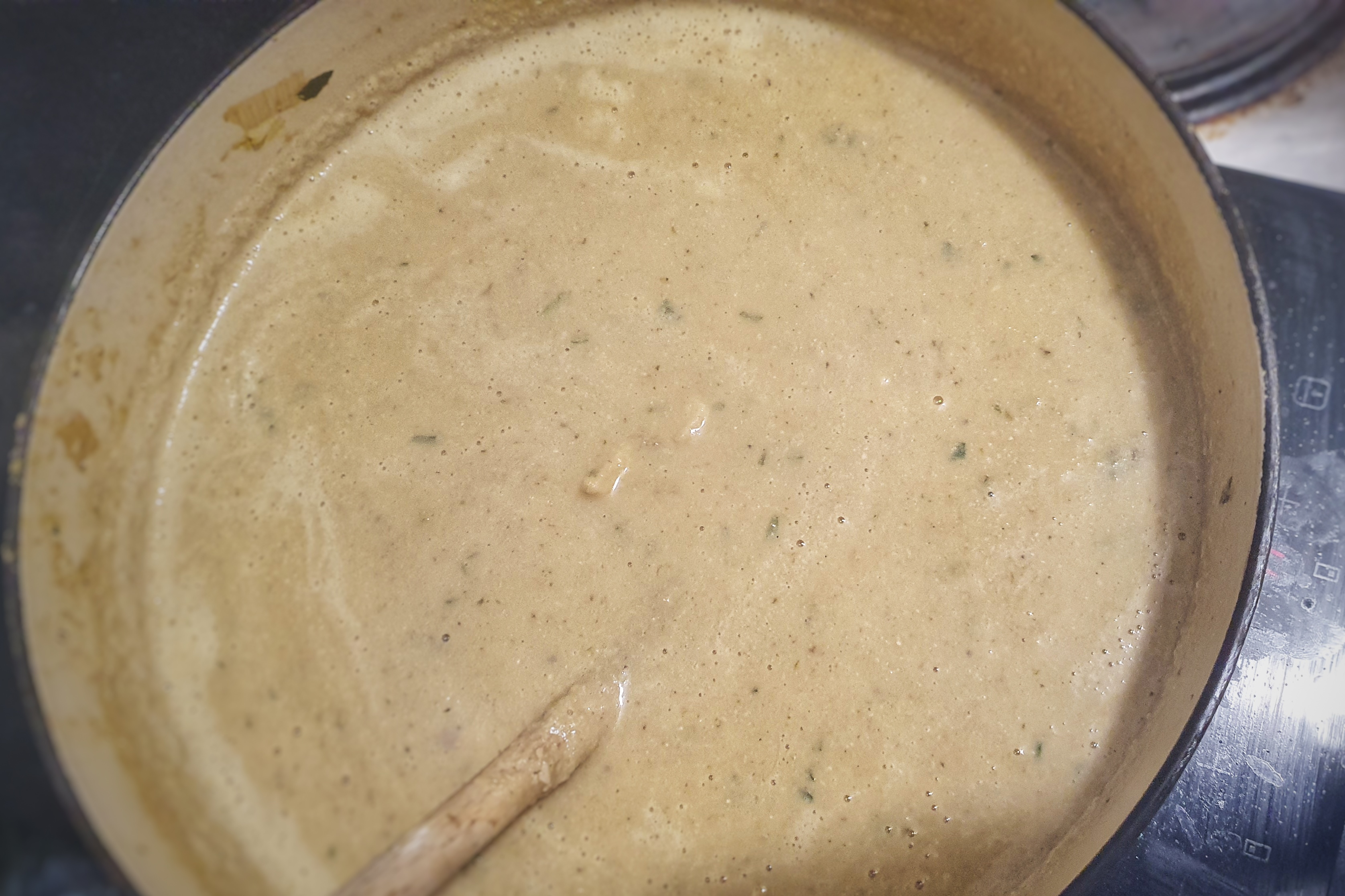
Return to a clean pan, bring back to a simmer, add the cream and the rest of the parsley and tarragon, as well as the diced leftover stuffing. Taste and season with more celery salt and pepper. Serve immediately.
For the stock

I keep vegetable trimmings and peelings in bags in my freezer for stock-making sessions such as these; you can, of course, use regular stock vegetables: celery, onions, carrots, leeks, etc.
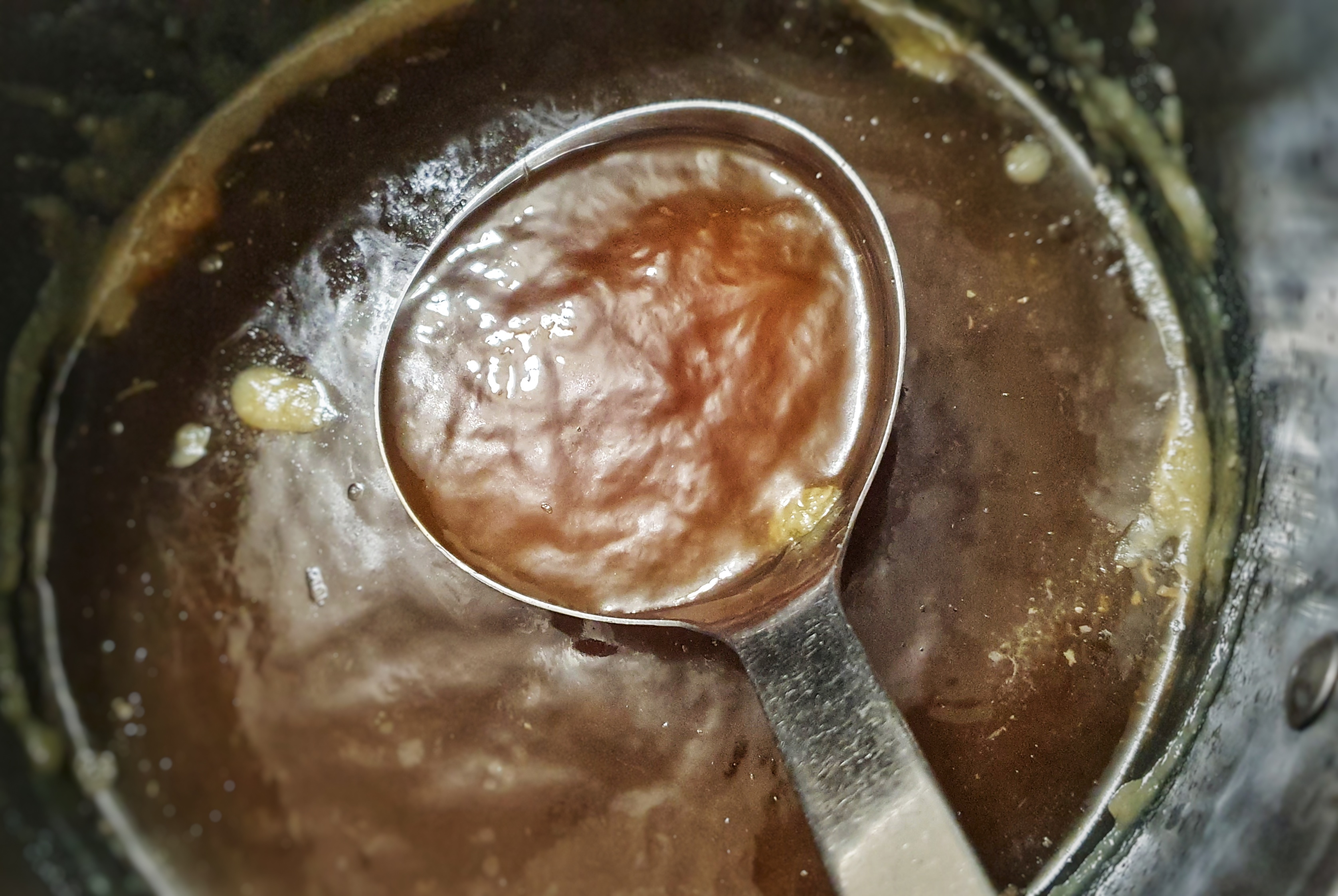
This secret to getting a good colour to your jellied stock is to brown the carcass and vegetables very well.

Makes around 2 litres of jellied stock

2 tbs of fat or oil

The roast turkey carcass, broken into pieces – don’t be too thorough with removing the meat, leave some on.

Vegetable trimmings and peelings (avoid brassicas) or a mixture of stock vegetables: 2 carrots, 2 celery sticks, the green part of a leek or two, a couple of onions, a few smashed garlic cloves.

Aromatic herbs, e.g. 3 or 4 bay leaves, a small bunch of thyme and/or rosemary, parsley stalks

Aromatic spices, e.g. 1 tsp black peppercorns, 6 cloves, 1 tsp allspice berries, 2 blades of mace

1 tsp salt

Any leftover turkey juices or turkey gravy

Cool water to cover

Heat the fat or oil in a stockpot or pressure cooker and add the turkey carcass, the vegetables, the herbs, the spices as well as the salt. Stir and fry until both the turkey and vegetables are starting to turn a good, golden brown.

Add any leftover gravy and top up with water so that it barely covers the turkey and vegetables.

If cooking in a stockpot: bring slowly to a simmer, turn the heat over and let it cook very gently for two hours.

If cooking in a pressure cooker: bring to a simmer, when high pressure is reached, reduce the heat and cook for 25 minutes before turning off the heat and allowing the stock to depressurise.

If cooking in a slow cooker: transfer everything to your slow cooker (careful!) and cook on a high setting for 1 hour and then a medium setting for 2 more hours.

When the stock is ready, pass the whole thing through a strainer, pressing down on the cooked mush with the back of the ladle: we want as much flavour as possible. Let the stock cool down and then refrigerate. Skim away the fat before using.

Tip: If you need the stock straight away, you can skim the fat with a spoon, but a quicker method is to throw in a couple of handfuls of ice cubes. The fats immediately freeze to the exterior of the cubes, and can be lifted out before the ice has had the chance to melt.
1 Comment

Filed under Britain, Christmas, food, General, Meat, Recipes, Soups

Cobnuts, Filberts & Hazelnuts (& Cobnut Cake)

One of my favourite seasonal foods are fresh Kentish cobnuts, and they are in season right now, so I thought I’d write a little post about them in case you see them at your local greengrocer’s shop. In the north of England they are difficult to get hold of, and when you do see them they cost a small fortune, but luckily for me, I was in London last weekend and spotted a fruit seller outside Borough Market selling big punnets at just £3.50 a pop. Up North, I’d have had to remortgage.

Cobnut season runs from late August to October in the UK, and they can – or, at least, their wild cousins can – be found growing on wild hazel trees all around the country – in fact they grow in abundance near me in Manchester. Unfortunately, the squirrels beat me to them every year. Nutting season traditionally started on 20 August on St Philibert’s Day.1

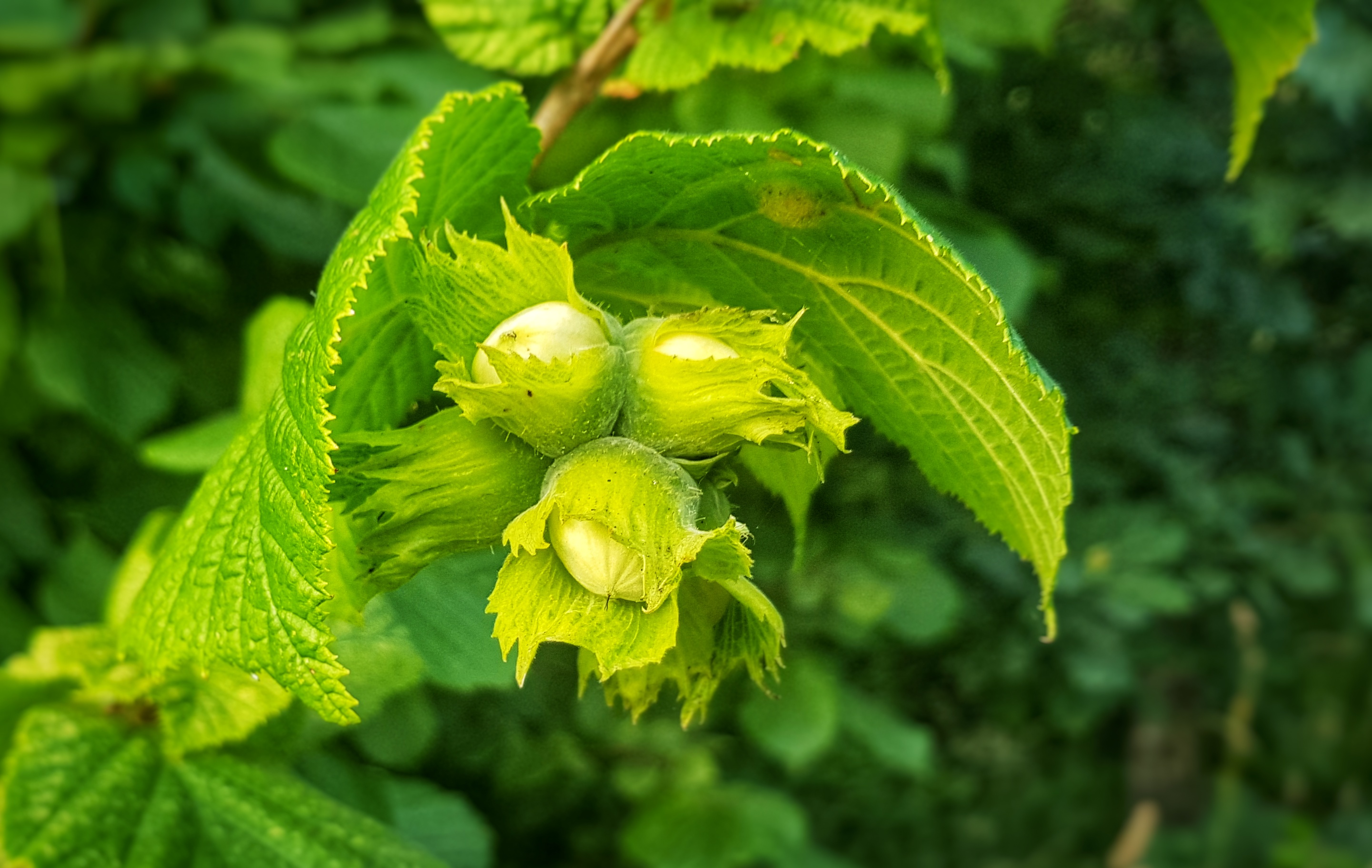
Wild, unripe Mancunian hazel/cobnuts

There’s a little confusion regarding nomenclature here, as is so often the case, some call these nuts cobnuts, others filberts, and some call them simply hazelnuts. Are there any real differences between the three or are they just regional names for the same thing? Well that all depends upon whom you ask, and when in time you ask.

Let’s start with the wild tree, the hazel, or to give its Latin name Corylus arellana. These nuts are hazels, or hazelnuts, they are elongate and flatter that the supermarket variety, but they still have the same smooth shells. This is what many people today would call a cobnut. This common tree produces nuts that was an important foodstuff for Neolithic humans, and they have been cultivated since Roman times.2,3 These cultivated trees were bred for greater yields and larger nuts changing making them more spherical in shape. These round nuts were called cobs, or cobnuts, and they are what we would call hazelnuts today. They grow so well in Kent that at one point 7000 acres of land was put aside for their cultivation, plenty to export a significant number to the United States.3

Okay, let’s, for the sake of argument, say that hazels are the wild nuts and cobnuts are their cultivated cousins, where do filberts fit in? Well, these are a larger cultivated nut from a completely different species of hazel (C. americanus).4 They were regarded as a rather upmarket orchard fruit, whilst cobnuts were considered more suitable for the hedgerow (or did they mean hazels!?).3

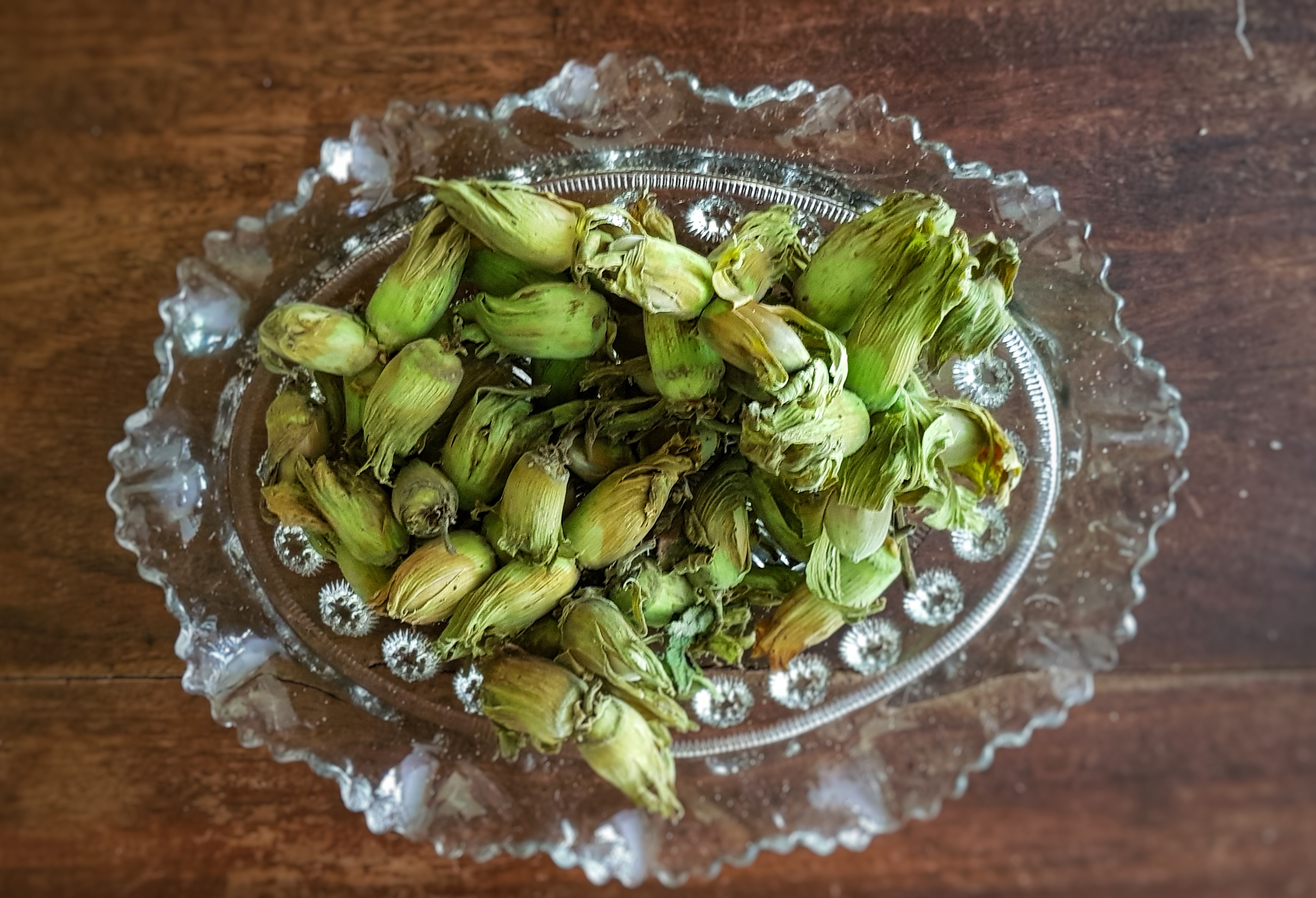
Today, cobnuts appear to be a catch-all term for any of the elongate forms of hazelnuts. The great thing about getting them fresh is that they have a lovely crisp, refreshing flavour, rather like water chestnut but with a mild hazelnut flavour. They are still covered in their green protective coats (shucks) and sometimes even the shell is still green. They store well and can be dried and eaten months later. An alternative to drying is to shell the fresh kernels and store them in honey. I expect the fresh kernels would make very successful pine nut replacement in pesto.


If you like the blogs and podcast I produce, please consider treating me to a virtual coffee or pint, or even a £3 monthly subscription: follow this link for more information.


Kentish Cobnut Cake

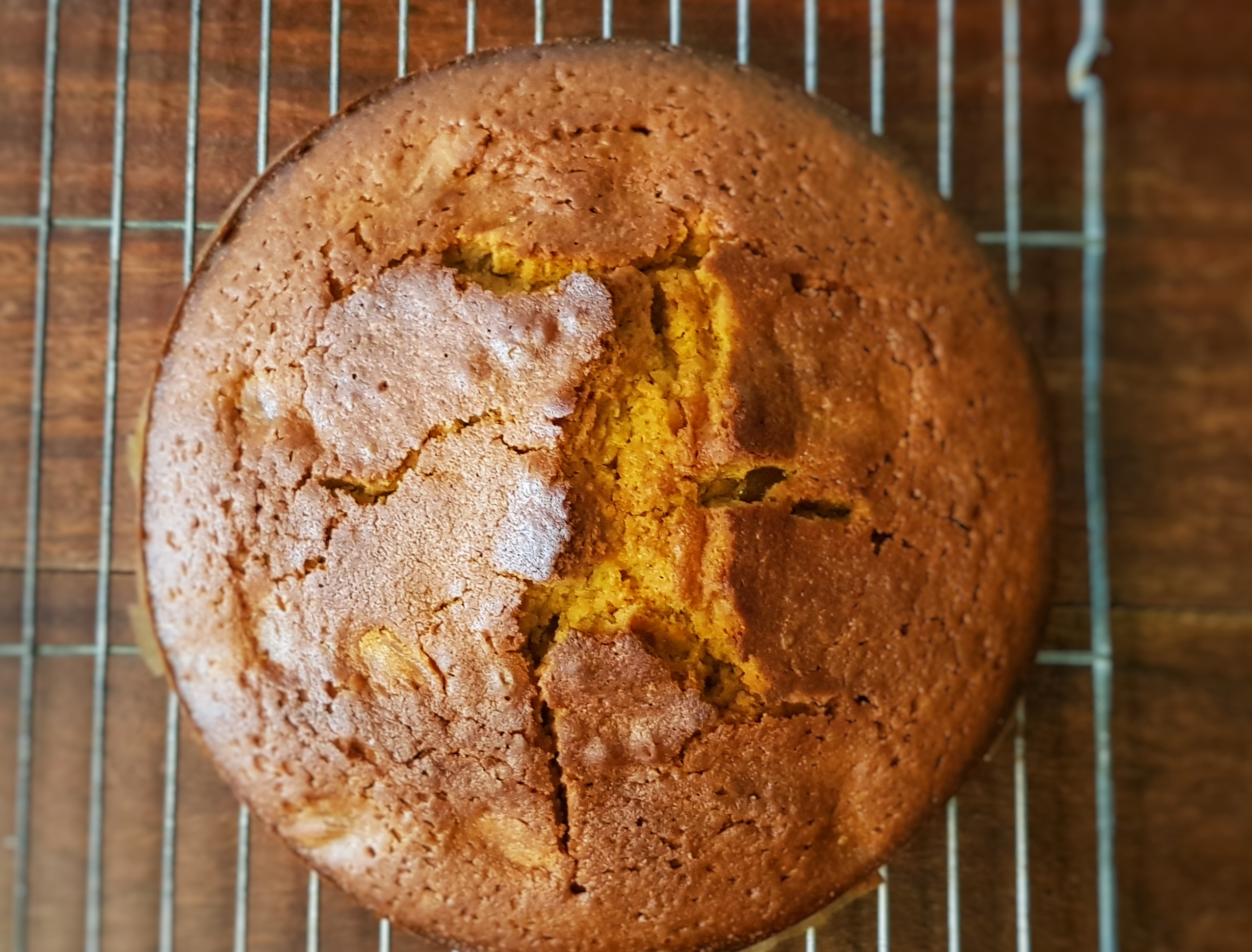
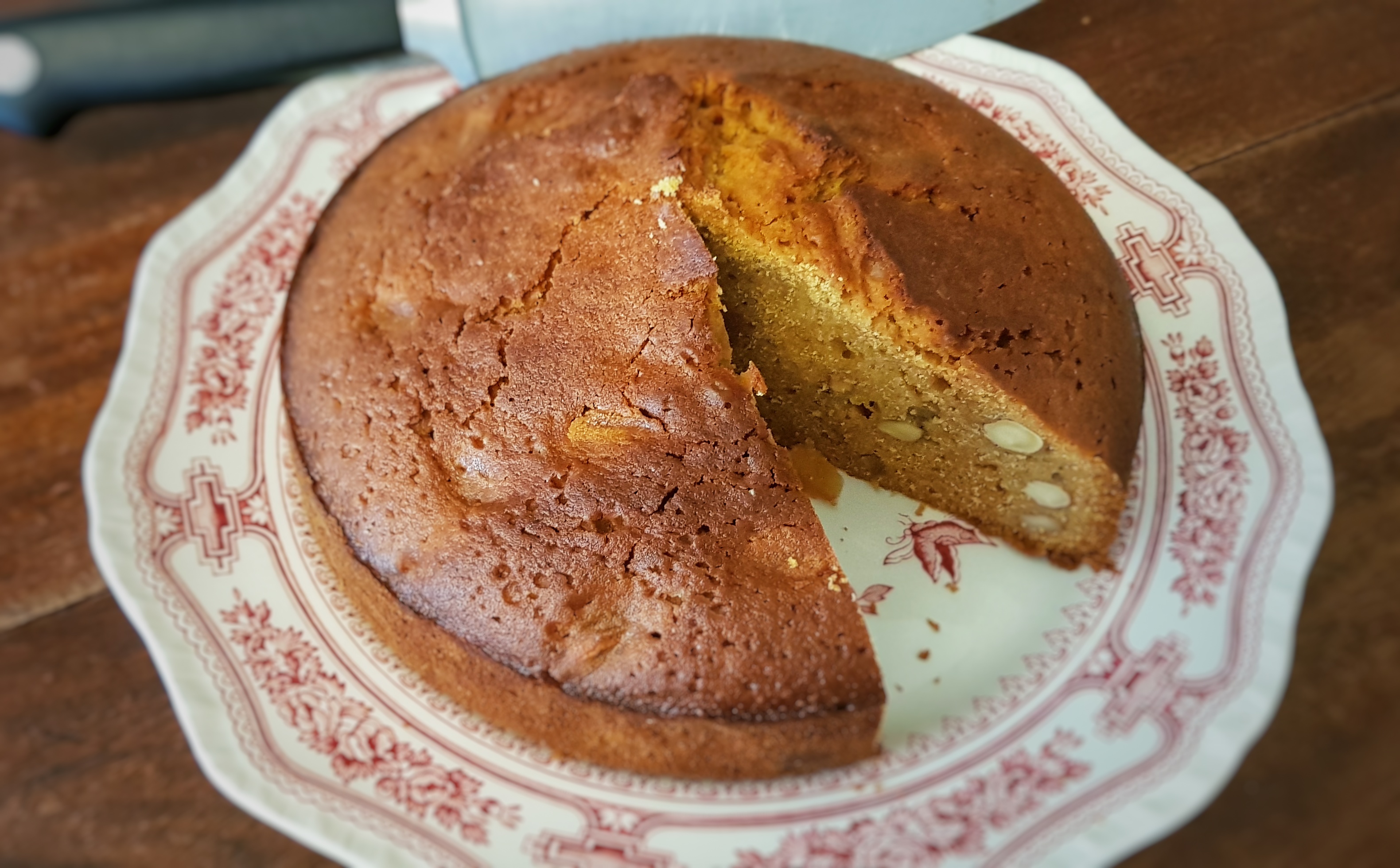
The best known traditional food made with cobnuts is Kentish cobnut cake. A dense cake flavoured with ginger and sweetened with some kind of unrefined sugar or honey. Some are made like a sponge cake by creaming butter and sugar, others are made by melting butter and syrup/sugar together. I go for the latter method. I found a few recipes that include a good dollop of double cream in the mix, so I’ve added it my recipe. This produces a dense cake, which I prefer, but if you want to make a lighter one, mix a teaspoon of baking powder into the flour and swap the cream for around half its volume of milk (i.e. 80 ml). Being a syrupy cake, it benefits from a couple of days’ maturing time in an air-tight box. You can use any syrup you like, or indeed any unrefined sugar. Honey works very well, especially if you have stored within it some cobnut kernels. As far as the nuts go: hazels, cobnuts or filberts all work equally well.

Makes one 8 inch/23 cm cake.

180 g butter

120 g golden syrup or honey

80 g Demerara, or any brown sugar

150 ml double cream (or 80 ml milk, if going for the lighter option)

3 knobs preserved ginger, chopped

2 eggs, beaten

240 g self-raising flour

1 tsp baking powder (optional; use if going for the lighter option)

1 ½ tbs ground ginger

100-150 g whole cobnuts, shelled weight

Preheat oven to 160°C and line a 20 cm round cake tin.

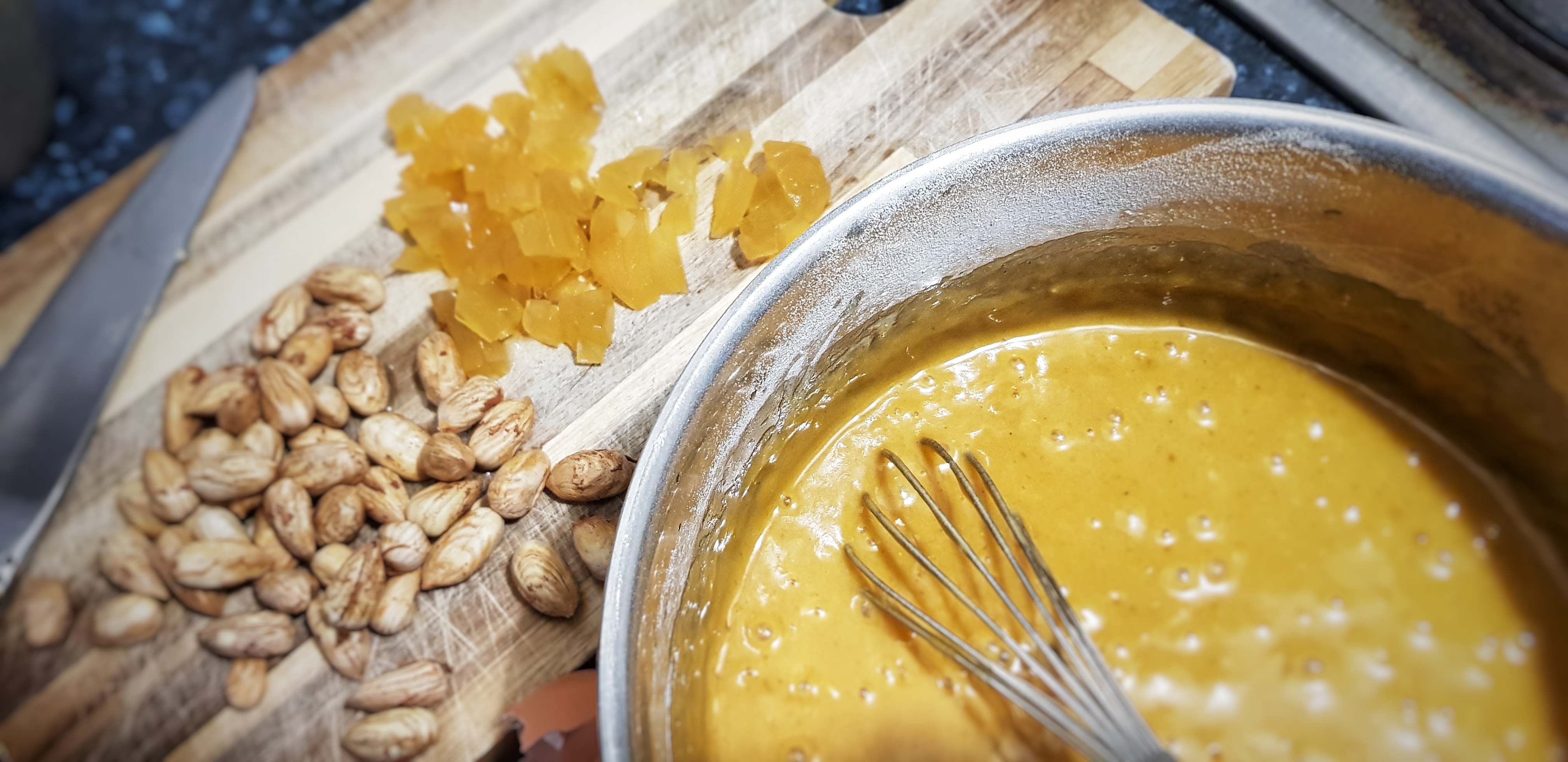
Melt the butter, syrup or honey and sugar in a saucepan, stirring until sugar is dissolved. Take off the heat and mix in the cream (or milk), chopped preserved ginger and then the eggs.

Mix the baking powder, if using, into the flour, then mix in the ground ginger and cobnuts. Make a well in the centre and pour in the butter-sugar mixture, stirring slowly with a whisk until the batter is smooth.

Pour into the lined cake tin and bake for anywhere between 1 and 1 ¼ hours. Test it is ready using a skewer. Cool in the tin.

References

1.           Wright, J. River Cottage Handbook No.7: Hedgerow. (Bloomsbury, 2010).

2.           Vaughan, J. G. & Geissler, C. A. The New Oxford Book of Food Plants. (Oxford University Press, 2009).

3.           Mason, L. & Brown, C. The Taste of Britain. (Harper Press, 1999).

4.           Johnson, O. & More, D. Collin’s Tree Guide. (Collins, 2004).

5 Comments

Filed under baking, Britain, cooking, food, foraging, General, history, Recipes, Teatime