Hello there readers, sorry I’ve been a bit tardy with posts but I’ve gotten somewhat bogged with a post on the history of vegetarianism that currently looks to be about four posts long! I’m ignoring the writers’ block by writing this little easy post instead…
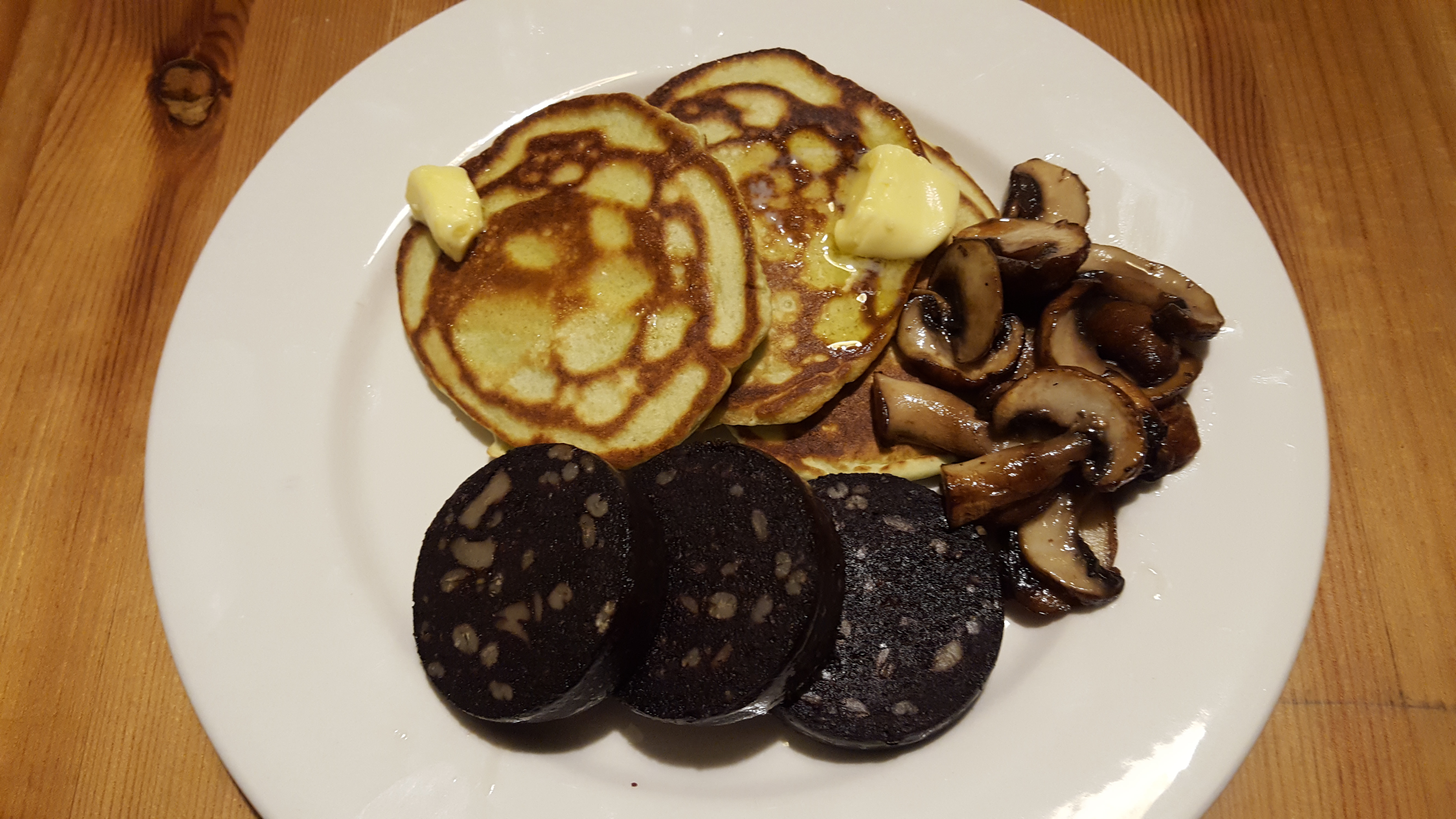
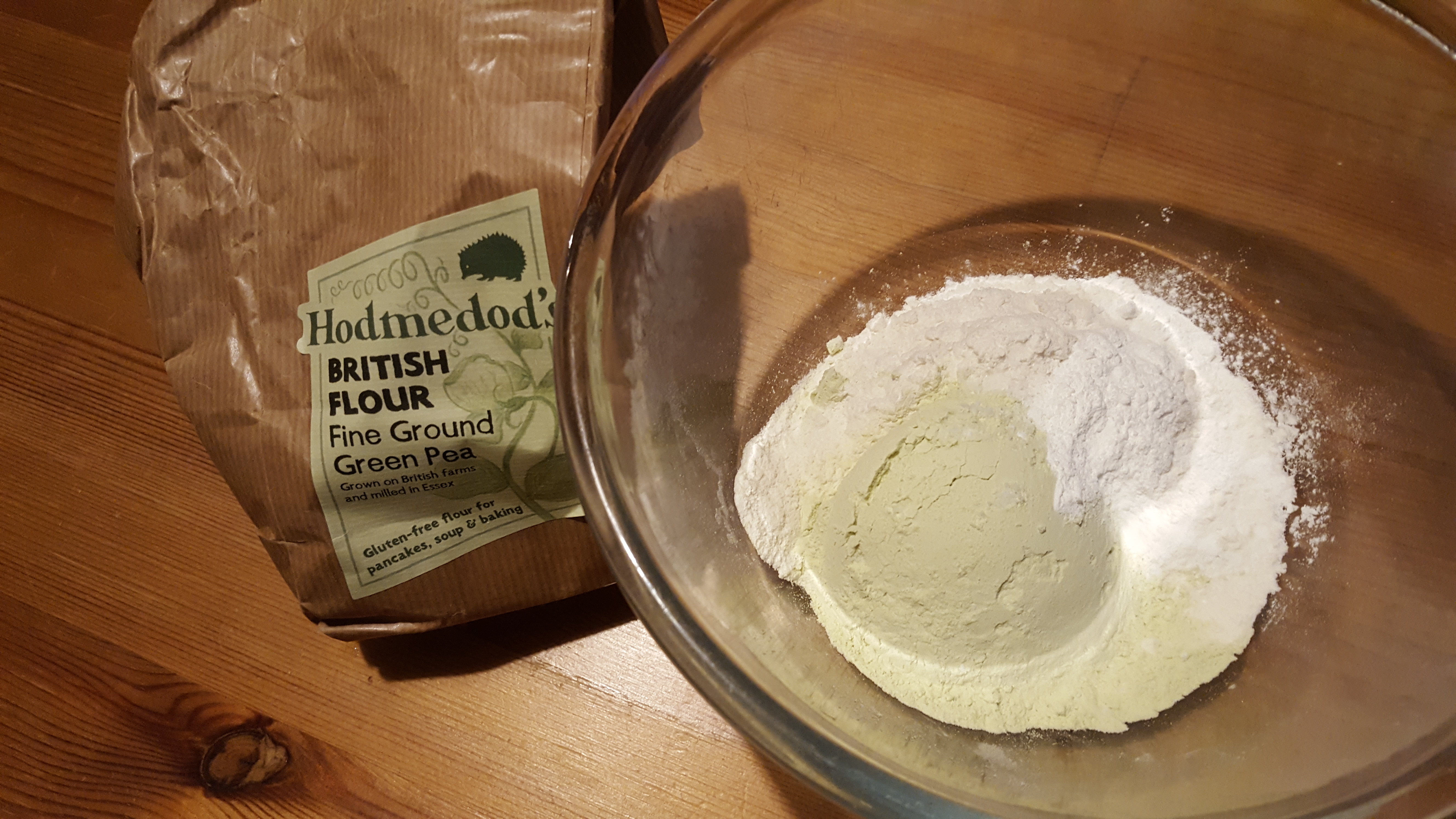
I was having a sort out of the kitchen cupboards and happened upon the bag of pea flour I had bought to write a post on peasebread a while ago. Researching for the post, I found that in the very north of Scotland, people ate a lot of peasemeal until recently, because very little in the way of cereals could be grown up there. These Scottish islanders would make pease pancakes amongst other things, so I thought I might have a go at them myself. Having no recipe, I just adapted my own recipe for American pancakes. They turned out pretty good – much better than the peasebread – and were delicious with some fried mushrooms and black pudding. They had a distinctive fresh pea and roast peanut flavour to them, and were slightly rubbery, but not in an unpleasant way.
Makes 10 to 12 pancakes:
½ cup pea flour
½ cup self-raising flour
1 tsp baking powder
½ teaspoon salt
2 tbs sunflower oil or 25 g melted butter
1 beaten egg
¾ cup milk, or half-milk half-water
sunflower oil for frying
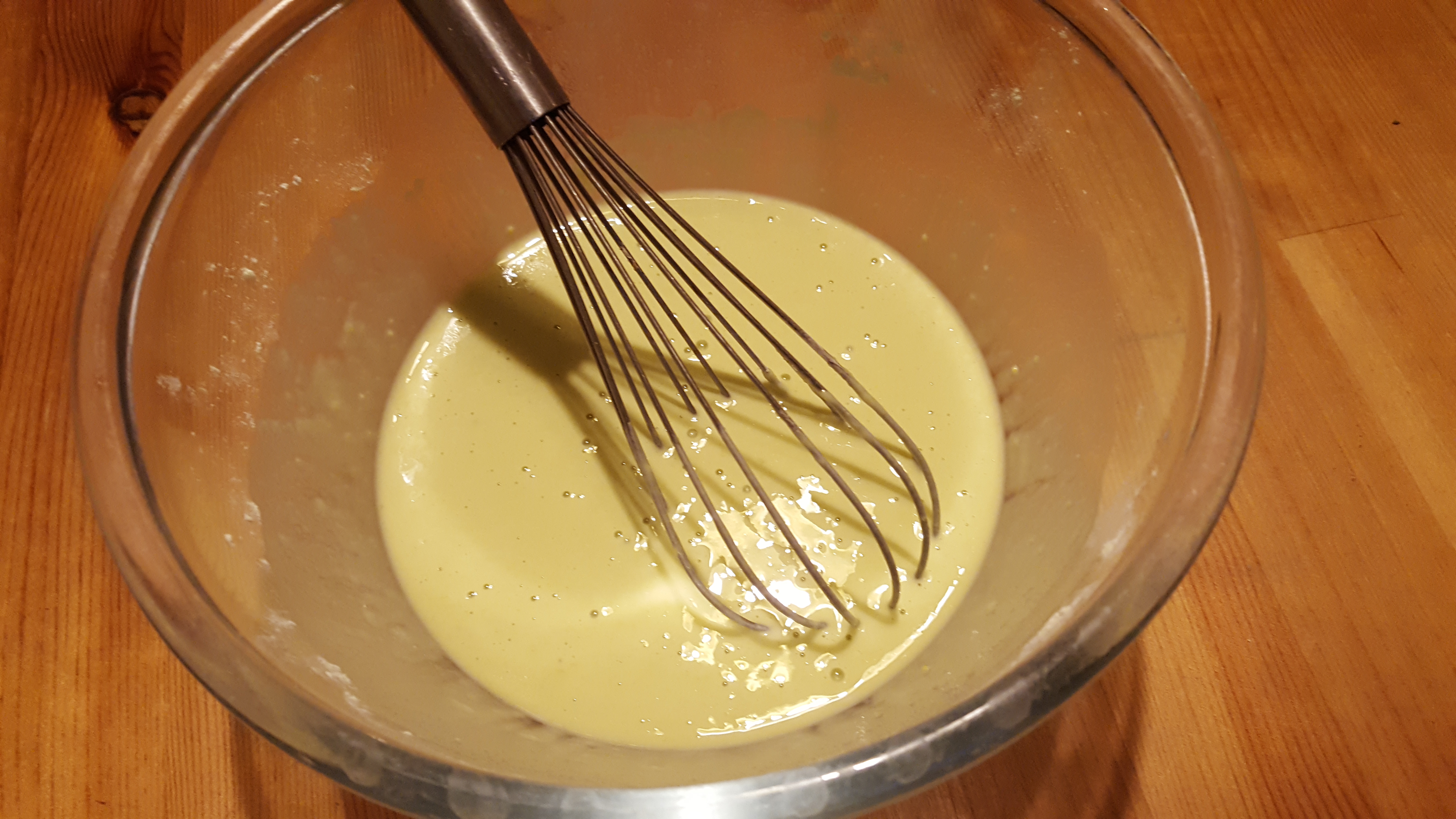
Mix the dry ingredients in a bowl, make a well in the centre and add the oil or butter, egg and around half of the milk. Beat in with a wire whisk until the thick batter is lump-free, then carefully mix in the rest of the liquid.
Put a griddlepan or non-stick pan on a medium heat and allow it to get hot. Add a little oil and spoon in small ladles into the pan. You should be able to fit 3 or 4 pancakes in each pan.
Allow to fry for a couple of minutes before checking that they are golden brown. Once they are, flip and fry the other side.
Pile up and keep warm in a very cool oven. Add a little more oil to the pan if needed and continue to fry in batches.
Serve with typical breakfast things: bacon, sausage, poached egg, mushrooms etc.
If you like the blogs and podcast I produce, please consider treating me to a virtual coffee or pint, or even a £3 monthly subscription: follow this link for more information.
Want to know more? There’s a podcast episode that complements this blog post:
A Simnel cake is a type of fruit cake that contains plenty of marzipan and is eaten at Easter, although it used to be specifically associated with Mothering Sunday. When folk were fasting during Lent, Mothering Sunday, appearing in the middle of the fast, offered a respite from 40 days of religious austerity.
Mothering Sunday occurs on the fourth Sunday of Lent; a special day when people visited their mother church or cathedral. Don’t confuse Mothering Sunday with Mothers’ Day; it is only in the last century that this day is associated with showing enforced appreciation to our mums (though I assume that you met up with your mother on return to your original diocese).
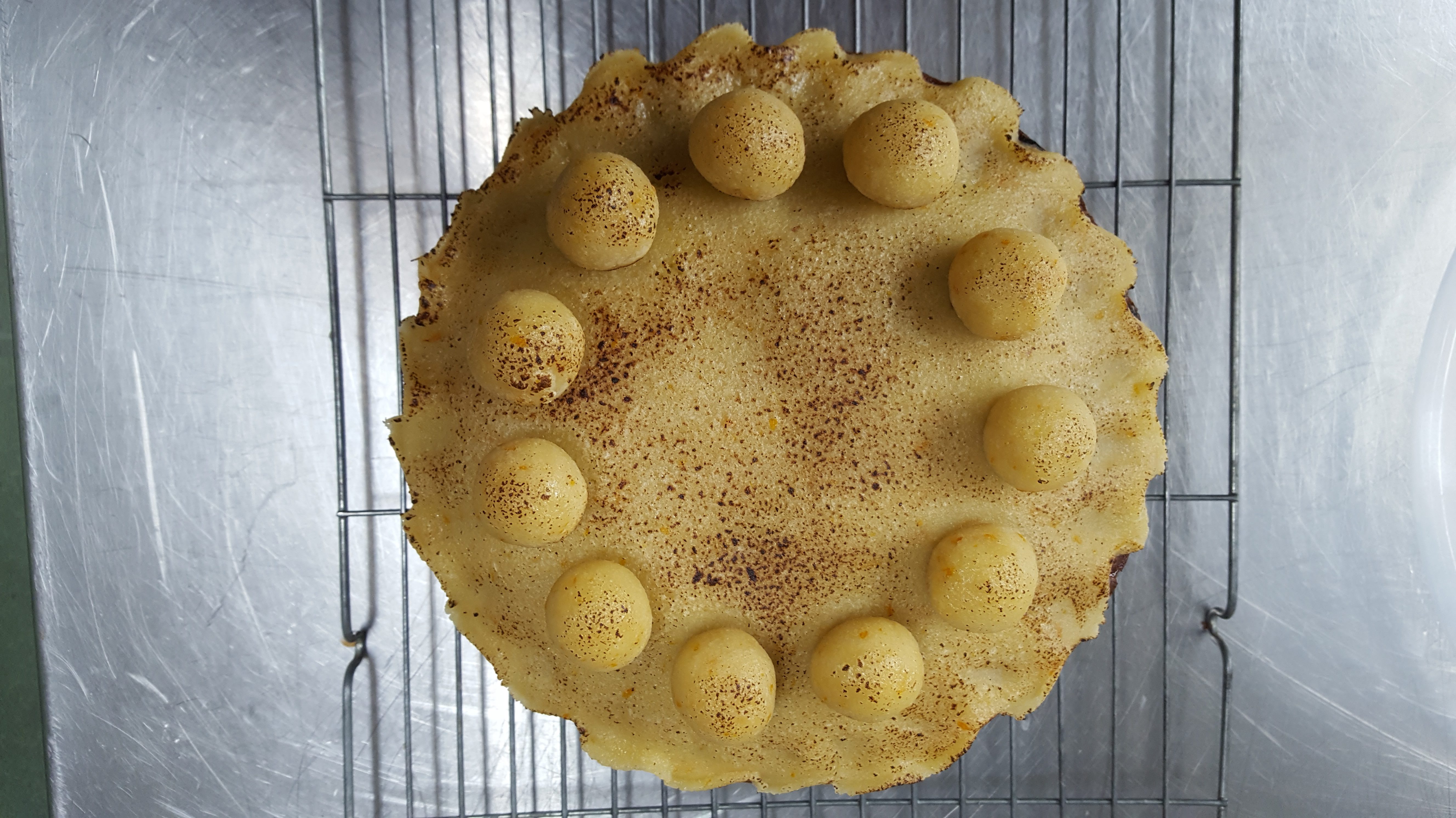
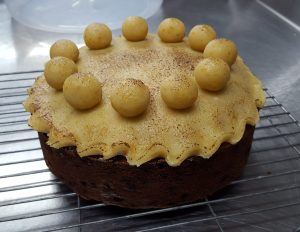
Like most British food eaten during winter and early spring, the Simnel cake contains lots of dried fruit, but it is much lighter than boozy Christmas cake and contains a layer or marzipan both on top and within, and is decorated with eleven marzipan balls, each symbolising Jesus’s disciples (minus the treacherous Judas of course).
To trace the origin of Simnel cake, you need to go right back to mediaeval times where it began life as a yeast-leavened bread, which may or may not have been enriched. This doesn’t sound that much like a special bread, you may think, but what made it special is that it made out of the highest quality flour possible; simnel derives from the Latin simila – the whitest and finest of flours.
Fast forward to the 17th and 18th centuries, and the bread mixture had been swapped for a pudding batter, not dissimilar to spotted dick, enriched with dried fruit, spices and almonds. It would be boiled like a pudding. When cooked, it was wrapped in pastry, glazed with egg and baked until a good hard crust formed. It would be like the Scottish black bun, a traditional Christmas food north of the border.
It is only when you get to the tail end of the 19th century that it starts to look like something we would recognise as a cake, though surprisingly it is not until the 20th century that the familiar marzipan layers and decorative disciples appear.
If you like the blogs and podcast I produce, please consider treating me to a virtual coffee or pint, or even a £3 monthly subscription: follow this link for more information.

Simnel cakes themselves seem to be disappearing from our Easter tables altogether and are getting more and more difficult to find in British bakeries. Below is the recipe I use – I can’t claim it as my own, but I don’t know where I got it from, so if you recognise it let me know, you know I always like to credit my sources!
This is a very straight-forward cake mixture made using the all-in-one method; it is very important that you use very soft butter so that the cake batter creams quickly without developing the gluten too much. If you don’t want to make your own marzipan, you can buy some ready-made, but I do urge you to make your own, it really is worth the (really quite little) effort required. The marzipan recipe below is different to my previously published one and I think much better. I shall try to remember to update the other post.
For the cake:
225 g softened butter
225 g caster sugar
4 eggs
225 g plain flour
2 tsp ground cinnamon
zest of 2 oranges
zest of 2 lemons
325 g mixed fruit (currants, sultanas, currants)
125 g glacé cherries, quartered or left whole
500 g orange marzipan (see below)
icing sugar for dusting
apricot jam
1 beaten egg
Begin by greasing and lining an 8-inch cake tin and preheating your oven to 150°C.
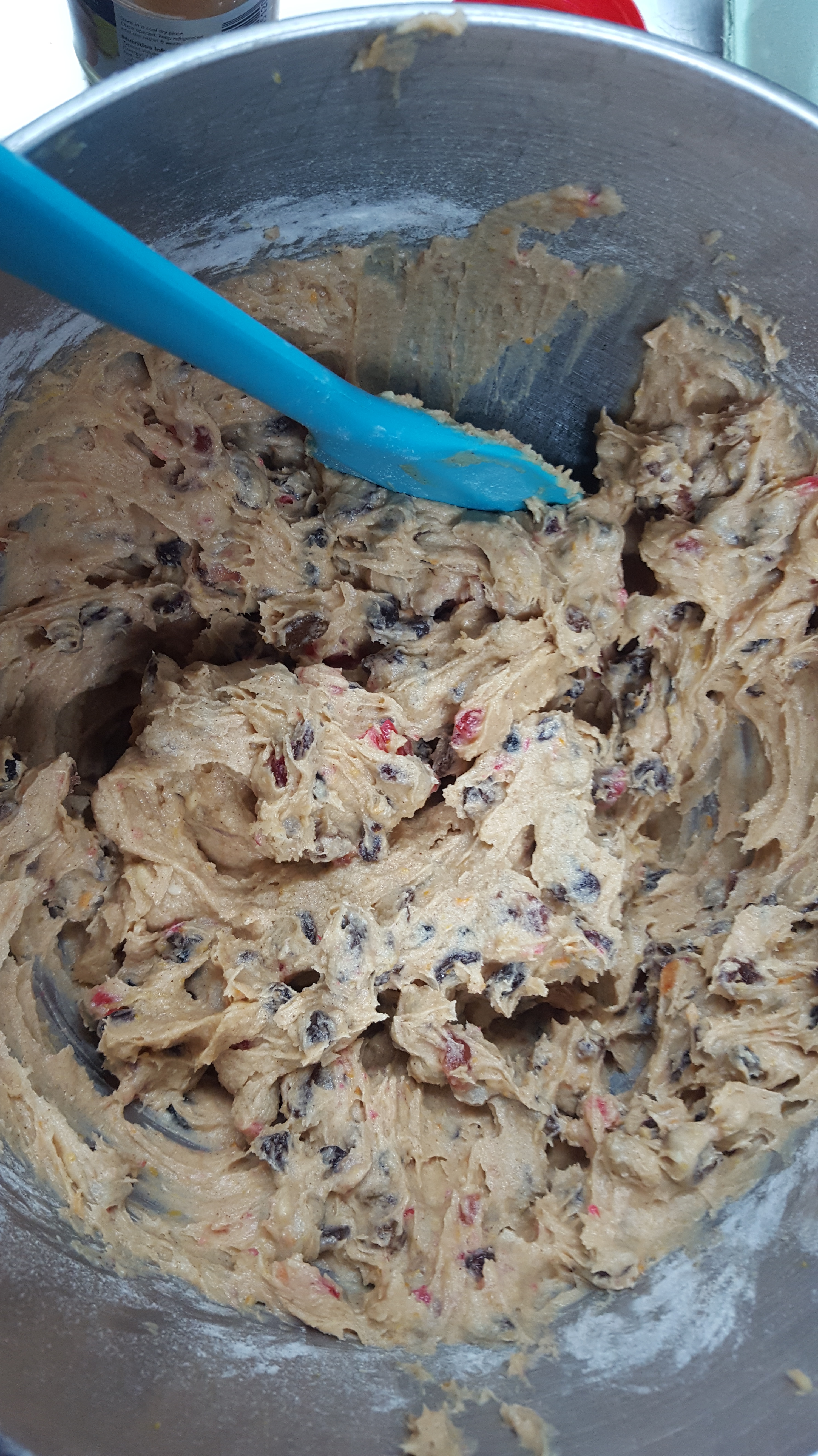
In a large bowl, beat together the softened butter, caster sugar, eggs, flour, cinnamon and zests. Using a hand mixer, beat together until smooth. Now fold in the mixed fruit and cherries with a spatula or wooden spoon.
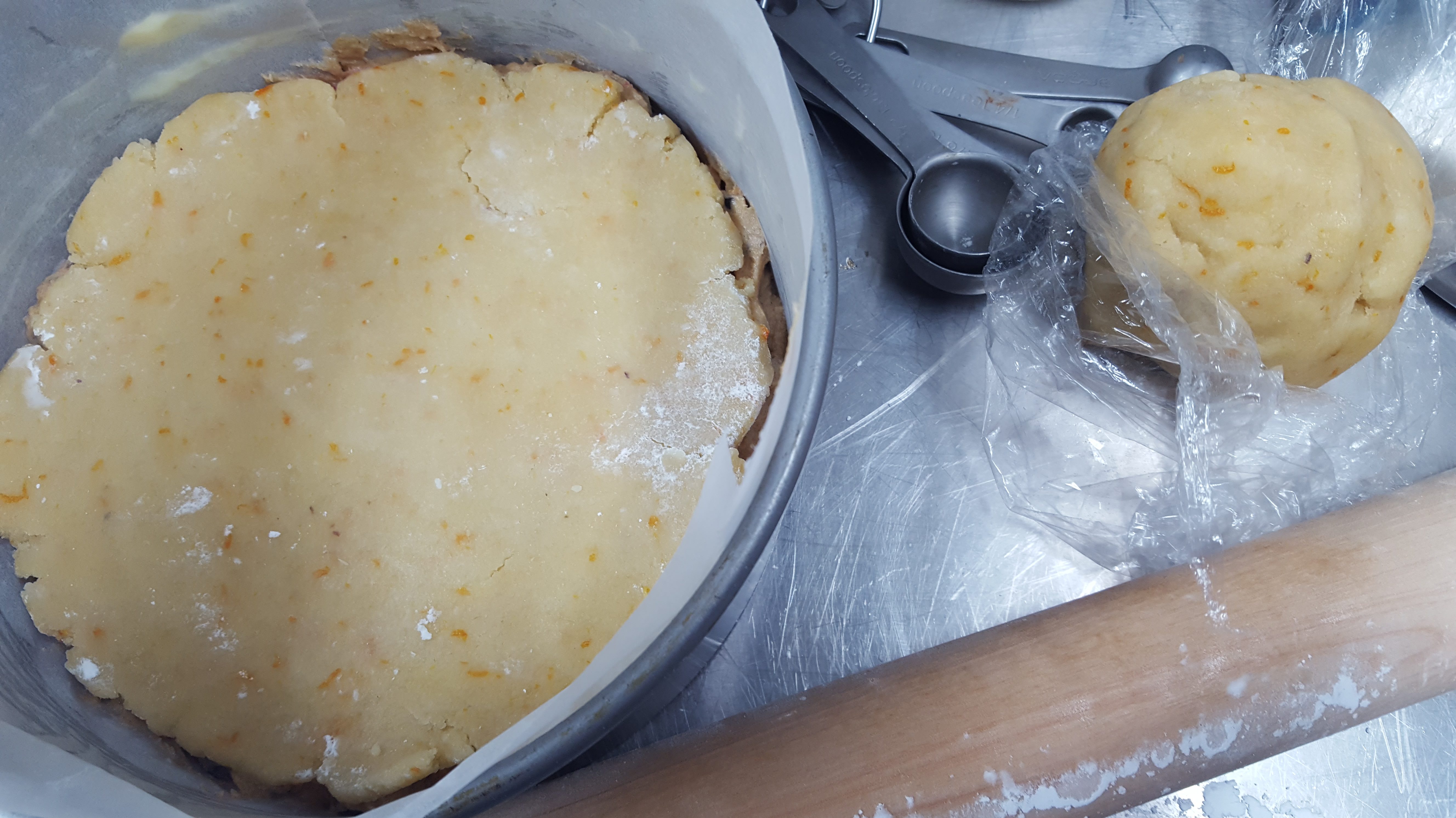
Spoon half of the mixture into your tin and level it off. Take a third of your marzipan and roll it out into a circle the same size as the tin, trimming away any untidy bits. Use a little icing sugar to roll the marzipan out, just like you would use flour to roll out pastry.
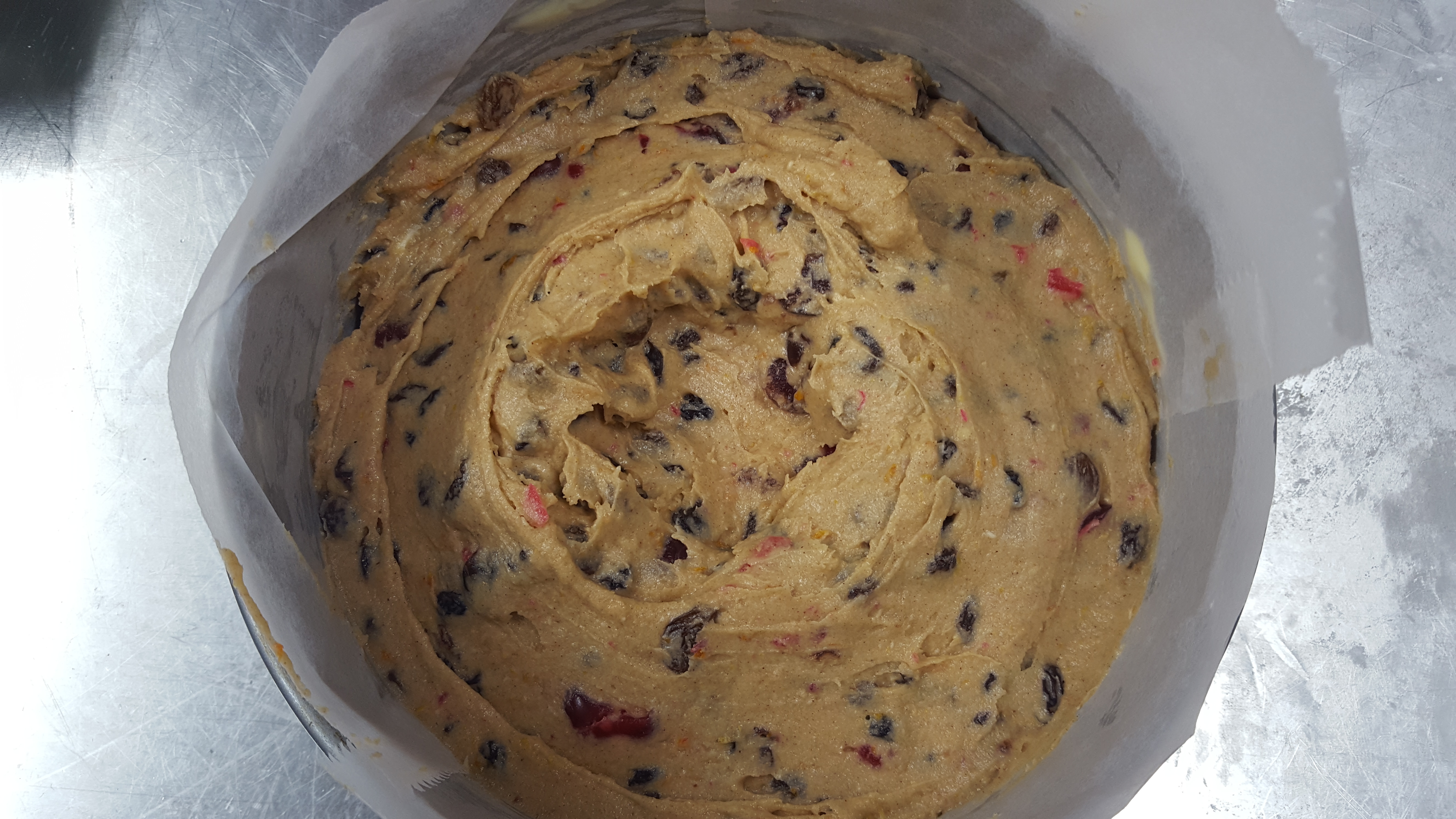
Lay the marzipan in the tin and then spoon and scrape the remainder of the cake batter on top of that. Level off with your spatula and make an indentation in the centre, so that the cake doesn’t rise with too much of a peak.
Bake for 2 ¼ to 2 ½ hours. Use a skewer to check it is done. Cool on a rack for about 30 minutes before removing the tin and greaseproof paper.
When cold, roll out half of the marzipan in a circle slightly larger than the cake – the best way to do this is to use the outside edge of the tin it was baked in as a template.
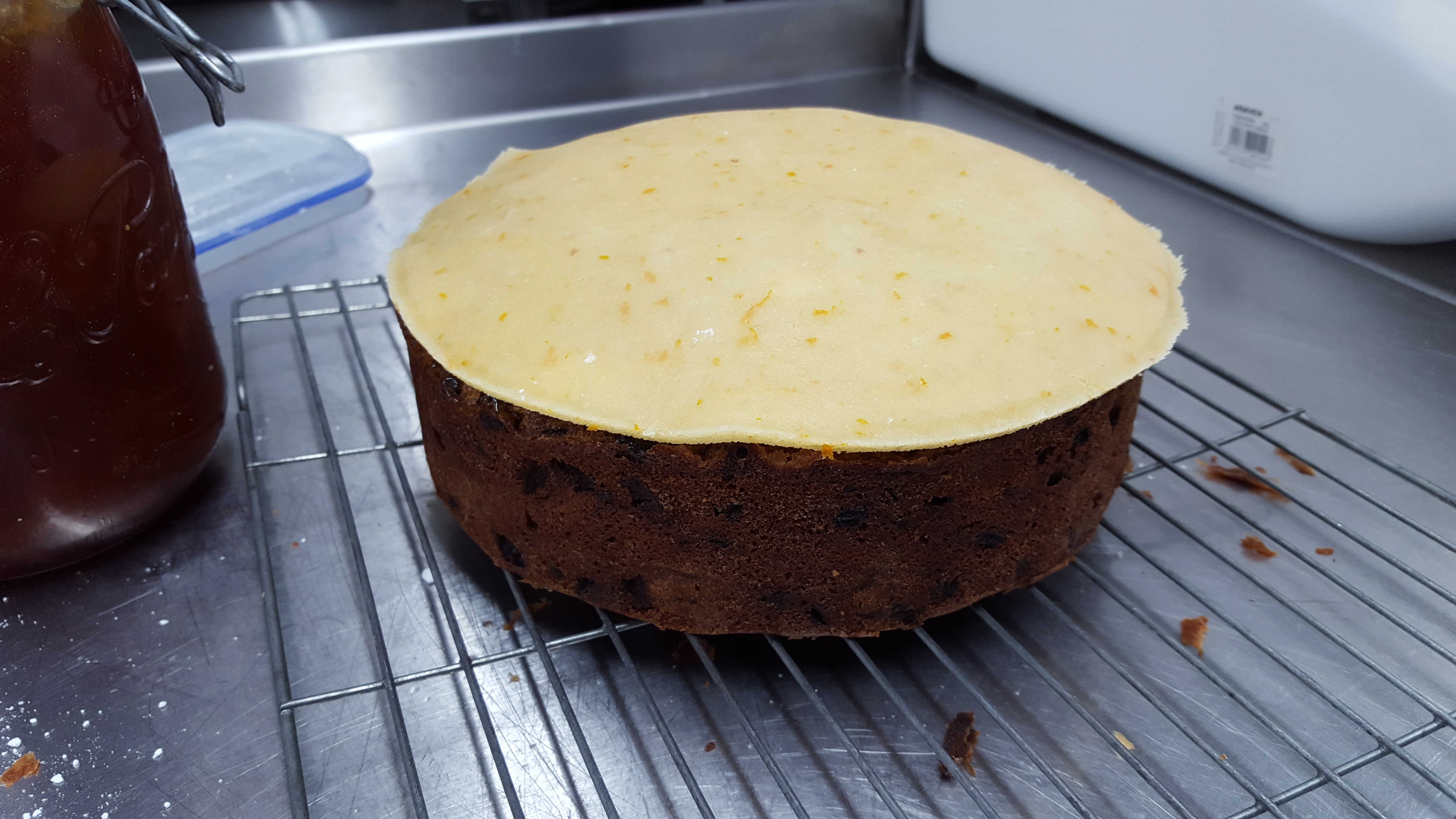
Brush the top of the cake with some apricot jam (if it is very thick, you may want to warm some with a little water in a pan) and lay the marzipan on top, then brush the marzipan with the beaten egg. Divide the remaining marzipan and trimmings into 11 equally-sized balls and arrange them in a circle. Brush those with egg too and glaze the top using a chef’s flame torch (or a very hot grill).
For the marzipan:
90 g caster sugar
140 g icing sugar
220 g ground almonds
grated zest of an orange
1 beaten egg
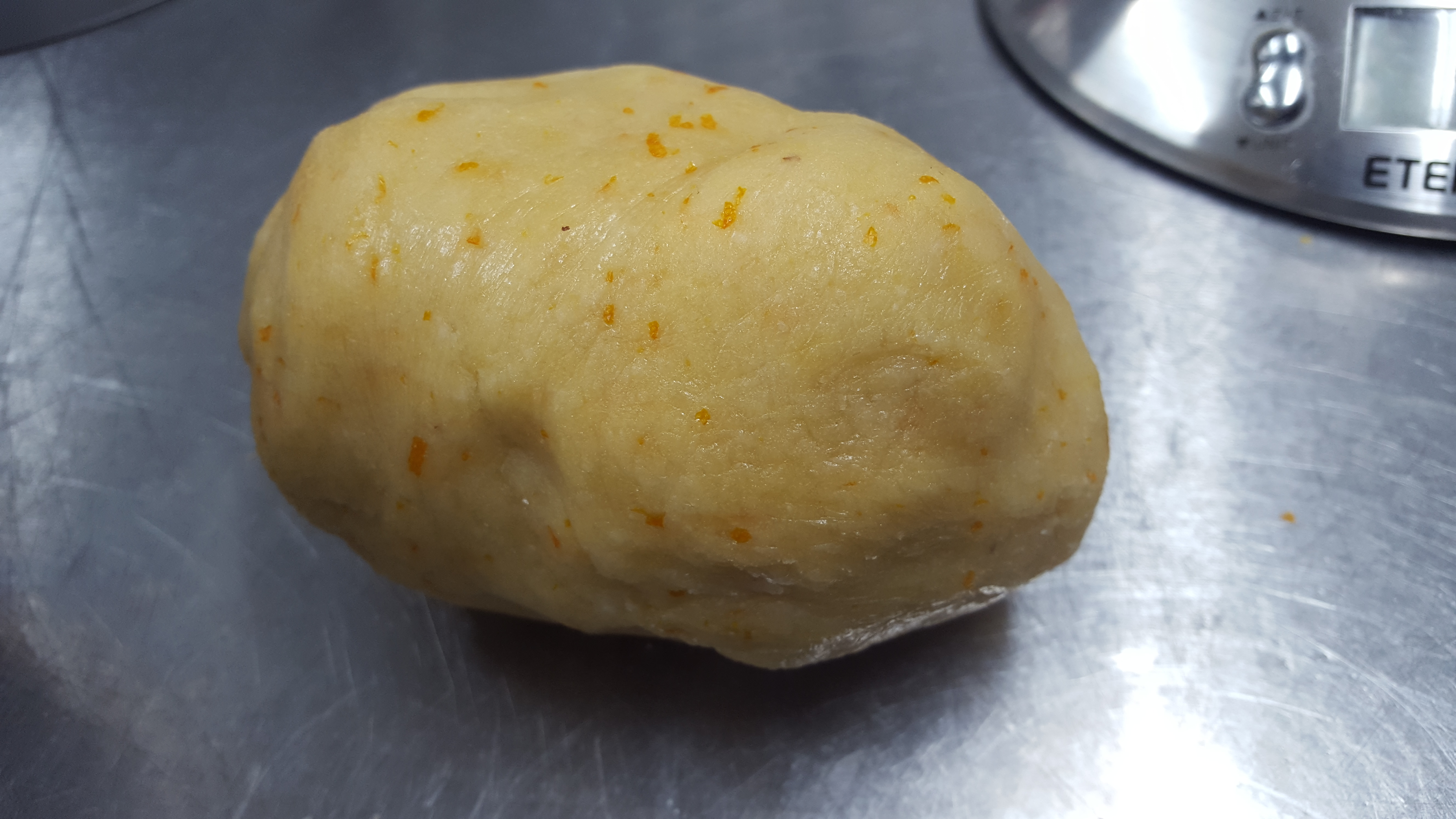
Mix all of the ingredients except for the egg in a bowl. Make a well in the centre and pour in the egg. Using a mixer or your hand, form a dough. Knead in the bowl until smooth, wrap in cling film and refrigerate for at least 2 hours.
Do you like the blogs and podcast I produce? If so, please consider supporting me
Sorry! This product is not available for purchase at this time.
I often frequent the excellent vegan cooperatively-run supermarket Unicorn in Chorlton, south Manchester, to fill my food cupboards both at home and at the restaurant. One day, a couple of months ago, I spotted a very mediaeval ingredient: green pea flour. I had come across ‘peasemeal’ in several old books, but didn’t expect to ever see it for sale. (Another popular mediaeval ingredient is almond milk, used particularly on fasting days; it’s funny how these old ingredients are having a comeback as health foods.)
One of the mediaeval small-holder’s most important crops was his pea crop – they were not eaten as young sweet garden peas, but were left in the pods to mature and dry. The peas became starchy and packed with protein; an excellent nutritional source for the winter months. We use those dried peas today for mushy peas or split peas. Then, they were mainly used in pease porridge/pottage.
The pease were often ground to make peasemeal to thicken stews, and to make bread for cattle. People only ate it themselves in times of winter famine, and this peasebread was hated by all.
Peasebread and peasemeal stopped being produced in most of the UK, but it did live on until the mid-20th Century in the very North of Scotland and Orkneys, where very few crops can be grown in abundance (rye and oats are the only others really). Folk enjoyed pease scones, bannocks (flatbreads) and breads, but it was still associated with poverty.
Peasemeal is considered easy to digest, partially due to its lack of gluten, and is high in protein and carbohydrates. I quite like how some of these mediaeval ingredients are being re-examined during a time of vegan and paleo-dieting. It is strange to think how the poor were eating healthy vegetables with little fat, red meat, salt and sugar, considered then to have no nutritional value. Meanwhile, the bunged-up rich were chowing down almost entirely on meat, spice, white bread and sugar, in the belief they were eating properly. I bet their bedchambers sank in the morning.
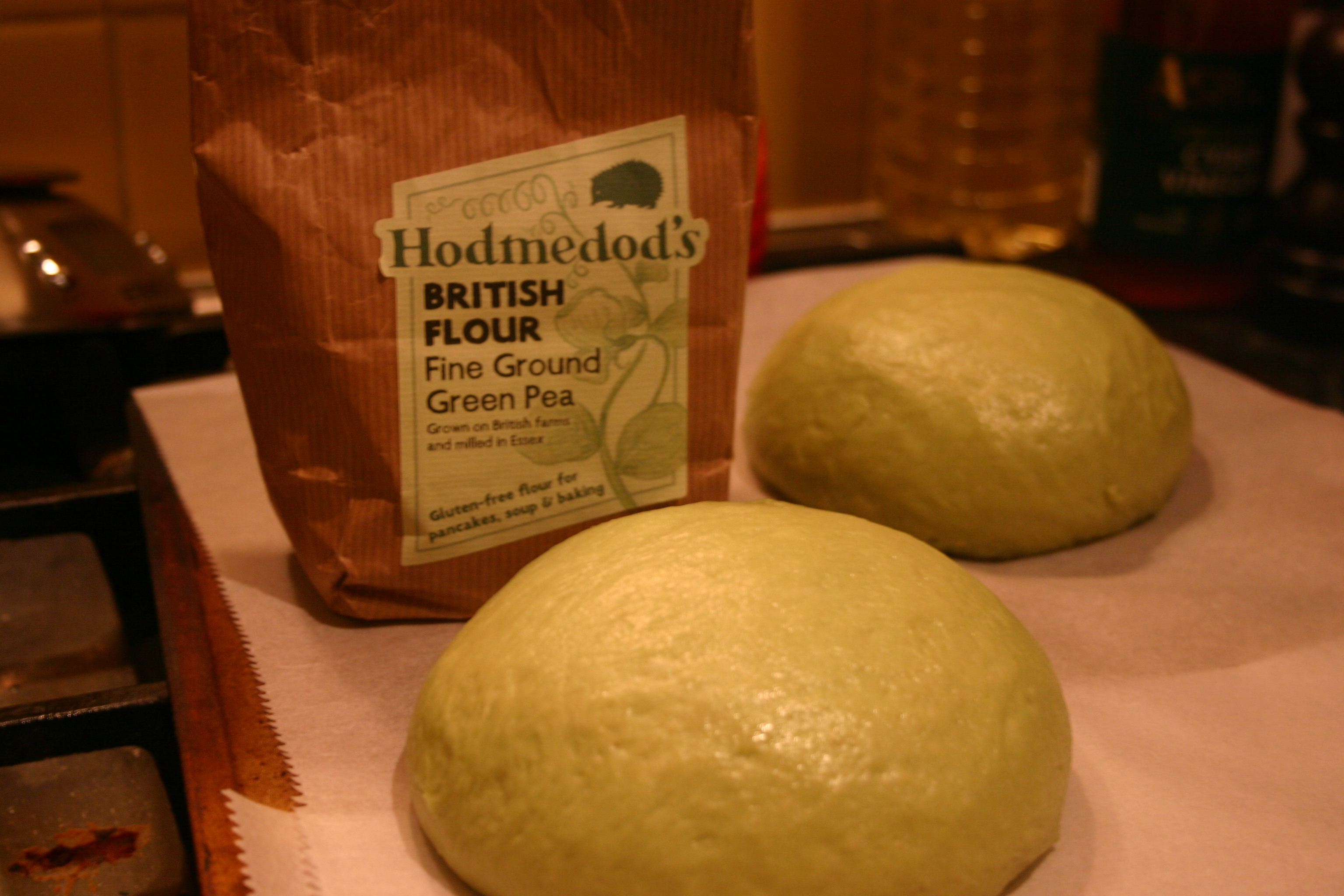
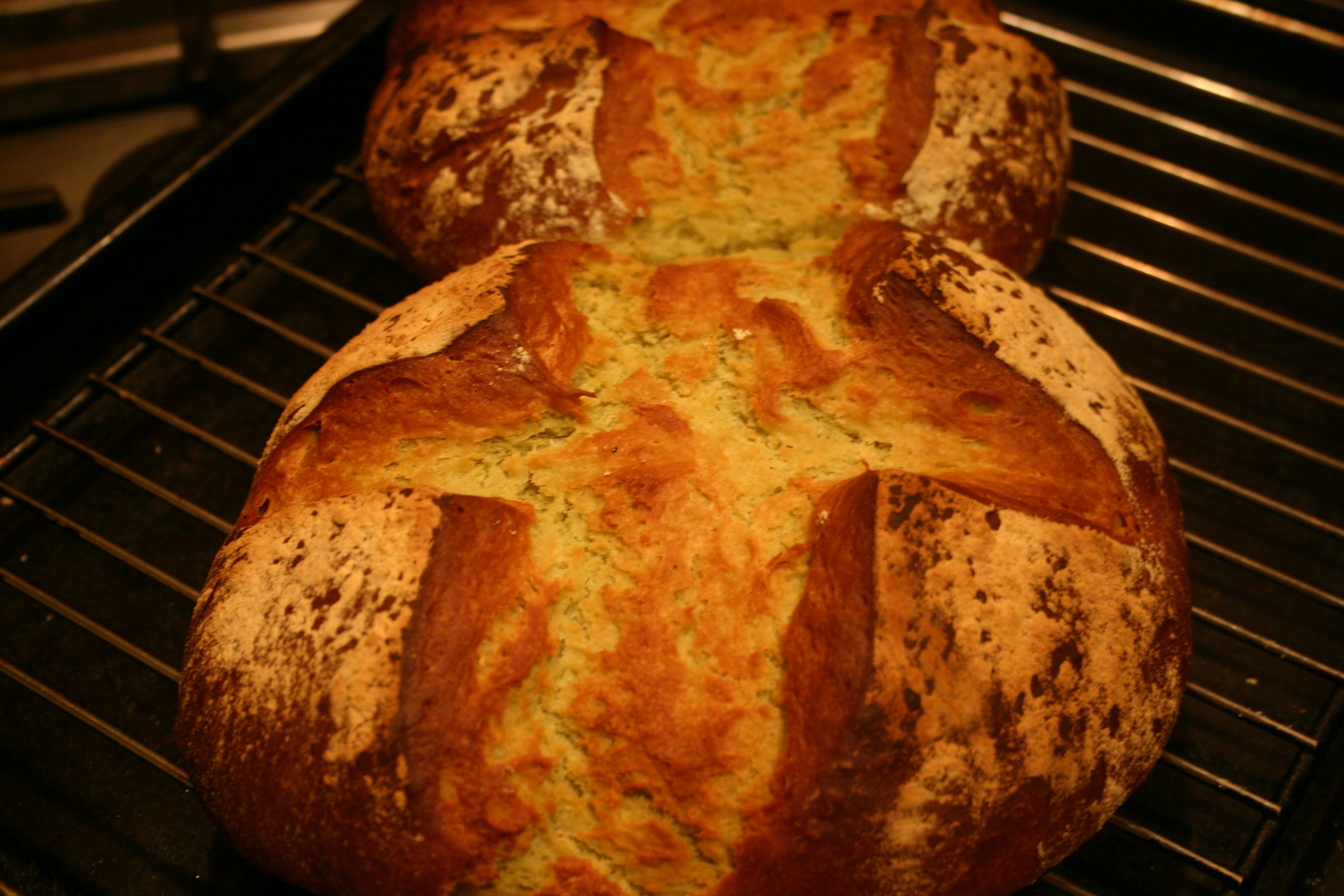
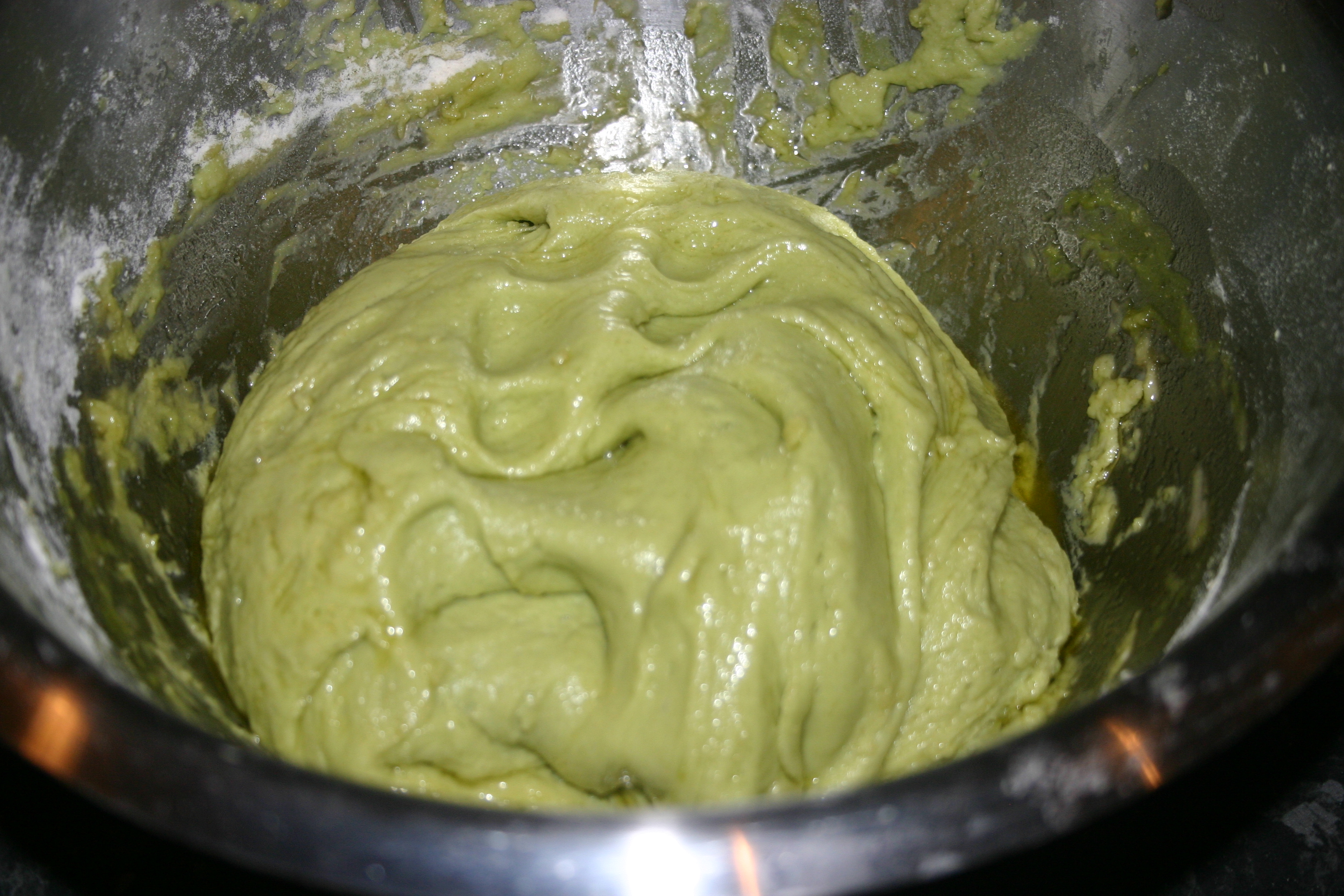
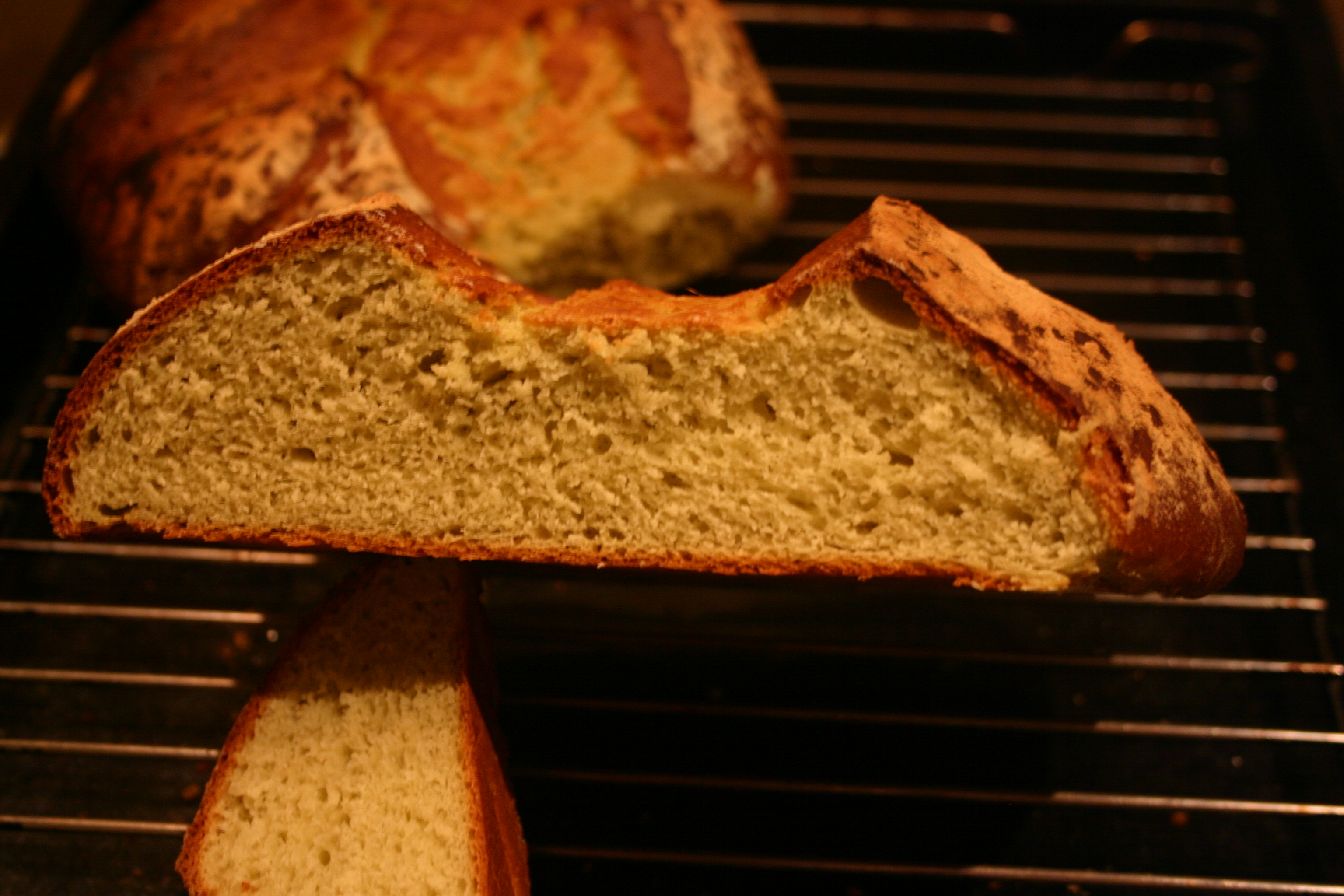
I had to have a go at the derided peasebread, just to see how bad it was. I did cheat a little bit and mixed the peasemeal with some strong bread flour. It was pretty straight-forward to make, though the dough was very sticky was hard to knead. The resulting bread was dense and a little crumbly, but had a delicious sweet pea flavour, with hints of roasted peanut butter. Probably too dry to eat on its own, it was great toasted, buttered and dunked in soup.
If you like the blogs and podcast I produce, please consider treating me to a virtual coffee or pint, or even a £3 monthly subscription: follow this link for more information.

So, here’s my recipe for peasebread. It made two flattened cobs.
(Notice all my liquid measurements are in grams rather than millilitres; for greater accuracy, it’s much easier to weigh your liquids, a tip from Elizabeth David.)
250g green pea flour
250g strong white bread flour
10g salt
10g instant yeast
30g sunflower or olive oil, or softened butter or lard
330g hand-hot water
In a wide mixing bowl mix together the two flours. To one side of the bowl place the salt, and place the yeast to the opposite side. Make a well in the centre and pour in the oil/fat and the water. Mix with your hands to form a dough. Leave to settle for ten minutes.
Spread a little oil on a work surface and knead until smooth. This is pretty tricky because it is so sticky, so use a dough scraper to help.
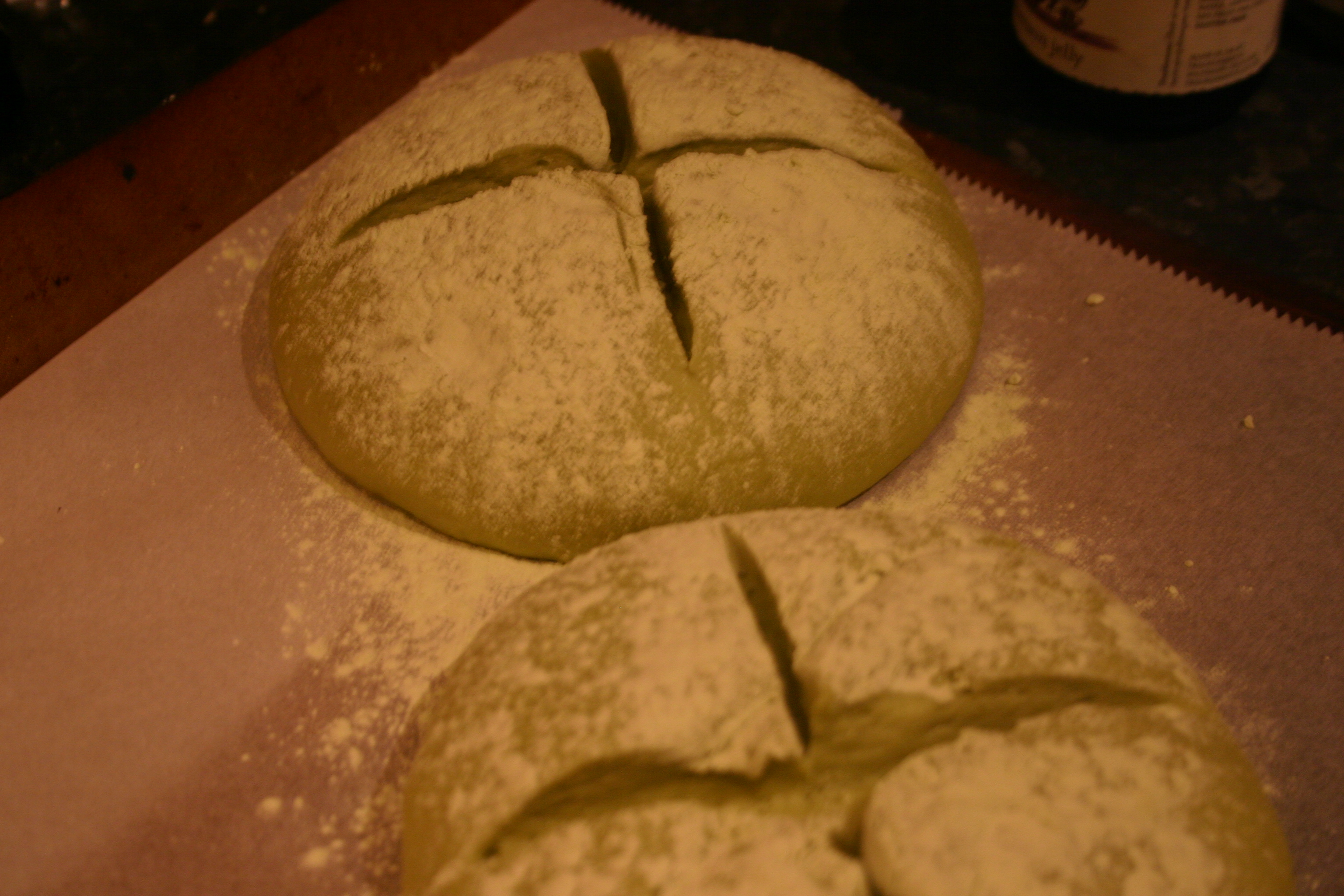
Oil a bowl and place in the dough inside and cover. Leave to rise until it has doubled in size, about 2 hours. Knock back the dough, divide into two pieces and form in to two taught, round cobs. To do this, roll into balls with oiled/floured hands, then tuck in the dough underneath whilst turning the ball, tautening the surface. Place on greased baking trays, flour generously and cut a cross in the centre. Cover with large plastic bags and leave to rise again for about an hour.
Place the cobs in a cold oven, then set the temperature to 230⁰C and bake for 40 minutes. Cool on a rack.
Every now and again I write a post on forgotten foods, and here is one vegetable that was used widely in Medieval times, but has fallen very much out of use in this country: parsley root.
We are all very familiar with the culinary uses of parsley leaves, but the root has been much ignored in Britain of late. Parsley root is what celeriac is to celery and it is still commonly used in northern Germany (hence its other name ‘Hamburg’ parsley), Croatia, Bulgaria, Poland and Russia. It is an essential element in a truly authentic borscht.
Parsley root pops up every now and again in Medieval recipes but it popped up rather more recently in Manchester from my fruit and veg suppliers Organic North. I assume it’s started to appear here because of the recent influx of Eastern European folk to the UK and demand is high!
In our old cook books, it only seems to crop up as an ingredient in pottages and the like, but seems to have been used extensively by local physicians in all sorts of tinctures to cure dropsy and scarlet fever, as well as in bladder and kidney ‘teas’ because of its supposed diuretic properties. It turns out that parsley root is very good for the liver, so they might have been on to something there.
Parsley root (Photo: Harvest to Table)
Parsley roots are a pale creamy-white, like a parsnip, but less yellow, and are thin and slender like a carrot. They lack that woody part to their roots that large parsnips have, being tender all the way up like a carrot. They taste predominately of parsley, but also of celeriac and parsnip.
They can be eaten raw in salads or as part of a coleslaw; the organic ones I got hold of made my tongue go a little numb after eating a raw one!
Cooked, they can be used like any root vegetable in soups. Apparently, they roast very well and make excellent chips. Their slight earthiness marries well with fish especially shellfish. I found a great-looking recipe for scallops in parsley root milk by American chef Karen Brooks – one to try next!
If you are unsuccessful in your search to find your own parsley roots, don’t worry because they are very easy to grow, taking just 3 months from seed to harvest. They overwinter well and can be dug up, replanted in a pot, and popped on a windowsill where the leaves will regrow to give you a personal supply of forced parsley herb.
If you like the blogs and podcast I produce, please consider treating me to a virtual coffee or pint, or even a £3 monthly subscription: follow this link for more information.
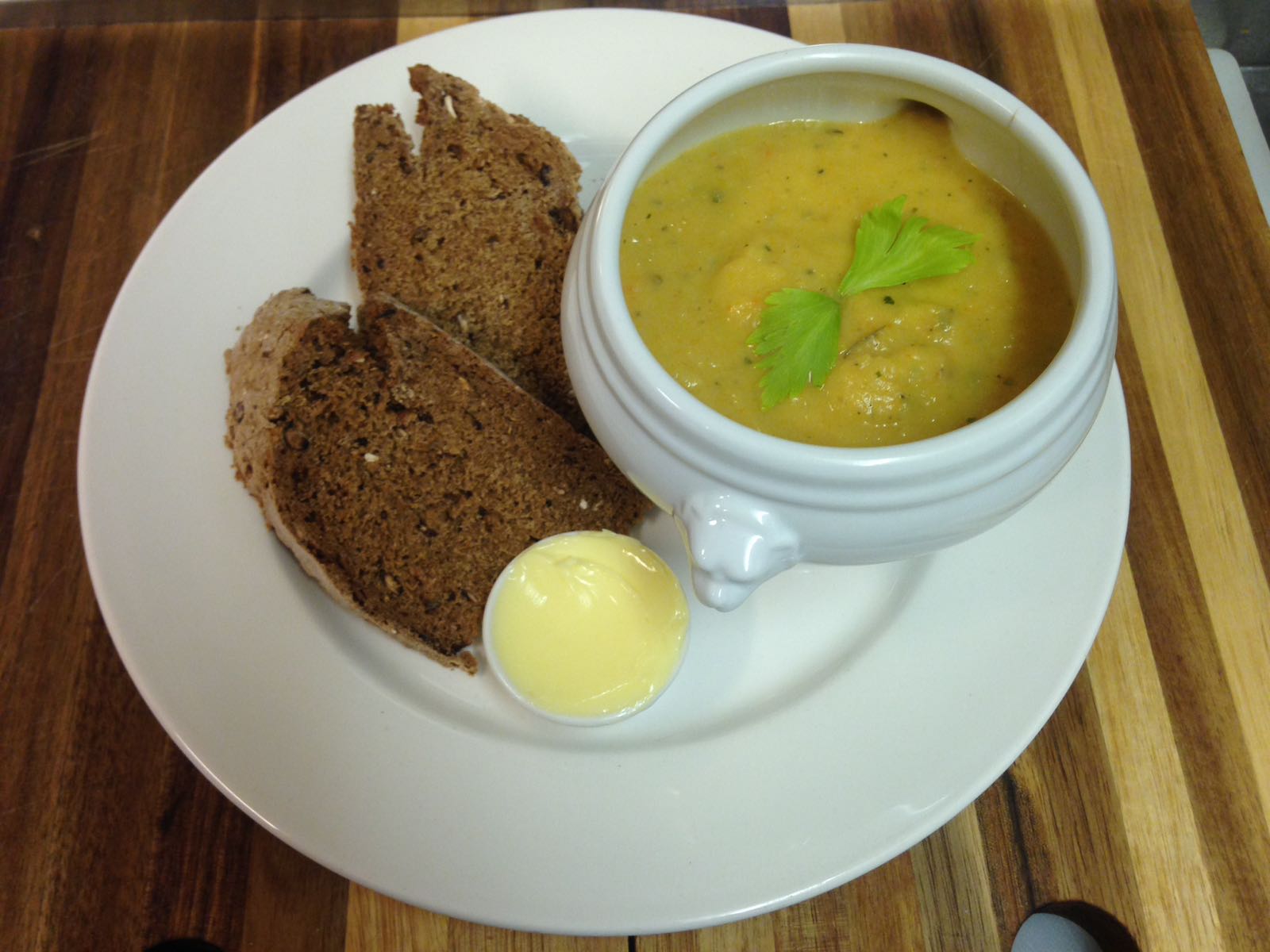
Roast Parsley Root Soup
The best ways to enjoy any root vegetable is to either roast it or turn it into soup. Here’s a perfect combination of the two from my chef Matt, I particularly like that – the onion aside – all the vegetables are from the parsley family, so they all work together very well, never taking focus away from our star ingredient.
3 tbs olive oil
1 medium onion, sliced
6 fine parsley roots, peeled and chopped into 1cm slices
1 carrot, prepared just as the parsley root
2 celery sticks, roughly chopped
2 or 3 sprigs of thyme
2 fresh bay leaves
Salt and pepper
1 litre light vegetable stock or water
A splash of white wine or white vermouth (optional)
Chopped parsley root leaves or celery leaves to garnish.
First preheat the oven to 200°C and then heat the oil in a sturdy roasting tin over a hob. Tumble in the onion, parsley roots, carrot, celery, thyme and bay leaves. Season with salt and pepper then turn the vegetables over in the pan until evenly coated with the oil. Once things have picked up a little colour, place the tin in the oven for around 20 minutes, stirring at half time.
When the vegetables are cooked though place them in a saucepan with the stock or water. Deglaze the pan with the wine or vermouth, if using, otherwise use a little water and tip all those nice burnt bits into the saucepan.
Bring the soup up to a bare simmer and cook until things are very soft. Allow to cool a little bit before fishing out the herbs and blitzing in a blender.
Check your seasoning, reheat and serve in bowls with some chopped parsley or celery leaves.
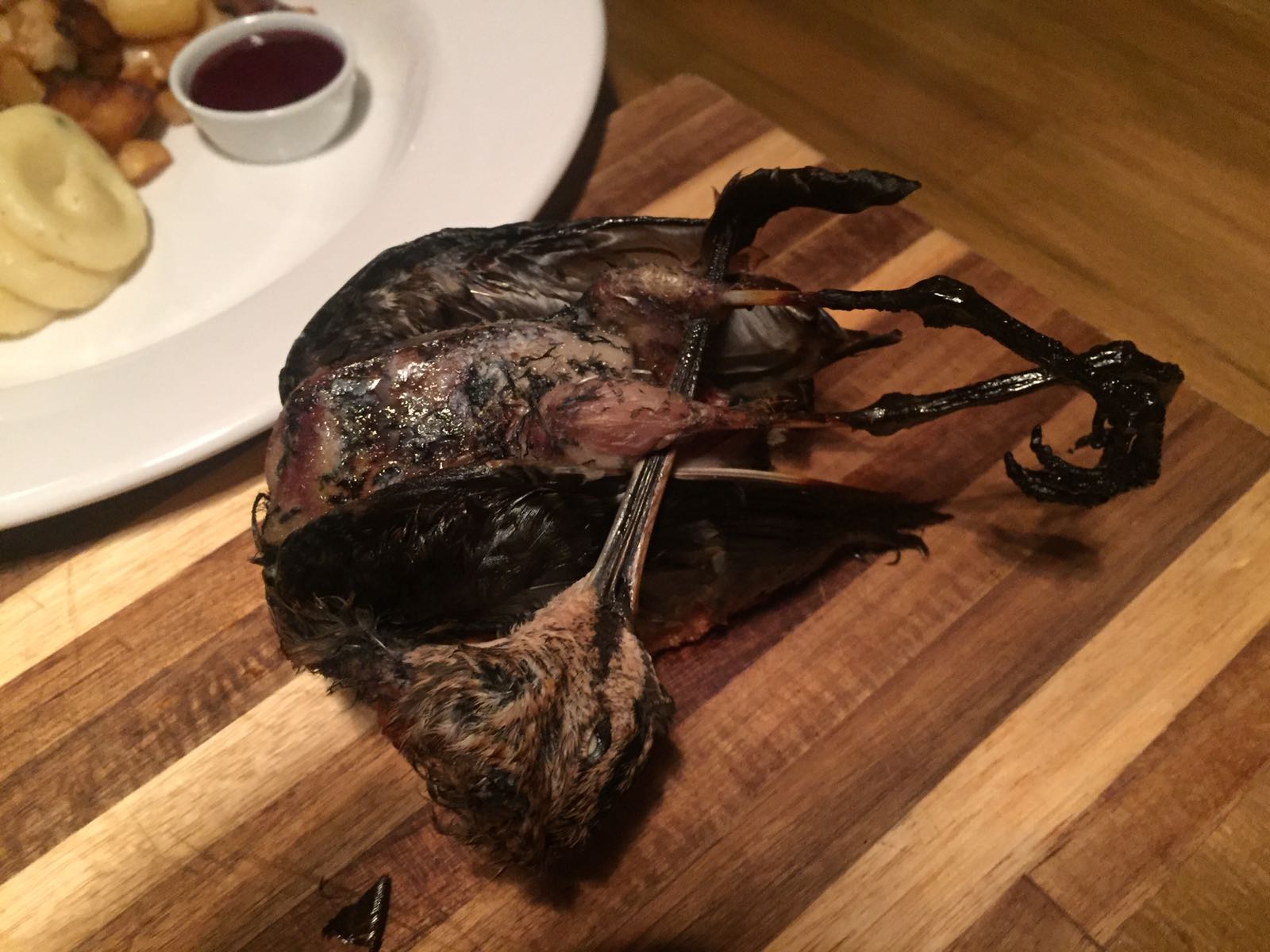
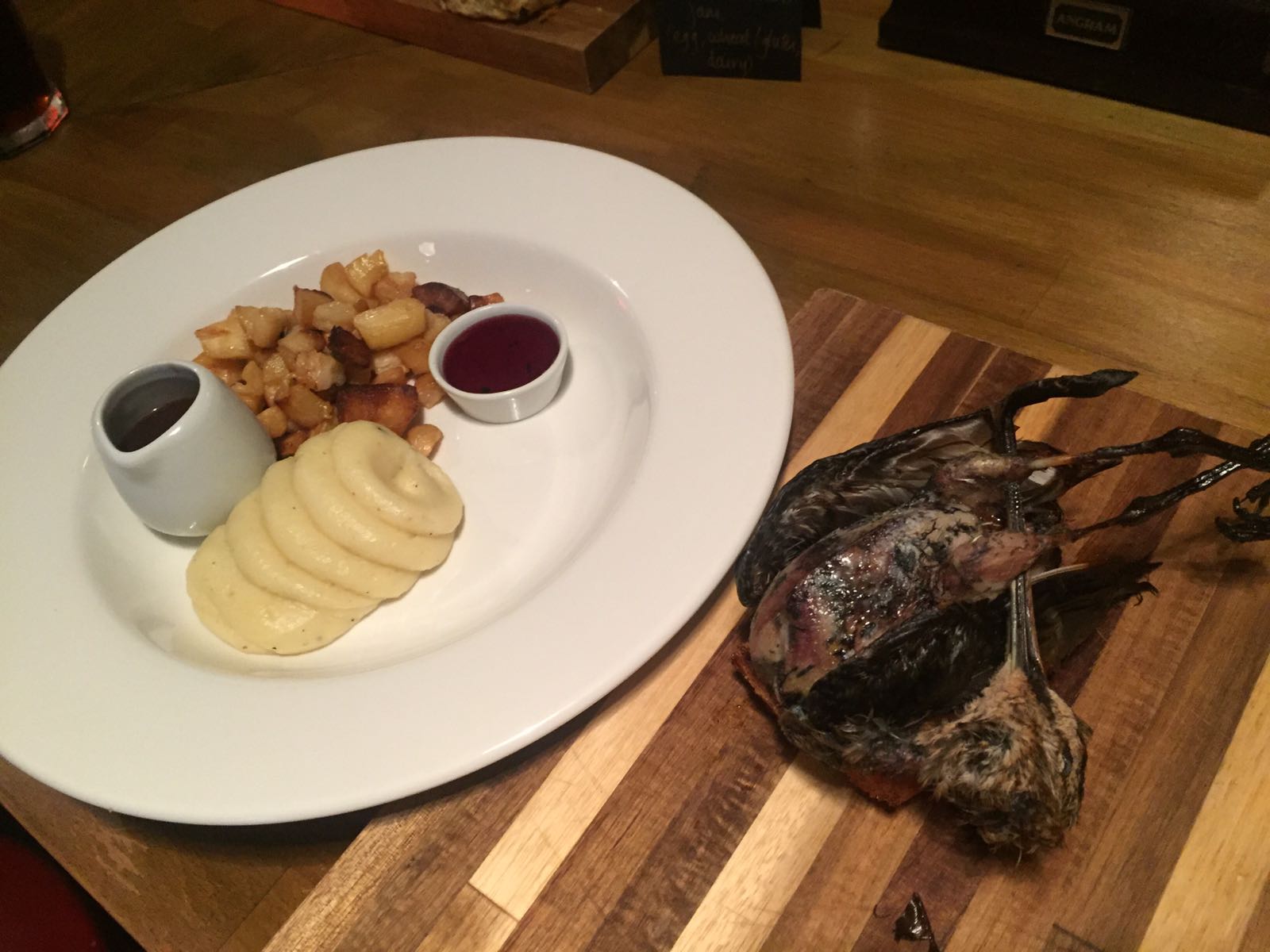
Last week I was very excited to hold of some snipe, a very rare treat indeed. I roasted them and got them on my menu. To eat them in the traditional way is, by our modern standards, rather macabre; they are cooked and roasted completely whole. Guts and brain are eaten. It’s not for the faint-hearted, but, as is often the case, they make delicious eating. I was worried I had gone a little too far, but the people of Levenshulme did me proud.
So here’s a post all about snipe and how to roast and eat them in the traditional way.
A while back I wrote a general entry about game. Read it here.
Snipe in brief:
Season: 12 Aug – 31 Jan (England, Wales & Scotland); 1 Oct – 31 Jan (Northern Ireland)
Hanging time: 2-3 days
Weight: 150g
Roasting time: 10-15 minutes at 230⁰C
Breeding pairs in UK: 80 000
Indigenous?: Yes
Habitat: Mainly marshes and wetlands, but also heathland, moorland and water meadows
Collective noun: wisp (when in flight); walk (when on foot)
What is a snipe? Well Laurence Andrew, writing in his tome The noble lyfe and natures of man of bestes, serpentys, fowles and fishes… (c. 1527) has a pretty good stab and describing it (though I’m sure the snipe does not get its bill stuck in the mud Natural Selection would have something to say about that!):
Snyte [Snipe] is a byrde with a longe bylle & he putteth his byll in the erthe for to seke the worms in the grounde and they put their bylles in the earthe sometyme so depe that they can nat get it up agayne & thane they scratche theyr billes out agayn with theyr fete. This birde resteth betimes at nyght and they be erly abrode on the morning & they have swete flesshe to be eaten.
Weighing in at an average of 150g, the snipe is our smallest legal game bird. They are not an introduced species like the pheasant, red legged partridge or rabbit, but indigenous to the UK and Ireland (where most reside). There are around 80 000 breeding pairs in the UK, but these numbers increase substantially when around one million individuals flock to the country to overwinter.
Normally, shooting indigenous species holds up a red light for conservation – and rightly so, it should always come first, but in this case the snipe have the upper hand because they are so damn tricky to shoot.
They are secretive, highly camouflaged birds that use their very long bills to probe mud and sand flats for tasty creatures to eat. When driven at a hunt they fly in zig zags and are quickly gone again, this is why a group of them is called a wisp. (It’s no surprise, then, that especially good sharp shooters in the armed forces became known as snipers.) These birds are almost self-managing in their difficulty to hunt!
As a food they are delicious, indeed they are considered the finest eating. They are wonderfully rich and tender, and although they are small, a little goes a long way. Winston Churchill once demanded ‘a brace of snipe washed down with a pint of port’ as a hangover cure whilst on a transatlantic flight to Washington DC. Their carcasses make excellent stock.
Not just the leg and breast meat are eaten, but also the brain and the trail – in other words, the innards of the bird, usually scooped out and spread on the slice of toast it was roasted upon.
Don’t be repulsed by this! Your first worry is probably that the guts will be full of the bird’s faeces, well worry not, the snipe (and its larger cousin, the woodcock) evacuates its bowel as soon as it takes flight. Your second worry, presumably, is that you are eating gory intestines, liver, heart etc. Again, nothing to worry about here either! It is all very soft, rich and tender like a lovely warm pâté.
The head is cut in half lengthways so that the brain can removed or sucked out.
This is ancient finger food.
Sourcing snipe
As you will have guessed, finding snipe for the table is tricky. I’ve only ever seen snipe three times in butcher’s shop windows so my advice is to make friends with someone who shoots, because only a few will have been shot on any single hunt, and therefore it’s unlikely there will be any surplus for the butcher to pick up. The chances are you’ll probably have to finish the business of hanging the bird(s) yourself.
Most game birds are sold in ‘braces’, i.e. pairs, usually a cock and hen, but snipe actually come in threes, or ‘fingers’, so-called because that’s how many you can hold between the fingers of one hand.
These tiny birds do not need to hang for long, just 2 or 3 days. If it is unseasonably warm or being hung indoors 1 or 2 days should do the trick.
Preparing snipe for the table
You are to observe: we never take anything out of a wood cock or snipe
James Doak’s Cookbook, circa 1760
Snipe are extremely easy to prepare if you are roasting them:
Pluck away the leg and breast feathers. If you like, remove the skin from its head.
Truss the snipe with its own beak, by pulling its head down to its side and spearing the legs with its long bill.
Some recipes as you to remove the trail before you cook it (sometimes to be fried up with butter and smoked bacon). To do this, make a small incision in its vent and use a small tea or coffee spoon to remove the entrails.
Snipe can also be cooked just like any other bird if you prefer (but you are missing out on a real treat). Pluck the whole body, or peel away the skin, and cut away legs, head and feet.
If you like the blogs and podcast I produce, please consider treating me to a virtual coffee or pint, or even a £3 monthly subscription: follow this link for more information.
Roast snipe, and how to eat it
Per person:
1 or 2 oven-ready snipe
1 or 2 pieces of toast, as large as the snipe
Butter
Salt and pepper
To accompany:
Mashed potatoes or game chips
Roast vegetables
Gravy made from game stock
A sweet jelly such as redcurrant, quince or medlar jelly
If your snipe have been kept in the fridge, remove them and let them get to room temperature, about 30-40 minutes.
Preheat your oven as hot as it will go, 230⁰
Spread a good knob of butter on the toast and lay the snipe on top. Smear two more small knobs over the snipes’ breasts. Season with salt and pepper.
Place the snipe on a roasting tin and roast for 10-12 minutes for medium-rare birds. If you are roasting several, make sure that you leave a good gap between each one so that heat can circulate around them.
Remove from the oven and allow to rest for 5 minutes or so.
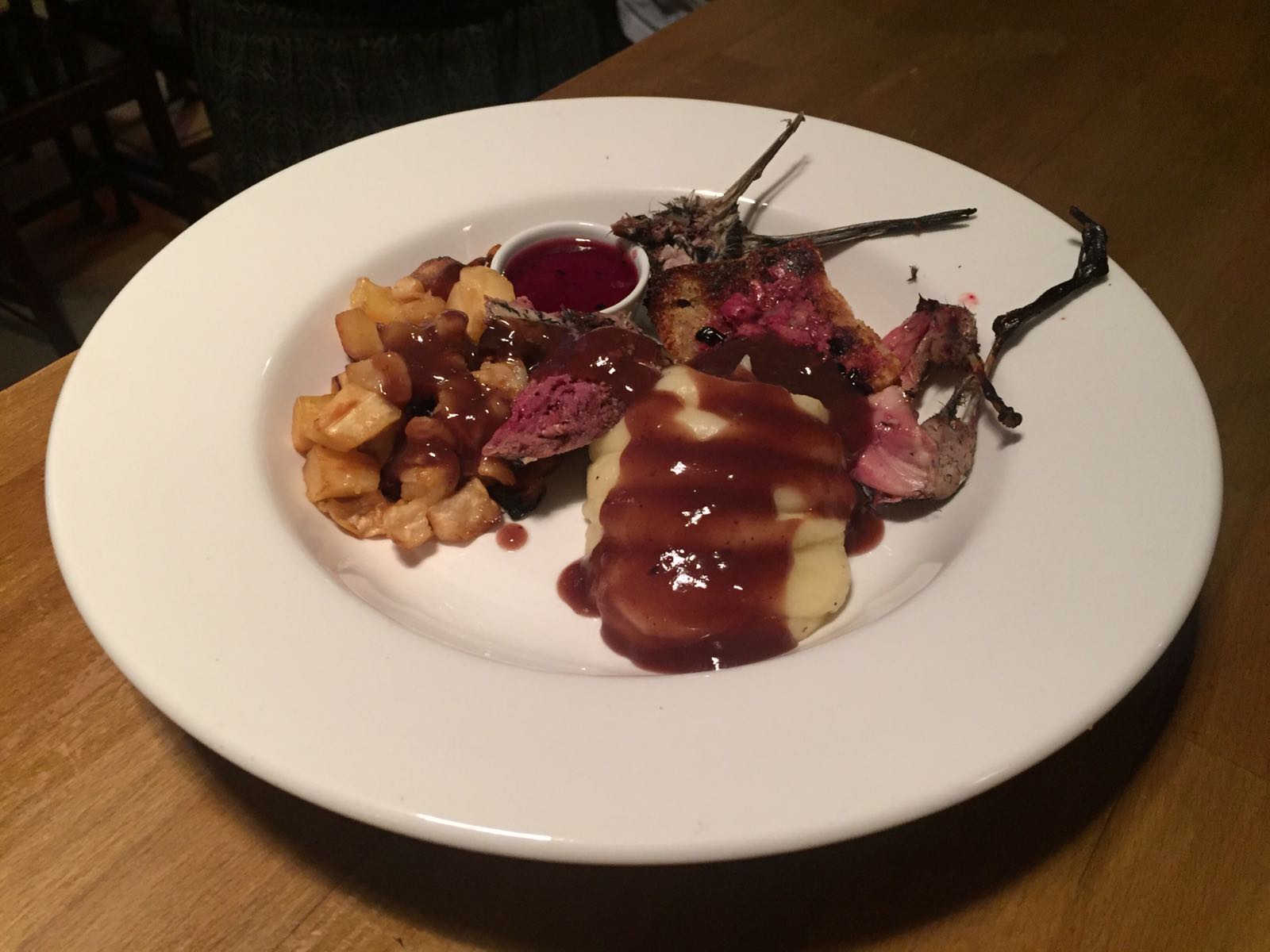
The snipe can then be served to each guest with various accompaniments. I think it’s best if each guest carves their own snipe.
Take the snipe off its toast and cut of its head. Use a chef’s knife the cut its head in half lengthways.
Next, scoop out the snipe’s trail with a teaspoon and spread it over the toast.
Remove the legs and cut away the breasts using a steak knife.
Eating is fiddly, so use your fingers to get every piece of meat from the carcass.
Don’t forget the brain – pick up the two halves of the head and use the beak from one half to extract the brain from the other half, then swap. Alternatively, suck the brain out.
“Did you by any chance order a calf’s head a couple of weeks ago? It’s the kind of thing you would order.”
“You’re right it is the sort of thing I’d order, but I didn’t, sorry.”
“Well someone did, but I can’t remember for the life of me who it was!”
“Oh dear. Well if you don’t find the culprit, let me know, I’m sure I can take it off your hands.”
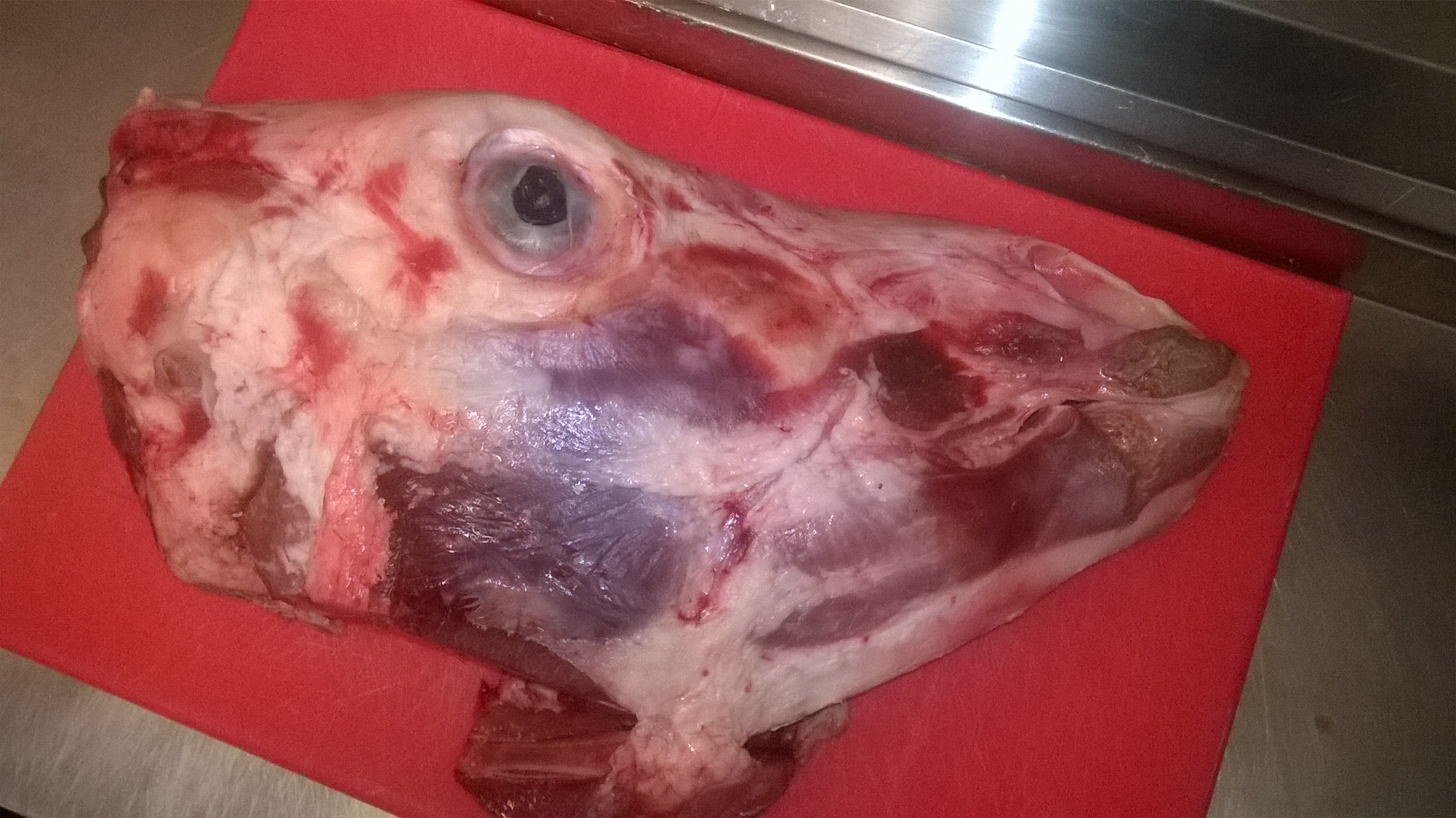
And that’s how I became the owner of a calf’s head; and I knew exactly what I was going to make with it once it got my hands on it: the mysterious Victorian classic, Mock Turtle Soup.
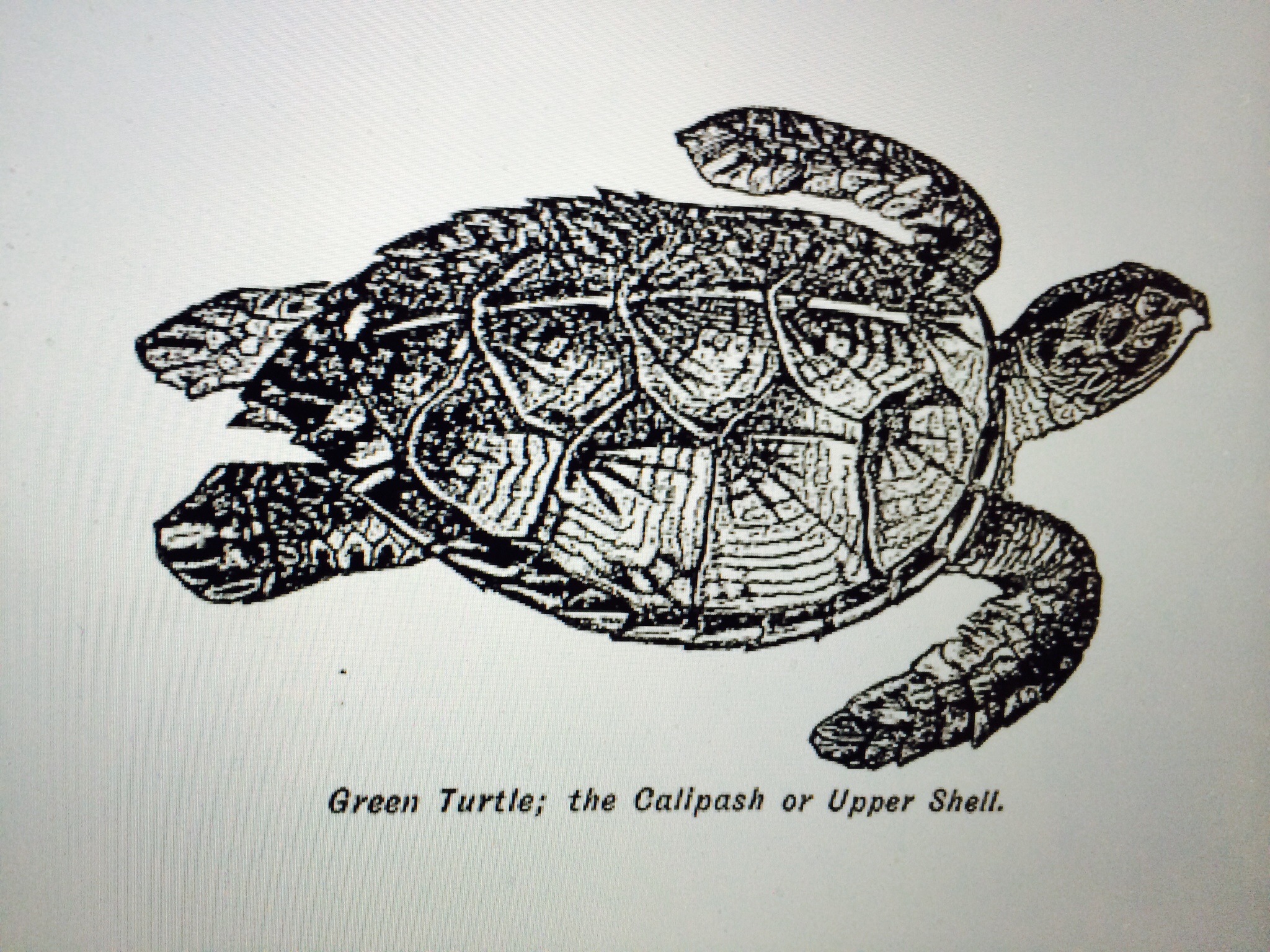
Mock turtle soup was invented from necessity – turtle soup had become immensely popular in the 1750s after sailors coming from the West Indies landed a couple of them upon British soil. Sailors would catch them and keep them alive on their ships as a source of fresh meat. They were very delicious, and it’s a surprise that any even made it back. Those that did, were readily snapped up by royalty. Now everyone wanted to get their hands one and suddenly no banquet or dinner party was complete without its turtle soup. At its peak in trade, 15 000 live turtles were being shipped live from the West Indies per year. Of course, these huge beasts were very expensive, and because such numbers were being caught, trade was not sustainable and the green turtles were almost hunted to extinction, driving up price even further.
But why were they so popular? Obviously the royal family enjoying themgot the ball rolling, but their huge bodies were made up of different cuts of meat tasting of veal, beef, fish, ham and pork!
So real turtle soup quickly became out of the question for all but the super-rich, and so mock turtle soup was invented. Recipes vary in their ingredients containing beef, ham, oysters, vegetables, skin, tongue and brain in an attempt to replicate the diverse tastes and textures of turtle meat. One ingredient common to all of the recipes I’ve seen is calf’s head – an economical addition with plenty of tastes and textures in itself. Recipe-writers are quite particular about the fact that the head should have the skin on – the fat and skin adding to the texture and flavour of the dish. My head arrived skinned and it still tasted good. If your butcher sells veal, see if you can get hold of one. Mine cost a fiver!
Some recipes are very complex, but are essentially a consommé of meat served with the meat cut into chunks with various accompaniments such as forcemeat balls (or fish balls or egg balls), fried brains, oysters and fresh herbs.
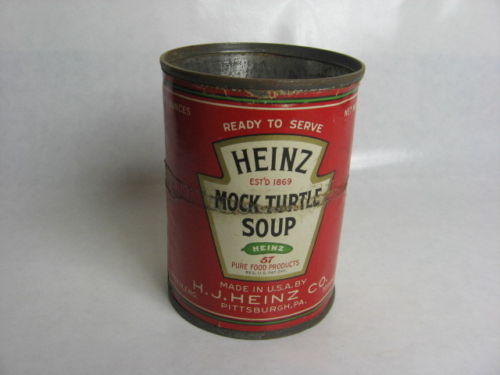
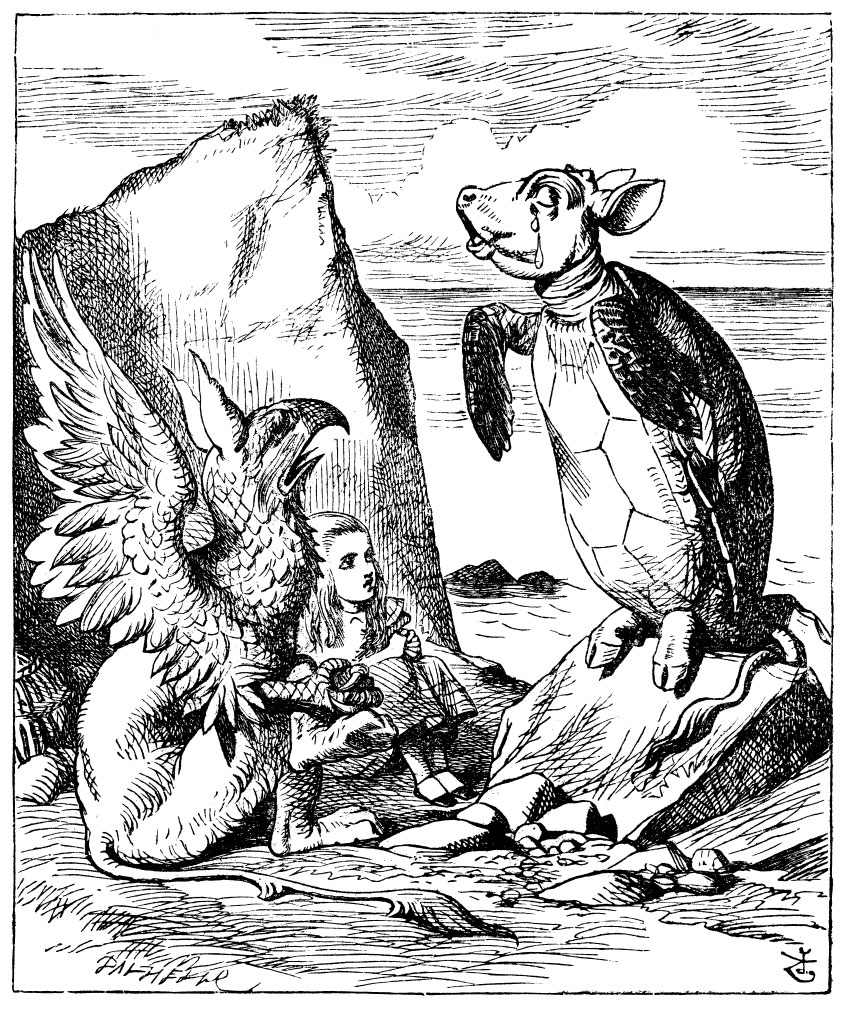
Mock turtle soup became a British classic; Heinz even made and canned it! Alice in her trip to Wonderland met a real Mock-Turtle, depressed that he was no longer a real turtle. He was quite tiresome if I remember rightly.
Alice meets the Mock-Turtle
I adapted a recipe for an ‘old fashioned’ mock turtle soup from the 1845 book Modern Cookery for Private Families by Eliza Acton, then my chefs Harry and Matthew and I got to work on producing it as a special for the restaurant.
If you like the blogs and podcast I produce, please consider treating me to a virtual coffee or pint, or even a £3 monthly subscription: follow this post for more information.
To make mock turtle soup
As the butcher to split the head. As soon as you get home, remove the brain carefully and place in a bowl of well-salted water, cover with cling film and keep in the fridge until needed. You don’t need to include the brain if you don’t want to; it is tricky to prepare, but it is delicious. We didn’t use the brain as we took our time over a couple of days to make this in-between regular food service, and brain doesn’t really keep more than 24-hours. Because the head had already been frozen, we couldn’t re-freeze it either. If you don’t have the same issues as we did, get it cooked! There are brief instructions below on how to prepare brain, but for more detail, check out the sister blog here.
1 calf’s head with tongue, brain removed, split and soaked in salted water for several hours
4kg beef neck or shin
75g butter
1 smoked ham hock
4 large onions, quartered
3 large carrots, peeled and halved lengthways
2 heads of celery, quartered lengthways
Bouquet garni: rosemary, bay, thyme, pared rind of a lemon
1 dsp black peppercorns
Rinse the calf’s head and place in a large stockpot, cover well with tepid water and bring slowly to a bare simmer. Skim any scum that rises to the surface of the water, then cover with a lid and let the head cook for 90 minutes.
In the meantime, heat up the butter in a large frying pan and fry beef until well browned. Add this, along with the butter, to the pot with the ham hock, vegetables, bouquet garni and peppercorns. Turn the heat up a little and bring back to light simmer, letting the whole lot tick over for seven hours.
Carefully remove the larger pieces of meat and bone and strain the soup well. If need be, reduce the resulting broth to produce a more concentrated flavour. Discard the vegetables and herbs and carefully remove the meat from the bone. Skin the tongue and cut away any gristle and bone from the root end. The meat can then be either shred or cut into even-sized pieces.
To finish the soup:
Beurre manie of equal amounts of butter and flour mashed together to form a paste
200ml sherry
½ tsp ground mace
¼ tsp Cayenne pepper
Salt
Double cream (optional)
Forcemeat balls (see below)
Prepared brain (see further below)
Chopped parsley
As you prepare the meat, get the strained stock back onto a simmer. Whisk in knobs of beurre manie until the soup is as thick as you like, add the sherry and spices and season with salt. Return the meat to the pan. If you like, add cream to the soup.
Serve the soup in bowls topped with forcemeat balls fried in butter or lard, breadcrumbed brain slices and chopped parsley.
For the forcemeat balls:
300g streaky bacon, chopped
100g grated beef suet, fresh is best, but the packet stuff is fine too
75g fresh breadcrumbs
1 tbs chopped parsley
1 tsp chopped marjoram
2 eggs, beaten
Freshly grated nutmeg
Salt and pepper
Mix together the first six ingredients together in a bowl and season with the spices and salt. Roll into walnut sized pieces. Fry in butter or lard over a medium heat.
For the brain:
The brain, soaked in salted water for several hours in the fridge
Seasoned flour
1 egg beaten
Dried breadcrumbs
Sunflower oil or lard for frying
A brain is covered by a membrane of blood vessels which need removing. To do this, gingerly place the brain on a chopping board, with its underside facing upwards. Here the membrane is thickest, and is the easiest place to begin. Carefully pull the membrane away. This is quite tricky and takes a little practise. Ease your fingers between the folds and get as many of blood vessels pulled away.
Now poach the brain in salted water for about 6 minutes. Remove, drain and cool.
Cut the brain into thick slices, pulling away any bits of membrane you might have missed.
Set out three plates: one with flour, the other with beaten egg and the last with the breadcrumbs.
Coat the brain slices in flour, then egg, then breadcrumbs.
Heat up the oil or lard in a frying pan and fry the brain quickly until golden brown – don’t overcook! Fry for three minutes maximum.
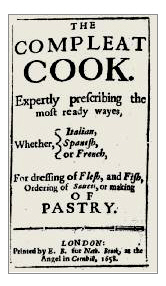
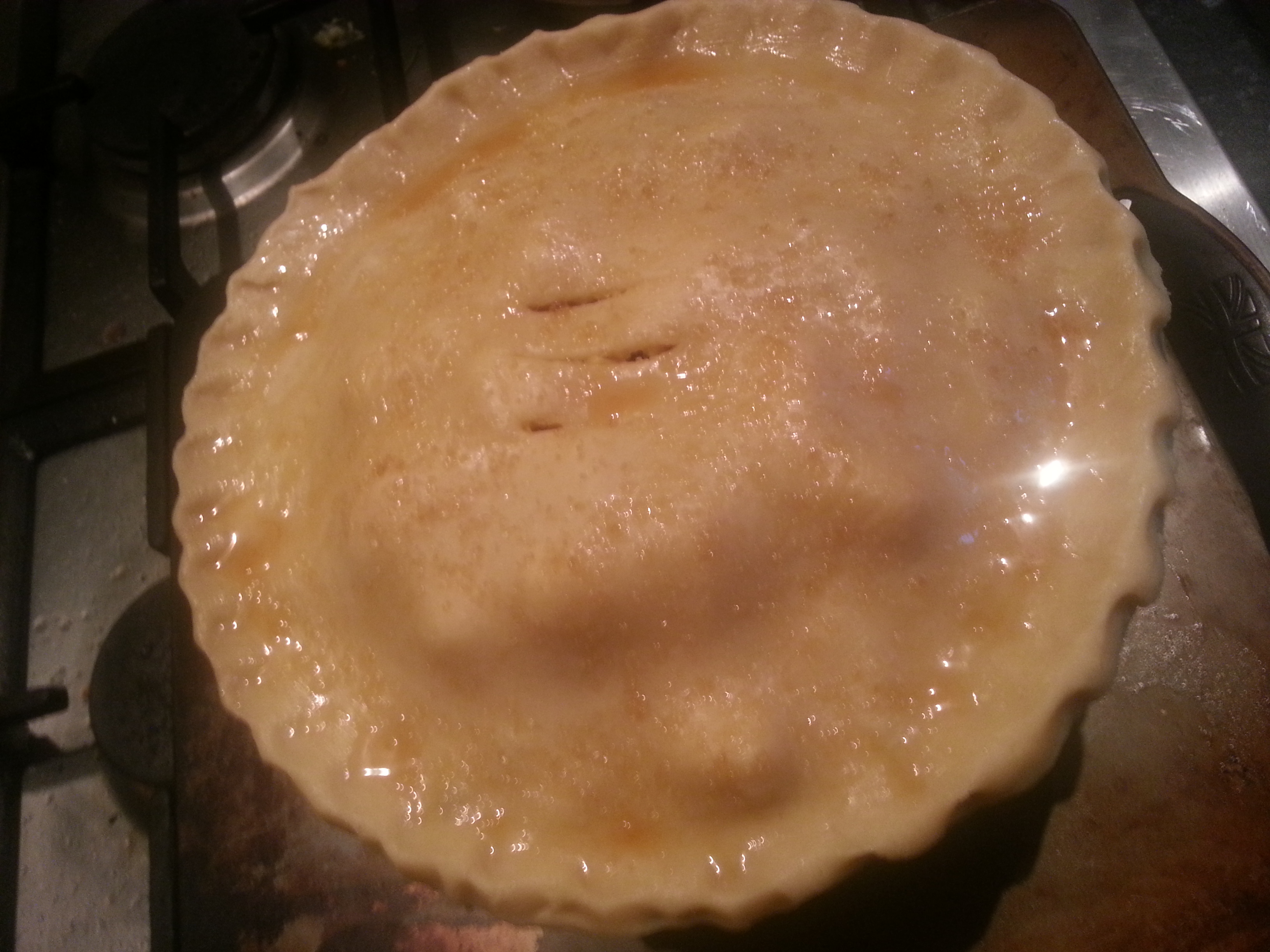
So here we are at the final course of the Dinner Party Through Time. It was suggested that, seeing as the meal was but a day after Hallowe’en, it should be an English pumpkin pie. I didn’t expect to find one, but after a brief search I found a recipe for ‘Pompion Pye’ in The Compleat Cook, published in 1658 by the mysterious W.M during the time of the Protectorate when England was under the control of misery guts Oliver Cromwell. It is the first ever recorded recipe of a pumpkin pie that we know of. It reads:
To make a Pumpion Pye. Take about halfe a pound of Pumpion and slice it, a handfull of Tyme, a little Rosemary, Parsley and sweet Marjoram slipped off the stalks, and chop them smal, then take Cinamon, Nutmeg, Pepper, and six Cloves, and beat them; take ten Eggs and beat them; then mix them, and beat them altogether, and put in as much Sugar as you think fit, then fry them like a froiz; after it is fryed, let it stand till it be cold, then fill your Pye, take sliced Apples thinne round wayes, and lay a row of the Froiz, and a layer of Apples with Currans betwixt the layer while your Pye is fitted, and put in a good deal of sweet butter before you close it; when the Pye is baked, take six yolks of Eggs, some white-wine or Verjuyce, & make a Caudle of this, but not too thick; cut up the Lid and put it in, stir them well together whilst the Eggs and Pumpions be not perceived, and so serve it up.
A froiz is something that has been fried, usually with beaten eggs like a Spanish omelette. A caudle is a sweetened custard made of egg yolks, cream and sugar or with wine instead of cream; it is poured through the central hole of a pie when it is cooked. Sometimes, the pie is returned to the oven so that the caudle can set before the pie is sliced. Verjuyce or verjuice is the sour juice of either crab apples or unripe grapes was used extensively in Britain; it serves the same purpose as lemon juice. Here’s a previous post all about it.
I must admit, it was very worried about making this pie for the diners. I was especially worried about the froiz with all those spices and herbs mixed into the sweetened egg and pumpkin , fried until cooked through then baked. Overcooked eggs release a lot of water and turn somewhat rubbery (as anyone who has overcooked scrambled eggs can tell you). I was not expecting good things.
The only thing I changed in the recipe was the caudle – I swapped the wine for cream and made a proper custard to pour into the pie when it came out of the oven. I thought that after six other courses, a wine caudle just might tip folk over the edge.
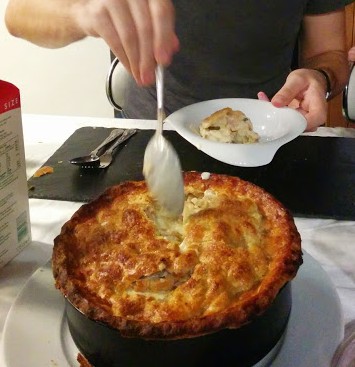
As it turned out, this pie was delicious! The soft apples seemed to prevent the eggs from overcooking (maybe it was the acidic conditions, they provided?) and really set off the tender sweetened pumpkin mixture. The creamy custard helped the whole thing go down very well. Although there might be a few more stages to making this pie, compared to a regular dessert fruit pie, it is well worth the effort, so give it a go.
Here’s how I interpreted the recipe:
Ingredients
8 eggs
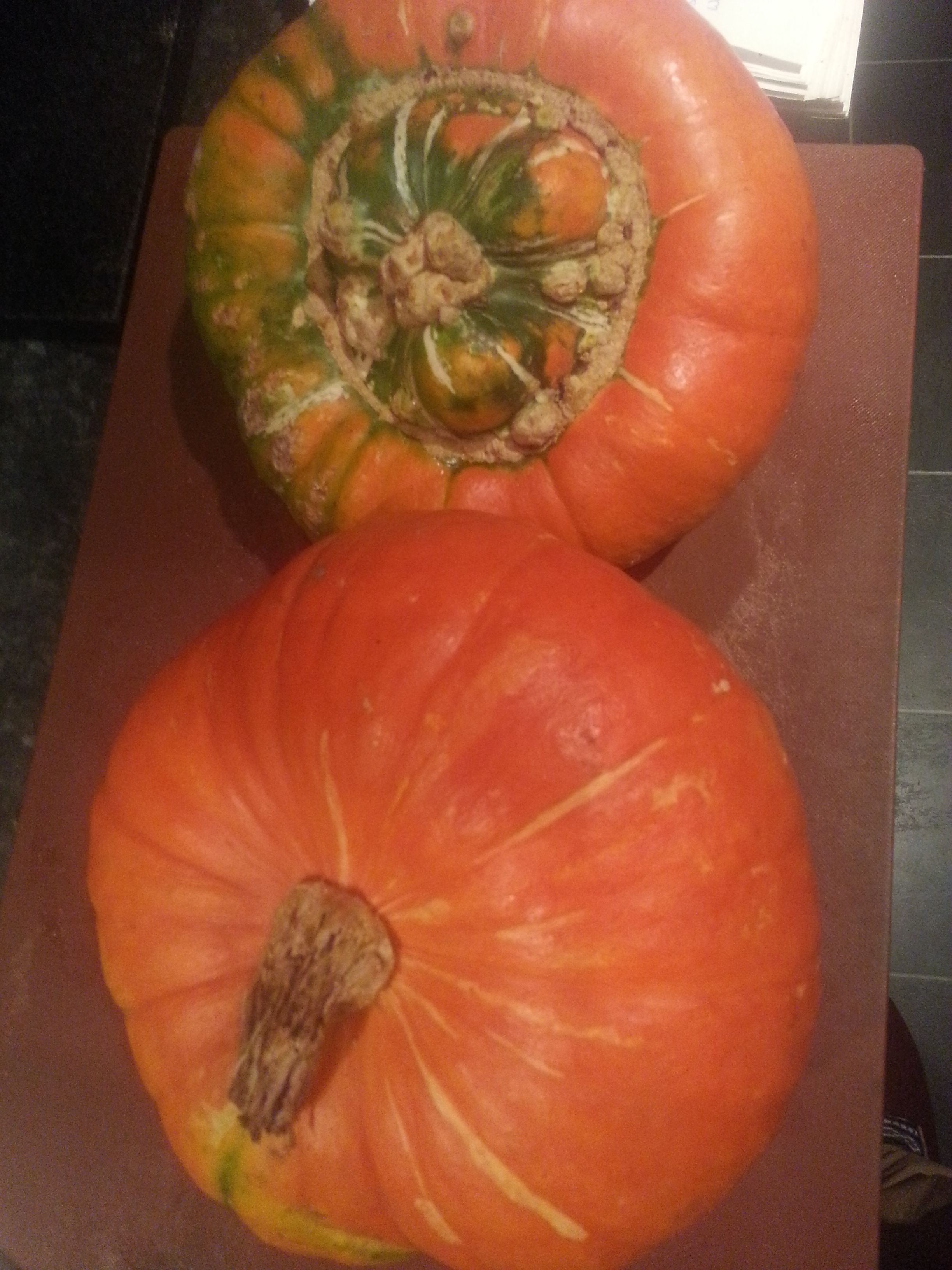
500g pumpkin flesh, cut into 1 ½ cm cubes, then thinly sliced
1 tsp each of finely chopped thyme, rosemary, parsley and marjoram
½ tsp each of ground cinnamon, black pepper and nutmeg
¼ tsp ground cloves
75g butter
200g caster sugar
sweet shortcrust pastry
800g Bramley apples, peeled, cored and sliced
1 handful of currants
egg wash and demerara sugar
250ml double cream, or half cream, half milk
4 egg yolks
30g sugar
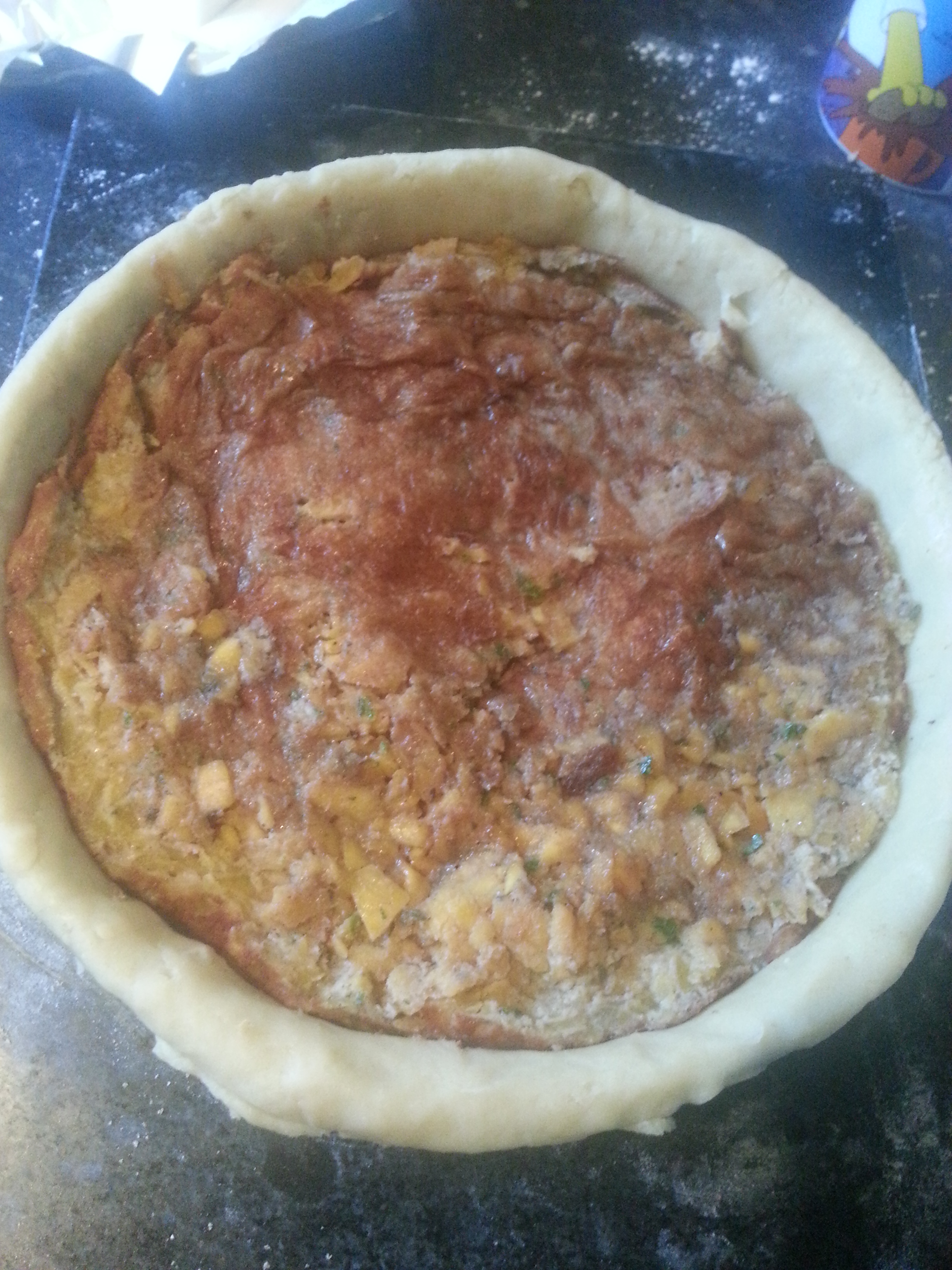
My pie is made in an 8 inch cake tin, so begin by frying the froiz in a non-stick frying pan of a larger diameter. Beat the eggs together with the herbs, spices and caster sugar and stir in the pumpkin slices. Melt 50g of the butter in the frying pan and, when foaming, pour in the egg mixture. Continue to fry over a medium heat, and when the froiz is half-cooked, place under a hot grill until cooked through. Slide the froiz onto a plate and let it cool.
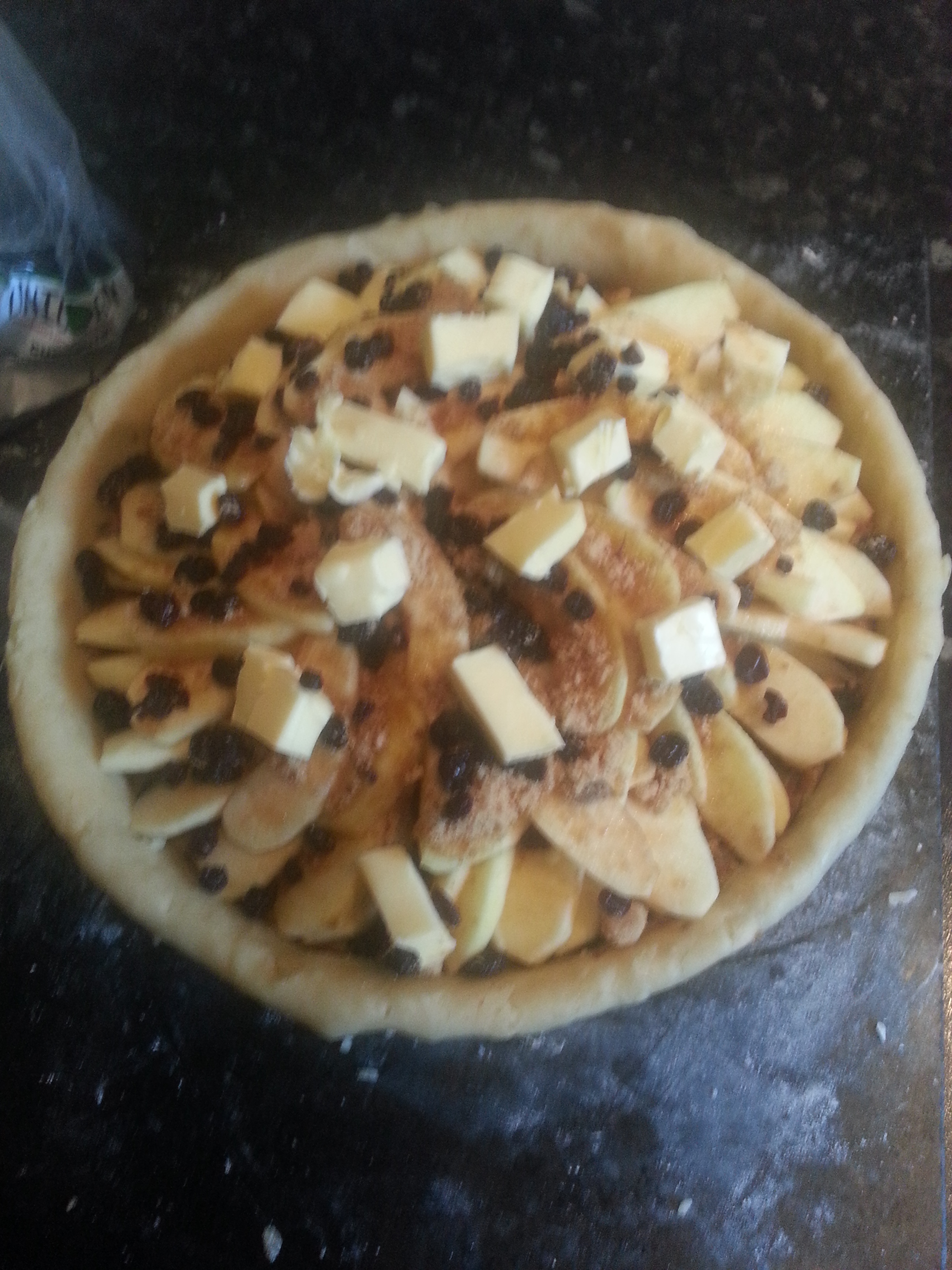
Line an 8 inch cake tin with 2/3 of your pastry, then scatter in half of the apples and currants. If you like, sprinkle on some more sugar if the apples are particularly tart.
Trim around the edges of the cooled froiz so that it fits snugly inside the pie before adding a second and final layer of apple and currants. Dot the remainder of the butter on top, before rolling out a lid with the reserved pastry, gluing it in place with egg wash.
Make a hole in the centre and decorate if liked (traditionally, sweet pies are not decorated). Glaze with egg wash and sprinkle on the sugar.
Bake at 200⁰C for around 20-25minutes until the pastry has browned, then turn the heat down to 160⁰C and bake for a further 30 minutes or so.
Just before the time is up, make the caudle just as you would for a custard tart by heating up the cream and milk, if using, and whisking it into the egg yolks and sugar.
Remove the pie from the oven, crack open the top of the pie and pour in the caudle. Return to the oven for about 8 minutes so that it can set. Alternatively, you can heat the caudle mixture in the pan until it thickens slightly and simply pour into the cooked pie.
If you like the blogs and podcast I produce, please consider treating me to a virtual coffee or pint, or even a £3 monthly subscription: follow this link for more information.
Here’s the penultimate course of the Dinner Party Through Time and it brings us up to the Second World War. The recipe is not actually from the 1940s, but I thought it represented two very different aspects of food culture during this time. A normal faggot is a mixture of pork or lamb offal and offcuts wrapped in a little caul fat and baked. They are of course a national dish and, quite rightly, should be celebrated.
During WWII, meat was rationed, and families could spend up to just one shilling and tuppence on meat per person per week, which got you a little over a pound of meat each. Offal, however, was not rationed so housewives would supplement the ‘proper’ meat with offcuts. This meant that dishes such as faggots were eaten more often.
In contrast to this, Winston Churchill ate opulently in his war room, putting away course after course of delicious, rich and very expensive food and booze. Here’s a typical lunch menu:
Native Oysters
Petite Marmite
Roast Venison with Mushrooms
Ice Cream with Raspberries
Stilton, Apples, Grapes & Walnuts
…and to drink:
Pol Roger Champagne
Chardonnay
Claret
Port
Cognac
Don’t forget the coffee and cigars, of course.
He did not hide the fact he was living in this way, indeed people thought the man who was overseeing the war should be living in this way. I doubt that would happen today.
Anyway, I digress.
I thought making a very cheap and basic meal into something rich and indulgent would highlight these two diets perfectly.
It’s a very complicated affair, but it benefits from the fact that you can make it ahead of time and can freeze them – in fact the freezing process helps tenderise the rich pigeon filling.
I can’t pretend it’s my own recipe; it’s adapted from Gary Rhodes’ excellent New British Classics.
Unfortunately, no one took a photograph of them, so here’s a picture of a woodpigeon from the RSPB website:
This recipe makes 24 to 30 faggots.
For the faggots themselves:
6 pigeons
1.8 litres pigeon stock (see below)
2 chicken breasts
350g belly pork
150g back fat
150g chicken livers
2 shallots, finely chopped
2 cloves of garlic, finely chopped
1 tsp thyme leaves, chopped
90ml brandy
120ml Madeira
2 egg whites, beaten
200ml double cream
Pigeon reduction (see below)
Salt and pepper
Caul fat, soaked overnight in salted water
Vegetable oil or lard for frying
Well ahead of time, remove the breasts from the pigeons (or ask your butcher to do it). Use the carcasses to make the pigeon stock (see below). Reduce around 400ml of the stock by three-quarters to use in the pigeon reduction (see even further below).
Coarsely mince the pigeon breasts, chicken breasts, pork, back fat and chicken livers twice.
Heat the shallots, garlic and thyme in a small saucepan along with the brandy and Madeira and boil down until almost dry. Mix this into the meat along with the egg whites, cream and pigeon reduction. Season with salt and pepper and refrigerate.
Unfurl your caul fat and spread it on a chopping board, cutting it into approximate six by six centimetre squares. Take tablespoons of the faggot mixture and roll into balls and wrap each one up in a square of caul fat. Pat each one dry and fry in oil or lard to seal them and give them a nice golden colour. Arrange them in a flameproof tin or pan.
Warm the remainder of the stock and pour it over the faggots. Simmer them very gently in the stock for about 15 minutes and let them cool in the stock then freeze.
When you want to eat the faggots, defrost them and warm them up in the oven. Serve them up with the mustard sauce (again, see below) and some steamed cabbage and some mashed potato.
For the pigeon stock
2 tbs sunflower oil or lard
6 pigeon carcasses
2 onions, chopped
2 carrots, chopped
4 sticks celery, sliced
4 mushrooms, sliced
500ml of red wine or port
2 cloves of garlic
2 sprigs of thyme
10 juniper berries
5 tomatoes
Black peppercorns
Beef bones
Beef skirt
I’ve already written about how to make stock, so have a look at this post for some general hints and tips. Don’t worry, if you don’t have exactly the right amount or variety of stock veg. I often use bags of veg trimmings I sequester in my freezer exactly for this sort of thing.
Fry the pigeon carcasses in the oil until very well browned, then turn down the heat and add the onions, carrots, celery and mushrooms. Cook these until they are softened and browned. Tip the whole lot into your stockpot, deglazing the frying pan with a splash of the red wine or port. Add the remainder of the wine or port with all of the other ingredients plus enough water to cover.
Bring slowly to a bare simmer, keep the pot covered and on your smallest hob on the lowest heat and let it tick away for three hours. Strain, skim and reduce to a volume of 1.8 litres.
For the pigeon reduction:
2 good sprigs of thyme
4 juniper berries, crushed
1 garlic clove, chopped
120ml brandy
120ml port
the reduced pigeon stock
Place all of the ingredients except the reduced stock in a pan and reduce the liquid by three-quarters. Strain through a sieve and add the stock. Cool and keep in the fridge until needed.
For the mustard butter sauce
200g chilled, cubed butter
a small onion, sliced
2 bay leaves
1 star anise
12 black peppercorns
4 cardamom pods, cracked open
4 tbs white wine vinegar
8 tbs white wine
360ml chicken stock
4 tbs cream
salt and white pepper
2 tsp English mustard
Take a knobsworth of butter and gently cooked the onion and herbs and spices gently for around five minutes.
Now, lots of reducing: add the white wine vinegar, turn up the heat, and reduce by three-quarters. Next, add the wine and reduce by three-quarters. Finally add the stock and reduce that by three-quarters too.
Turn the heat down low, stir in the cream and whisk in the remainder of the butter a few pieces at a time. Season with salt and white pepper, strain and stir in the mustard. Pour into a warmed sauce boat or jug.
If you like the blogs and podcast I produce, please consider treating me to a virtual coffee or pint, or even a £3 monthly subscription: follow this link for more information.
The fourth course jumps ahead somewhat to the Edwardian Age; a time of real food opulence (I’ve mentioned it before in this post here). Domestic ice cream machines were rather fashionable in the houses that could afford to buy one and to pay the staff to hand churn it. It was essentially a drum that could be encased in a mixture of ice and salt, which would drop the temperature enough to freeze the ice cream or sorbet reasonably efficiently. The contents would be churned so that only small ice crystals formed, giving the ice that soft and creamy texture we all know and love.
Although ice cream had been eaten for many decades previously, during the early Twentieth Century the flavours were much more savoury than today. I chose this cucumber, mint and gin sorbet as I thought it would make a lovely refreshing little respite in amongst the other, larger courses, but I could just as easy have gone for pear and Stilton, tomato or Parmesan, to name but a few. I absolutely love making sorbets and ice creams – in all of the menus I have put together I’ve always found space for some.
As soon as I’ve written up all of the courses, I will write a post on the history of iced desserts in Britain.
This recipe makes around 1 litre of sorbet:
1.5kg cucumbers, peeled and deseeded weight
50g mint (i.e. a decent bunch)
Juice of 4 lemons
150g icing sugar
100ml gin, warmed
In a blender, blitz the cucumbers, mint and lemon juice, and then pass through a sieve. Dissolve the icing sugar in the gin and add to the cucumber mixture.
Freeze in your ice cream churn as normal. If you have no churn, pop in the freezer, beat every 30 or 45 minutes until almost frozen, and then leave to freeze properly.
Make sure you remove the sorbet from the freezer around 30 minutes before you want to eat it.
If you like the blogs and podcast I produce, please consider treating me to a virtual coffee or pint, or even a £3 monthly subscription: follow this link for more information.

So, it’s the next course in my Dinner Party Through Time and we have moved up to 1660. It’s the year of the Restoration of the British Monarchy after that to-do with Oliver Cromwell.
Now this recipe has turned out to be a bit of a mystery because as I write it up for you from my notebooks, dear reader, I cannot find out which seventeenth century cook book it is from! My notes say the year, but nothing else. Those of you that like historical cook books will be thinking “the idiot! It’s the Accomplisht Cook by Robert May that he is looking for.” But no, it’s not there. I have looked and looked; through my own collection as well as the internet and I cannot find these blessed chickens or turnips anywhere. If anyone can help me out here, I’d be most grateful.
Anyway, let’s get on with the recipe. Poached chicken is served here with turnips in a creamy and tart sauce. Many things are served as a hash in old books as well as new. In this case, a hash is essentially meat served with some vegetables. As we go on through time, a hash becomes more of a left-over dish, such as the famous corned beef hash.
Along with the hashed chickens, I served up some quinces roasted up with butter, sugar and honey; a typical way of cooking them in the mid-seventeenth century. I couldn’t do a dinner party through time without including the delicious quince.
One last thing before I give you the recipe – use good quality truly free-range chickens. A mass-produced supermarket bird (even a free-range one) will not cut the mustard. I got my chicken, via my local butcher, from the very excellent Packington. Ask your butcher for the nearest similar supplier to you. They do cost quite a lot more, but it is well worth it, and you can certainly tell by the quality of the cooking liquor from poaching the chickens. It makes the base of a delicious soup, so on no account throw it away!
Right, on we go…
For the chickens:
2 free-range large chickens, e.g. from Packingham
2 onions, quartered
2 carrots, peeled and coarsely chopped
4 sticks celery, coarsely chopped
1 fennel bulb, coarsely chopped
bouquet garni of bay leaves, thyme, rosemary
1 tsp black peppercorns
blade of mace
2 tsp salt
For the quinces:
6 good-sized quinces, peeled, cored and quartered
6 knobs of butter
1 tbs sugar
1 tbs honey
For the turnips:
1 kg turnips, peeled and cut into 2cm/1 inch cubes
100g butter
chicken or vegetable stock
75ml white wine or cider vinegar
1 tsp salt
2 tsp sugar
¼ tsp each ground black pepper and ground ginger
2 egg yolks
150ml double cream
Garnish: thinly sliced toast
It looks quite a list of ingredients here, but it’s actually pretty straight-forward. Don’t worry if some things are ready before others – everything can be kept warm under foil or in a low oven.
Start by placing all of the ingredients for the turnips, except for the cream and egg yolks, in a saucepan, adding just enough stock to almost cover them. Cover, and cook on a bare simmer for around 2 hours until very tender. Next, strain the cooking liquor into another saucepan over a low heat. Beat together the yolks and cream and pour into strained liquor, whisking all the time. The sauce with thicken as you whisk. Whatever you do, do not allow the sauce to boil. Return the sauce to the turnips.
During the 2 hours the turnips cook, get on with the other elements of the dish. Lower your chickens, which you might like to quarter first, into a deep stock pot. Get them tightly-packed and snug. Tuck in the vegetables, herbs and spices. Pour in enough water so that it almost covers everything. Pop on the lid and slowly bring to a simmer; let it plop and gurgle only a little. Check a leg after 35 minutes, if it’s nice and tender, you are done. If you are using a really free-range chicken, it may take a little longer.
As you wait for the chicken and turnips to cook, you can get on with the roast quince. Arrange them in an ovenproof dish and coat them in the sugar and honey. Place knobs of butter between the quince pieces. Roast in a moderate oven, around 180⁰C, until tender; around 20-30 minutes. Make sure you turn them every now and again. When ready, keep warm under foil.
Arrange the chicken meat on or off the bone as you prefer with the turnips and quinces all around. Pour over some sauce and tuck in the toast. Serve extra sauce is boats or jugs.
If you like the blogs and podcast I produce, please consider treating me to a virtual coffee or pint, or even a £3 monthly subscription: follow this link for more information.