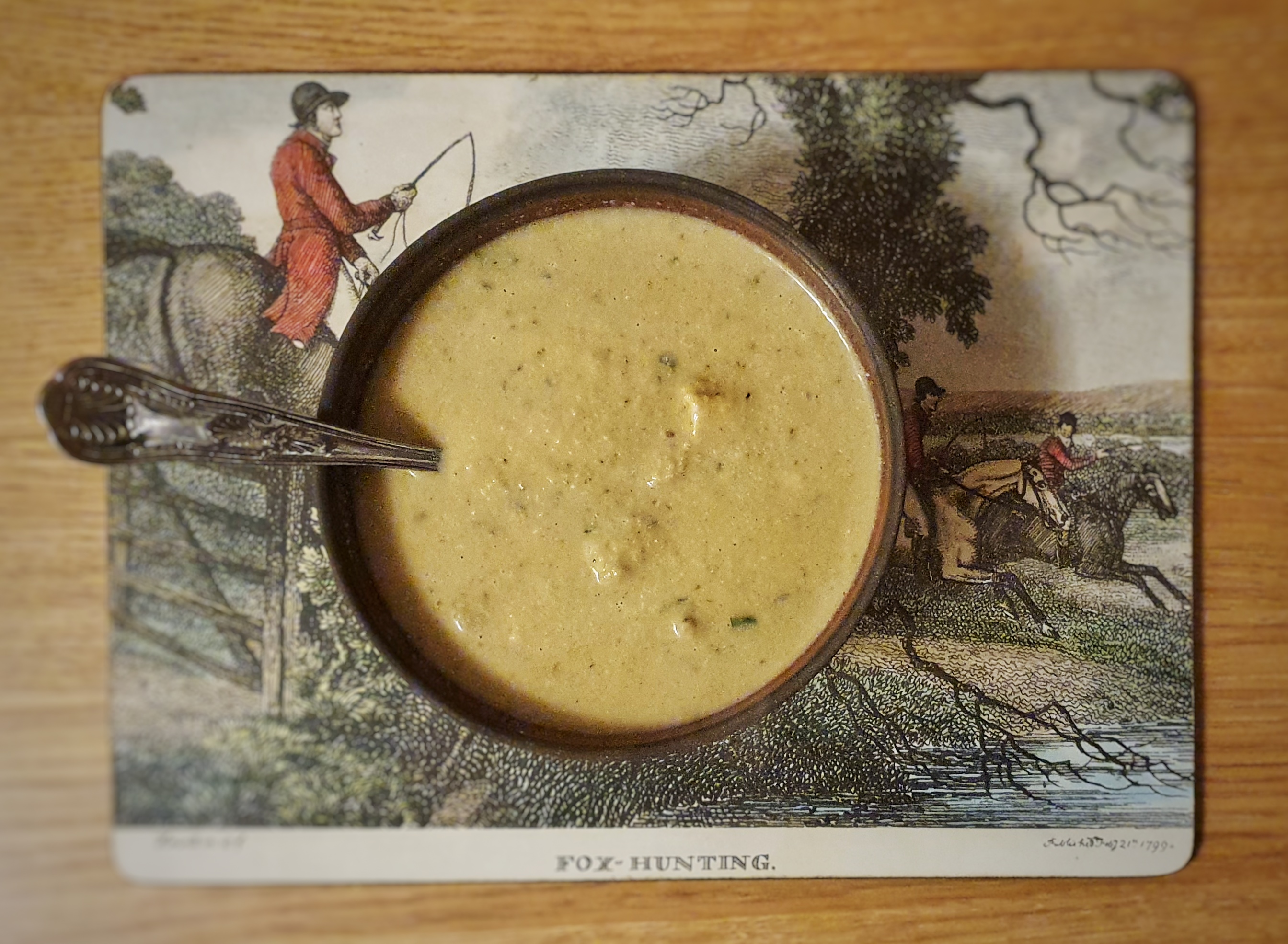
Tag Archives: turkey

To Make Turkey and Hazelnut Soup (& Turkey Stock)

If you are not loving your leftovers at Christmastime, then you are missing a trick: it doesn’t have to be all dry turkey and cranberry sandwiches for the next week.

This is a really great recipe adapted from Jane Grigson’s English Food. I’ve made a few tweaks, and I have provided you with a method for making turkey stock. This recipe would work with leftover chicken, or even pheasant and partridge, or a mix of them.
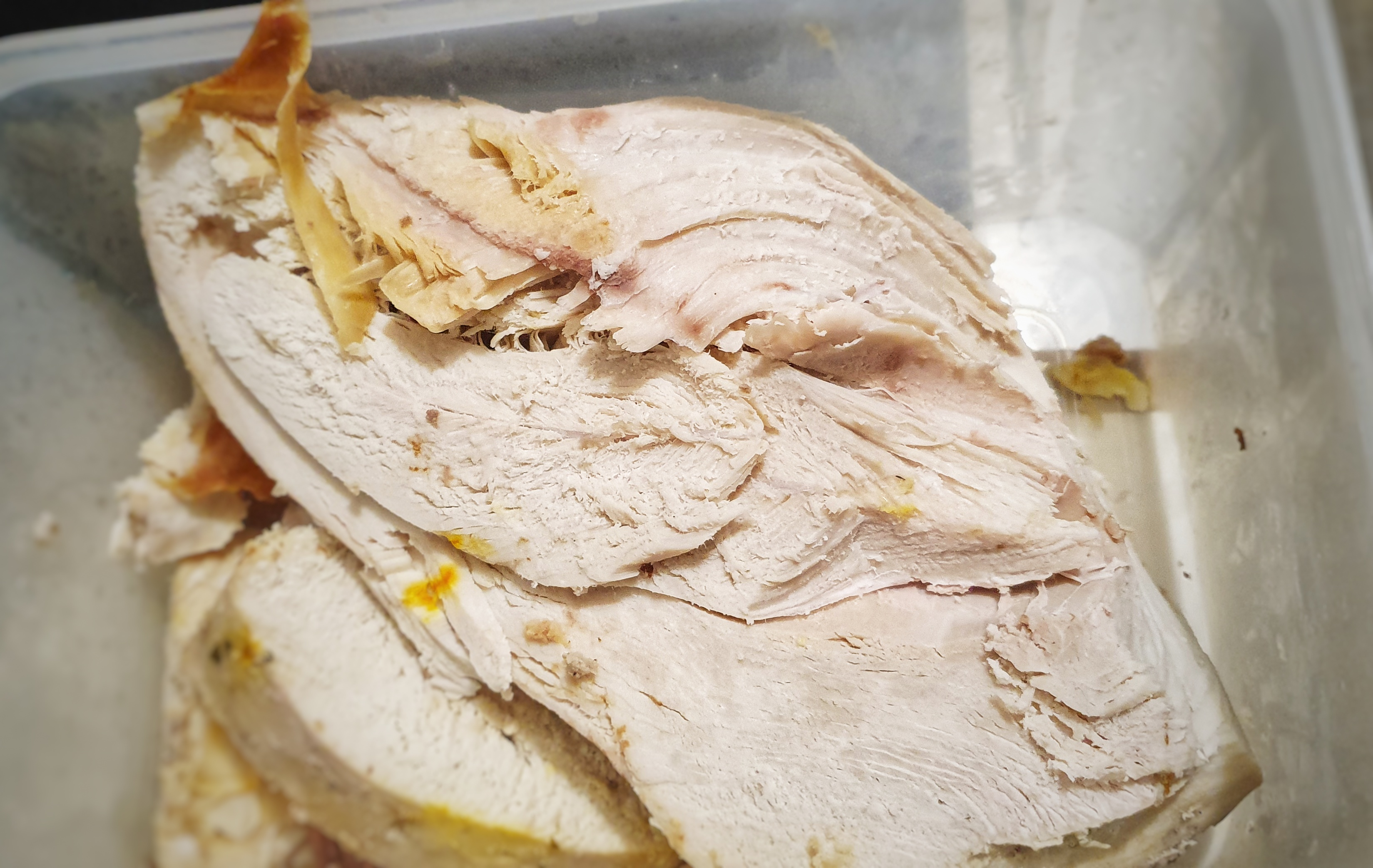
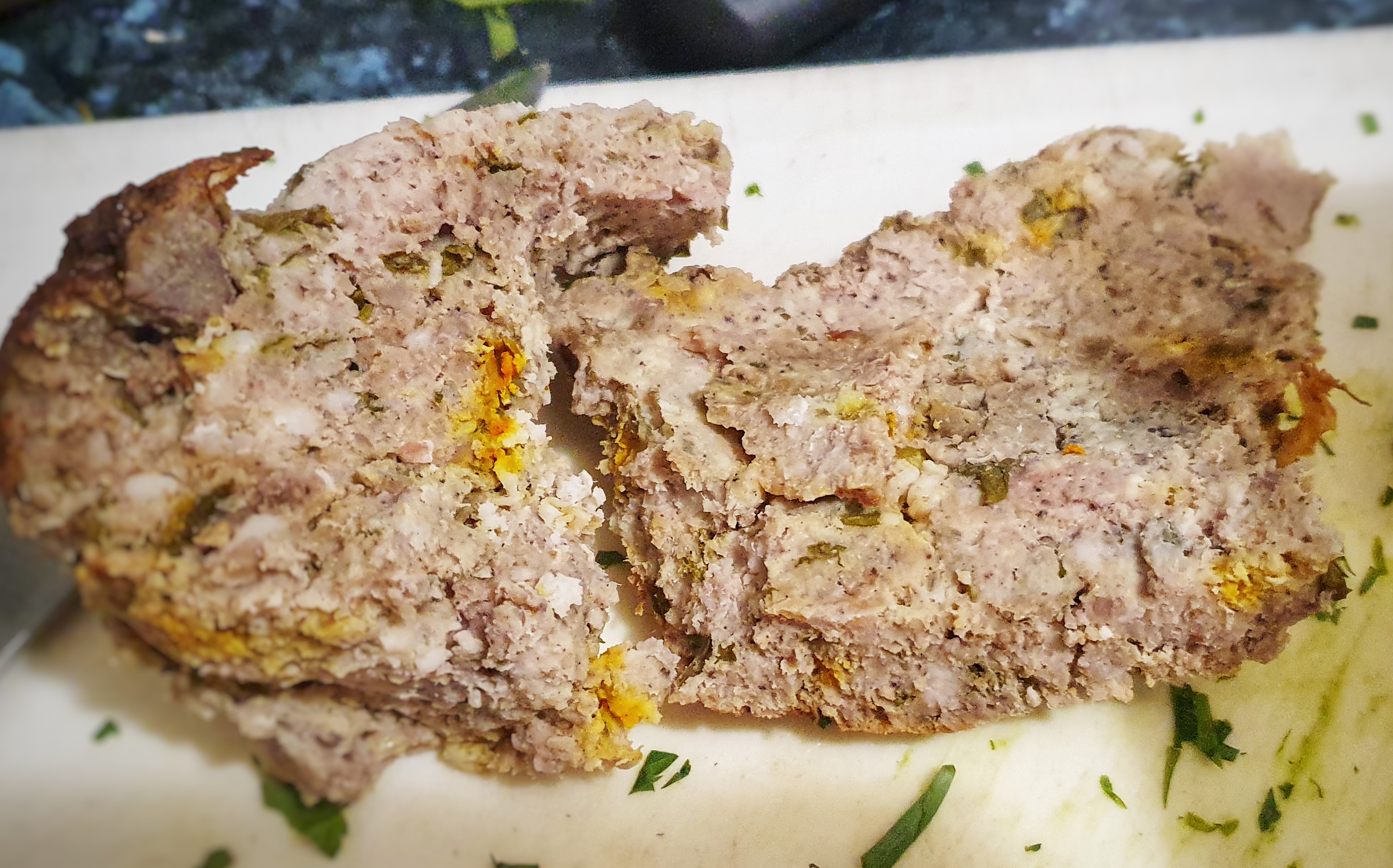
Because it’s a leftovers dish, don’t worry if you don’t have all of the ingredients, though I would say it’s important to have at least three of the basic soup veg and one herb (fresh or dried). It doesn’t even matter if you don’t have any hazelnuts: almonds would work just as well, or you could miss them out entirely. Also, if there are any leftover boiled or steamed vegetables, or roast potatoes, you can pop them in before everything gets blitzed.


If you like the blogs and podcast I produce, please consider treating me to a virtual coffee or pint, or even a £3 monthly subscription: follow this link for more information.


This recipe makes many servings.

For the soup

2 to 3 tbs of fat: this could be butter, leftover fat from the roast potatoes or skimmed from the roast turkey juices

Basic soup veg, peeled, trimmed and diced, such as 2 carrots, 2 onions, 3 cloves garlic, white part of one or two leeks (keep the green parts for the stock), 3 sticks of celery

Herbs: 4 bay leaves, a small bunch of thyme or a tsp of mixed, dried herbs

1 tsp celery salt

1 bunch tarragon leaves, chopped

1 bunch parsley, chopped

1 medium potato, peeled and diced

1.5-2 L turkey stock

Salt and pepper

2 handfuls diced turkey breast (or whatever you have left)

100 g roast hazelnuts, roughly chopped

Leftover stuffing, cut into approx. 1 cm dice

150 ml cream

Heat the fat in a stockpot or large saucepan and add the diced soup veg and herbs, plus the celery salt. Stir and fry on a medium heat until things begin to turn golden brown. Add half of the parsley and tarragon plus the potato and continue to cook for another 7 or 8 minutes.

Pour in the turkey stock and bring the whole lot to a lively simmer, then turn it down to gently bubble until the vegetables are nice and soft, about 15 minutes.

Taste, and season with salt and pepper at this point, then add the diced turkey and the hazelnuts. Simmer for a further 7 or 8 minutes, then allow to cool slightly before blitzing the soup in batches in your blender or food processor. Be careful here! Don’t overfill your blender, especially if the soup is still quite hot.
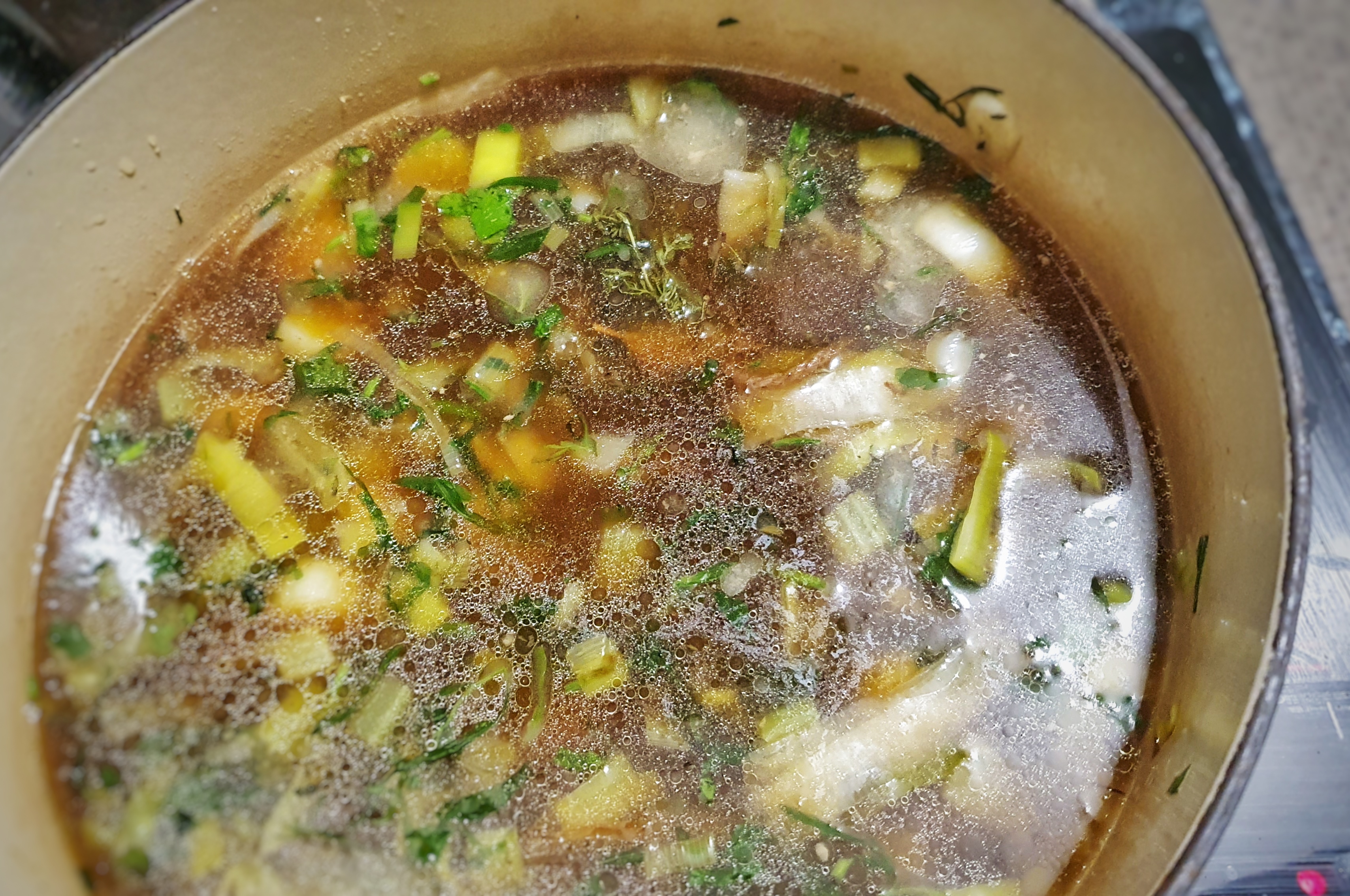
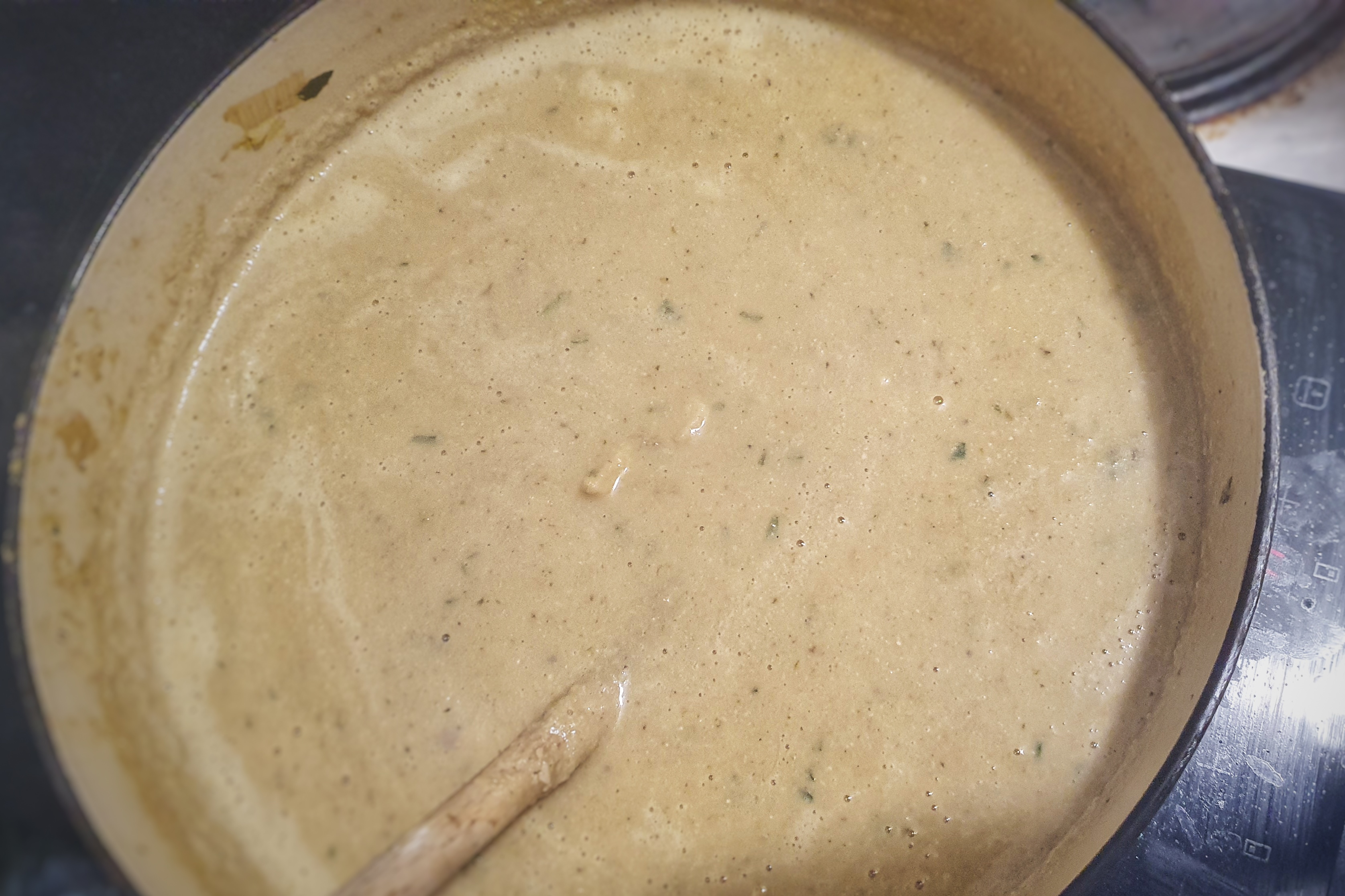
Return to a clean pan, bring back to a simmer, add the cream and the rest of the parsley and tarragon, as well as the diced leftover stuffing. Taste and season with more celery salt and pepper. Serve immediately.
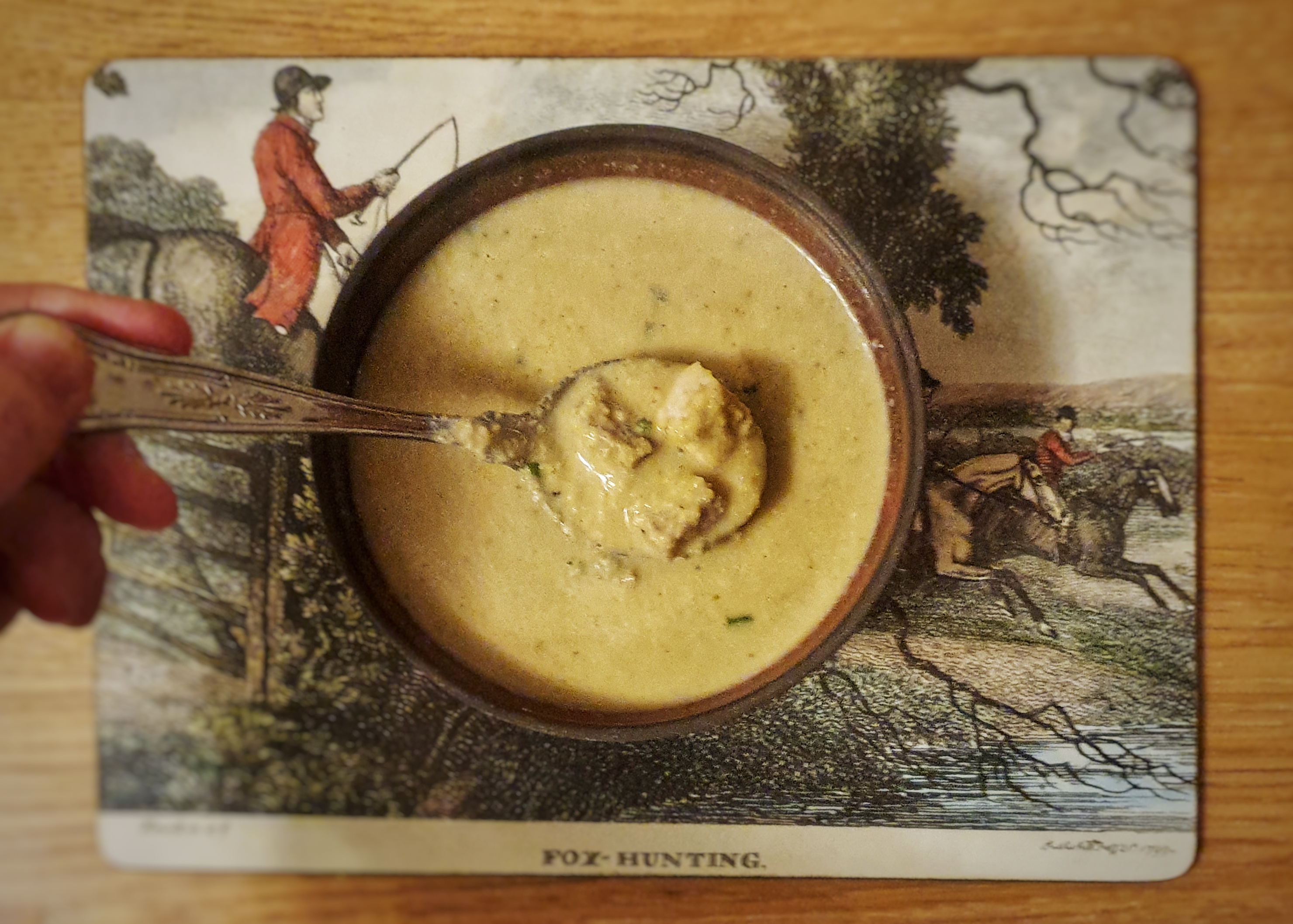
For the stock

I keep vegetable trimmings and peelings in bags in my freezer for stock-making sessions such as these; you can, of course, use regular stock vegetables: celery, onions, carrots, leeks, etc.
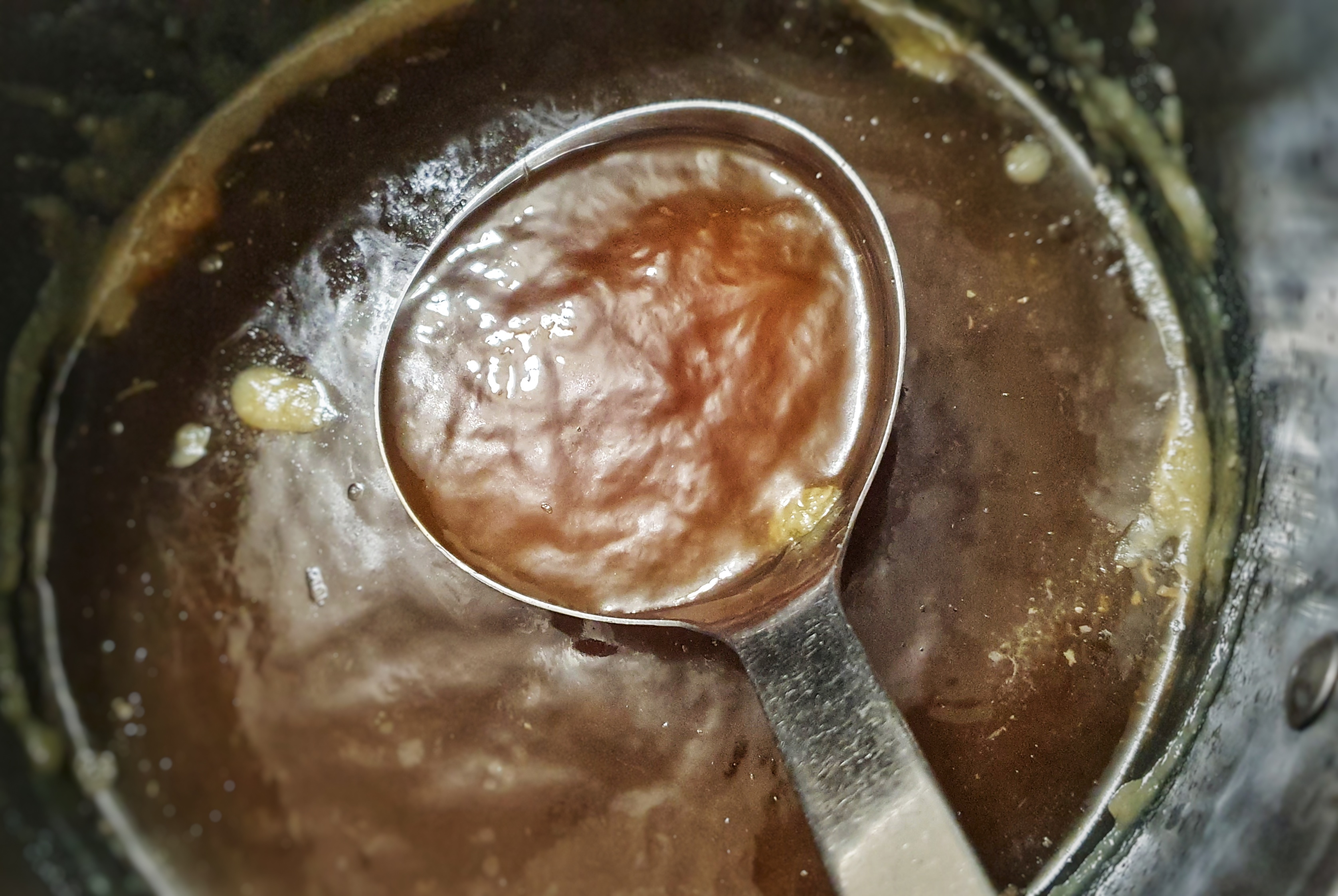
This secret to getting a good colour to your jellied stock is to brown the carcass and vegetables very well.

Makes around 2 litres of jellied stock

2 tbs of fat or oil

The roast turkey carcass, broken into pieces – don’t be too thorough with removing the meat, leave some on.

Vegetable trimmings and peelings (avoid brassicas) or a mixture of stock vegetables: 2 carrots, 2 celery sticks, the green part of a leek or two, a couple of onions, a few smashed garlic cloves.

Aromatic herbs, e.g. 3 or 4 bay leaves, a small bunch of thyme and/or rosemary, parsley stalks

Aromatic spices, e.g. 1 tsp black peppercorns, 6 cloves, 1 tsp allspice berries, 2 blades of mace

1 tsp salt

Any leftover turkey juices or turkey gravy

Cool water to cover

Heat the fat or oil in a stockpot or pressure cooker and add the turkey carcass, the vegetables, the herbs, the spices as well as the salt. Stir and fry until both the turkey and vegetables are starting to turn a good, golden brown.

Add any leftover gravy and top up with water so that it barely covers the turkey and vegetables.

If cooking in a stockpot: bring slowly to a simmer, turn the heat over and let it cook very gently for two hours.

If cooking in a pressure cooker: bring to a simmer, when high pressure is reached, reduce the heat and cook for 25 minutes before turning off the heat and allowing the stock to depressurise.

If cooking in a slow cooker: transfer everything to your slow cooker (careful!) and cook on a high setting for 1 hour and then a medium setting for 2 more hours.

When the stock is ready, pass the whole thing through a strainer, pressing down on the cooked mush with the back of the ladle: we want as much flavour as possible. Let the stock cool down and then refrigerate. Skim away the fat before using.

Tip: If you need the stock straight away, you can skim the fat with a spoon, but a quicker method is to throw in a couple of handfuls of ice cubes. The fats immediately freeze to the exterior of the cubes, and can be lifted out before the ice has had the chance to melt.
1 Comment

Filed under Britain, Christmas, food, General, Meat, Recipes, Soups

Roast Turkey and Giblet Gravy

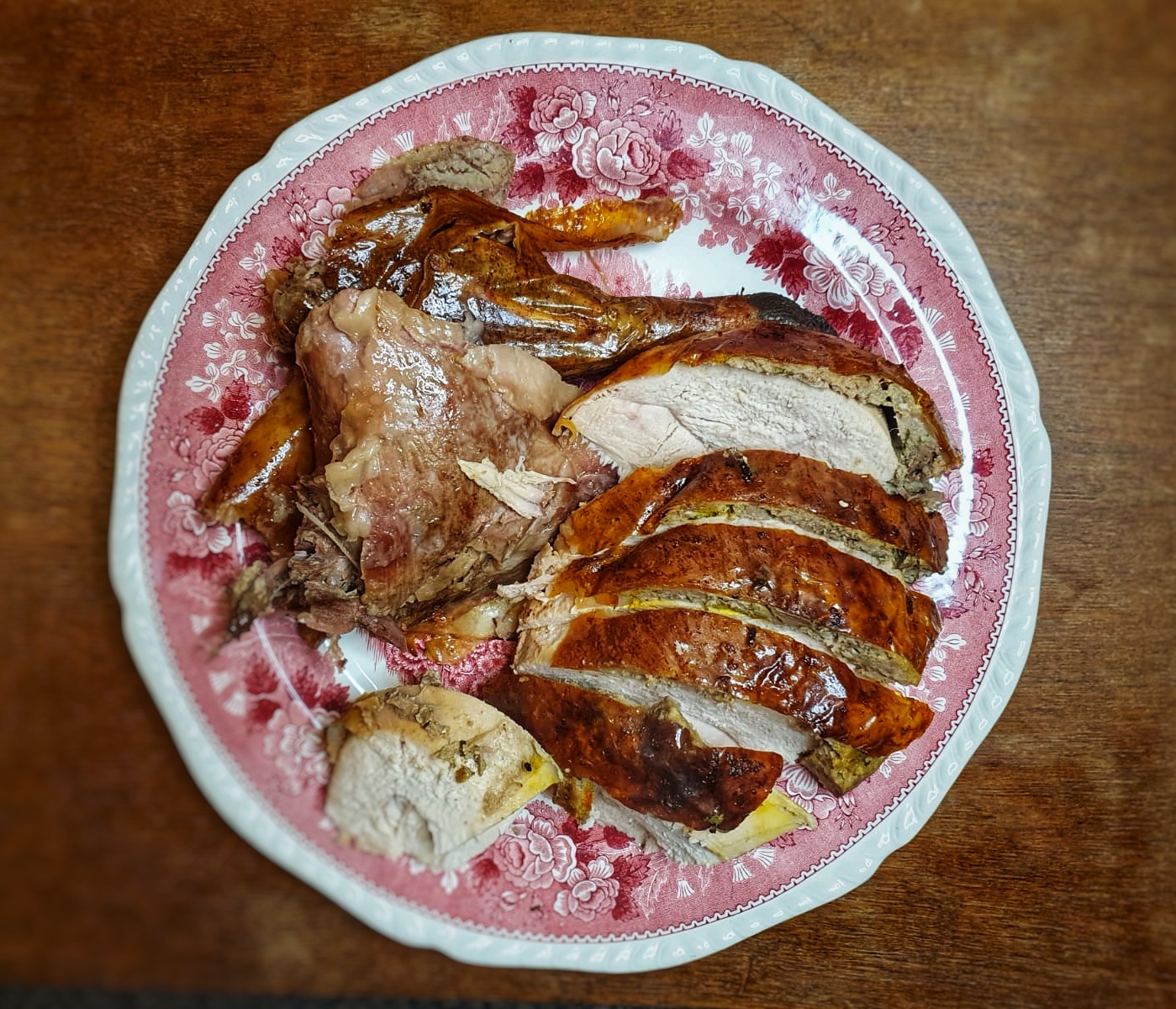
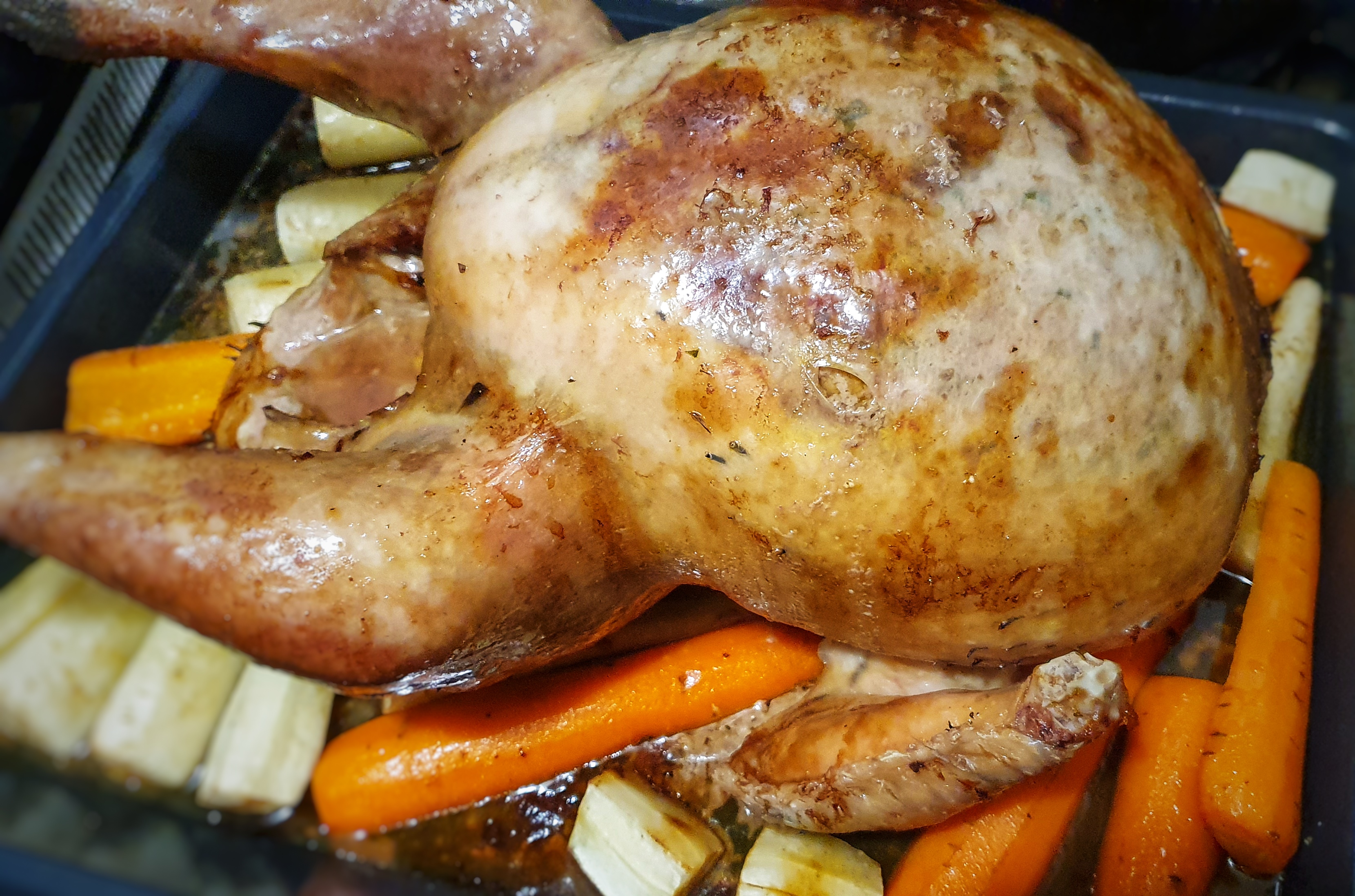
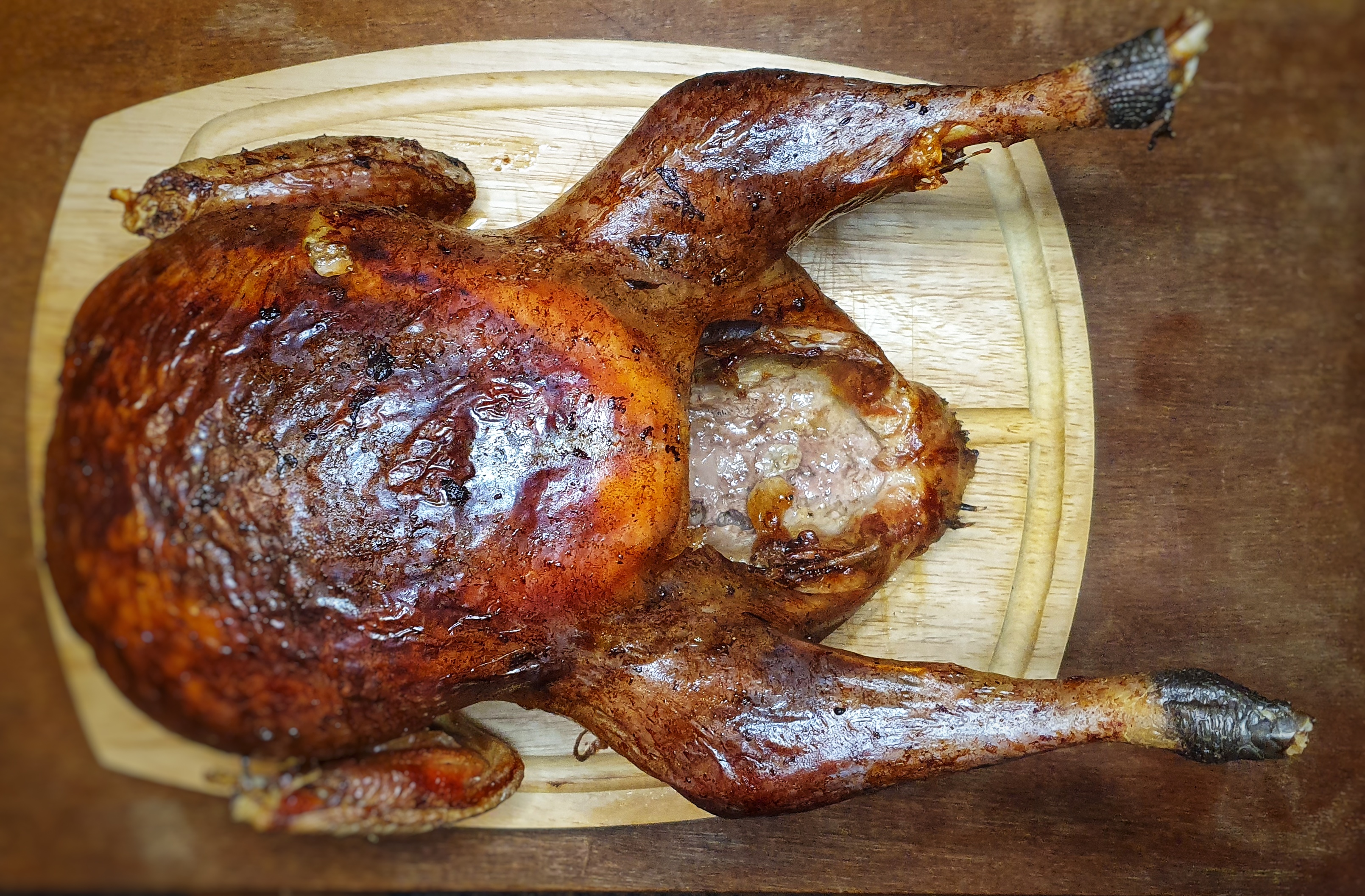
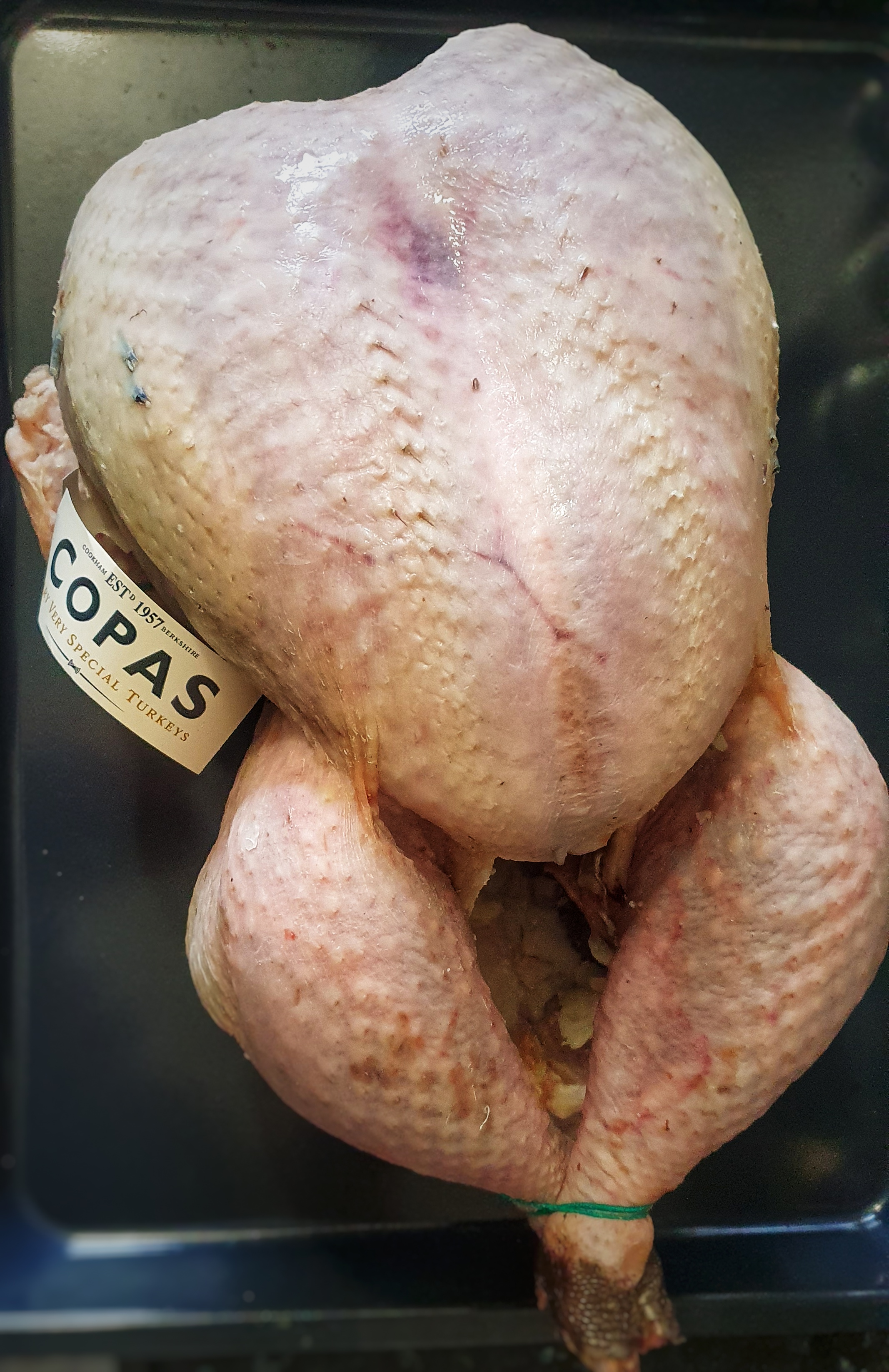
A very bronzed roast Copas turkey: butter is the only way to get this deep, delicious colour.

This blog post complements the recent episode of The British Food History Podcast called Turkey with Tom Copas.

If you feel inspired to order a Copas turkey, you need to get your order in by 16 December to avoid disappointment.

In the episode, we discussed the best way to roast turkey and we concluded that as long as you baste the bird and calculate the cooking time properly, it will be delicious. Tom even says that there’s no need to cover the turkey with bacon. While I agree with him, I do like the crispy bacon and the delicious, perfectly seasoned juices that come from the roasting turkey. My way of roasting turkey is very similar to how I cook a chicken.

What we didn’t discuss is the giblets! Please don’t waste them, they can be turned into lovely rich gravy when combined with the roasting juices. It’s important to get the giblet stock on about 45 minutes before the turkey goes in the oven (or you could prepare it in advance).

If you want to stuff the turkey, I suggest you stuff the neck only because an empty cavity means quicker cooking and a more succulent turkey.

Right, let’s get to it.


If you like the blogs and podcast I produce and would to start a £3 monthly subscription, or would like to treat me to virtual coffee or pint: follow this link for more information. Thank you.


To Roast a Turkey

You don’t have to use bacon if you don’t want to, but butter is essential. It adds richness, helps the bird keep moist and gives the skin a lovely deep brown colour.

1 free-range turkey

250 g salted butter, softened

Freshly ground black pepper

Around 14 rashers of dry-cured streaky bacon (optional)

Stuffing (optional)

Halved or quartered carrots and parsnips (optional; see recipe)

As soon as you get up on Christmas morning, take the turkey out of the fridge, untruss it, and when it’s time to cook the turkey, preheat your oven to 190°C.

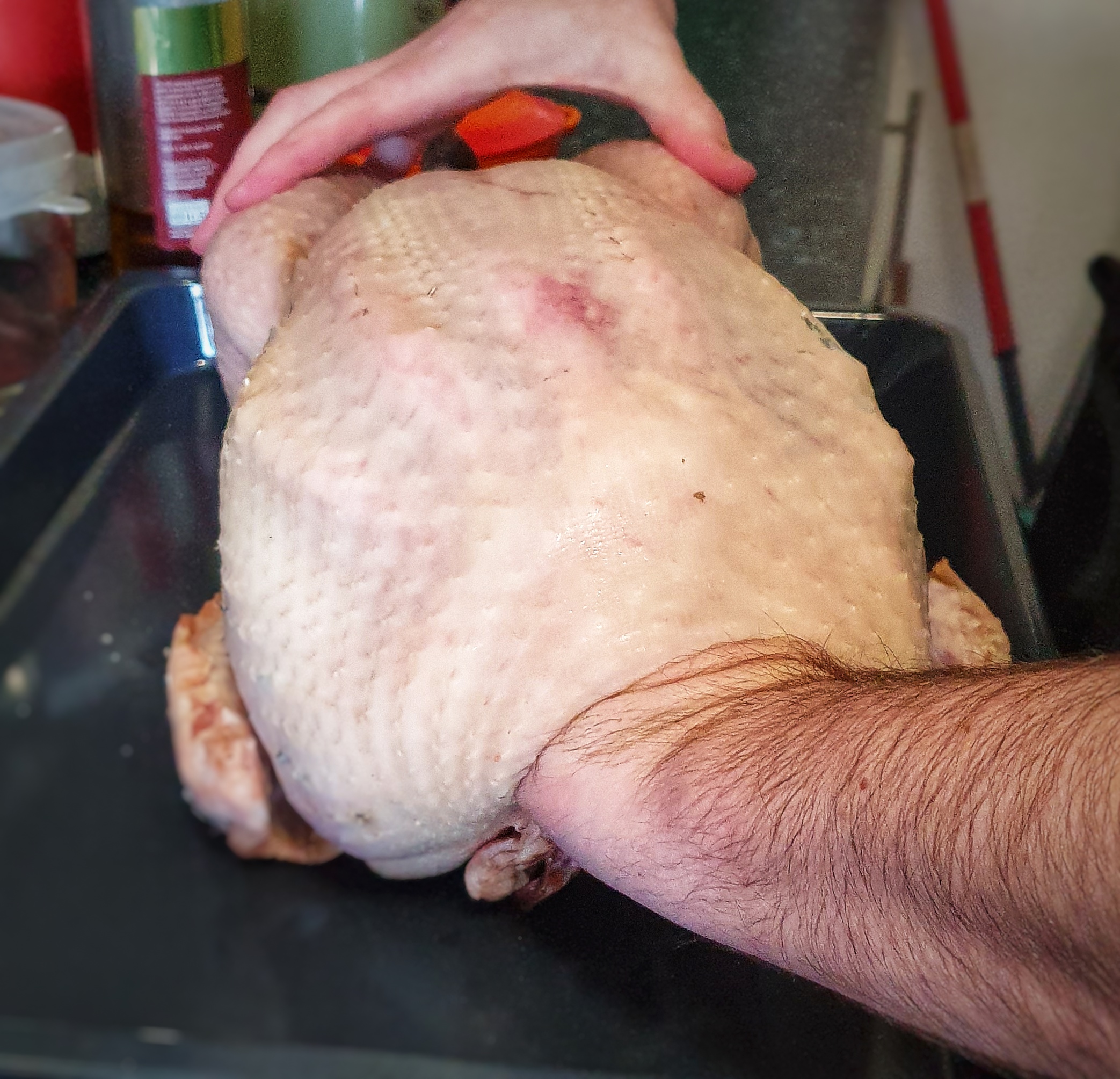
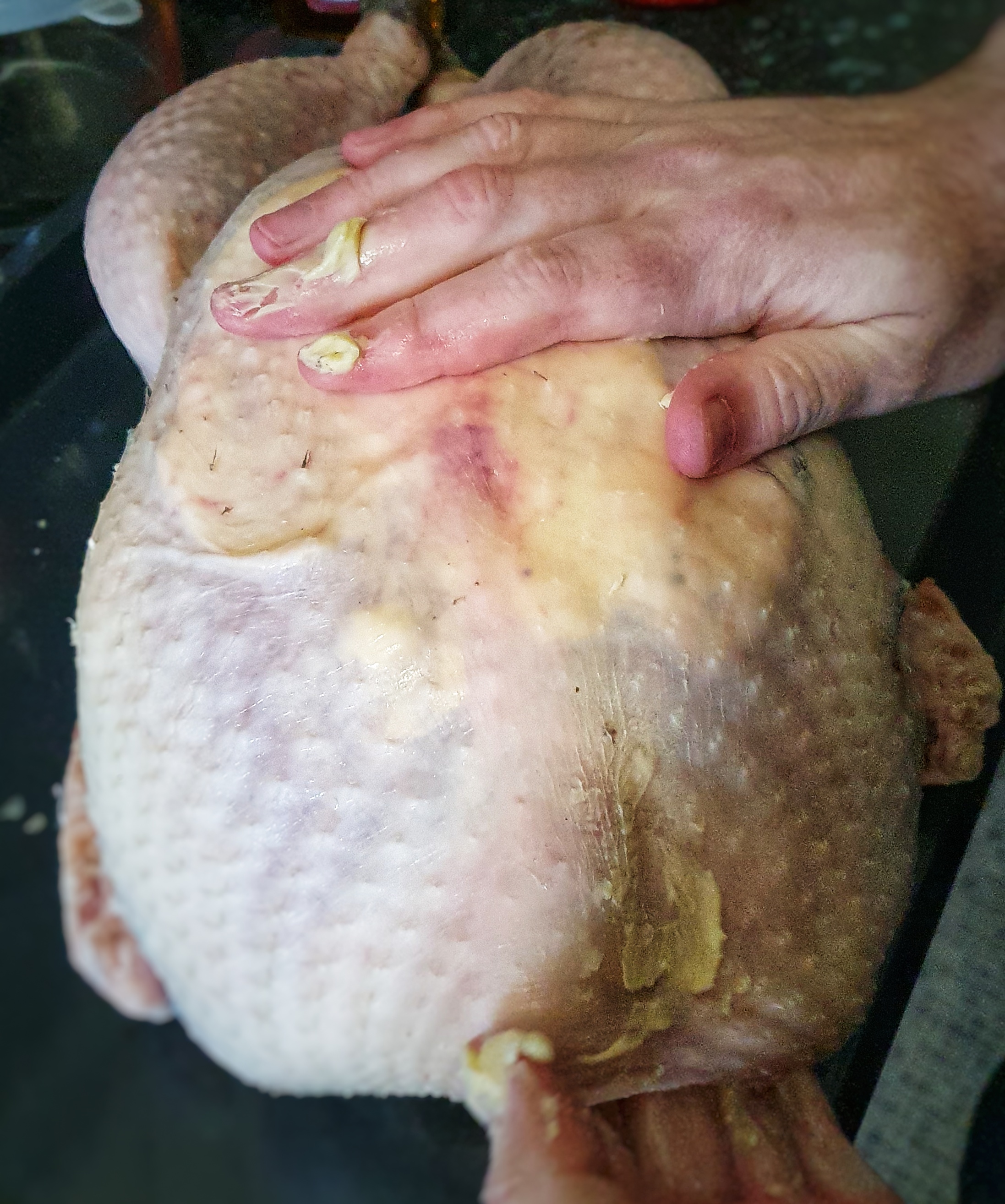
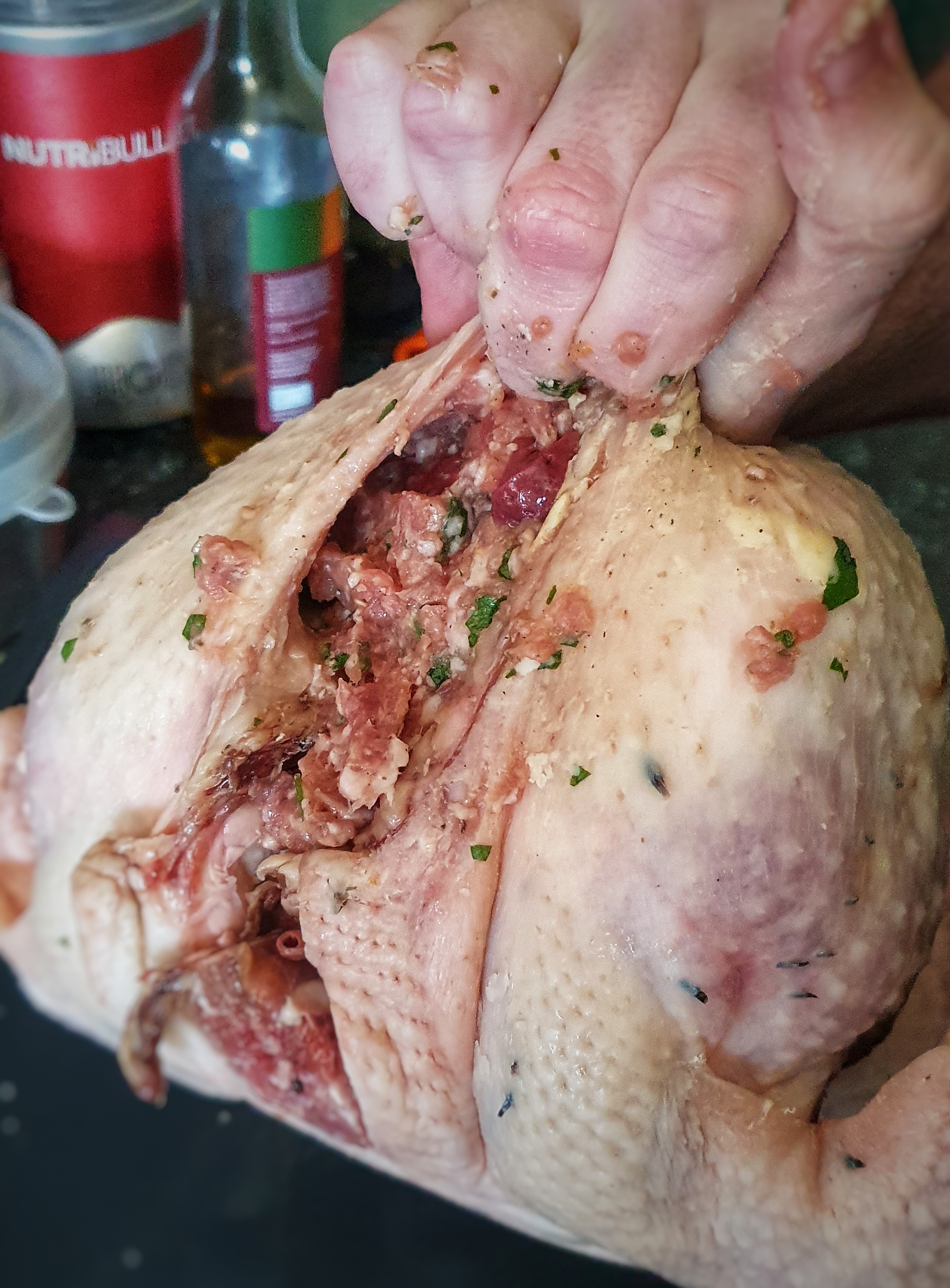
Sit the turkey on a board, legs facing towards you, then make a tear in the skin where the breast starts and lift the skin away from the breast. Don’t rush – you don’t want to tear the skin. Put half the butter between the skin and breast and massage it as far back as possible. If you are using stuffing, add this under the skin too and tuck the flap of neck skin underneath. If there’s not much neck skin, don’t worry, it can be secured with a skewer.

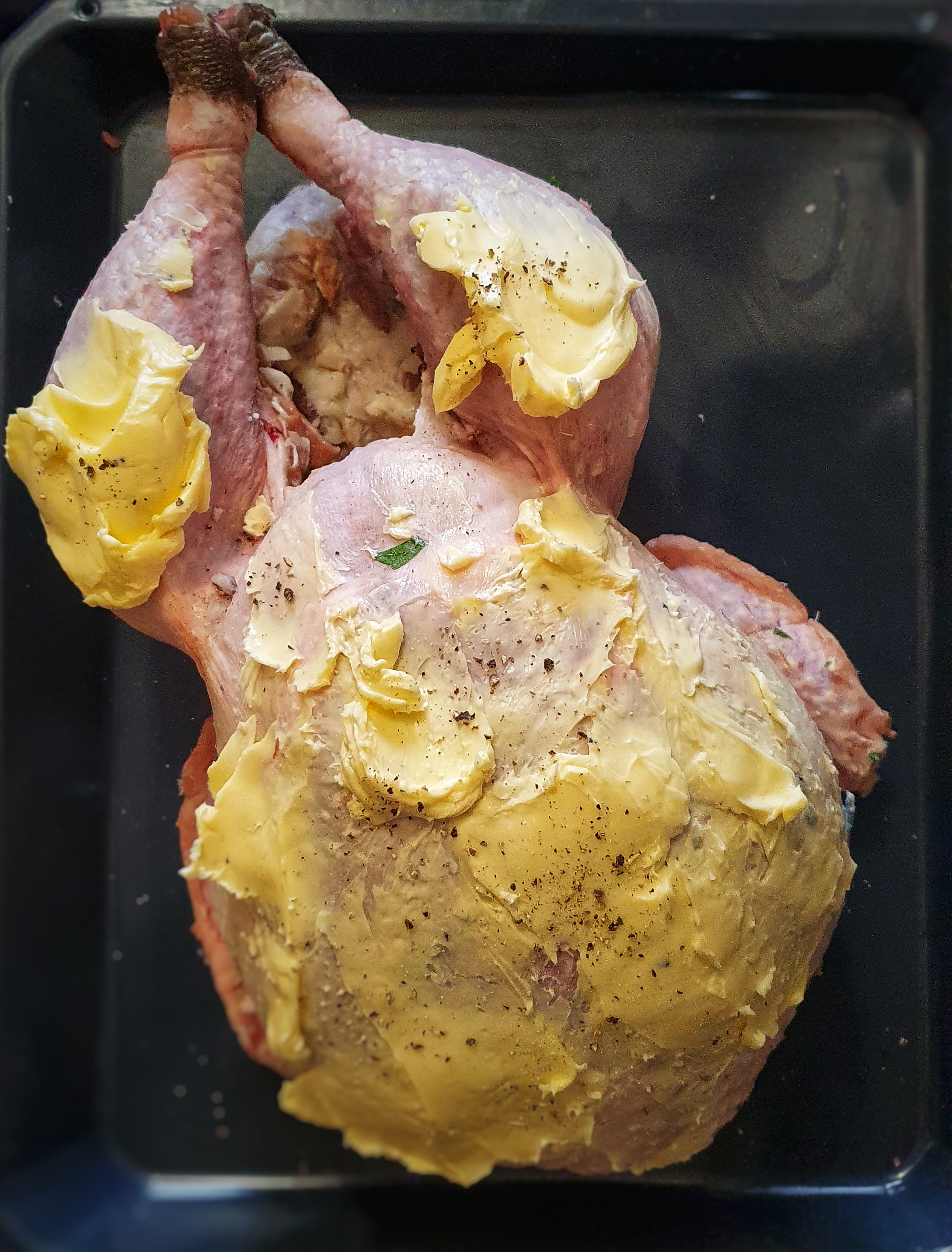
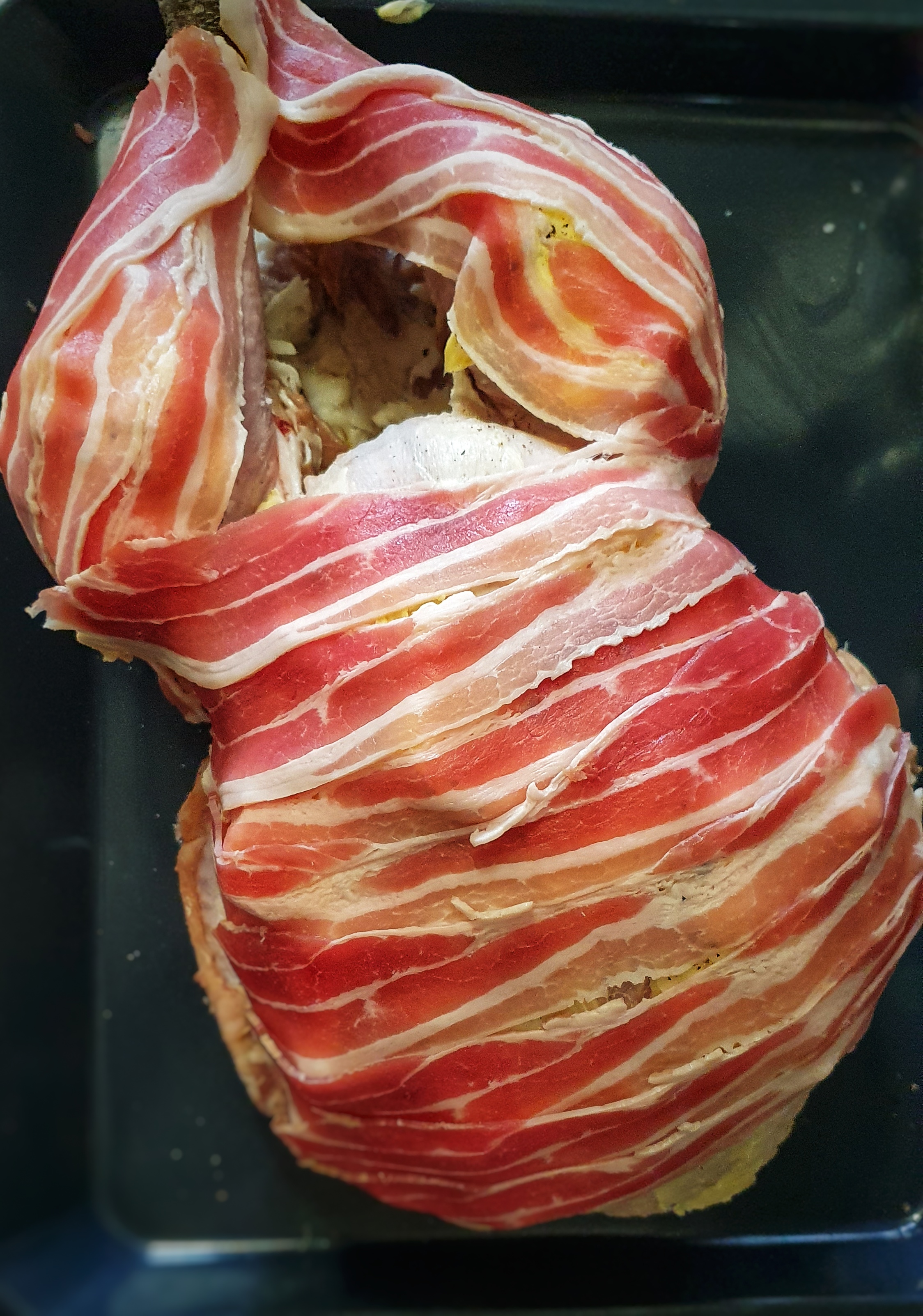
Smear the rest of the butter over the outside of the turkey and season with plenty of black pepper, then lay the bacon over, overlapping each rasher only slightly.

Weigh the prepared turkey and calculate the cooking time: 30 minutes per kilo. A 4.5 kilo turkey will take 2 ½ hours. If cooking for more than 3 hours, cover the legs with foil.

Sit the turkey in its roasting tin, place it in the oven, and leave it for a good 45 minutes before doing anything at all. At the 45-minute mark baste the turkey with any juices; make sure to tip any juices in the cavity into the roasting tin.

Baste every 20 minutes or so. When the bacon is very crispy, remove it and set aside.

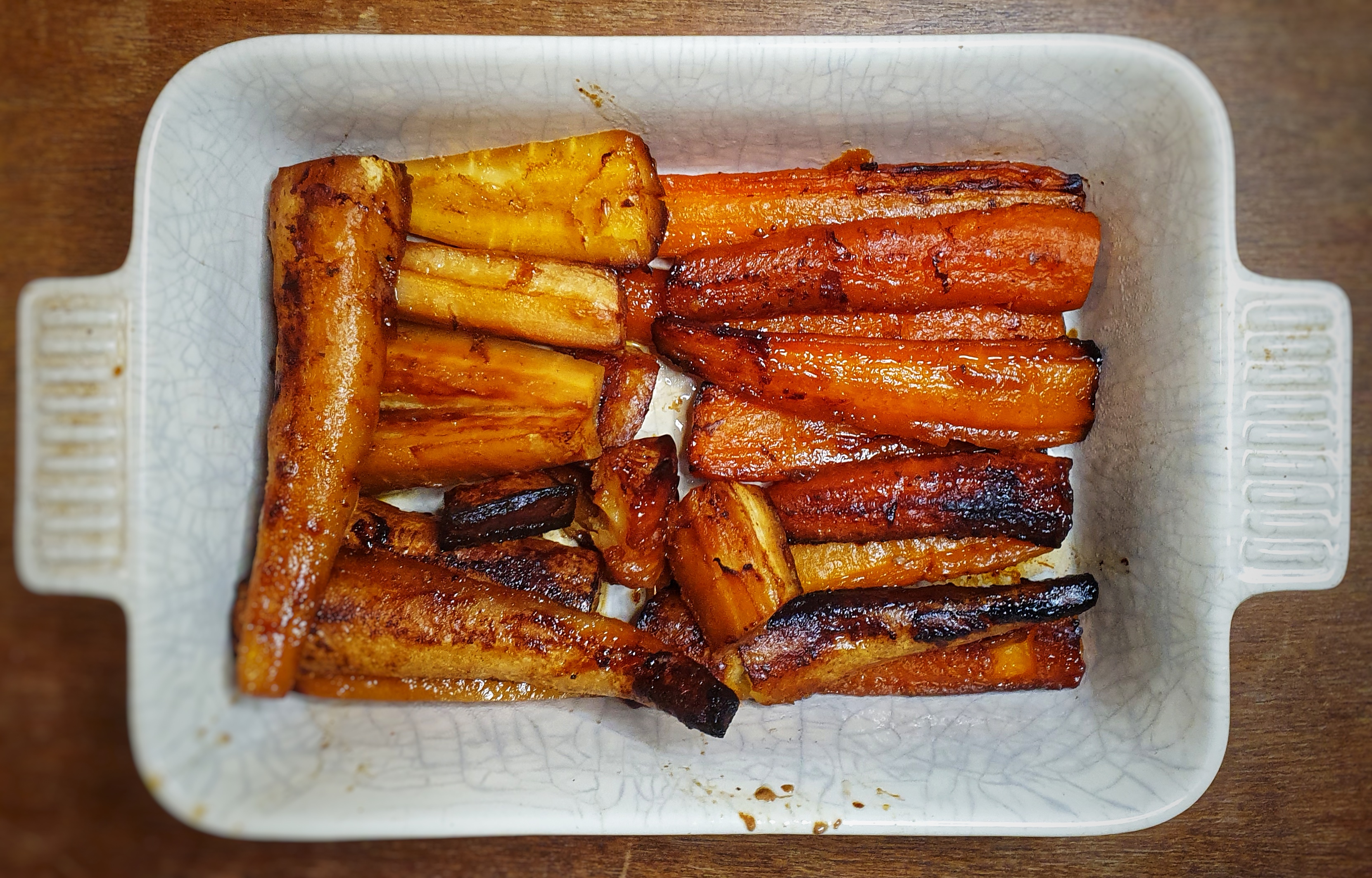
If you like you can add some carrots and parsnips, peeled and halved or quartered to braise in the juices. It’s best to do this when there are 90 minutes to go – don’t forget to turn the veg over each time you braise.

90 minutes to go, the bacon has been removed and the vegetables added to braise

When the time is up, you can test with a digital probe: 68°C is the temperature you are looking for. Take the turkey, place it on a carving board and cover with foil. It will happily rest for one to two hours.

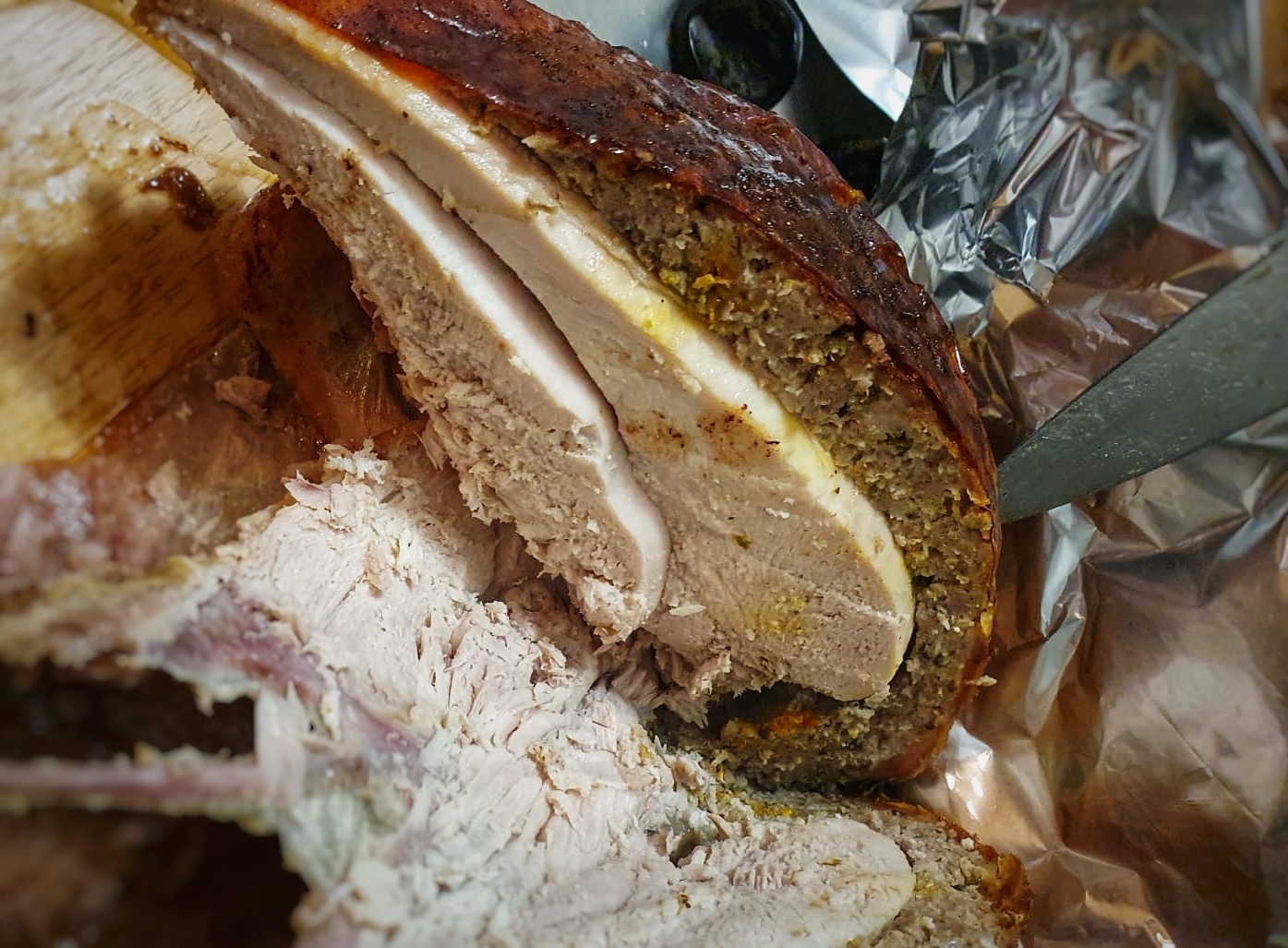
When it’s time to carve, remove the legs and separate them into thighs and drumsticks. For the breast, I find the easiest way is to remove one side completely and then slice it thickly. These can be arranged on a warm serving plate, surrounded by the crisp bacon. Only cut into the second breast if the first one goes (it keeps better that way for leftover feasts).

I massaged the stuffing quite far into the turkey’s breast skin, protecting the meat and keeping it juicy

To Make Giblet Gravy

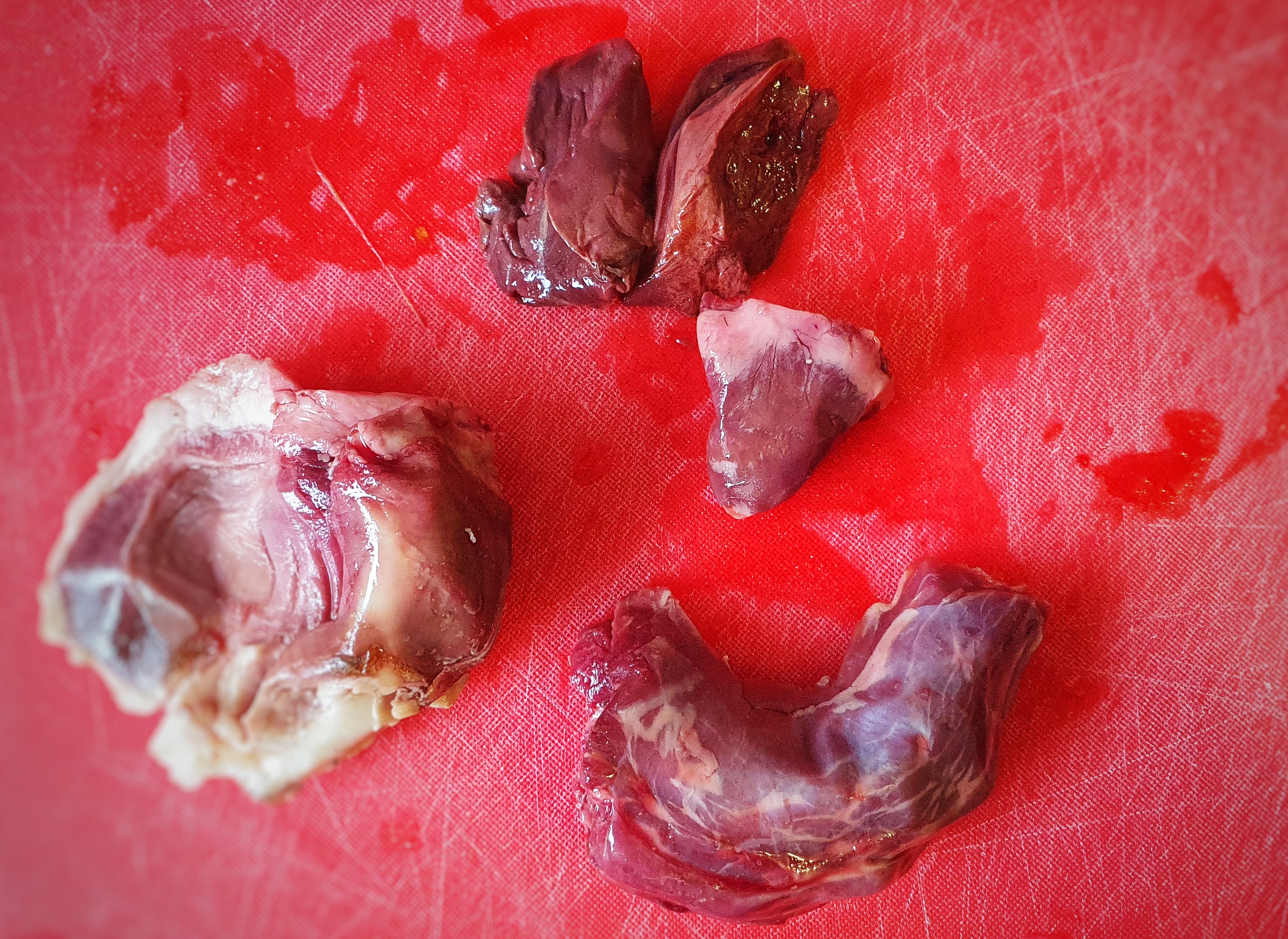
Don’t waste or fear the giblets! The giblets are the heart, neck, gizzard and liver.[1] Use your vegetable trimmings from the veg to make the stock: though avoid brassicas like sprouts.

For the stock:

Heart, gizzard and neck

A knob of butter

Leek greens, carrot peelings, and some celery trimmings, or 2 outer stems of celery

2 cloves of garlic, lightly crushed

Herbs: bay leaves, parsley stalks, rosemary or thyme sprig tied with string

175 ml white wine

Cold water

For the gravy

Giblet stock

Pan of turkey juices

1 tbs cornflour

To make the stock, first cut up the giblets into quarters.

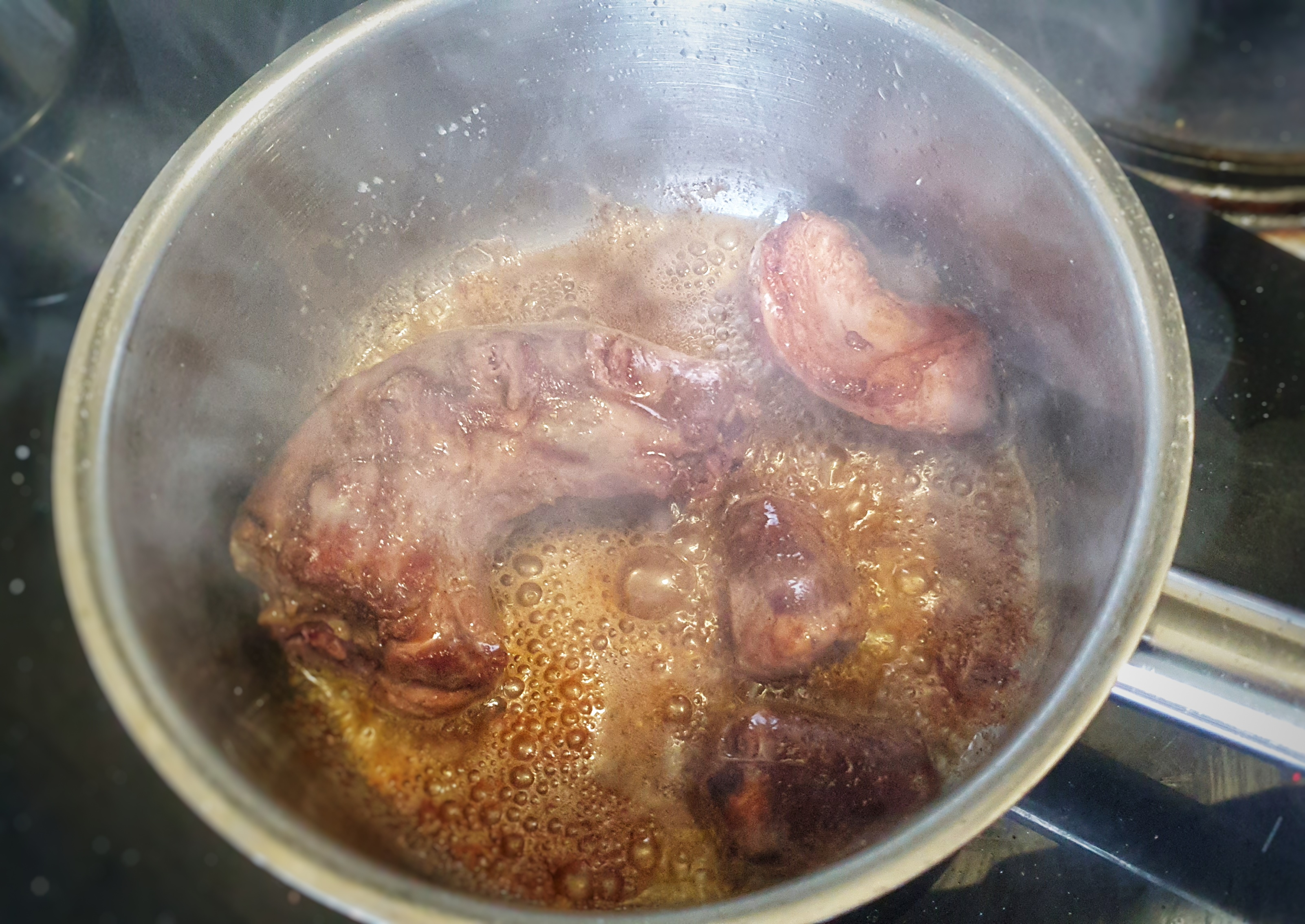
In a saucepan, heat the butter until foaming, add the giblets and fry over a medium-high heat until brown – about 5 minutes. Now add the vegetable trimmings, garlic and herbs and wilt them. Cook until they have picked up a tinge of brown, then add the wine. Stir and scrape any nice burnt bits from the bottom. Add water to just cover the contents, put a lid on and bring to a simmer and cook for around 3 hours, then strain through a sieve into a clean pan (or into a tub if you’re making it in advance).

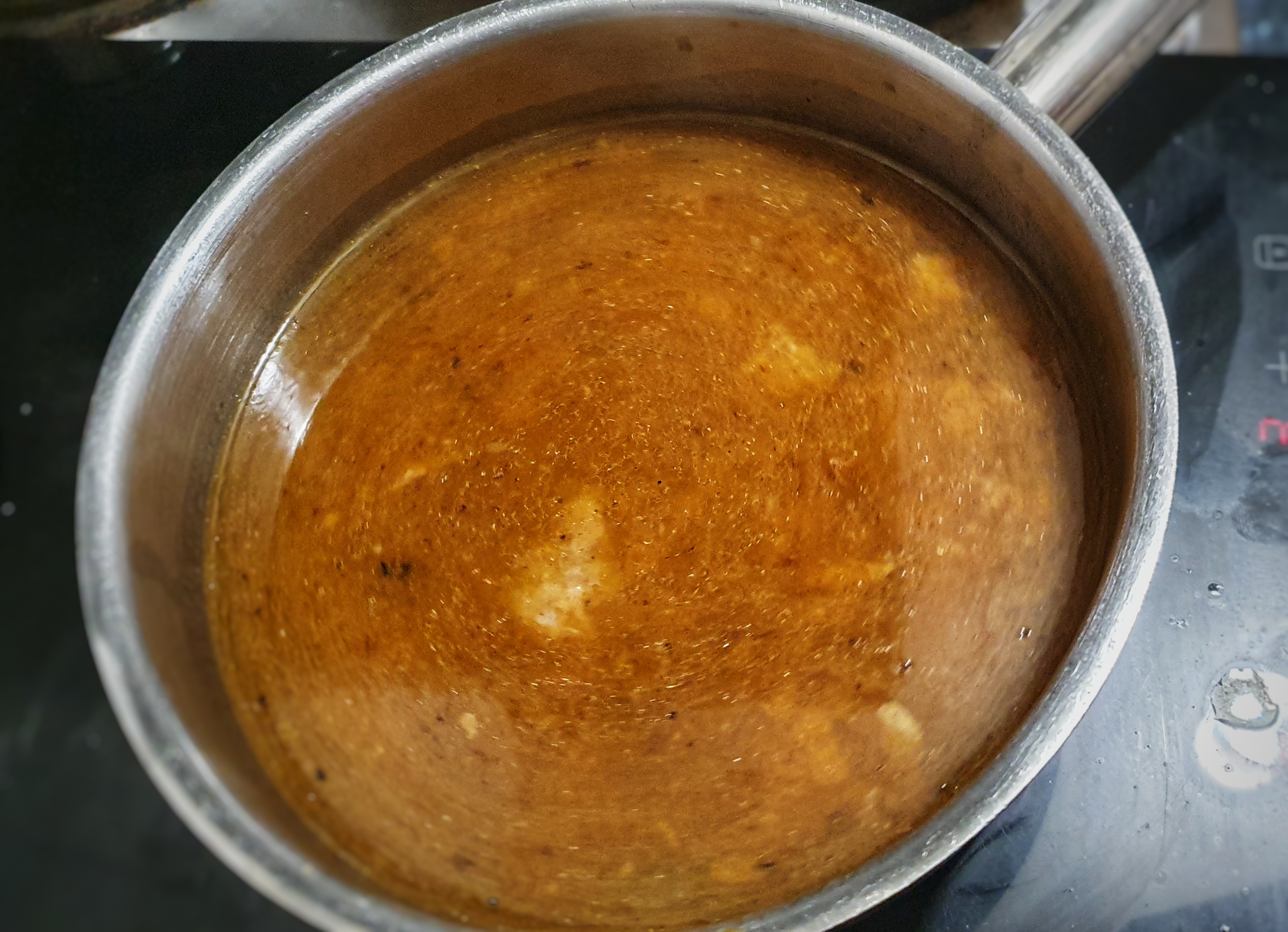
When it’s time to make the gravy, get the stock nice and hot. When the turkey is cooked and is resting on its board, pour the hot stock into the roasting tin and scrape off all the nice treacly burnt bits, then tip the whole thing back into your saucepan. Skim away most of the buttery juices.[2] Bring to a simmer and then add the cornflour which has been first slaked in a little cold water. Stir and simmer unlidded for 10 minutes.

Check the seasoning, though usually I find that the bacon and the salted butter from roasting the turkey have done it for me. Pour the gravy into a jug. You can pass it through a sieve, but I never do. Easy!


[1] Use the liver for the stuffing, or fry it and eat it on toast. You could devil it – recipe for devilling livers can be found here.

[2] But don’t throw the fat away, it can be used for frying vegetables for sauces or soup.

6 Comments

Filed under Britain, Christmas, cooking, Festivals, food, General, history, Meat, Recipes