Read more of this content when you subscribe today and unlock lots of premium content, including the secret podcast, bonus blog posts (such as this one) and recipes, my Easter eggs and a monthly newsletter. Please click here for more information.
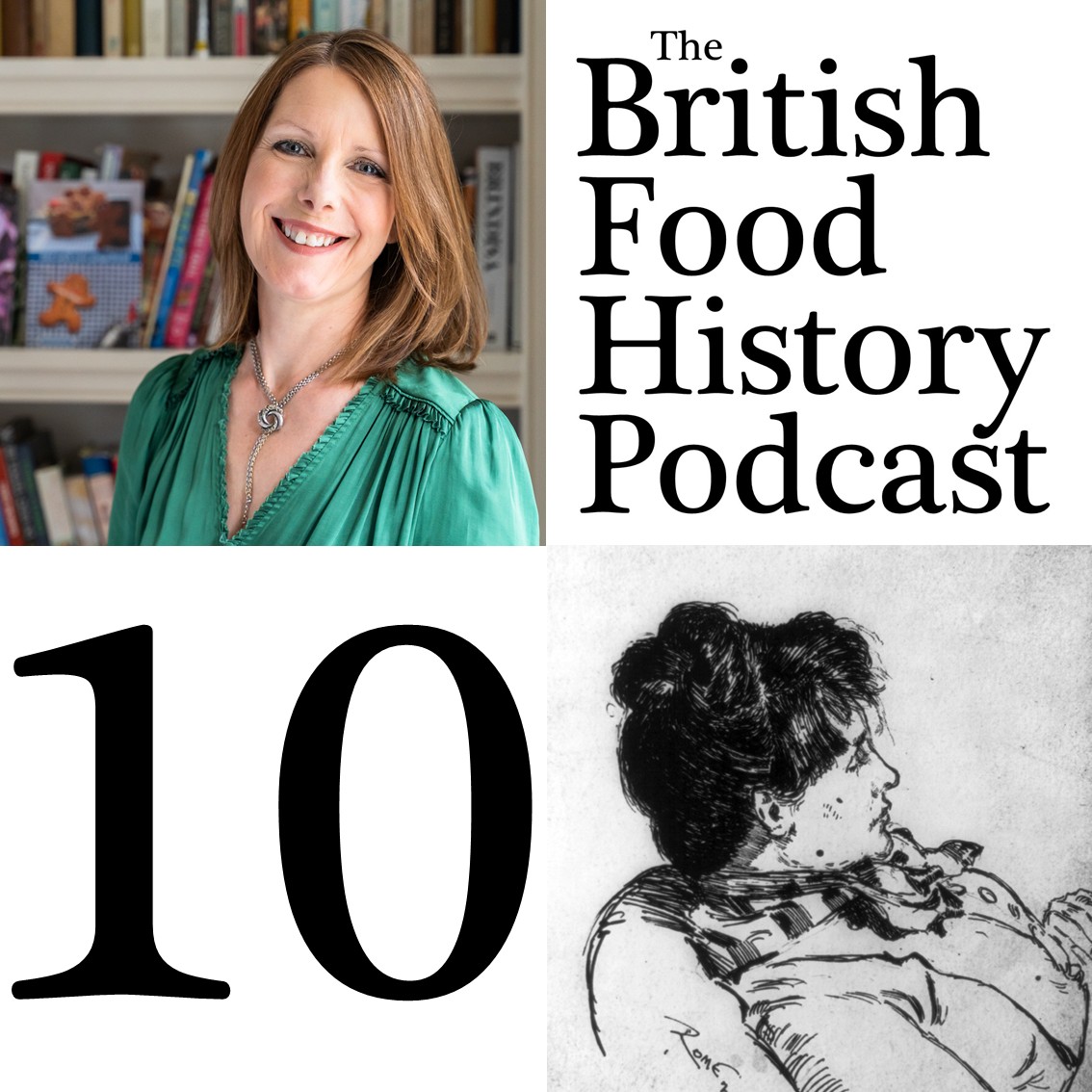
Welcome to this special bonus episode of The British Food History Podcast. I always make an extra episode for my monthly £3 subscribers. I wanted to make an episode where I talk with another food historian about a book. I asked Sam Bilton and she chose The Feasts of Autolycus: The Diary of a Greedy Woman by Elizabeth Robins Pennell (1899). An author I was not familiar with – and I really enjoyed reading the book and having this discussion.
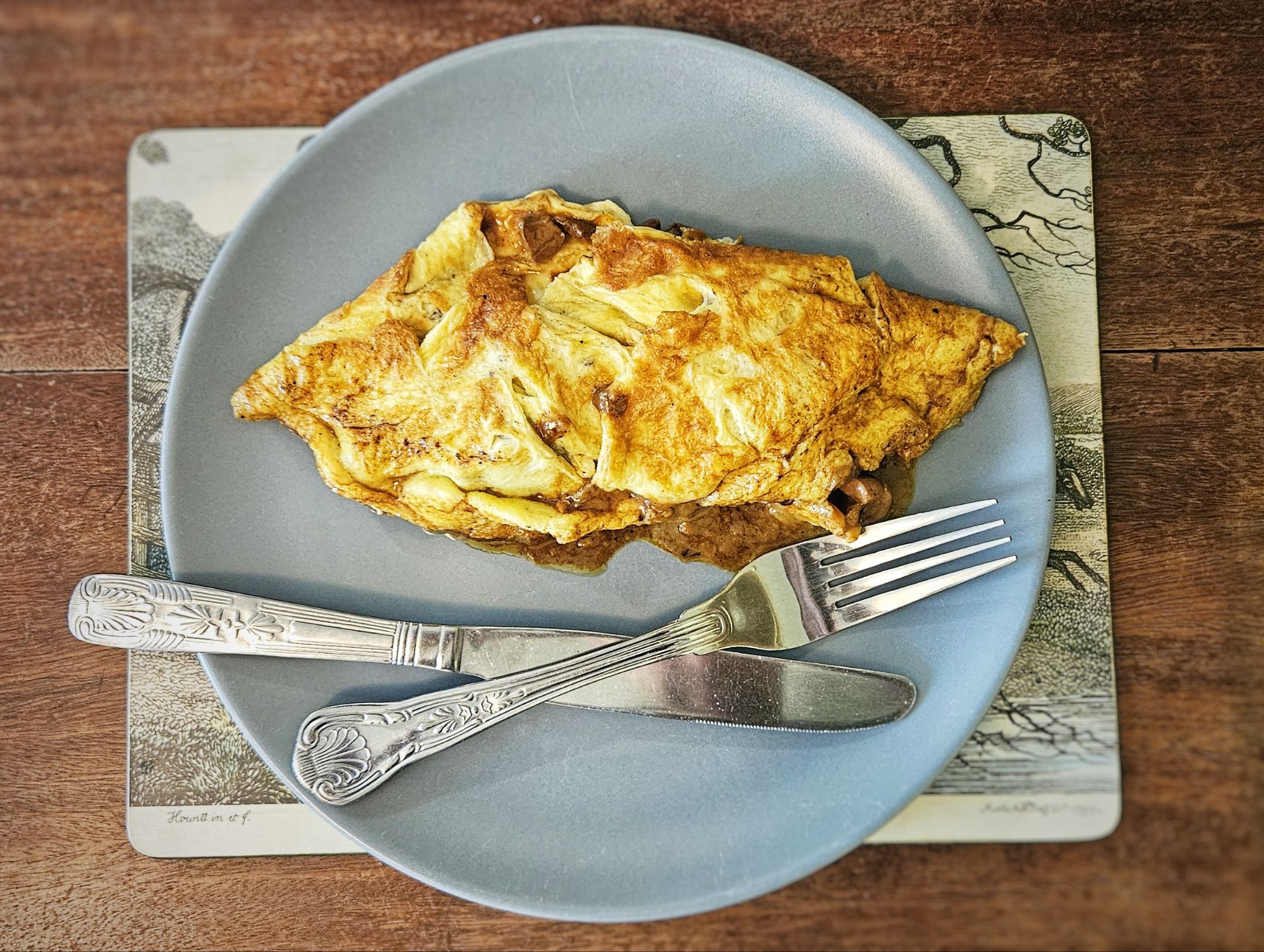
We talk about Elizabeth Robins Pennell and how Sam discovered her, the expectations of women and greediness in the late Victorian period, food and morality, Camp coffee, stirring savouries, magnificent mushrooms, and kidneys – lots and lots of kidneys.
Subscribe to get access
Read more of this content when you subscribe today and unlock lots of premium content, including the secret podcast, bonus blog posts and recipes, my Easter eggs and a monthly newsletter. Please click here for more information.
In this week’s episode I am speaking with Adam Crymble and Rachel Rich about a really exciting piece of research looking at the complexities of feeding the households of King George III and his eldest son George who was Prince Regent whilst George III suffered from his “madness”, and eventually succeeded him as George IV. The focus of the research is the ledgers that still exist, listing the ingredients ordered, foods that were prepared and the people who ate them. Over 40,000 dishes were counted.
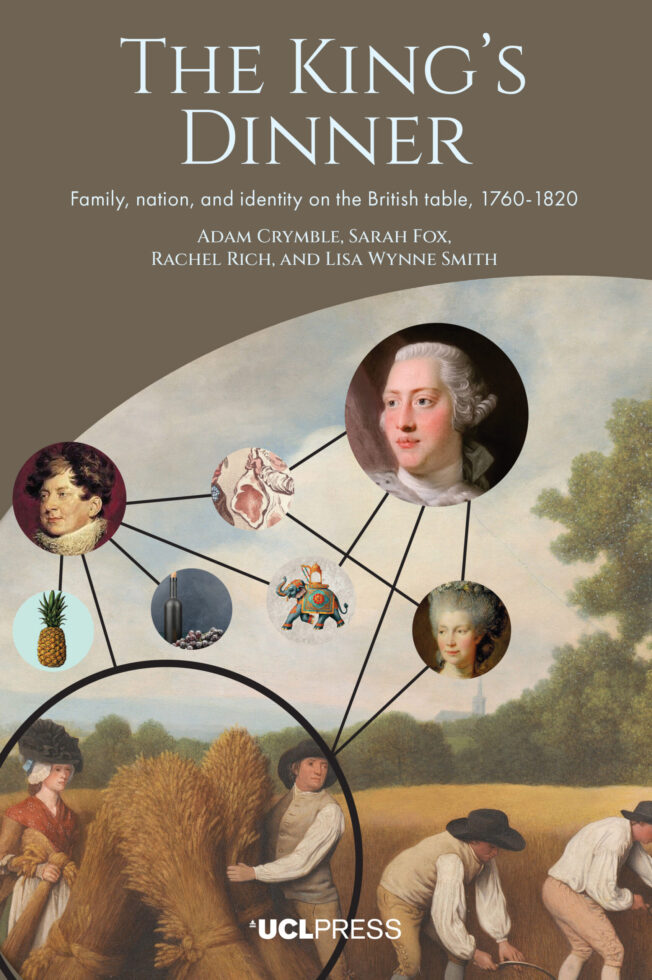
They have analysed the ledgers from two royal palaces – George III’s Kew Palace and the Prince Regent’s Carlton House – with two other food historians Sarah Fox and Lisa Smith, and assimilated them to produce a book called The King’s Dinner: Family, nation, and identity on the British table, 1760-1820, which was published by UCL Press on 11 June 2026. The book is available from wherever you buy your books, but it is also available open access as a free PDF. So is the data they used in their analysis.
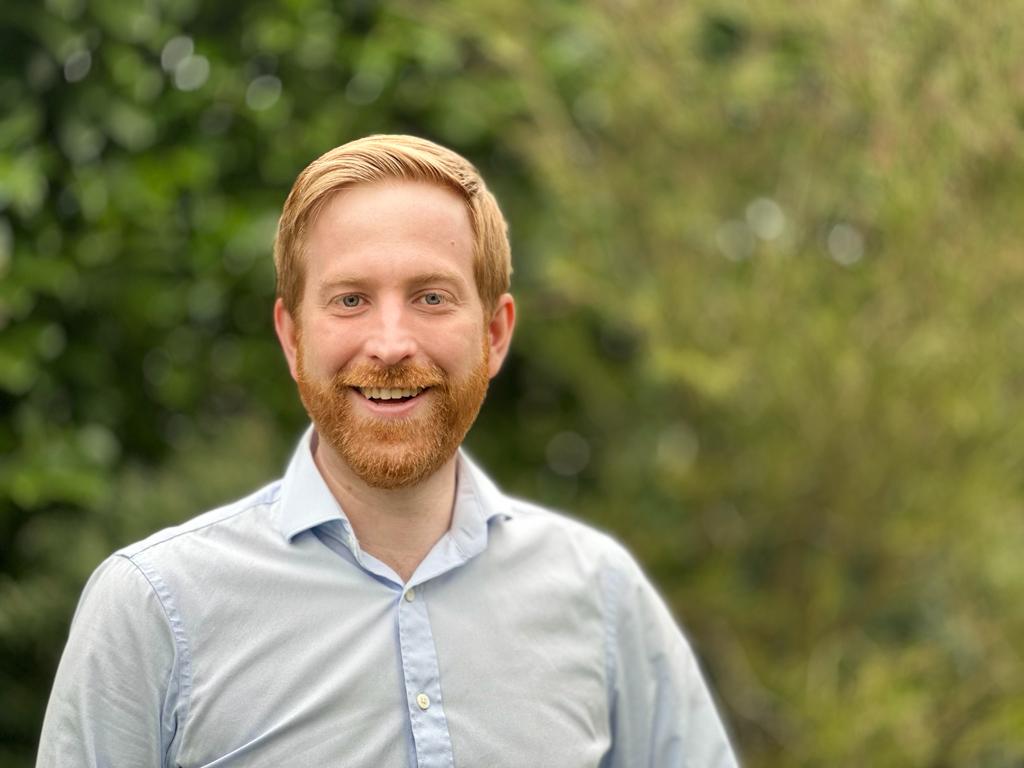
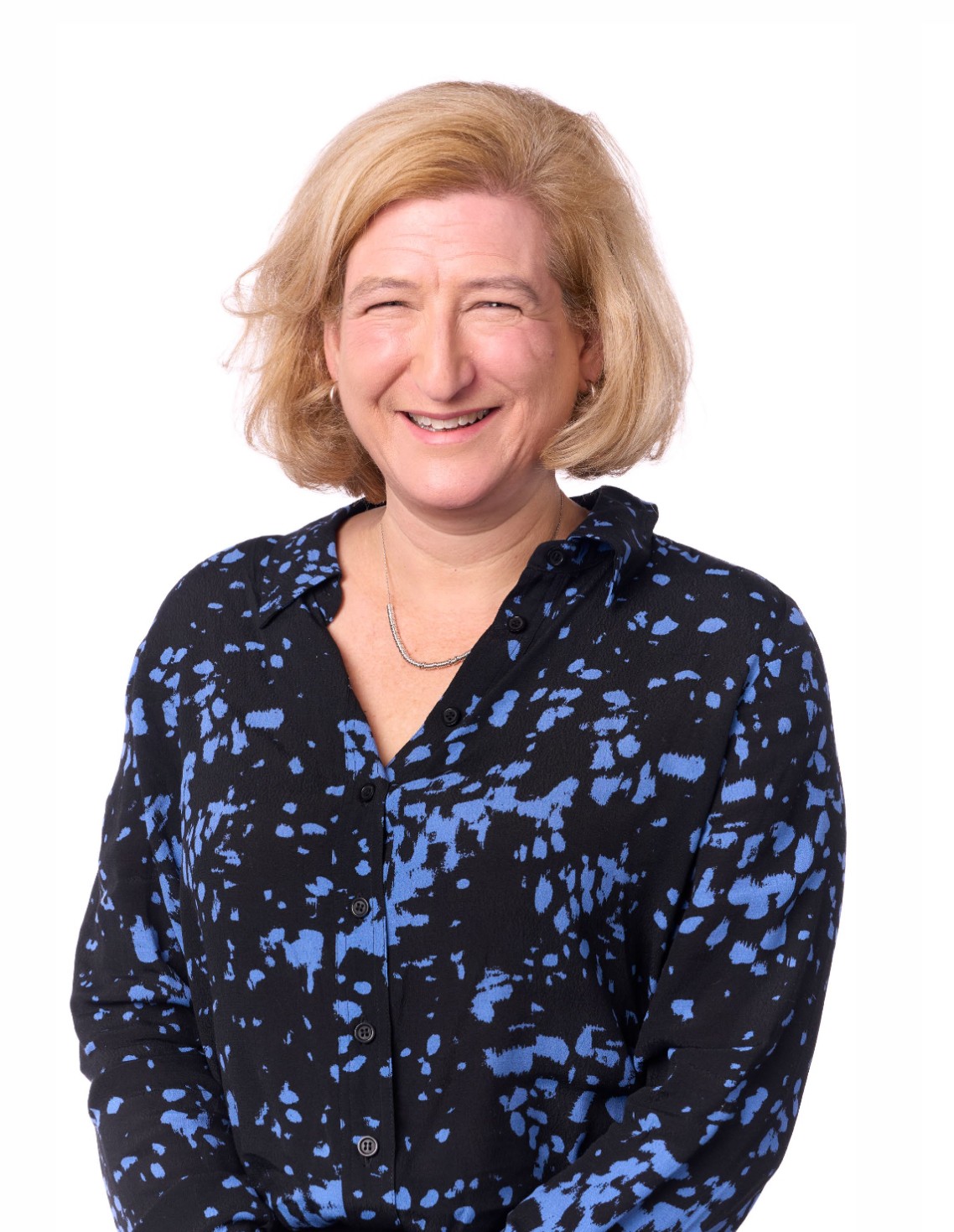
From left to right: Co-author Adam Crymble, the cover of The King’s Dinner, co-author Rachel Rich
We talk about the differing characters of the two Georges and how these were expressed in the foods they ate, Georgian food identity, the concept of oeconomy, the exotic food cultures NOT appearing on royal dinner tables, French cuisine and famous French chef Careme’s tenure in the Prince Regent’s kitchens, as well as their fruit and veg suppliers, one of whom was called Savage Bear, amongst many other things
Those listening to the secret podcast get some bonus material where we discuss the upper servant’s fancy foods, the huge amounts of meat consumed, and the politics of wine.
The British Food History Podcast is available on all podcast apps, but you can also listen to it via this Spotify embed:
Follow Rachel Rich on social media: @drrachelrich (Insta)
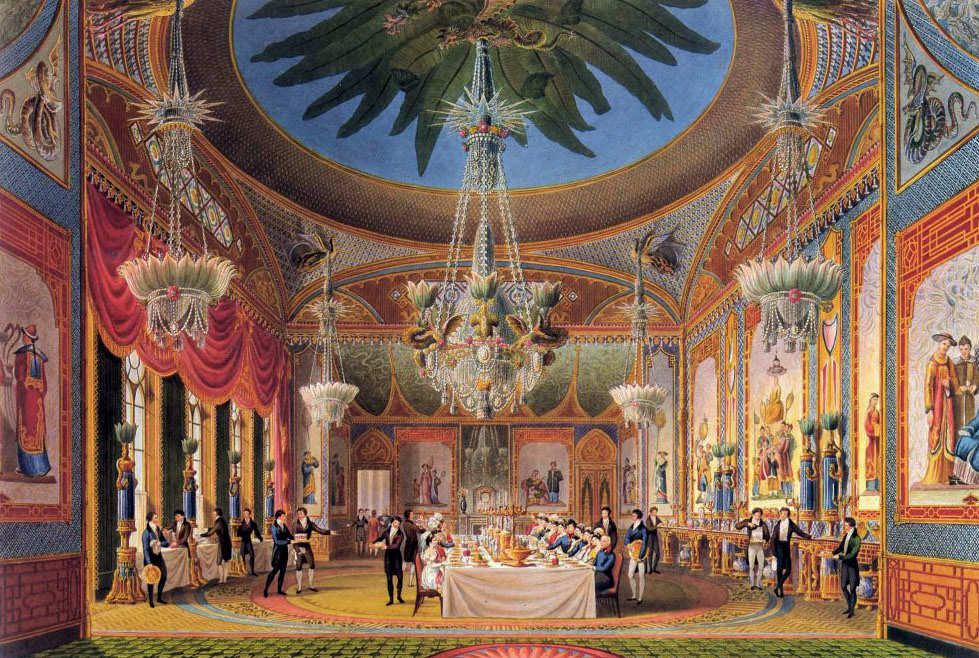
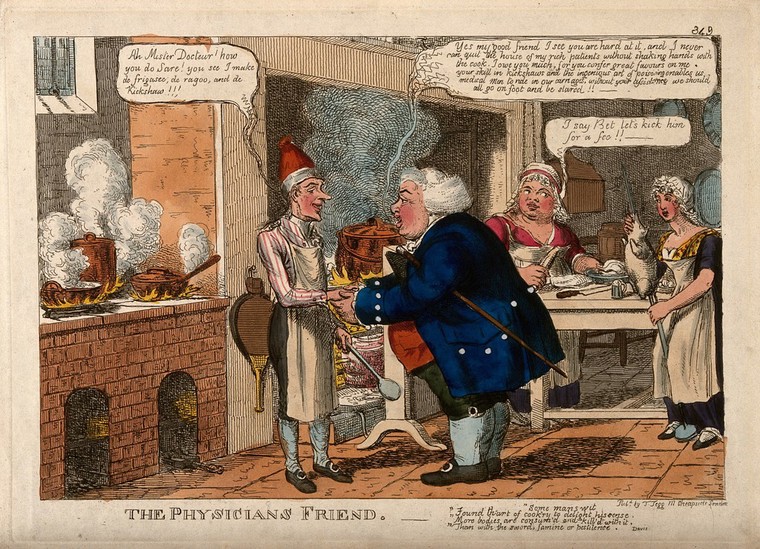
The Brighton Banqueting Room (L); and a satirical cartoon of a doctor thanking a French chef for making his patients (customers!) so unhealthy.
Season 10 of the podcast is sponsored by Netherton Foundry, makers of high-quality kitchen and outdoor cookware. Netherton Foundry ships to several countries outside of the UK, including the USA and Canada. Visit www.netherton-foundry.co.uk to find out more about their wonderful products – approved not just by me but by folk such as Tom Parker-Bowles, Diana Henry and Nigella Lawson.
The mixing and sound engineering were done by Thomas Ntinas of The Delicious Legacy podcast
If you can, support the podcast and blogs by becoming a £3 monthly subscriber, and unlock lots of premium content, including bonus blog posts and recipes, access to the easter eggs and the secret podcast, or treat me to a one-off virtual pint or coffee: click here.
Don’t forget, there will be postbag episodes in the future, so if you have any questions or queries about today’s episode, or indeed any episode, or have a question about the history of British food please email me at neil@britishfoodhistory.com, or leave a comment.
Welcome back to The British Food History Podcast. In this episode, I am speaking with Peter Ross. Peter was, until recently, the Principal Librarian at the City of London’s Guildhall Library. He is an historian of both food and crime in Georgian London, an Arts Society lecturer, and a Fellow of the Society of Antiquaries.
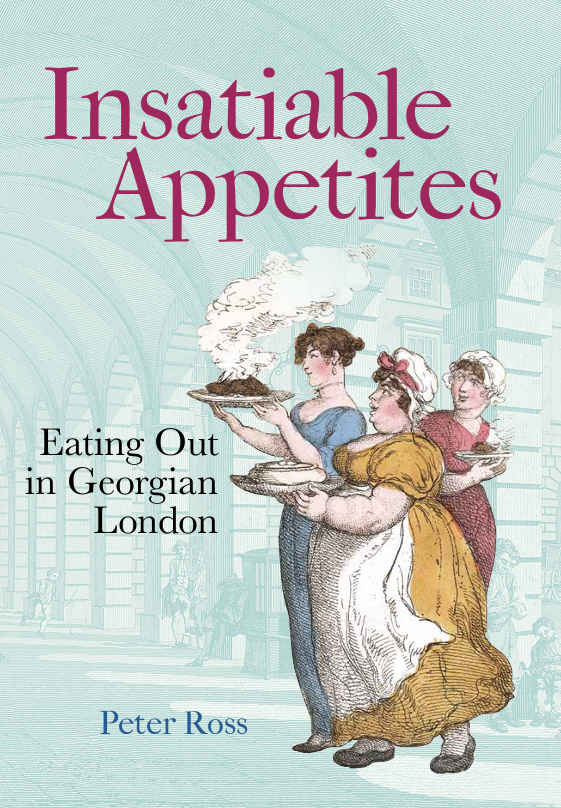
He has also written a fantastic book called Insatiable Appetites, Eating Out in Georgian London, published by the Bodleian Library. Published 14 May 2026.
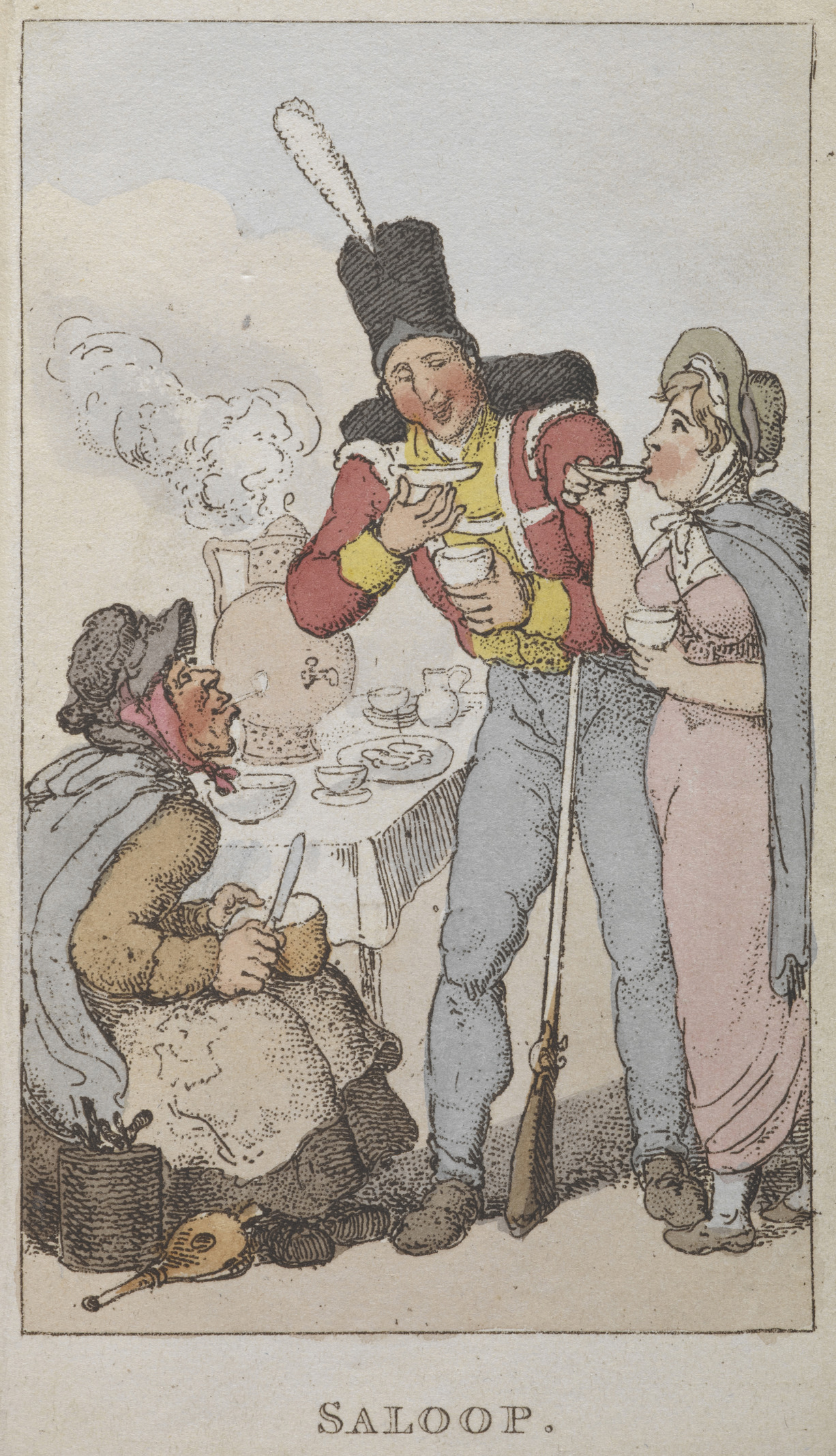
We talk about the migrating mealtimes of the Georgian period, chophouses, the importance of satirical cartoons when studying food history in this period, turtle soup, and why you wouldn’t want to be seen hanging around the saloop stand – amongst many other things.
Those listening to the secret podcast get some top drawer bonus material where we discuss what Georgian chocolate was really like, and the beautiful and amazing Vauxhall gardens + more.
The British Food History Podcast is available on all podcast apps, but you can also stream it via this Spotify embed:
Season 10 of the podcast is sponsored by Netherton Foundry, makers of high-quality kitchen and outdoor cookware. Netherton Foundry ships to several countries outside of the UK, including the USA and Canada. Visit www.netherton-foundry.co.uk to find out more about their wonderful products – approved not just by me but by folk such as Tom Parker-Bowles, Diana Henry and Nigella Lawson.
If you can, support the podcast and blogs by becoming a £3 monthly subscriber, and unlock lots of premium content, including bonus blog posts and recipes, access to the easter eggs and the secret podcast, or treat me to a one-off virtual pint or coffee: click here.
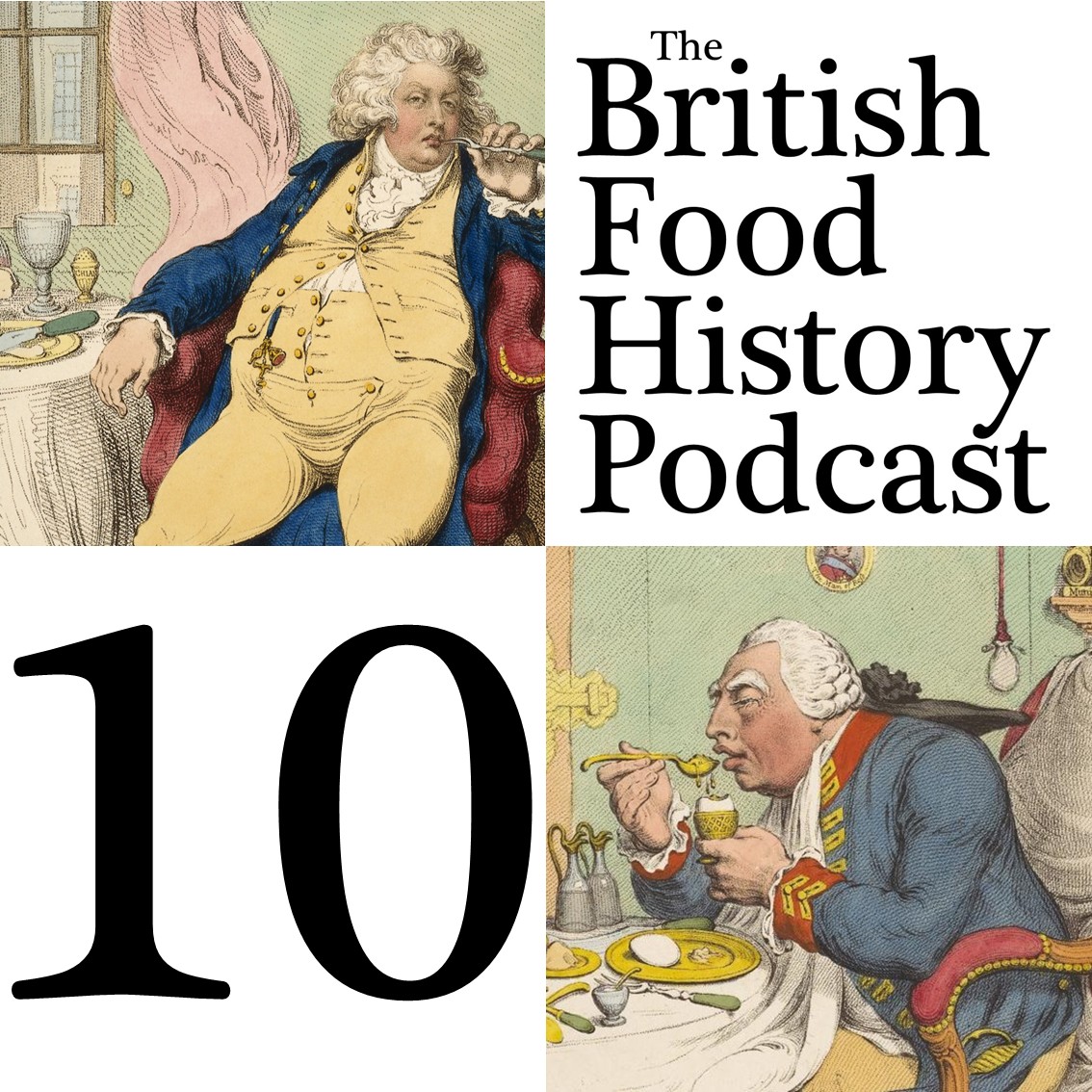
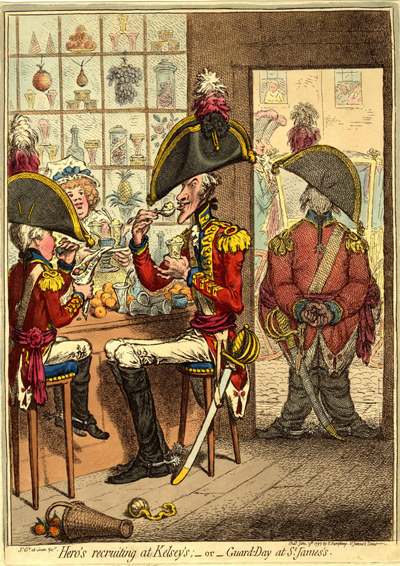
The James Gilray cartoon discussed in today’s episode
Don’t forget, there will be postbag episodes in the future, so if you have any questions or queries about today’s episode, or indeed any episode, or have a question about the history of British food please email me at neil@britishfoodhistory.com, or leave a comment below.